Watch Venus Glide Past Regulus and Then a Crescent Moon in July’s Evening Sky
Watch Venus light up the July night sky with a close pass by Regulus and a later display beside a youthful crescent moon.
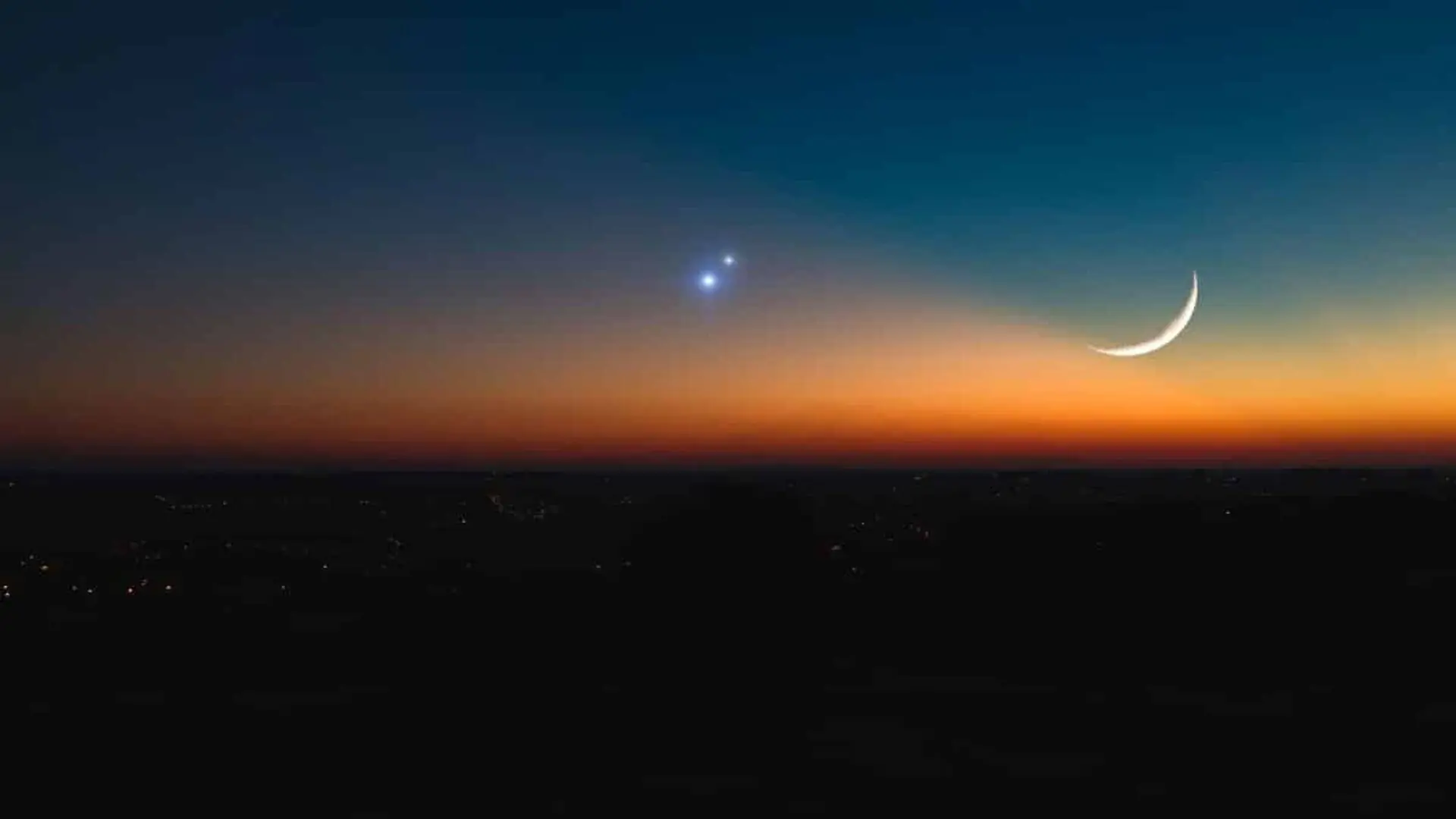
In July, the western evening sky will host two straightforward sightings: first, Venus will drift close to the luminous star Regulus, and later the planet will appear beside a delicate waxing crescent moon. Neither event requires a telescope, offering a clear chance for casual observers to watch the Solar System’s geometry shift with the naked eye.
Venus Skims Within One Degree of Regulus
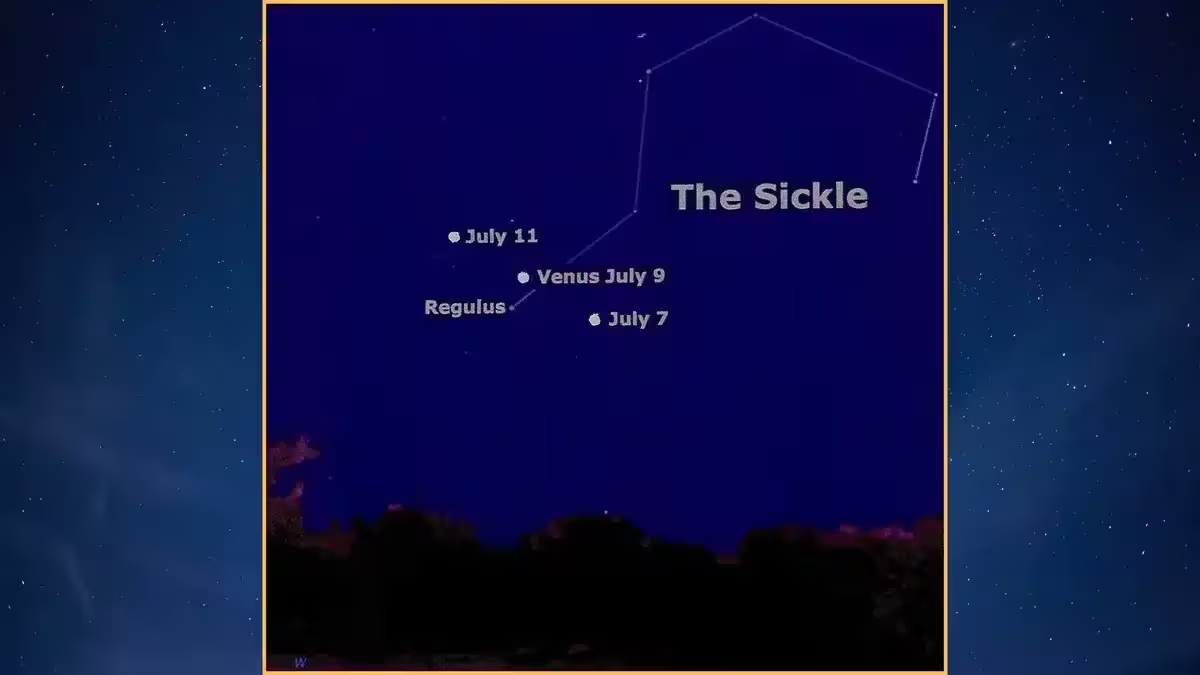
From July 7 through July 12, Venus and Regulus will stay inside a three‑degree corridor, presenting a bright pairing low in the west after sunset. Their tightest moment occurs on July 9, when the planet passes just one degree north of the star.
The contrast between the objects is dramatic. Venus shines with a silvery‑white glare that is about 158 times brighter than Regulus, a blue‑white star ranked 21st among the night sky’s brightest points. This brightness gap makes the planet easy to pick out even while twilight lingers.
The motion can be tracked night by night. On July 7 Venus appears to the right of Regulus; by July 9 it has moved to the star’s upper right, reaching the minimum separation. Two days later, on July 11, the gap widens noticeably, placing Venus to the upper left of Regulus. This progression offers a direct glimpse of planetary movement against the relatively fixed backdrop of distant stars.
Regulus crowns the “handle” of the Sickle of Leo, a prominent backward‑question‑mark asterism formed by six stars. Ancient cultures counted Regulus among four “royal stars” linked to the four quarters of the heavens. Its temporary alignment with the brightest planet adds a striking visual layer to this well‑known Leo feature.
How to Spot the Regulus Conjunction
Space.com advises observers in mid‑northern latitudes to glance low toward the western horizon around 9:45 p.m. local time, when the sky is in mid‑twilight. Exact visibility will depend on latitude, local terrain, weather, and how open the western horizon is.
No special equipment is needed; both Venus and Regulus should be visible to the unaided eye under suitable conditions. Binoculars can enhance the view, especially because the pair sits relatively low above the horizon. A dark site free from buildings, trees, hills, and bright artificial lighting offers the best chance to see the conjunction clearly.
Venus is the easier object to locate thanks to its intense brilliance, which becomes apparent while twilight remains fairly bright. Regulus is fainter, so observers may need to wait for the sky to darken a bit more before spotting the star near the planet.
Because the encounter spans several evenings, cloudy weather on July 9 does not automatically mean a missed opportunity. The shifting position of Venus relative to Regulus remains observable for days on either side of the closest approach, providing a flexible window for skywatchers.
A Young Crescent Moon Joins Venus Mid‑Month
The second visual treat arrives on July 17, when Venus will be positioned near a thin waxing crescent moon. At that time the moon will be about 3.5 days past new and illuminated to roughly 17 percent, producing a narrow arc that stands out in deepening twilight.
The two bodies will not form an extremely tight pairing; by mid‑twilight the moon will sit roughly six degrees to the left of Venus. Nevertheless, their combined brightness should make the scene conspicuous as both objects sink toward the west‑northwest horizon.
Venus and the moon are the two brightest objects regularly seen in Earth’s night sky, so their proximity will be readily noticeable. Observers can follow them as they descend after sunset, with both setting around 10:30 p.m. for mid‑northern locations.
Using binoculars can reveal earthshine on the moon—a faint glow caused by sunlight reflected from Earth onto the moon’s dark side. This subtle illumination can give the crescent a gray‑blue edge and make the full lunar outline visible.
Why Venus Is Gradually Dropping Lower in the Evening Sky
Earlier this year Venus passed behind the Sun on January 6, reaching superior conjunction. For weeks the planet was hidden by the Sun’s glare. In March it began emerging from bright evening twilight and soon became the dominant point of light in the western sky.
By mid‑June Venus rose to nearly 30 degrees above the sunset horizon and remained visible for about two and a half hours after sunset. Since then its apparent path has shifted in a way that may feel counterintuitive.
Although Venus continues to increase its angular distance from the Sun for a while, its trajectory is moving southward relative to the Sun’s apparent track. For observers at mid‑northern latitudes this geometry causes the planet to appear lower in the evening and to set earlier relative to sunset.
Venus reaches its greatest eastern elongation of 46 degrees on August 15, yet it will look noticeably lower in the western sky than during the July events. This illustrates that angular separation from the Sun alone does not dictate how high a planet appears; the season, observer latitude, and the ecliptic’s tilt all influence visibility.
Upcoming Phase Changes and the Planet’s Evening Exit
As September progresses, Venus will descend rapidly toward the horizon. Through telescopes—or steady binoculars in good conditions—the planet will appear larger while its illuminated portion shrinks into a thin crescent.
These phases occur because Venus orbits closer to the Sun than Earth does. As its orbital position changes relative to our planet, observers see varying fractions of its sunlit side, producing phases similar to those of the Moon.
For mid‑northern observers, Venus will become hard to catch in the final evenings of September as it clings to the west‑northwest horizon shortly after sunset. The planet then reaches inferior conjunction on October 24, slipping between Earth and the Sun and appearing about six degrees south of the Sun.
Because the conjunction occurs south of the Sun, it will favor viewers in the Southern Hemisphere rather than those farther north. After disappearing from the evening sky, Venus will reappear dramatically before dawn in November.
By December, the planet is expected to become a brilliant “Star in the East,” dominating the predawn sky and drawing the attention of early risers. The July pairings with Regulus and the crescent moon therefore mark an early chapter in a longer journey that will carry Earth’s neighboring planet from evening brilliance to its next morning apparition.
This article has been fact checked for accuracy, with information verified against reputable sources. Learn more about us and our editorial process.
Last reviewed on .
Article history
- Latest version
Cite this page:
- Posted by Aisha Ahmed