Astronomers Unveil Super-Jupiter With 180-Day Orbit After 200 Nights Of Watching
Astronomers confirm a rare super‑Jupiter on a 180‑day orbit, marking one of the longest‑period transiting exoplanets ever found.
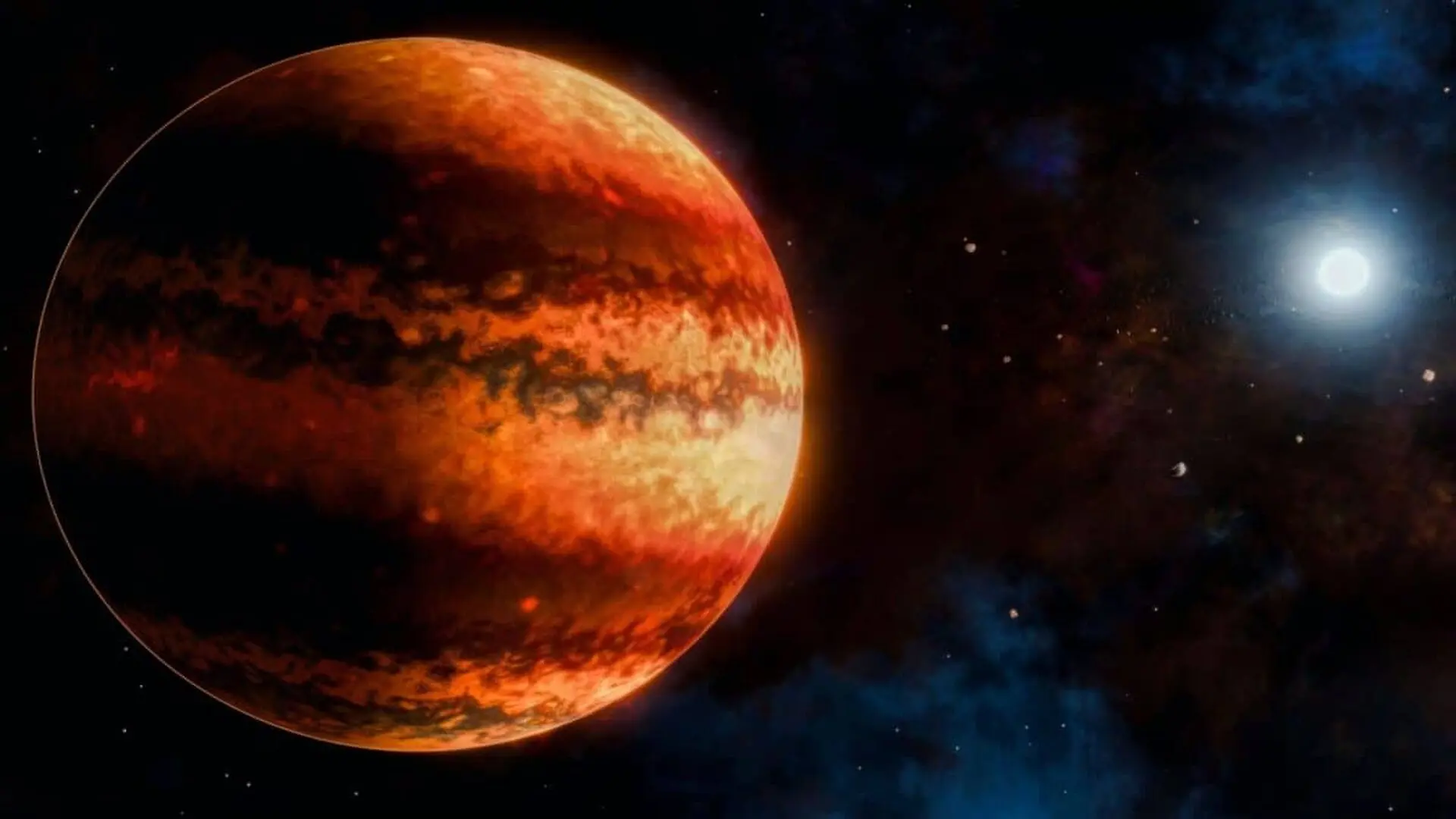
A newly confirmed super‑Jupiter that circles its star once every 180 days has been identified after extensive, years‑long monitoring, placing it among the longest‑period transiting exoplanets ever recorded. The findings, detailed in the Monthly Notices of the Royal Astronomical Society, highlight how astronomers are extending the reach of the transit technique to worlds once thought beyond detection.
A Planet That Defied Conventional Transit Searches
For more than twenty years, the transit method has revolutionized the search for planets outside the Solar System by spotting brief dimmings in starlight as a planet passes in front of its host. This approach naturally favors close‑in planets that transit frequently, making a body that transits only once every six months a demanding target that requires extraordinary observational patience. The object, named NGTS‑38 b, is a gas giant roughly eight percent larger than Jupiter but with a mass between 4.5 and 5 times that of Jupiter, classifying it as a “super‑Jupiter.” Initial hints of the planet emerged from NASA’s Transiting Exoplanet Survey Satellite (TESS), and an international team led by researchers at Queen’s University Belfast spent several years gathering the data needed to confirm its existence. According to the study published in the Monthly Notices of the Royal Astronomical Society, NGTS‑38 b now joins a select group of long‑period transiting planets that allow scientists to explore giant worlds on wider orbits than the hot Jupiters that dominated early exoplanet discoveries.
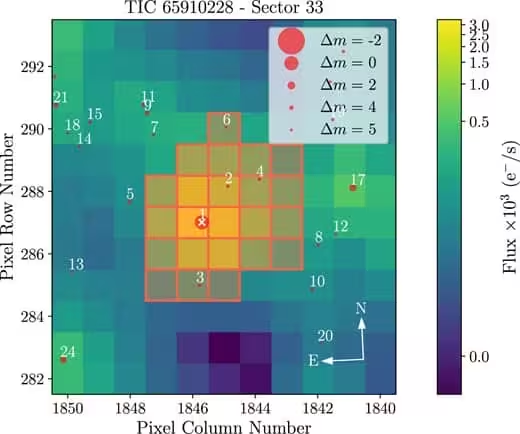
Over 200 Nights of Telescope Time Secured the Signal
Validating the planet demanded a level of persistence rarely needed for short‑period systems. A single transit rarely provides enough evidence to confirm a planet, so extensive follow‑up observations become essential. Toby Rodel described the arduous path to confirmation:
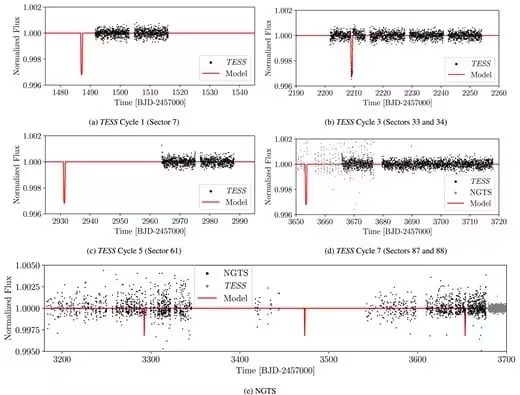
“The journey began when the planet was first detected by TESS from just a single transit on Christmas Day 2020. Our team then pointed telescopes from the Next Generation Transit Survey (NGTS) in Chile at the star for more than 200 nights before we caught the final moments of a second transit.”
Spectroscopic measurements of the host star’s subtle motion were also required to gauge the planet’s gravitational influence. Rodel added:
“We were able to measure tiny changes in the star’s movements by splitting up the light from the star. This allowed us to detect the tiny gravitational pull of the planet on its star. Analyzing all this data together, we were able to reveal that the planet completes one orbit—which marks the length of its year—every 180 days.”
By merging the transit data with radial‑velocity measurements, researchers derived both the planet’s radius and mass, transforming an isolated dip in brightness into a fully characterized exoplanetary system.
An Eccentric Path Adds Scientific Value
Beyond its long orbital period, NGTS‑38 b follows a mildly elliptical trajectory, causing its distance from the host star to vary throughout its year. Rodel explained why this matters:
“This planet has a much cooler temperature than most of the other planets we can study in detail so it’s a great opportunity to study what happens to planets at these cooler temperatures.” He continued, “Most planets in our solar system have almost circular orbits, but this new planet follows a slightly more unusual and oval-shaped path. At its closest approach, it lies only slightly farther from its star than Mercury is from the sun. At its most distant, it is almost as far away as the Earth is from the sun. However, because its host star is larger and hotter than our sun, the planet is hotter than Earth.”
These traits place NGTS‑38 b in a relatively unexplored sector of giant exoplanets that may retain clues about how massive planets form and migrate. Unlike the scorching environments of typical hot Jupiters, this world occupies a temperate zone that could shed light on atmospheric evolution and dynamical processes.
Potential for Moons or Rings Around the Giant
The planet’s substantial mass and moderate distance from its star raise the prospect of retaining a system of moons or even rings. Rodel highlighted the excitement surrounding this possibility:
“Because the planet is so massive, it also has a really strong gravitational pull and is far enough away from its star that it might be able to hold on to moons or rings, which is really exciting as we’ve never found moons or rings around any planet outside our solar system.”
Also ReadStunning Solar ‘Godzilla’ Captured in Backyard Astrophotography Looks Straight Out of Sci-Fi
While no satellites or rings have yet been detected, the system is now a prime candidate for future observations with upcoming facilities. Independent teams have also verified the planet’s existence, bolstering confidence in the discovery and underscoring its role in expanding the catalog of long‑period transiting worlds. Each new addition of this type brings astronomers closer to probing planetary architectures that more closely resemble our own Solar System, suggesting that many distant giants remain hidden until patient, long‑term monitoring uncovers them.
This article has been fact checked for accuracy, with information verified against reputable sources. Learn more about us and our editorial process.
Last reviewed on .
Article history
- Latest version
Cite this page:
- Posted by Aisha Ahmed