A Rare Blue Moon Will Light Up The Sky This May: Here’s Where And When To Spot It!
A unique Blue Moon will illuminate the night sky on May 31, 2026, offering stargazers a rare chance to observe a second Full Moon within the same calendar month.
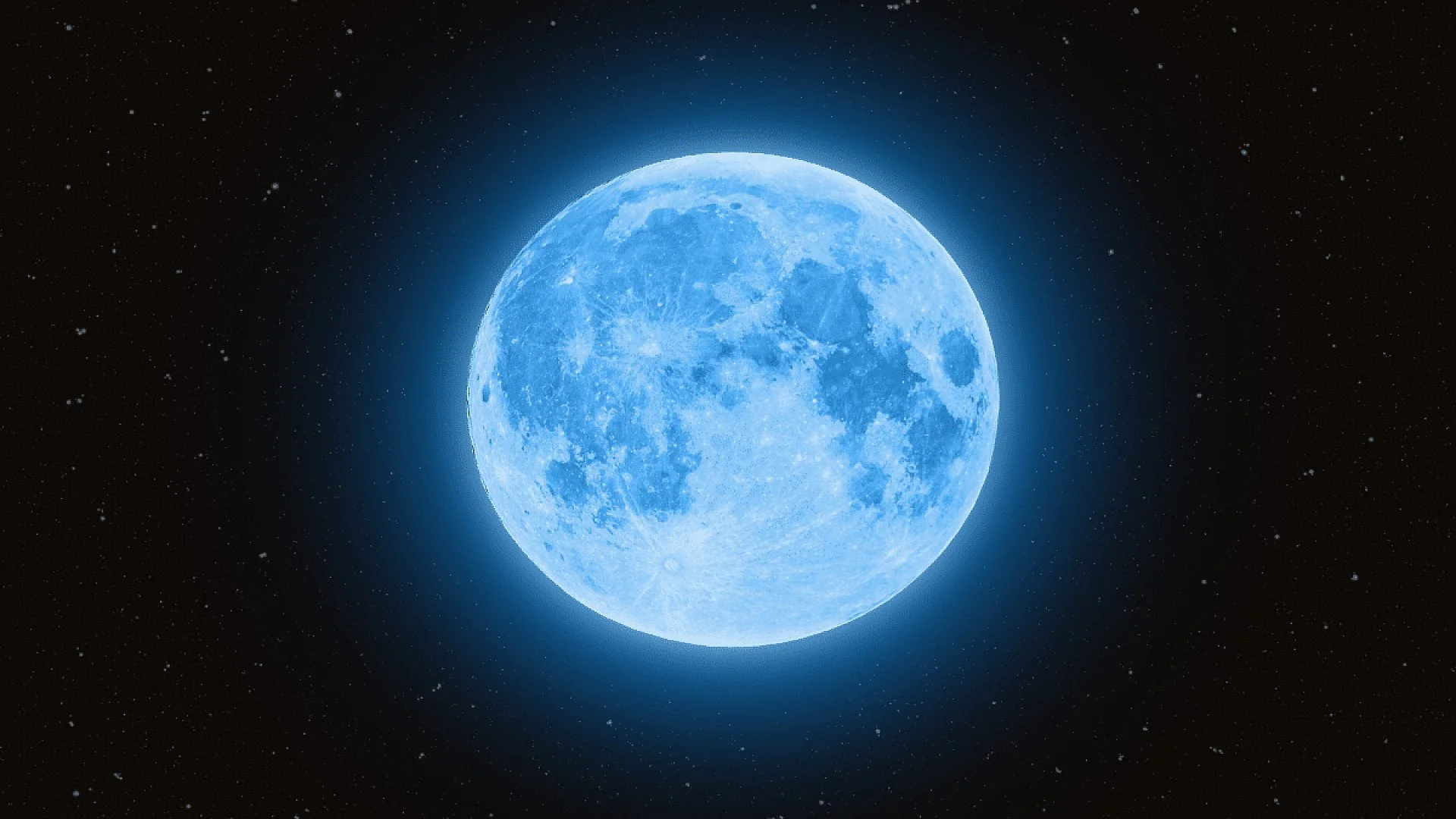
Get ready to witness a rare celestial spectacle as a Blue Moon graces the night sky on May 31, 2026. This extraordinary event, as defined by The Old Farmer’s Almanac, occurs when a second Full Moon appears in the same calendar month, a phenomenon that happens only about once every two to three years. While the Moon won’t take on a blue hue, the timing offers a unique opportunity to delve into the intricacies of lunar cycles and their profound impact on our understanding of astronomy.
Unraveling the Enigma of a Blue Moon
The term Blue Moon often sparks curiosity and bewilderment. In modern parlance, it refers to the second Full Moon in a single calendar month, arising from the Moon’s approximately 29.5-day cycle from New Moon to New Moon. If a Full Moon occurs at the beginning of the month, a second one inevitably appears at the end, creating a rare “extra” lunar event.
Historically, there’s also a seasonal definition, which predates the calendrical version. A season, marked by the solstices and equinoxes, typically hosts three Full Moons. If four occur instead, the third Full Moon in that season is called a Blue Moon. This older definition fell into obscurity after a misinterpretation published in Sky & Telescope magazine in 1946, eventually giving way to the modern calendrical definition that gained popularity in the 1980s.
Contrary to its name, a Blue Moon does not appear blue to the naked eye. The phrase is purely figurative, emphasizing rarity rather than color. Occasionally, atmospheric conditions such as dust or smoke can impart a bluish hue, but this is unrelated to the astronomical definition.
Why Stargazers Should Take Notice
The upcoming Blue Moon offers more than a visually striking moment; it’s a practical reminder of the intricacies of lunar motion. Observers in the U.S. and across the globe can witness the Moon reach its peak visibility near 4:45 a.m. local time, just before moonset. Photographers, amateur astronomers, and astrology enthusiasts often plan around Blue Moons for capturing striking lunar imagery or marking symbolic events.
Beyond aesthetics, Blue Moons help highlight the predictable patterns of celestial cycles. Understanding these events can deepen appreciation for the interplay between the Sun, Moon, and Earth, reinforcing the way lunar phases have historically guided agriculture, navigation, and cultural rituals.
The Cultural and Historical Significance of Blue Moons
While today the Blue Moon is primarily an astronomical curiosity, its historical origins are fascinating. Many Full Moon names were inspired by Native American and European folklore, linking lunar cycles to seasonal agriculture and festivals. The modern misunderstanding that led to the calendrical Blue Moon further illustrates how scientific communication evolves over time.
The Old Farmer’s Almanac emphasizes that keeping track of these rare lunar events continues a centuries-old tradition. Blue Moons provide context for observing the broader rhythm of the sky and allow modern observers to connect with historical methods of tracking time and nature.
This article has been fact checked for accuracy, with information verified against reputable sources. Learn more about us and our editorial process.
Last reviewed on .
Article history
- Latest version
Reference(s)
- Berman, Bob. “Blue Moon on May 31, 2026: What It Is and What It Means.”, February 10, 2026 The Old Farmer's Almanac <https://www.almanac.com/what-blue-moon>.
Cite this page:
- Posted by Aisha Ahmed