Scientists Crack Asteroid-Hopping Route Puzzle With Innovative Technique
Fresh studies cast doubt on earlier assertions regarding water vapor geysers on Europa, suggesting that initial Hubble observations might have been misread.
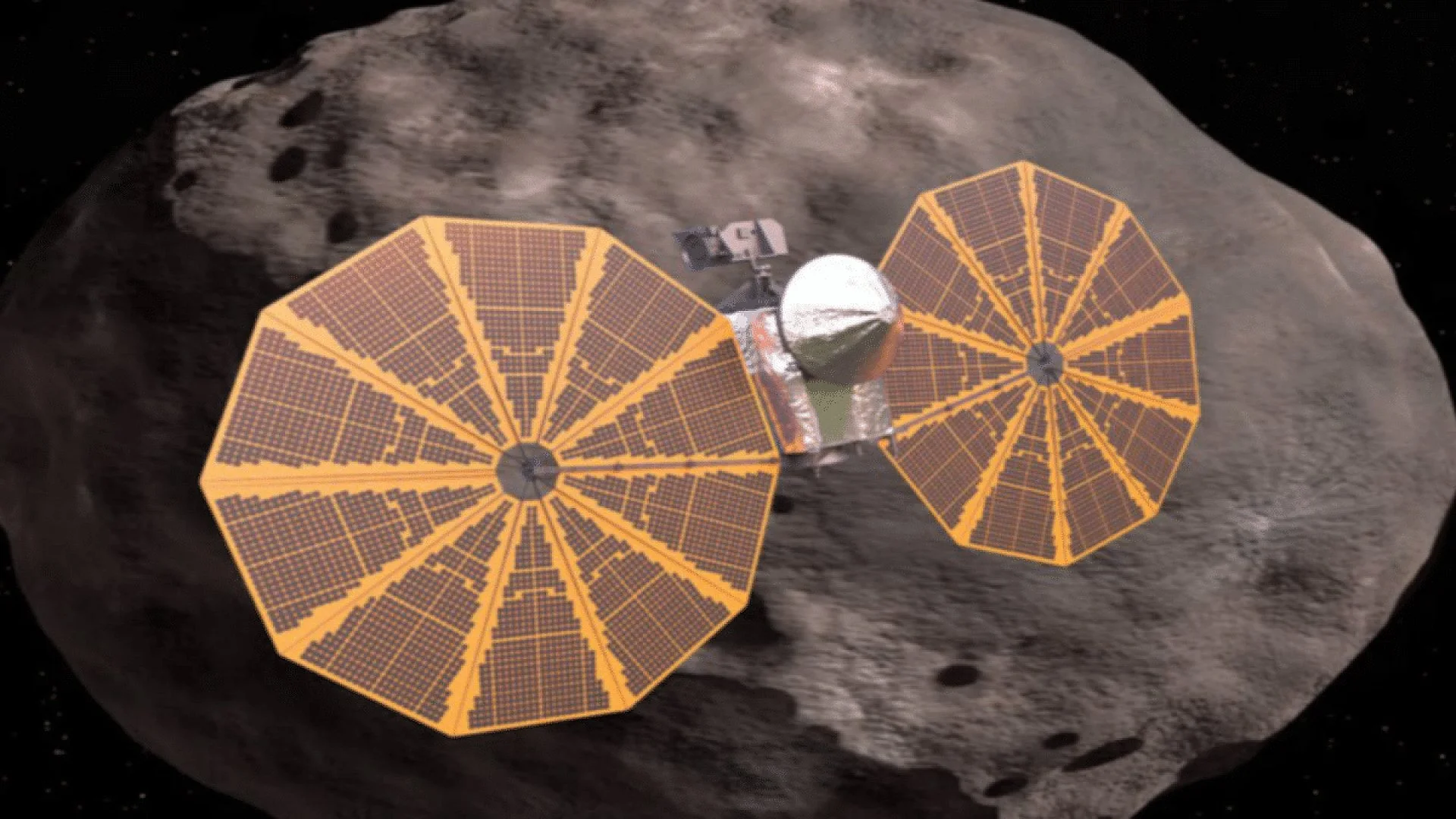
A team of researchers has unveiled a groundbreaking mathematical method that could revolutionize the way spacecraft visit multiple celestial bodies in motion, a challenge that has long stumped mission planners. Published in the INFORMS Journal on Computing, the research provides a roadmap for navigating asteroids more efficiently, potentially saving time, fuel, and millions of dollars for future space missions.
A New Era in Space Travel: Solving the Asteroid Routing Problem
Visiting multiple asteroids poses a unique challenge: unlike cities on Earth, these targets are constantly moving in their orbits, and distances between them fluctuate over time. Isaac Rudich of Polytechnique Montréal and Michael Römer of Universität Bielefeld approached this challenge by reframing it as the “Asteroid Routing Problem,” or ARP, which asks: In what order should a spacecraft visit multiple asteroids if both travel time and fuel consumption are to be minimized?
Their solution hinges on precise calculations of the optimal departure time and trajectory between each asteroid. “Our research is foundational, in the sense that it develops mathematical machinery that can be used by space agencies to plan missions,” Rudich and Römer told Space.com. By modeling both travel time and fuel usage simultaneously, the ARP offers a practical framework for planning missions that must navigate complex and constantly changing environments in space.
Unlocking the Secrets of Lambert’s Problem
At the core of the ARP lies an ancient mathematical challenge known as Lambert’s problem, first posed in the 1700s by Swiss mathematician Johann Heinrich Lambert. This problem determines the optimal trajectory between two moving objects in space, a task already complex for just one pair.
“The ARP is particularly challenging because determining the exact cost and travel time requires solving another challenging optimization problem, which is Lambert’s problem,” the researchers explained.
Rudich and Römer’s approach extends this problem to a network of asteroids, exponentially increasing the computational complexity. To manage this, they employed Decision Diagrams, an advanced form of Decision Trees. These diagrams consolidate multiple choices that lead to the same destination into single nodes, reducing the number of times Lambert’s problem must be solved. This method, according to the researchers, can produce solutions up to 20% more efficient than traditional approaches, considering both fuel consumption and travel time.
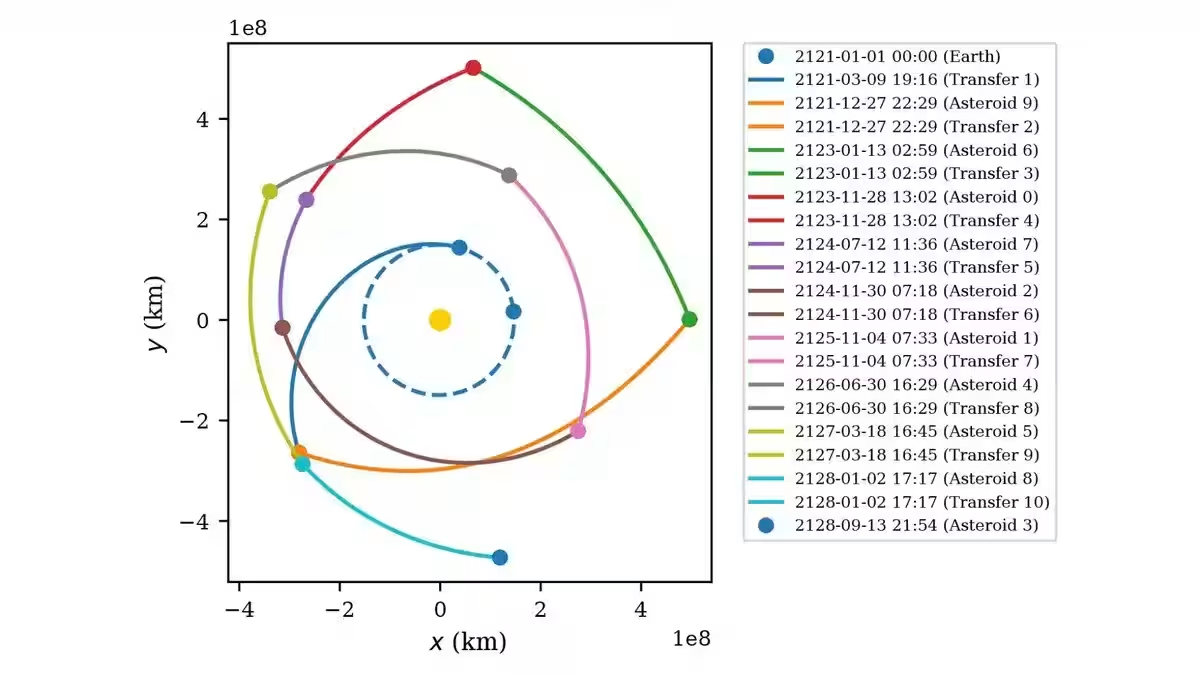
(Image credit: Isaac Rudich)
Revolutionizing Space Exploration and Beyond
The practical applications of the ARP are vast. NASA’s Dawn mission, which visited Ceres and Vesta, and the ongoing Lucy mission, currently en route to Jupiter to explore the Trojan asteroids, highlight the growing relevance of multi-object missions. While ARP is currently a highly stylized problem, Rudich and Römer believe even small improvements, on the order of 1%, could translate into substantial savings in time, money, and onboard fuel.
The research also carries terrestrial implications. Similar algorithms could optimize dynamic bus routes, supply chains, and shipping networks, where changing conditions replace moving celestial objects. By tackling one of spaceflight’s most persistent logistical puzzles, this work demonstrates the power of mathematical optimization to solve problems both on Earth and across the solar system.
This article has been fact checked for accuracy, with information verified against reputable sources. Learn more about us and our editorial process.
Last reviewed on .
Article history
- Latest version
Reference(s)
- Cooper, Keith. “Scientists just solved a tricky asteroid-hopping spacecraft riddle.”, May 19, 2026 Space <https://www.space.com/space-exploration/asteroid-comet-missions/scientists-just-solved-a-tricky-asteroid-hopping-spacecraft-riddle>.
Cite this page:
- Posted by Aisha Ahmed