NASA Chief Calls To Make Pluto A Planet Again, Reigniting A Long-Running Space Debate
NASA’s top executive, Jared Isaacman, is advocating for a renewed discussion on Pluto’s planetary status, reigniting the long-standing debate about the celestial body’s classification.
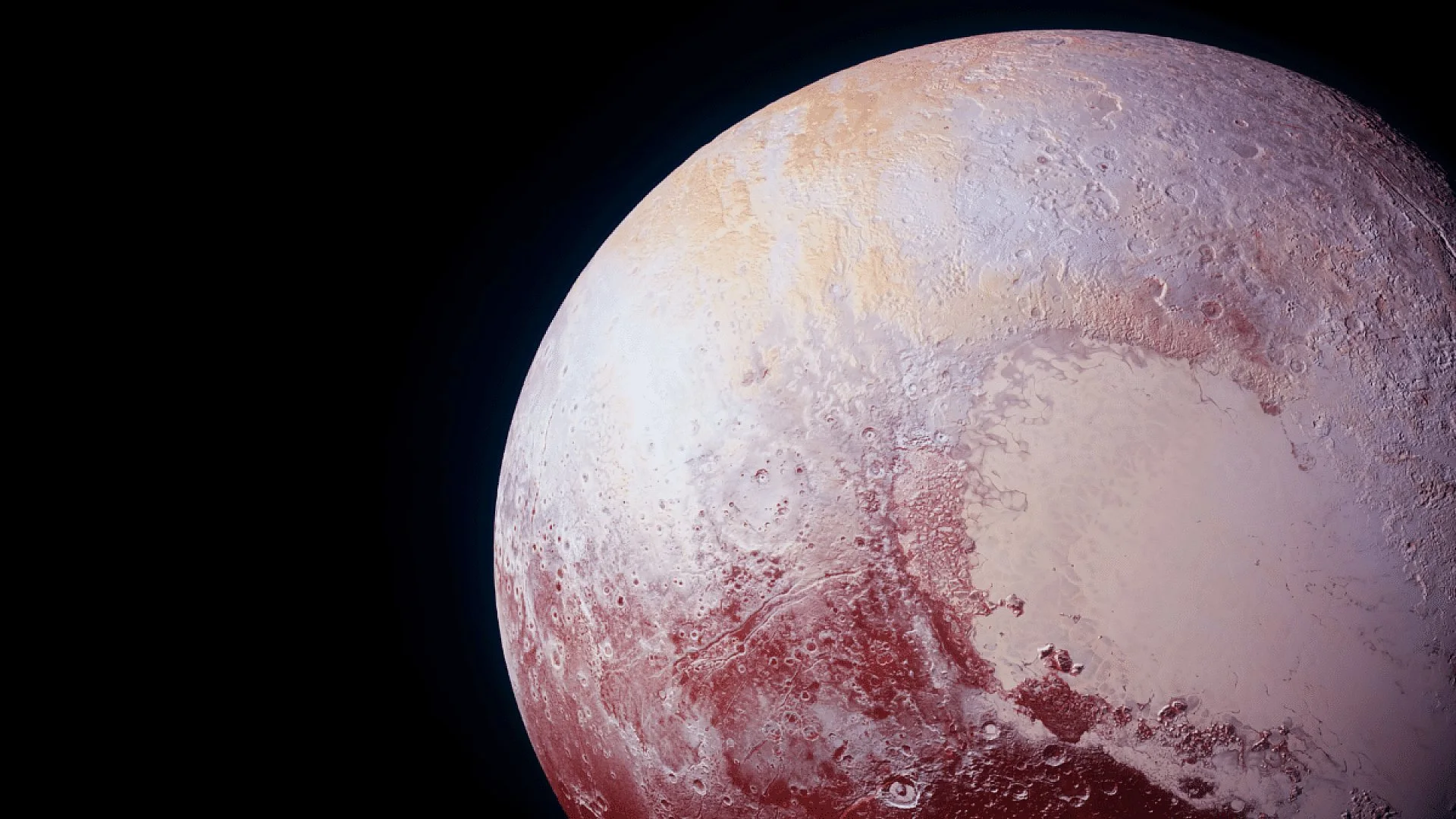
A seismic shift in the astronomical community, sparked by NASA Administrator Jared Isaacman’s impassioned plea to reevaluate Pluto’s planetary status, is reigniting a debate that has been simmering since the International Astronomical Union (IAU) reclassified it as a dwarf planet in 2006. Amidst the backdrop of proposed deep cuts to NASA’s science programs, Isaacman’s remarks signal a coordinated effort to influence scientific consensus and restore the legacy of Clyde Tombaugh, the astronomer who discovered Pluto in 1930.
A New Era of Exploration: Pluto’s Planetary Status Revisited
The question of whether Pluto should be considered a full-fledged planet has been a contentious issue for nearly two decades. Isaacman’s statement, “I am very much in the camp of ’Make Pluto A Planet Again’,” during a Senate hearing, has reignited the debate, with some observers questioning the timing of this initiative amidst proposed budget cuts. However, Isaacman emphasized that this is not a symbolic gesture, but rather a coordinated effort to escalate the discussion through the scientific community.
Isaacman’s remarks have sparked a renewed interest in Pluto’s classification, with many scientists and experts weighing in on the issue. The debate is no longer purely academic; it reflects evolving understandings of how solar systems form and how categories should adapt to new data. The IAU’s definition of a planet, which requires a celestial body to clear its orbital neighborhood, has been questioned by some, who argue that it does not fully capture the diversity of planetary bodies.
At the heart of this debate lies the legacy of Clyde Tombaugh, who discovered Pluto in 1930. For decades, Pluto held its place as the ninth planet, embedded in educational systems and public imagination. The IAU’s 2006 decision introduced stricter criteria, requiring a planet to clear its orbital neighborhood, something Pluto does not do due to its position within the Kuiper Belt. This technical distinction reshaped planetary science but also sparked enduring controversy among scientists and the public alike.
The debate over Pluto’s status is not just about a planet, but about the legacy of Clyde Tombaugh and the future of space exploration. @NASAAdmin@AlanSternpic.twitter.com/7F5OCJMRYY
— NASA Watch (@NASAWatch) April 28, 2026
A Tension Between Ambition and Constraint
The timing of this initiative raises critical questions about the balance between ambition and constraint. Isaacman’s comments come as NASA faces proposals that could reduce its science budget by nearly half, forcing difficult decisions about which missions survive. The debate becomes sharper when considering missions like New Horizons, the spacecraft that delivered humanity’s first close-up images of Pluto and transformed understanding of the distant world. That mission, led by Dr. Alan Stern, a vocal advocate for Pluto’s planetary status, remains a cornerstone of outer solar system exploration, yet similar projects could face cancellation under tighter budgets.
Isaacman’s remarks reflect this tension between ambition and constraint. He reiterated the agency’s commitment to advancing multiple fronts at once, even under financial pressure. The repetition underscores how central this initiative appears to his vision, even as lawmakers question how NASA will balance such efforts with mission-critical programs.
A Symbolic Gesture or a Catalyst for Change?
The renewed focus on Pluto’s classification is more than a technical dispute; it reflects how scientific definitions intersect with culture, history, and institutional priorities. Isaacman’s initiative could catalyze fresh research and discussion within the astronomical community, potentially leading to proposals that challenge or refine the IAU’s criteria. At the same time, it risks being seen as a distraction during a period when many fear for the future of space science funding. Whether Pluto regains planetary status or not, the conversation itself highlights a deeper issue: how science adapts to new knowledge while balancing legacy, public engagement, and finite resources.
This article has been fact checked for accuracy, with information verified against reputable sources. Learn more about us and our editorial process.
Last reviewed on .
Article history
- Latest version
Reference(s)
- “https://twitter.com/NASAWatch/status/2049147159388303701/photo/1.” <https://t.co/7F5OCJMRYY>.
Cite this page:
- Posted by Aisha Ahmed