Paleontologists Identify New Giant Dinosaur Species From Two Rare Uruguayan Fossils
Decades after their discovery, two rare dinosaur bones are shedding new light on a mysterious lineage of giants that once dominated South America.
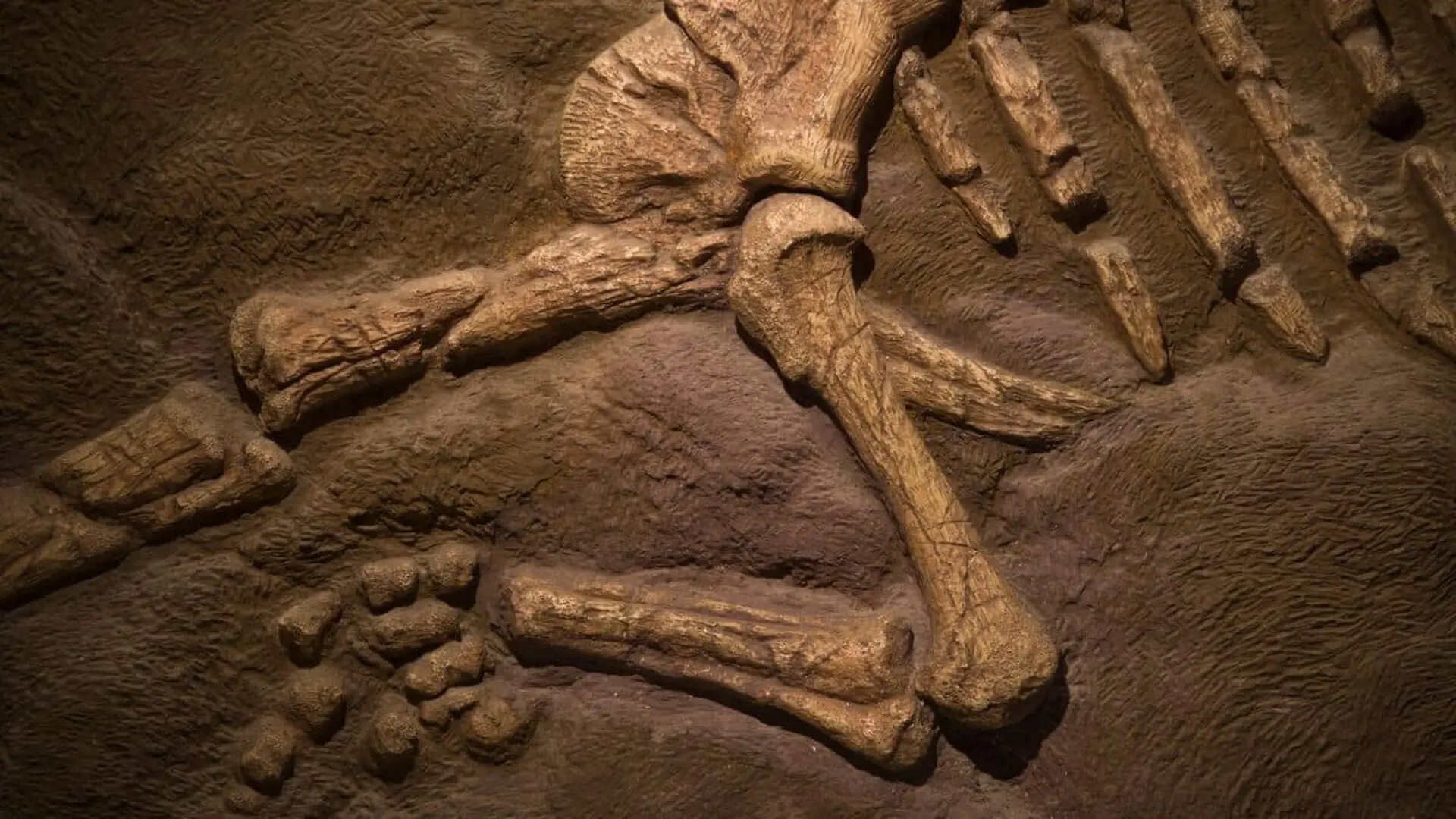
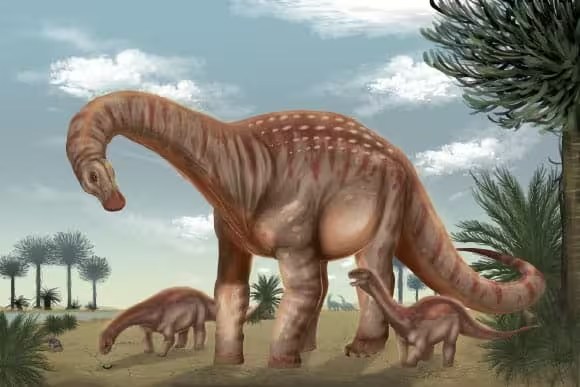
Paleontologists have officially identified a new species of giant dinosaur from fossilized remains discovered along the Uruguay River decades ago. The creature, named Mesetasaurus protector, represents an aeolosaurine titanosaur that roamed the South American landscape between 86 and 72 million years ago during the Late Cretaceous epoch.
The findings, detailed in the journal Ameghiniana on July 8, 2026, were led by Dr. Matías Soto Núñez of the Universidad de la República. While the two tail vertebrae were pulled from the earth in the 1980s, the recent analysis provides a critical look at the diversity of titanosaurs that once thrived in the region.
Excavating the Guichón Formation
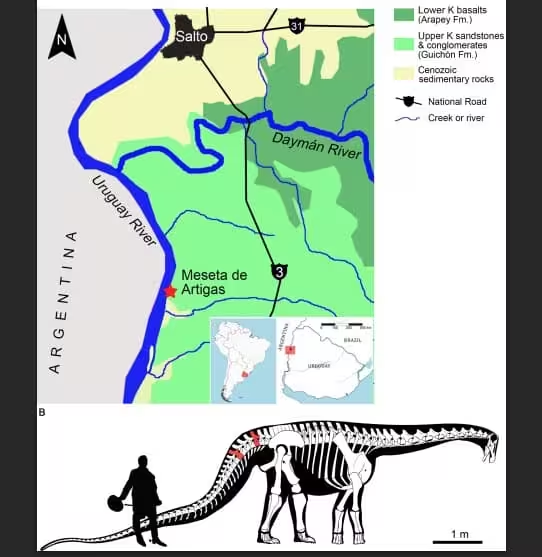
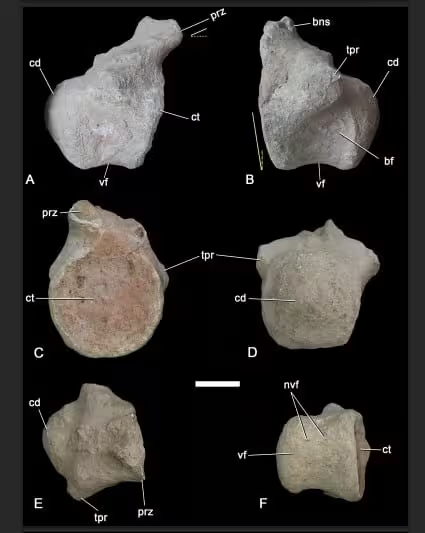
The fossils were unearthed at the Meseta de Artigas site within northern Uruguay’s Paysandú department. Found embedded in reddish sandstone, the two vertebrae—catalogued as FC-DPV 3740A and FC-DPV 3740B—were located in close proximity to one another, leading experts to conclude they belonged to the same individual. The research team noted that the specimens rank among the best-preserved sauropod vertebrae ever recovered in Uruguay.
Mapping the Titanosaur Lineage
To determine the evolutionary position of Mesetasaurus protector, the researchers performed a comprehensive phylogenetic analysis. The results place the species firmly within the Aeolosaurini clade, alongside known relatives like Aeolosaurus rionegrinus from Argentina and Arrudatitan maximus from Brazil. Titanosaurs were arguably the most successful sauropod group of the Late Cretaceous, boasting significant abundance and variety across South America.
The evolutionary history of titanosaurs is extensive, appearing as early as the Valanginian period (137 to 132 million years ago) and reaching massive proportions by the Albian-Cenomanian. Notably, they were the last surviving group of sauropods, persisting until the mass extinction event 67 million years ago.
Uruguay’s Cretaceous Biodiversity
The identification of Mesetasaurus protector highlights that Uruguay was home to multiple distinct lineages of giant herbivores rather than a single population. The study confirms that Mesetasaurus belongs to a different lineage than Udelartitan celeste, the only other sauropod previously identified in the country. Additionally, the discovery marks only the second known instance of an aeolosaurine in Uruguay, the first being a vertebra attributed to Aeolosaurus found in the Asencio Formation.
The unique anatomical features of these tail vertebrae are particularly significant for future research. According to the study authors, the distinct morphology of aeolosaurine vertebrae makes them easily identifiable, potentially allowing them to serve as valuable biostratigraphic proxies for dating ancient geological layers.
This article has been fact checked for accuracy, with information verified against reputable sources. Learn more about us and our editorial process.
Last reviewed on .
Article history
- Latest version
Cite this page:
- Posted by Hassan Raza