Rare Adult Fossil Rewrites The Timeline Of Early Human Evolution In Africa
A 2-million-year-old skull fragment from South Africa provides compelling new evidence that Homo erectus appeared 200,000 years earlier than previously thought.
A fresh analysis of fossil material recovered from South Africa’s Drimolen Main Quarry is shedding new light on the coexistence of ancient human relatives. By examining 18 previously unpublished or partially described hominin specimens, researchers have clarified the evolutionary paths of Homo erectus and its neighbor, Paranthropus robustus, during a critical window of early human history.
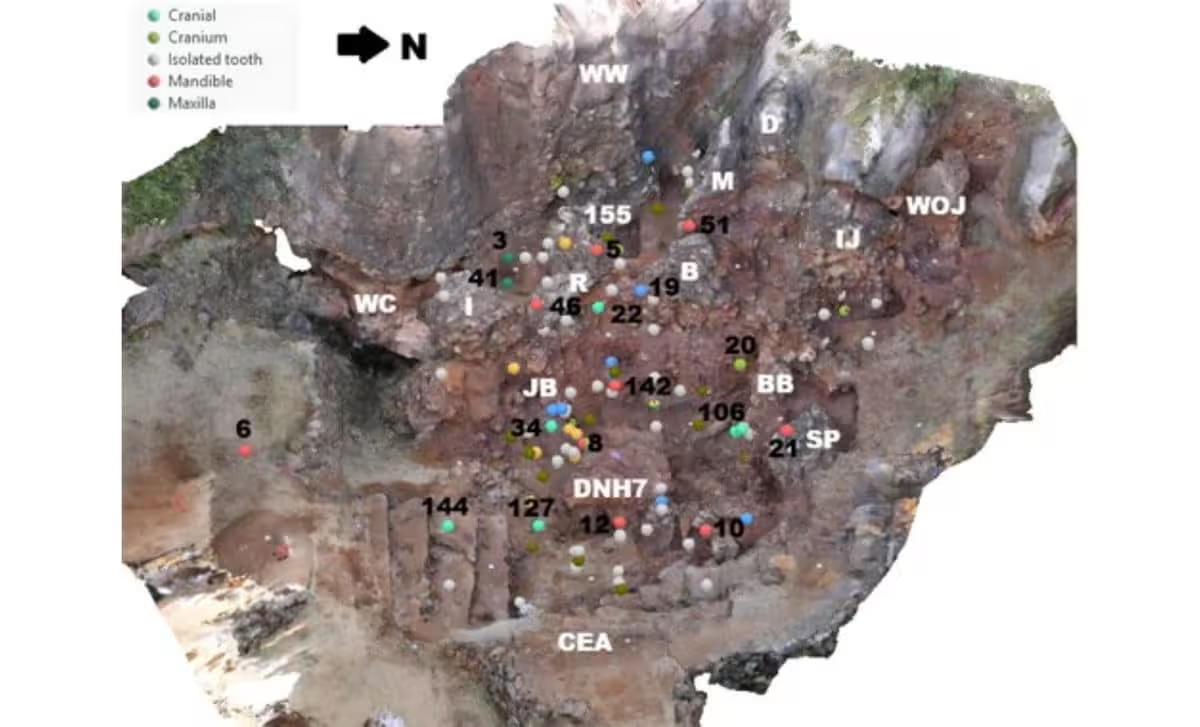
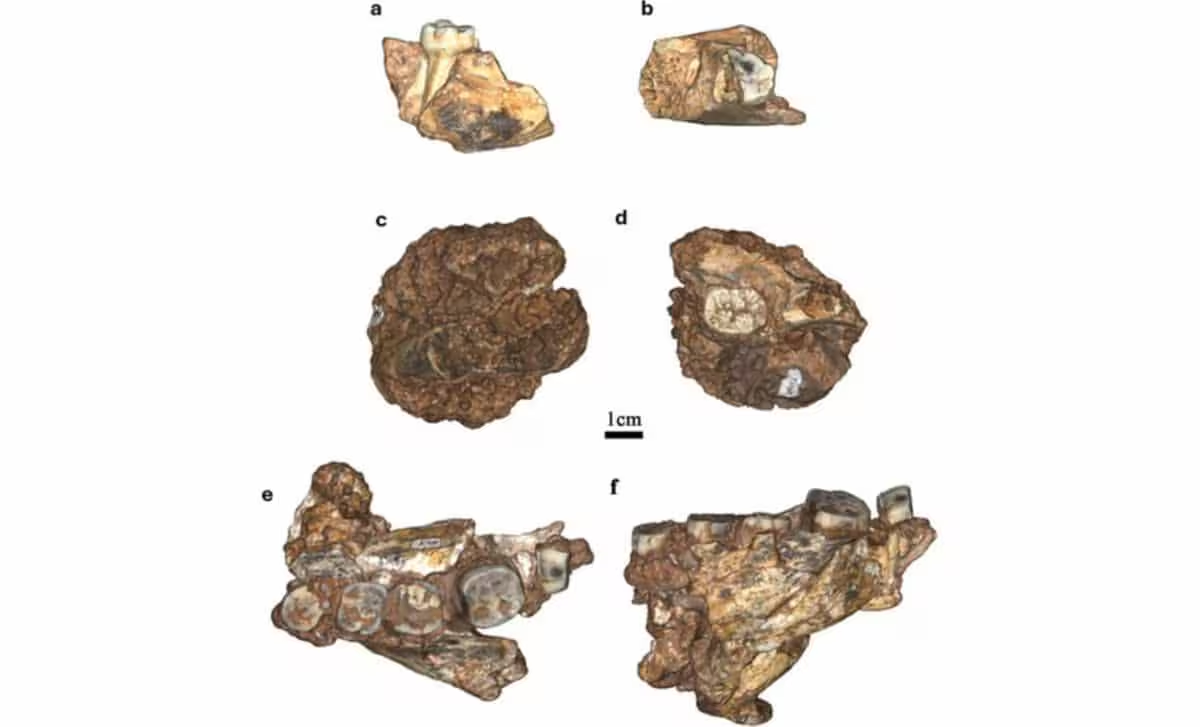
The study, published in the journal Annals of Human Biology, focuses on a collection of cranial and mandibular fragments gathered between 1992 and 2019. Among these findings, one specimen—designated DNH 127—is particularly noteworthy. Comprising parts of the temporal, parietal, and occipital bones, the fragment provides vital evidence for the presence of adult Homo erectus in southern Africa roughly 2 million years ago.
Filling Gaps in the Fossil Record
The significance of DNH 127 lies in its maturity. Previous evidence for Homo erectus at the site, such as the DNH 134 fossil, belonged to a young child, making anatomical comparisons with adult specimens from other regions—like Dmanisi in Georgia—challenging. According to La Trobe University, this new adult fossil pushes back the confirmed timeline for Homo erectus in the region by approximately 200,000 years compared to adult specimens found elsewhere.
While the researchers caution that the fragment is incomplete and its classification remains tentative, the geological dating of the Drimolen deposits—established through uranium-lead dating and magnetic field analysis—places the site firmly in the 2.04 to 1.95 million-year-old range, as detailed in an earlier study in the journal Science.
Diverging Evolutionary Strategies
The study also offers a detailed look at the more abundant Paranthropus robustus. Characterized by robust teeth and jaw structures, this hominin appears to have specialized in consuming tough, fibrous vegetation. By comparing the Drimolen specimens with fossils from neighboring sites like Swartkrans and Kromdraai, the team tracked a gradual evolutionary transition between 2 million and 1.8 million years ago.
Lead researcher Jesse Martin notes that the specimens highlight the distinction between early and later populations of the species, specifically proposing a transition from Paranthropus robustus ukusa to Paranthropus robustus robustus. The discovery of unusual jaw features in specimens such as DNH 5 further suggests a higher degree of anatomical variation than previously recognized.
Perhaps most striking is the numerical disparity between the two lineages. At Drimolen, Paranthropus robustus fossils outnumber those of Homo erectus by a ratio of more than 10 to one. While Homo erectus eventually became the ancestor of modern humans, the specialized Paranthropus line ultimately faced extinction. By re-examining legacy collections, scientists are uncovering how these distinct hominin groups navigated the same landscape, offering a clearer picture of the complex mosaic of human evolution.
This article has been fact checked for accuracy, with information verified against reputable sources. Learn more about us and our editorial process.
Last reviewed on .
Article history
- Latest version
Reference(s)
- Martin, Jesse M.., et al. “New hominin cranial and mandibular remains from Drimolen Main Quarry, South Africa.” Annals of Human Biology, vol. 53, no. 1, September 25, 2026 Informa UK Limited, doi: 10.1080/03014460.2026.2725046. <https://doi.org/10.1080/03014460.2026.2725046?utm_source=chatgpt.com>.
- <https://www.latrobe.edu.au/news/articles/2026/release/fossils-confirm-human-ancestors-first-appearance?utm_source=chatgpt.com>.
- Herries, Andy I. R.., et al. “Contemporaneity of Australopithecus , Paranthropus , and early Homo erectus in South Africa.” Science, vol. 368, no. 6486, April 3, 2020 American Association for the Advancement of Science (AAAS), doi: 10.1126/science.aaw7293. <https://doi.org/10.1126/science.aaw7293?utm_source=chatgpt.com>.
- “Discovery.” <https://scholars.latrobe.edu.au/jmmartin>.
Cite this page:
- Posted by Hassan Raza