Ancient Fossil Discovery Challenges 140 Year Old Assumption About Extinct Mammals
New research suggests that long-held beliefs about sexual dimorphism in a prehistoric mammal were overstated, challenging a century of scientific consensus.
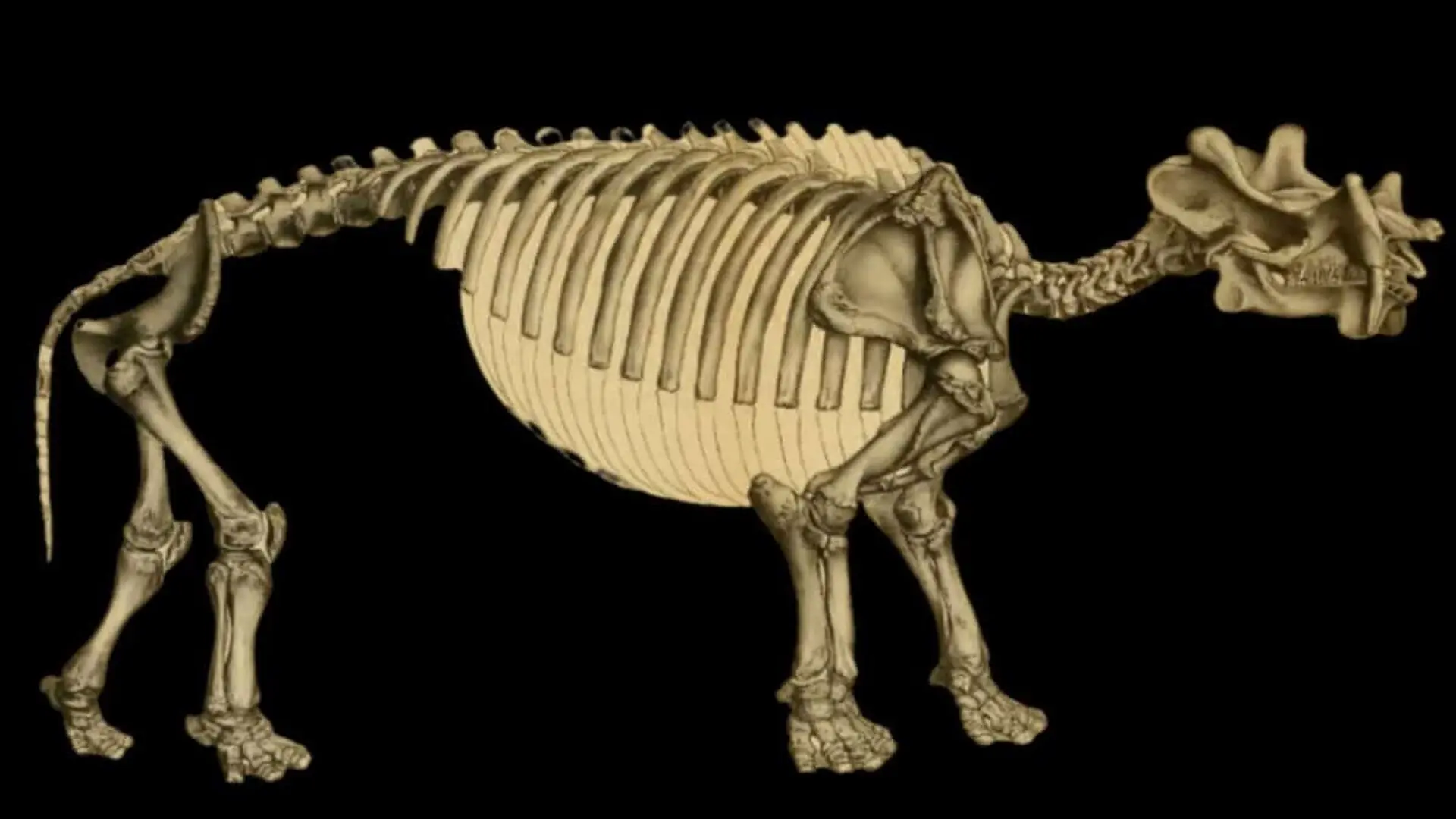
For more than a century, the imposing, horn-bearing skulls of Uintatherium anceps—a massive herbivore that roamed ancient landscapes 58 million years ago—have been categorized through a lens of Victorian-era assumptions. Paleontologists have long held that the most dramatic specimens, characterized by outsized canine tusks and prominent cranial protrusions, were males, while smaller fossils represented females. A new study, however, suggests this long-standing narrative of extreme sexual dimorphism may be more fiction than fossil fact.
Research published October 7, 2026, in PLOS One casts significant doubt on these historical classifications. By applying rigorous quantitative analysis to the existing fossil record, scientists at the University of Kansas have demonstrated that the assumed biological divide between male and female uintatheres lacks the statistical weight required to support such a binary conclusion.
Reevaluating Historical Assumptions in Paleontology
The investigation was sparked by a chance discovery of a broken molar in Montana, which led researchers to the American Museum of Natural History. There, doctoral researcher Kevin Mulcahy and his advisor, K. Christopher Beard, began a comprehensive review of 26 adult uintathere skulls. Rather than finding two distinct populations, the data revealed a more continuous spectrum of physical variation.
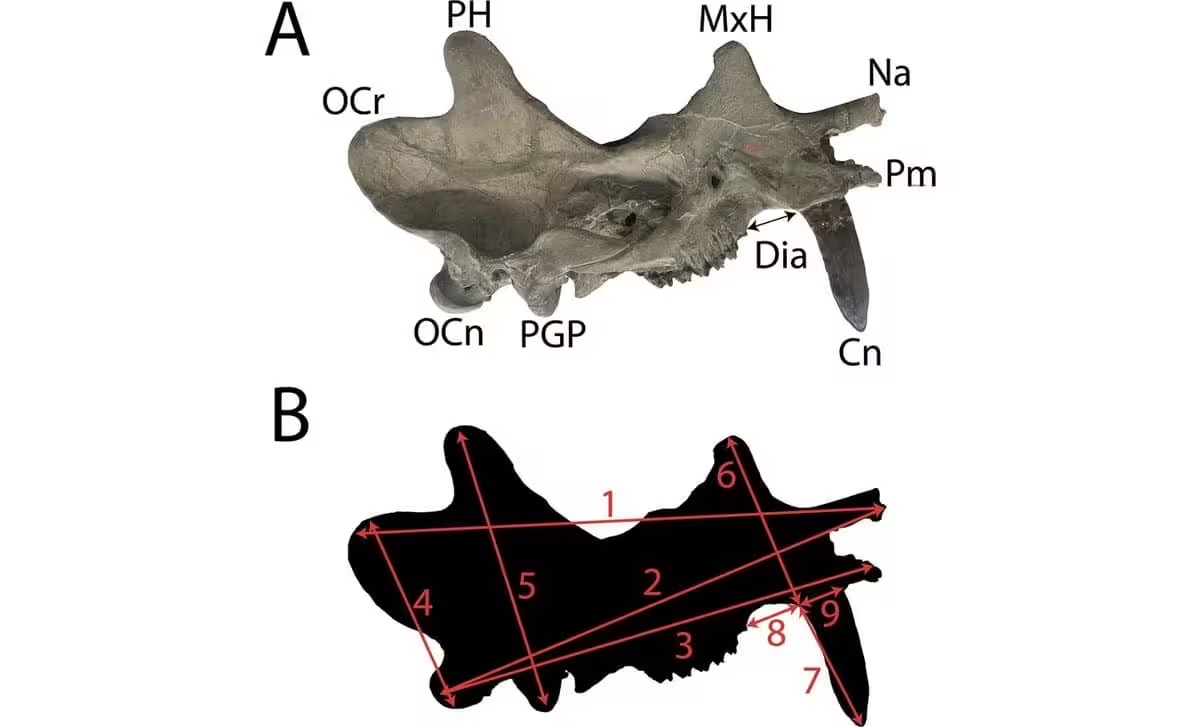
To test the validity of the sexual dimorphism hypothesis, the team performed a detailed morphometric analysis across nine key cranial features. The findings indicated that these measurements did not cluster into two clear, sex-based groups. In contrast, when the researchers applied the same statistical methods to modern American bison—a species with well-documented, clear sexual dimorphism—the results showed an unmistakable split between males and females.
Challenging 19th-Century Bias
The original classification system, proposed by Othniel Charles Marsh in 1886, appears to have been heavily influenced by societal biases prevalent during the Victorian era. At the time, it was widely assumed that in any sexually dimorphic species, the male would inevitably be the larger, more ornate participant. Modern biological studies, however, have shown that this is not a universal rule across the animal kingdom.
The current analysis suggests that if sexual dimorphism existed in Uintatherium anceps, it was likely subtle or moderate, rather than the extreme physical disparity previously claimed. It is entirely possible that both sexes possessed the characteristic horns and saber-like teeth, a trait that would have significant implications for how we understand their social behaviors and evolutionary adaptations.
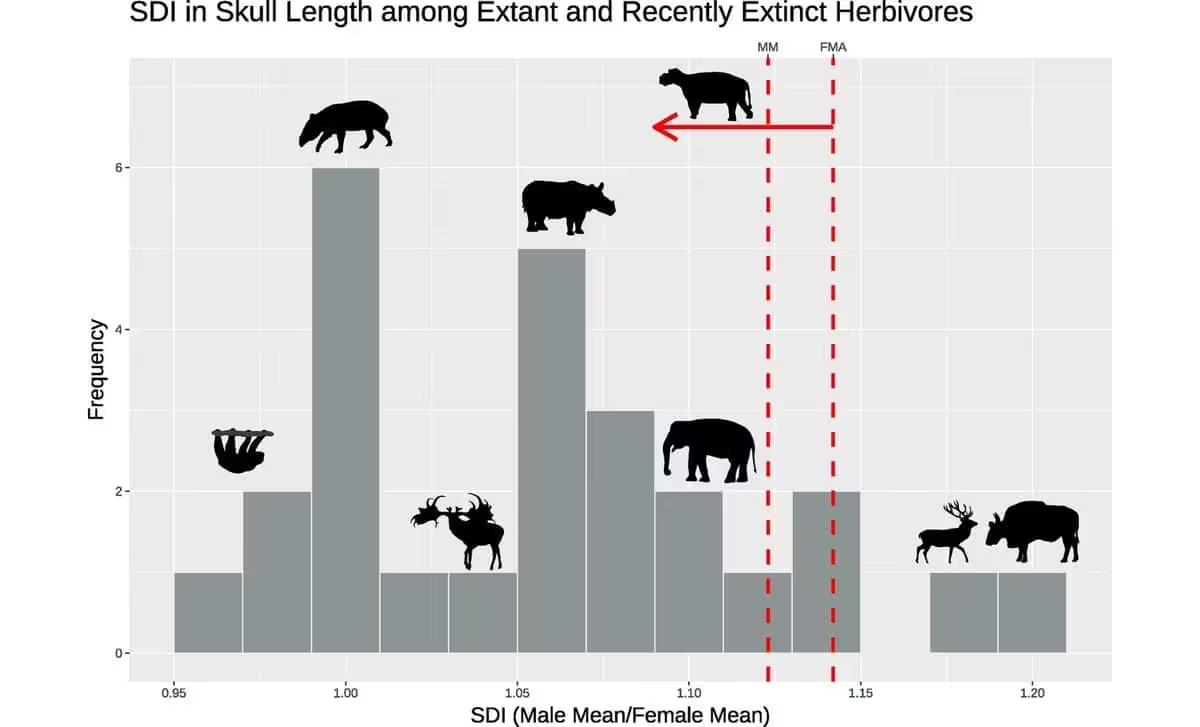
While the study acknowledges limitations—such as the inherent difficulty of identifying sex in fossils and the preservation status of certain specimens—the work serves as a necessary corrective. By replacing outdated assumptions with measurable data, the research underscores a critical principle in modern paleontology: that historical interpretations should never be treated as immutable, especially when they were established before the advent of modern statistical rigor.
This article has been fact checked for accuracy, with information verified against reputable sources. Learn more about us and our editorial process.
Last reviewed on .
Article history
- Latest version
Reference(s)
- “Kevin Mulcahy.” <https://biodiversity.ku.edu/people/kevin-mulcahy>.
- Mulcahy, Kevin. “Linear morphometrics fail to support strong sexual dimorphism in Uintatherium anceps.”, vol. 21, no. 10, pp. e0345236, doi: 10.1371/journal.pone.0345236. <https://journals.plos.org/plosone/article?id=10.1371/journal.pone.0345236>.
Cite this page:
- Posted by Hassan Raza