Ancient Roman Amulet Found With A Prayer To Jesus Challenges What We Know About Early Christians
Researchers have discovered an object inscribed with a prayer to Jesus Christ that suggests the owner practiced a form of Christianity rejected by the Church.
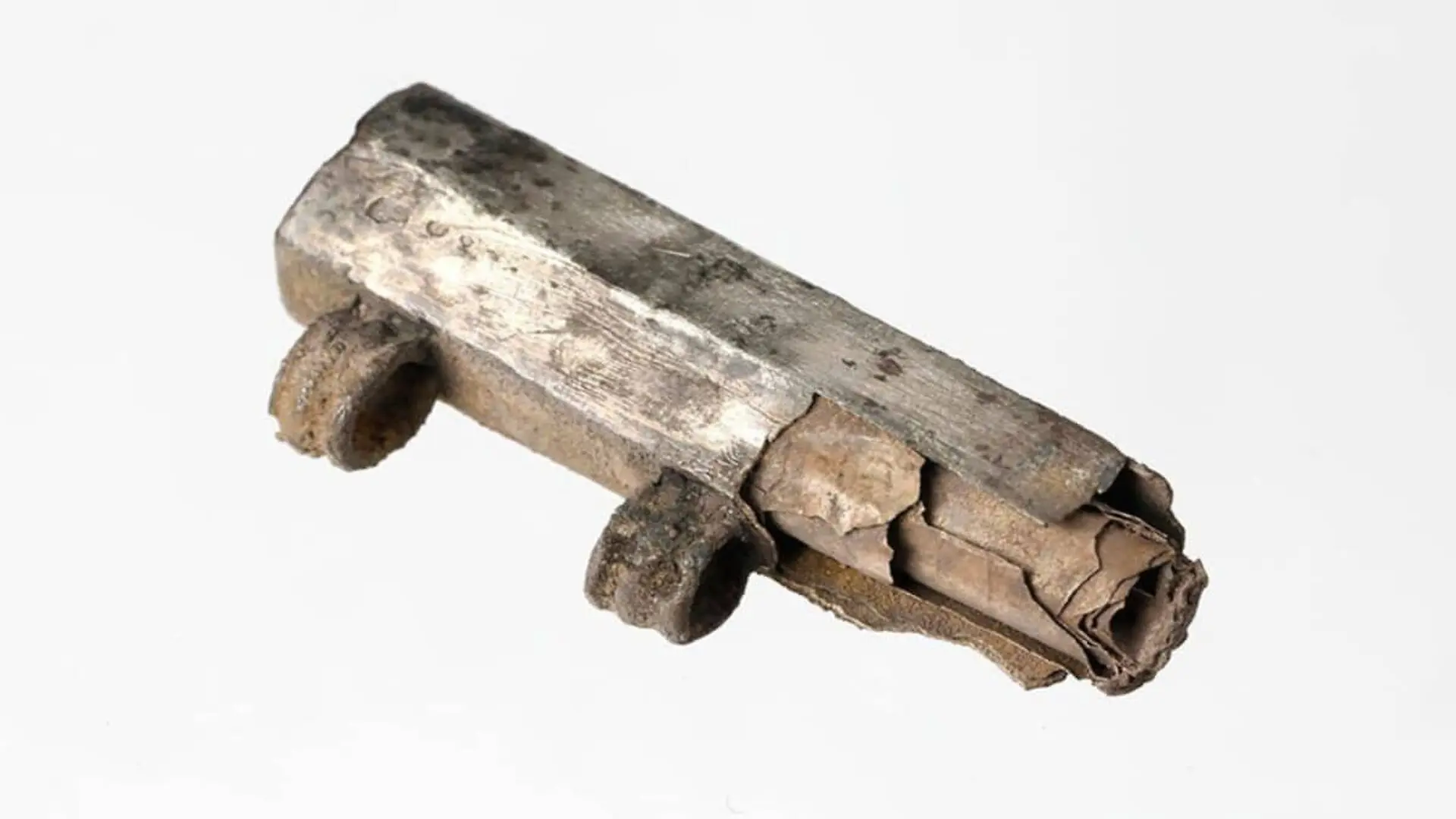
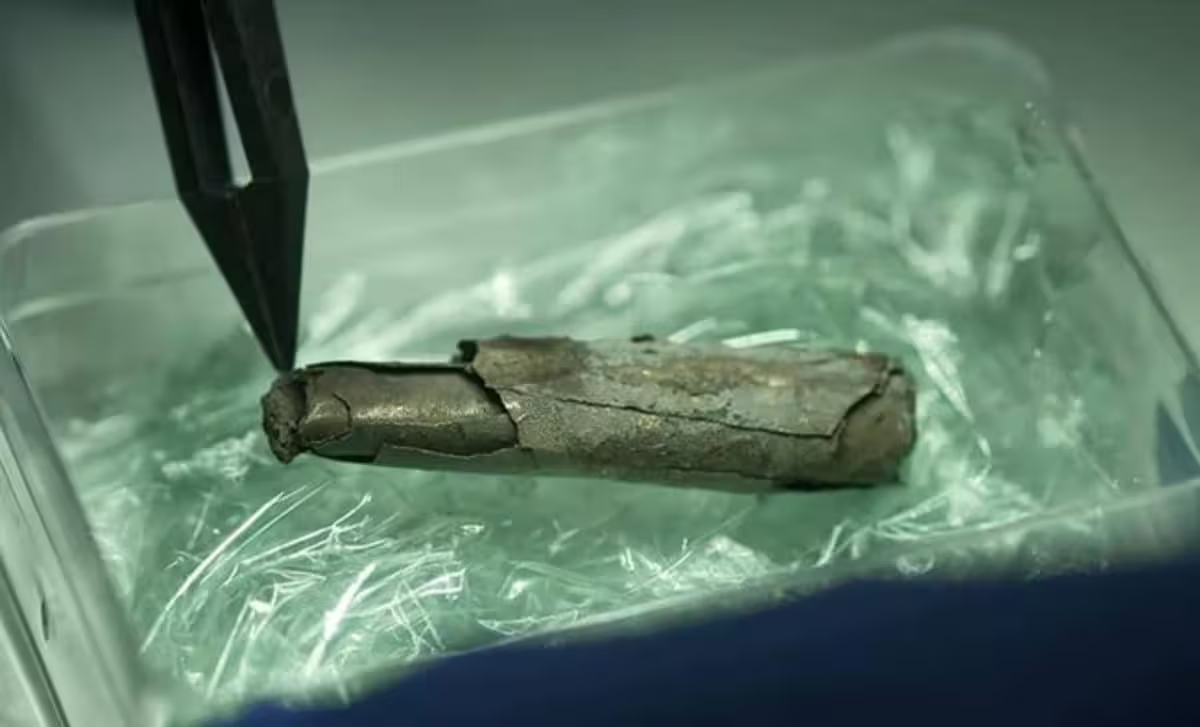
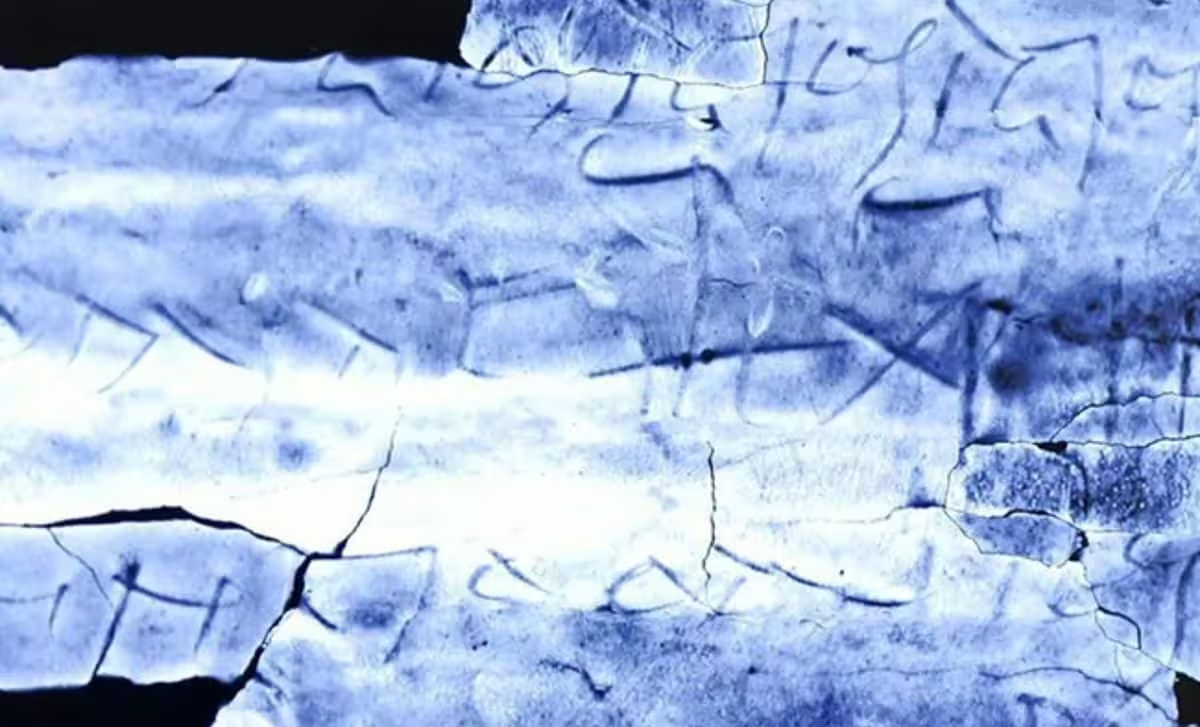
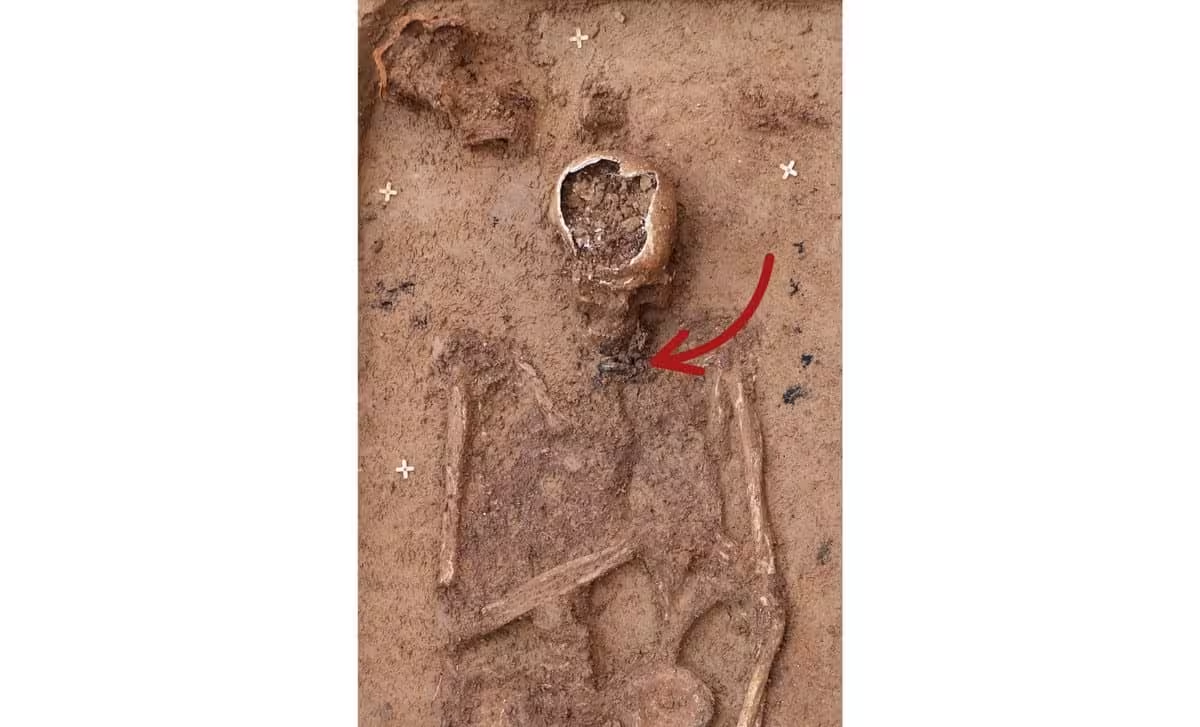
Archaeologists working in Frankfurt’s Praunheim district have uncovered a rare artifact that challenges our understanding of early Christianity. Discovered in 2018 within a Roman cemetery, the find consists of a small silver capsule buried alongside a man between 230 and 260 C.E. Inside the capsule, researchers found a delicate, tightly wound silver scroll. While its fragile nature initially kept it sealed, advanced CT scanning in 2024 successfully deciphered the 18-line Latin inscription hidden within.
The text serves as a protective prayer, explicitly invoking Jesus Christ, Son of God, to shield the bearer from illness and harm. It incorporates the repeated acclamation holy, holy, holy and draws upon language found in Philippians 2:10–11. Notably, the scroll is entirely devoid of the pagan deities commonly featured on protective amulets of that era, marking it as a distinctly Christian object found in a region where such evidence is exceptionally rare for the third century.
A Unique Window Into Ancient Faith
The discovery is significant not only for its antiquity but for its physical context. As scholar Santiago Guijarro of the Universidad Pontificia de Salamanca noted in a 2025 analysis in Isidorianum, this prayer was not a product of a scholarly library or monastic scriptorium, but a personal item carried by someone living on the edges of the Roman Empire. The scroll also represents the oldest known Latin iteration of these specific verses from Paul’s Letter to the Philippians.
However, the artifact presents a historical puzzle. The inscription opens with a reference to Saint Titus, yet the traditions venerating Titus as a saint did not gain prominence until much later. Guijarro describes this specific wording as particularly mysterious, suggesting the text requires further academic scrutiny to fully comprehend its origins.
Faith in a Complex Frontier Society
Perhaps the most profound question raised by the amulet is whether its owner was truly a practicing Christian. The burial, dated by items like a clay jug and an incense burner, aligns with the third-century Roman frontier, where religious boundaries were often fluid. Guijarro emphasizes that the presence of a Christian prayer does not necessarily equate to membership in a Christian congregation.
“The content tells us about the person who composed or wrote the text; it tells us rather less about the person who wore it,” Guijarro explains.
The timing is critical. Around 250 C.E., Emperor Decius mandated that citizens perform sacrifices to Roman gods, a policy that forced many early Christians into a dangerous dilemma. The individual in the grave may have lived through this period of state-mandated ritual. Archaeological investigations in the area, such as those at the Nida sanctuary, confirm that traditional Roman worship—involving animal offerings and ritual meals—remained common in the region during this time. Someone might have carried a Christian amulet for protection while simultaneously complying with imperial religious requirements, seeing no conflict between the two practices.
The Porous Boundaries of Early Belief
Ultimately, the Frankfurt amulet forces historians to move away from binary definitions of religious identity. Guijarro argues that the boundaries of what constituted Christianity in the third century were far more porous than later literature implies. By embracing the complexity of these findings, scholars can achieve a more nuanced and honest account of how faith manifested in the Roman world.
“In the third century, the boundaries of what we call Christianity were considerably more porous than later ecclesiastical literature suggests,” Guijarro says.
While the amulet remains a silent witness, its existence suggests that Christian ideas circulated through the empire in ways that eluded the control of church leaders—and the records they left behind.
This article has been fact checked for accuracy, with information verified against reputable sources. Learn more about us and our editorial process.
Last reviewed on .
Article history
- Latest version
Reference(s)
- -, “„Frankfurt silver inscription“ – Oldest Christian testimony found north of the Alps.”, December 12, 2024 Goethe-Universität <https://aktuelles.uni-frankfurt.de/english/frankfurt-silver-inscription-oldest-christian-testimony-found-north-of-the-alps/>.
- “Frankfurt Amulet Limes Germanicus.” <https://www.sanisidoro.net/publicaciones/index.php/isidorianum/article/view/frankfurt-amulet-limes-germanicus>.
Cite this page:
- Posted by Hassan Raza