This Plain Slab of Wyoming Rock Hides Hundreds of 50 Million Year Old Fossil Fish
Ancient fossils hold clues to a mysterious prehistoric event, hidden in plain sight for those willing to look closer at the rock record.
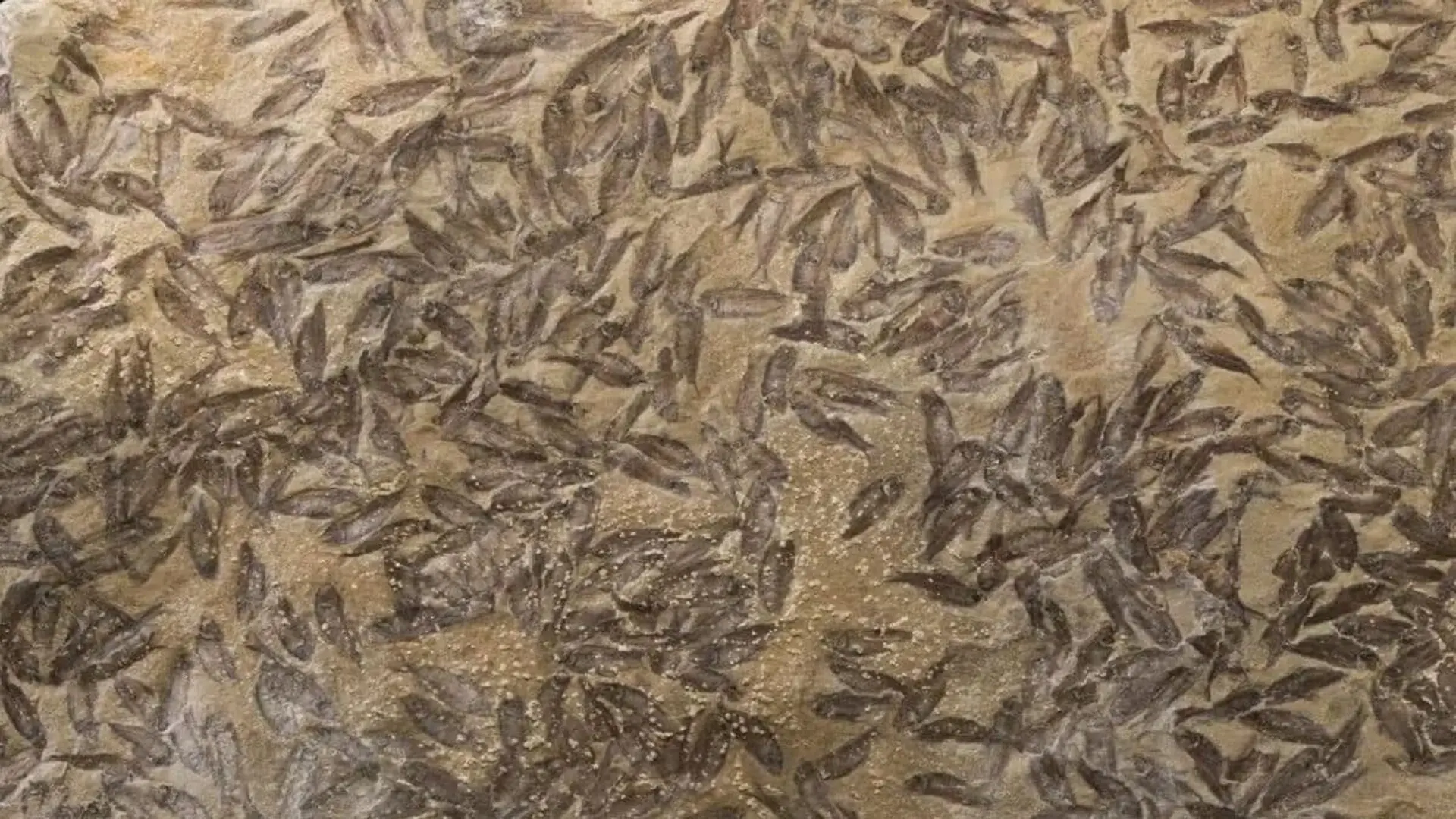
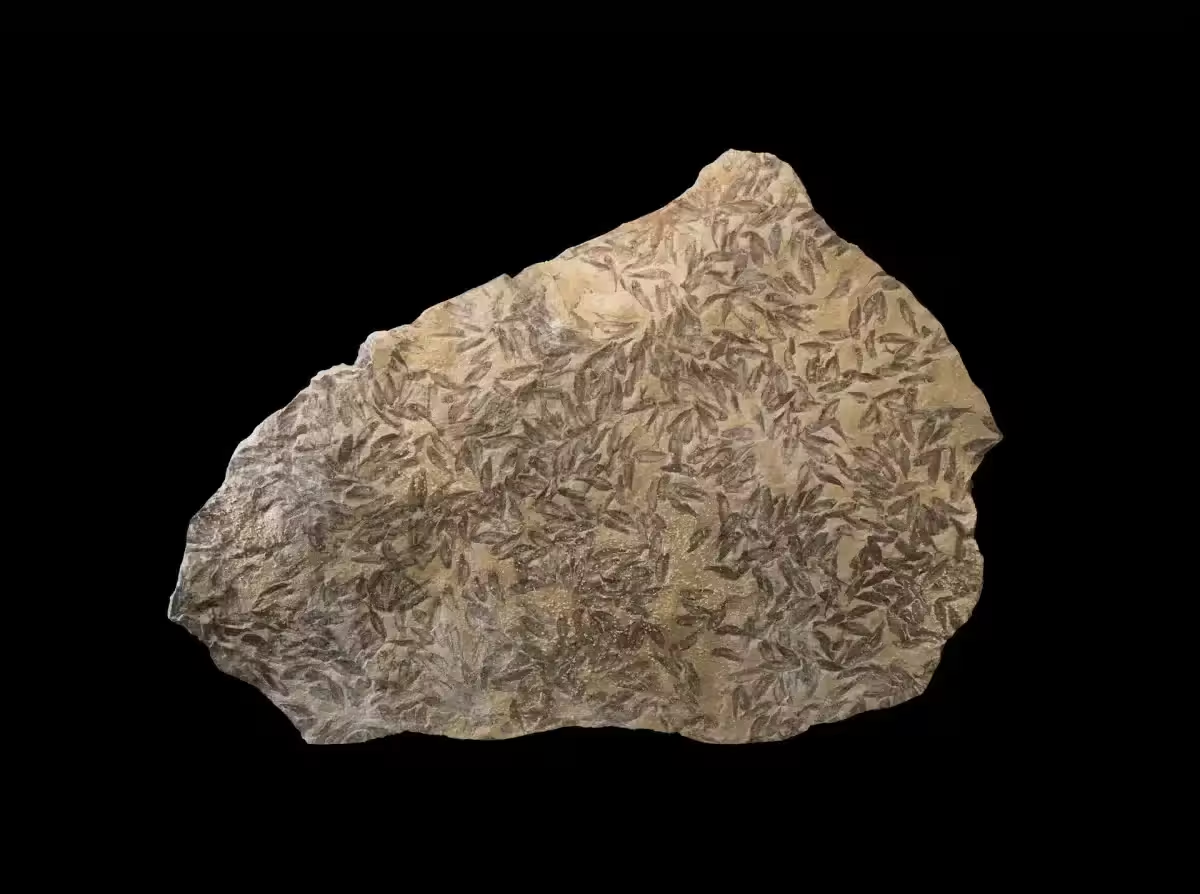
A four-foot slab of stone unearthed in Wyoming serves as a dramatic time capsule, containing the remains of hundreds of freshwater herring that perished in a single event 50 million years ago. Now housed at the Smithsonian’s National Museum of Natural History, the specimen offers a rare, high-definition look at a prehistoric world that bears little resemblance to the arid landscape of today.
At first glance, the rock appears unremarkable, but closer inspection reveals a dense, intricate tapestry of skeletons. The delicate ribcages, fin structures, and vertebrae of Knightia eocaena remain remarkably intact, preserved in a final, crowded formation. The slab was recovered in Sweetwater County and donated to the museum in 1998, where it was recently identified by paleontologist Stewart Edie while he curated a collection of over 600 specimens for the exhibition, From These Lands: Sharing Our Natural and Cultural Heritage.
A Sudden End in Ancient Waters
The Knightia herring thrived in the lakes of Wyoming between 48 and 50 million years ago. Geological records, particularly those from the Green River Formation, are replete with such “mortality blocks,” where entire schools of fish were wiped out in rapid succession. As noted by the Smithsonian Institution, while theories regarding these mass die-offs range from toxic algal blooms to drastic seasonal shifts in water chemistry, the exact cause of this specific tragedy remains unknown.
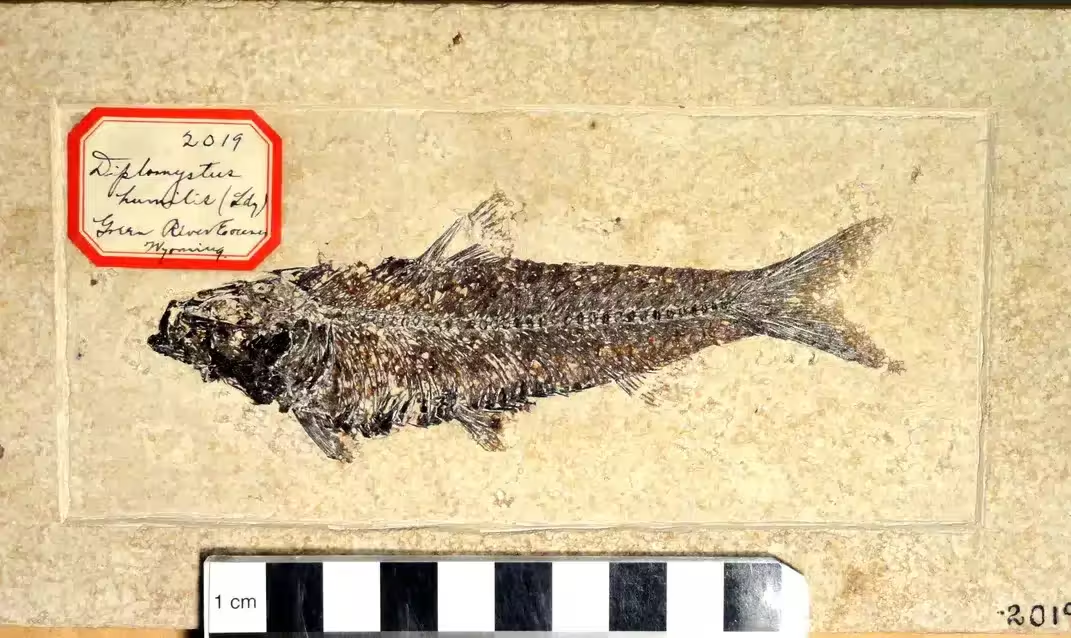
“I stopped, turned back, and looked more closely at it,” Edie recalled of his discovery. “Once your eyes refocus, you start to see all these little fish emerge, their tiny little vertebrae and their other little bones. They are exquisitely preserved.”
Why the Green River Fossils Are Unique
The exceptional condition of these fossils is attributed to the unique environment of the ancient Lake Gosiute. When the fish died, they were rapidly buried in sediment, preventing scavengers from scattering their remains. Furthermore, the oxygen-depleted waters of the lake bottom inhibited the typical processes of decay, ensuring that even the most fragile skeletal features were locked in stone. As the Wyoming state fossil, Knightia holds the title of the most frequently discovered complete vertebrate fossil globally.
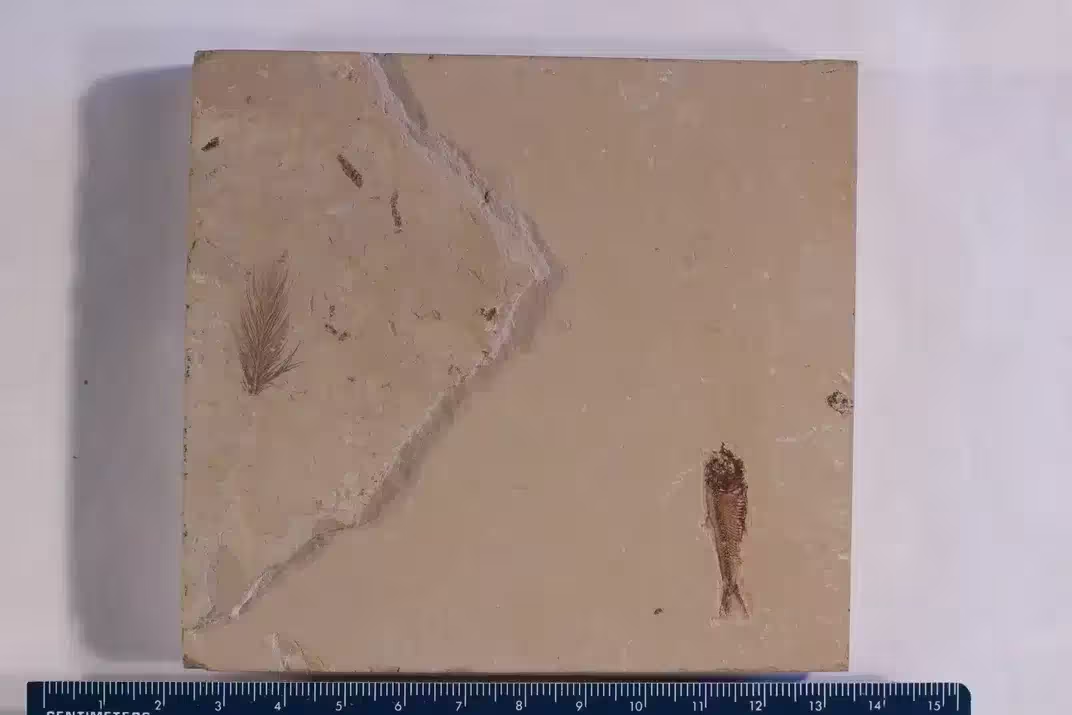
The site offers more than just fish; it provides a comprehensive biological snapshot. Fossilized remains of insects and delicate plant life indicate a thriving, lush ecosystem that would be unrecognizable to modern observers. “You end up with just an incredible snapshot of what life was actually like back then,” Edie added.
Eocene Wyoming: A Climate in Contrast
The early Eocene represented one of the most significant warming periods within the last 66 million years. While modern southwestern Wyoming is characterized by rugged, dry badlands, the region once hosted a humid, tropical environment featuring palms and crocodilians. This era was also defined by the presence of early mammals, such as the diminutive horse ancestor Protorohippus venticolum.
By analyzing plant fossils, animal remains, and isotopic data from the Greater Green River Basin, which spans parts of Wyoming, Utah, and Colorado, researchers are reconstructing these ancient, often “non-analog” environments—ecosystems that do not have direct modern counterparts. These findings continue to illuminate the dramatic transformations Earth has undergone over deep time.
“Our landscapes really are just this tapestry of ancient environments,” Edie concluded. “When we start to peel back those layers, we start to appreciate how much life has changed through time.”
This article has been fact checked for accuracy, with information verified against reputable sources. Learn more about us and our editorial process.
Last reviewed on .
Article history
- Latest version
Reference(s)
- “Green River Formation— Earth Experience Museum.” Earth Experience Museum <https://www.earthexperience.org/green-river-formation>.
- <https://www.smithsonianmag.com/blogs/national-museum-of-natural-history/2026/10/14/these-tiny-fossil-fish-offer-a-glimpse-into-a-once-lush-wyoming/>.
Cite this page:
- Posted by Hassan Raza