October’s Hunter’s Moon Will Bring a Rare Cosmic Show to the Night Sky This Month
The Hunter’s Moon returns this October, offering a brilliant autumn spectacle that you can enjoy without any special equipment.
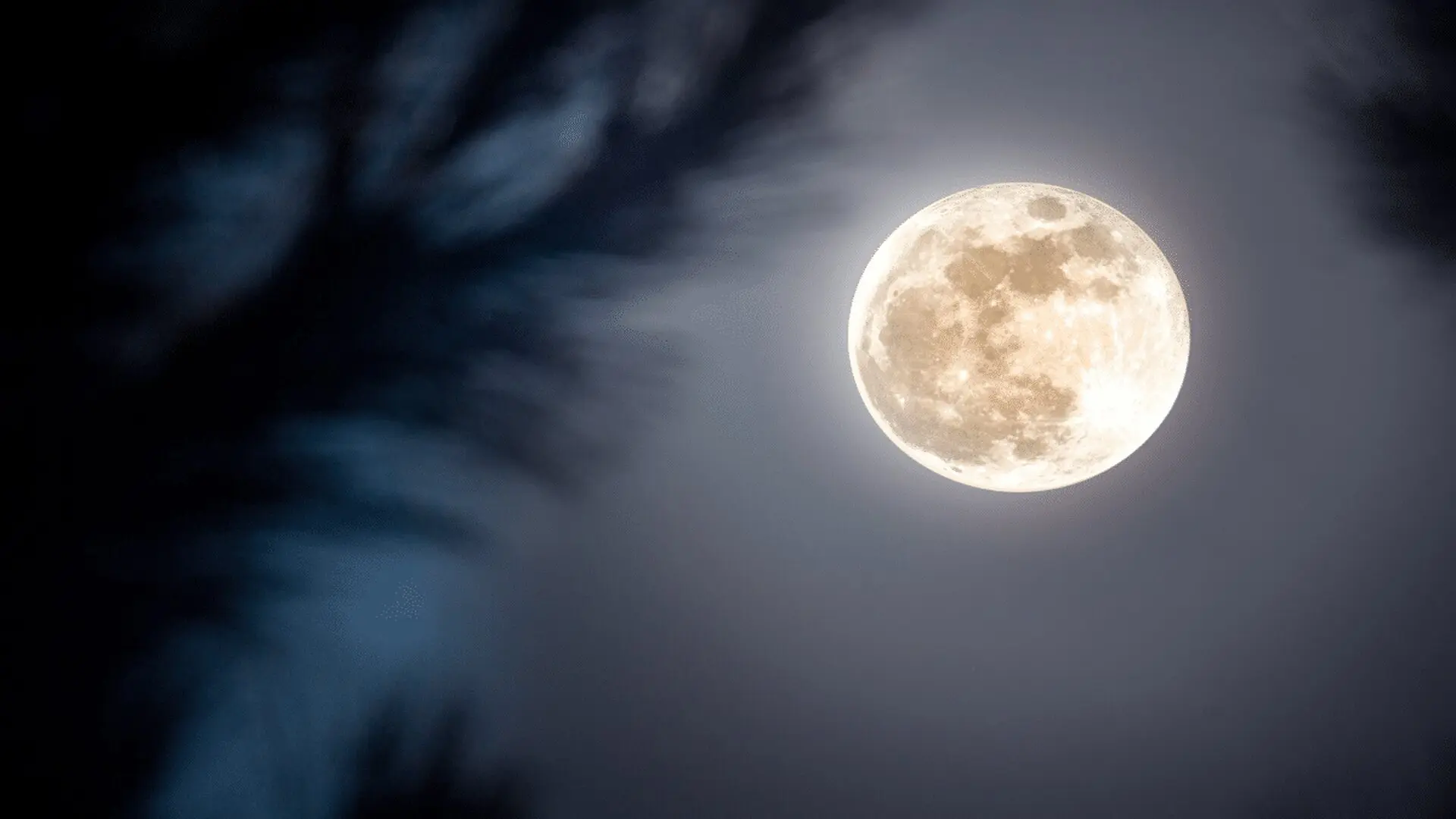
Skywatchers are preparing for a vibrant celestial show this October as the upcoming Hunter’s Moon prepares to dominate the night sky. On October 25, 2026, the lunar disk will rise around sunset, signaling the arrival of a seasonal milestone that brings with it a collection of planetary neighbors and a rare stellar encounter.
The full moon reaches its peak illumination at 12:11 a.m. EDT on October 26 (4:11 a.m. GMT), presenting a brilliant sight for observers across the globe. As the moon ascends above the eastern horizon, it may initially appear in shades of amber or gold. This shift in color is a result of light scattering; as the moon sits low in the sky, its light must travel through a denser layer of Earth’s atmosphere, which filters out shorter blue wavelengths and allows warmer, longer-wavelength hues to pass through.
While the moon may appear unusually massive during its rise, this is a well-documented optical phenomenon known as the Moon illusion. When the lunar disk is positioned near terrestrial landmarks like buildings or distant ridges, the human brain perceives it as significantly larger than it actually is when compared to the vast, empty expanse of the high night sky.
Deep Roots in Seasonal Tradition
The term “Hunter’s Moon” is deeply embedded in agricultural history, serving as a reminder of how early societies used the lunar cycle to track the changing seasons. As noted by the Old Farmer’s Almanac, the name stems from the timing of the harvest. Once fields were cleared of crops, the increased visibility provided by the bright moonlight allowed hunters to more easily track game preparing for the onset of winter.
Indigenous cultures have long recognized this period with their own descriptive terminology. For the Cree, the lunar event is known as the Migrating Moon, signaling the seasonal movement of birds. Meanwhile, for the Ojibwe and Haida nations, the period marks the transition toward colder temperatures, often referred to as the Freezing or Ice Moon.
Beyond the Moon: A Cosmic Alignment
The lunar display serves as an excellent anchor for other observations throughout the weekend. On October 25, the planet Saturn will be visible approximately 20 degrees south of the moon for observers in the United States, offering a prime opportunity for those with modest equipment or keen eyesight to spot the ringed world. The constellation Pegasus, specifically the recognizable Great Square, will hover above, while the bright star Capella is expected to emerge in the northeastern sky shortly after dark.
The celestial activity carries into the following days. By the pre-dawn hours of October 26, Jupiter will be prominently positioned in the southeast, situated between Mars and the bright star Regulus within the constellation Leo. The excitement continues on October 27, when the moon undergoes a lunar occultation of the Pleiades. During this event, the moon will temporarily pass in front of the famous star cluster in Taurus, effectively masking the light of the stars. The precise timing and visibility of these stellar disappearances will vary depending on the observer’s specific geographic location, as the Moon traces its path across the night sky.
This article has been fact checked for accuracy, with information verified against reputable sources. Learn more about us and our editorial process.
Last reviewed on .
Article history
- Latest version
Reference(s)
- Boeckmann, Catherine. “Full Hunter’s Moon October 2026: Date, Meaning, and Folklore.”, September 16, 2025 Almanac.com <https://www.almanac.com/content/full-moon-october>.
Cite this page:
- Posted by Hassan Raza