Space Junk Could Disrupt Rare 2029 Asteroid Encounter According to New Research
As asteroid Apophis approaches its 2029 flyby, researchers have uncovered a new risk involving Earth’s dense cloud of orbiting space debris.
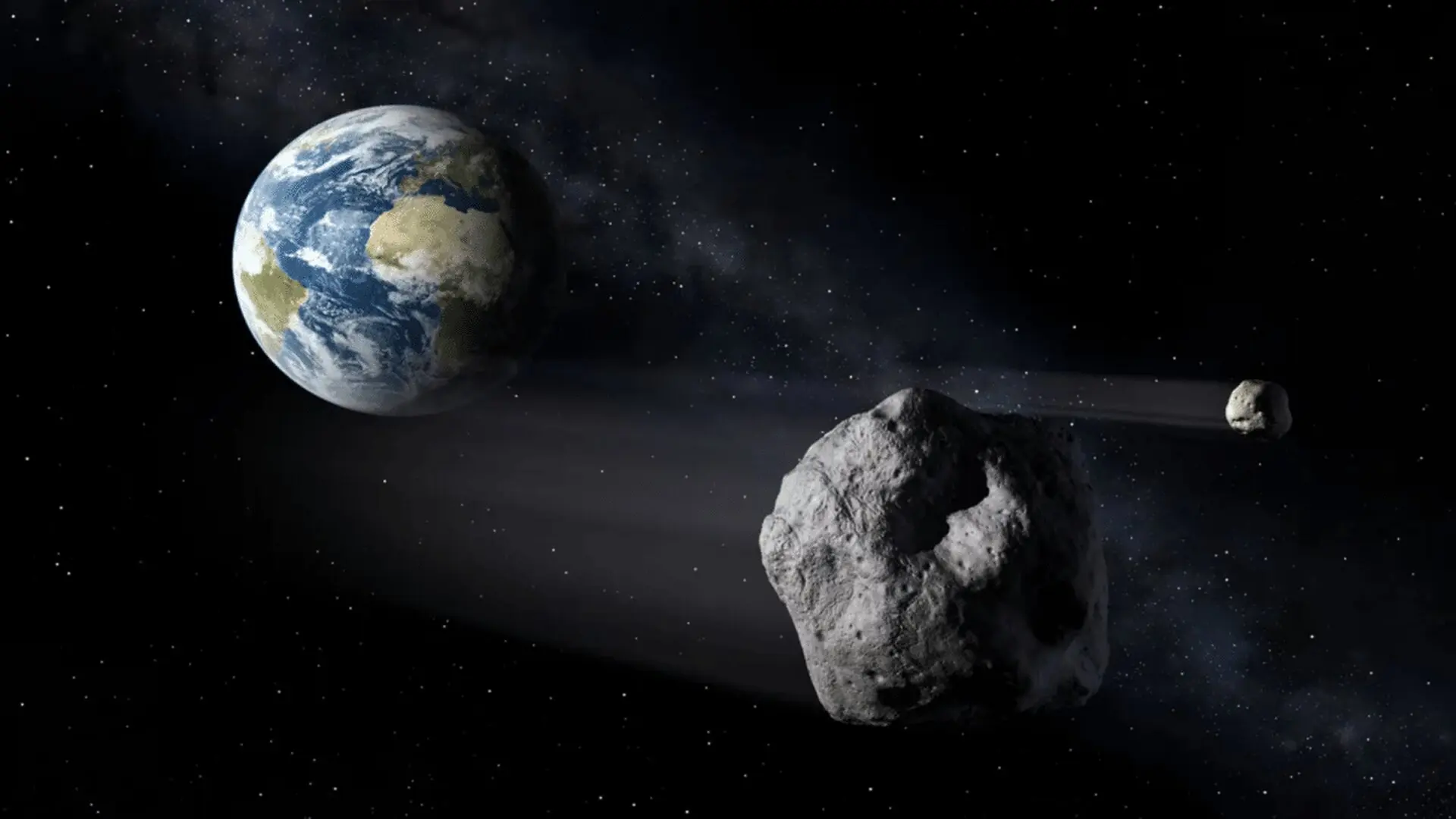
When the asteroid 99942 Apophis makes its historic approach to Earth on April 13, 2029, it will pass within 20,000 miles of our planet. While astronomers have firmly ruled out any possibility of an impact with Earth, new analysis suggests the massive 370-meter (1,210-foot) space rock may face a different kind of threat: a collision with our own discarded orbital hardware.
A Close Encounter With Orbital Clutter
The upcoming flyby offers a rare, high-stakes laboratory for planetary scientists. As the asteroid swings past, Earth’s intense gravitational tidal forces are expected to pull at its structure, potentially triggering seismic shifts, landslides, or changes in its rotational state. Researchers are eager to witness these effects firsthand, yet a recent study published in The Planetary Science Journal indicates that human-made debris could muddy the data.
Alessandro Rossi and Giulia Schettino from the Institute of Applied Physics “Nello Carrara” of Italy’s National Research Council began their research by questioning if the dense population of satellites and rocket fragments in high-altitude orbits might intersect with the asteroid’s path. Their findings were unexpected.

“I was expecting a null experiment, meaning no possible interactions,” Rossi explained to ScienceAlert. Instead, their simulations showed that debris could pass within just a few kilometers of the asteroid. While a direct hit remains a low-probability event, the sheer volume of untracked, smaller fragments in orbit adds a significant layer of uncertainty to the observation mission.
Potential Interference for Scientific Missions
Two primary missions—the European Space Agency’s RAMSES and NASA’s OSIRIS-APEX—are currently being readied to observe the encounter. Their goals are to record precisely how the asteroid reacts to the stresses of Earth’s gravity. A debris strike, however, would introduce an uncontrolled variable into the experiment.
Rossi clarified that any such impact would not pose a risk to Earth, nor would it alter the asteroid’s orbit in a meaningful way. “The consequences would be most probably the formation of a small crater and a plume of ejecta,” he said. While such an event might provide researchers with a chance to study the asteroid’s internal composition through the ejecta, it would complicate efforts to isolate the specific effects of planetary gravity.
The Blind Spot in Space Surveillance
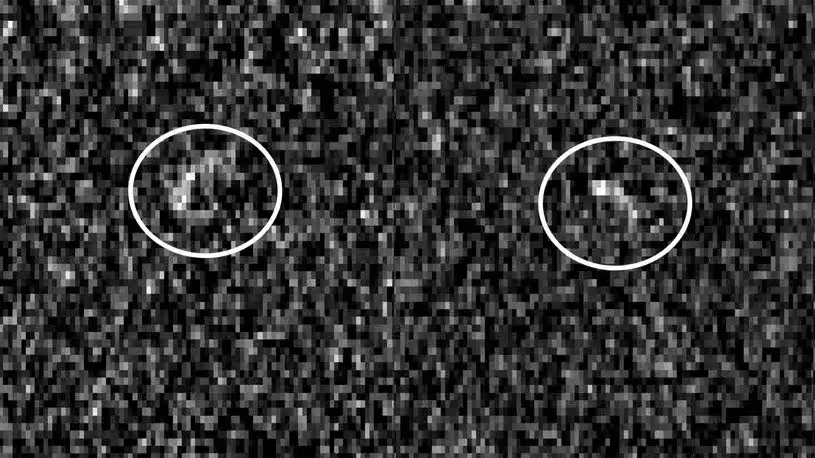
The study highlights a recurring issue in modern astronomy: our incomplete map of the debris environment in high-Earth orbit. While large satellites are monitored, smaller fragments—which could still deliver significant energy upon impact—remain largely invisible to current tracking systems.
Researchers do not fear a cascading “Kessler syndrome” event, as objects in the geostationary region are significantly more dispersed than those in low-Earth orbit. Nevertheless, the Apophis event underscores an urgent need for improved space surveillance. By utilizing advanced new telescopes capable of spotting smaller objects, scientists hope to better characterize the hazards surrounding the asteroid before its 2029 arrival. For now, the scientific community must wait to see if the cosmic dance of Apophis will be interrupted by the remnants of humanity’s spacefaring past.
This article has been fact checked for accuracy, with information verified against reputable sources. Learn more about us and our editorial process.
Last reviewed on .
Article history
- Latest version
Reference(s)
- Schettino, Giulia., et al. “Potential Interaction of 99942 Apophis with the High Earth Orbit Population during the 2029 Close Approach.” The Planetary Science Journal, vol. 7, no. 5, May 15, 2026, pp. 110 American Astronomical Society, doi: 10.3847/PSJ/ae5dc3. <https://doi.org/10.3847/PSJ/ae5dc3?utm_source=chatgpt.com>.
- Starr, Michelle. “In April 2029, a Massive Asteroid Will Just Miss Earth. Scientists Are Worried There Could Still Be Major Consequences.”, August 4, 2026 ScienceAlert <https://www.sciencealert.com/in-april-2029-a-massive-asteroid-will-just-miss-earth-scientists-are-worried-there-could-still-be-major-consequences>.
Cite this page:
- Posted by Karan Das