Curiosity Rover Finds Striking Pinstriped Rocks in Gale Crater, Revealing Mars’ Hidden History
Curiosity rover hits a new Martian geological boundary, uncovering striped rocks and gathering fresh clues about the planet’s ancient environment.
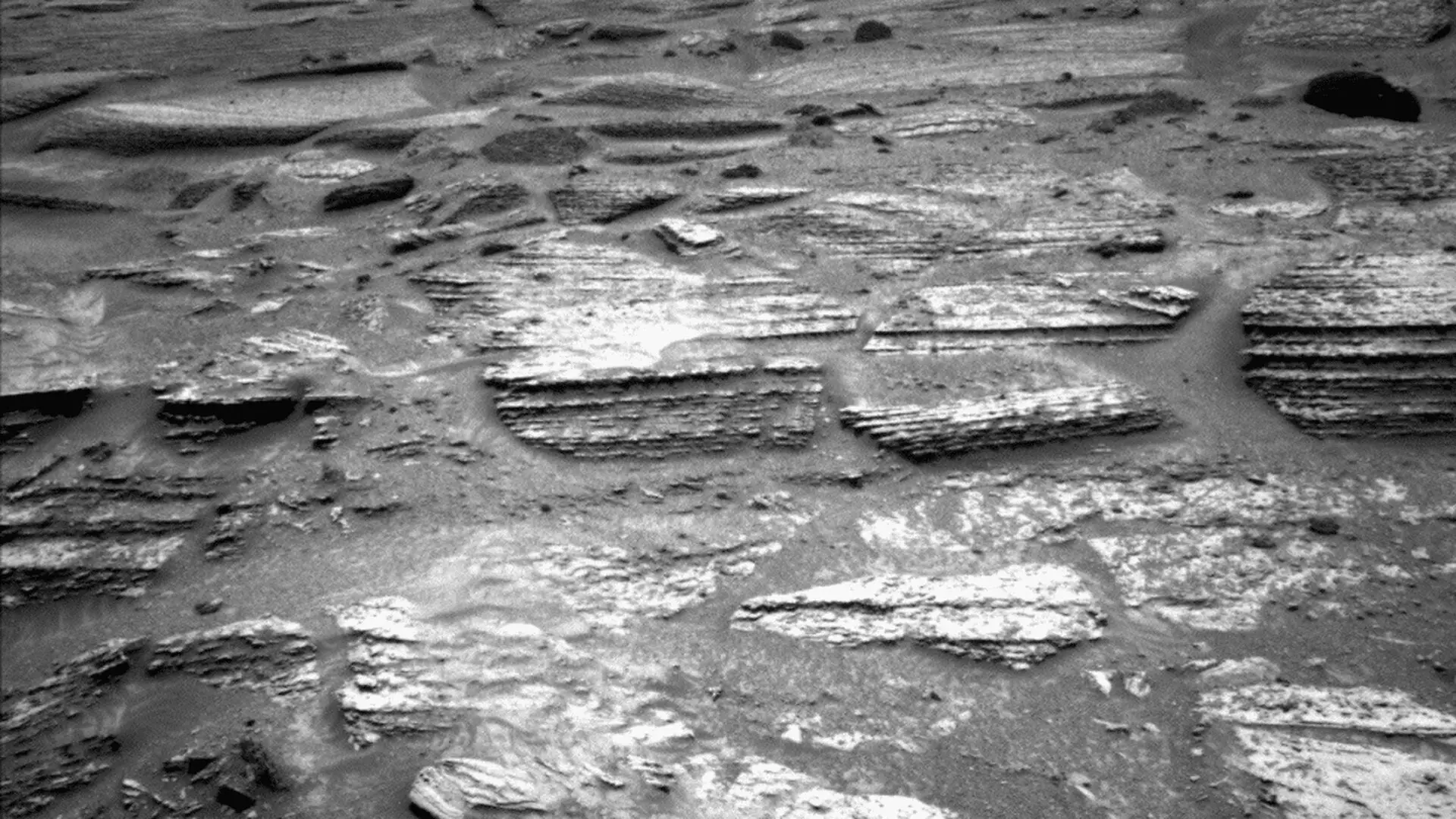
NASA’s Curiosity rover has entered a fresh geological boundary within Gale Crater, uncovering striking striped rock outcrops that may shed new light on Mars’ early environment. The mission team says the terrain marks a point where distinct geological chapters intersect, offering a window into processes that shaped the planet billions of years ago.
A Transformative Terrain Unveiled by Curiosity
The rover is now traversing a zone where smooth, sandy deposits give way to rugged, exposed bedrock. This shift has become a focal area for researchers aiming to decode the sequence of sedimentary layers that built up the crater.
Equipped with a suite of scientific tools, Curiosity has been methodically scanning the surroundings, gathering high‑resolution photographs, sampling surface material, and mapping structural features that record Gale Crater’s complex past.
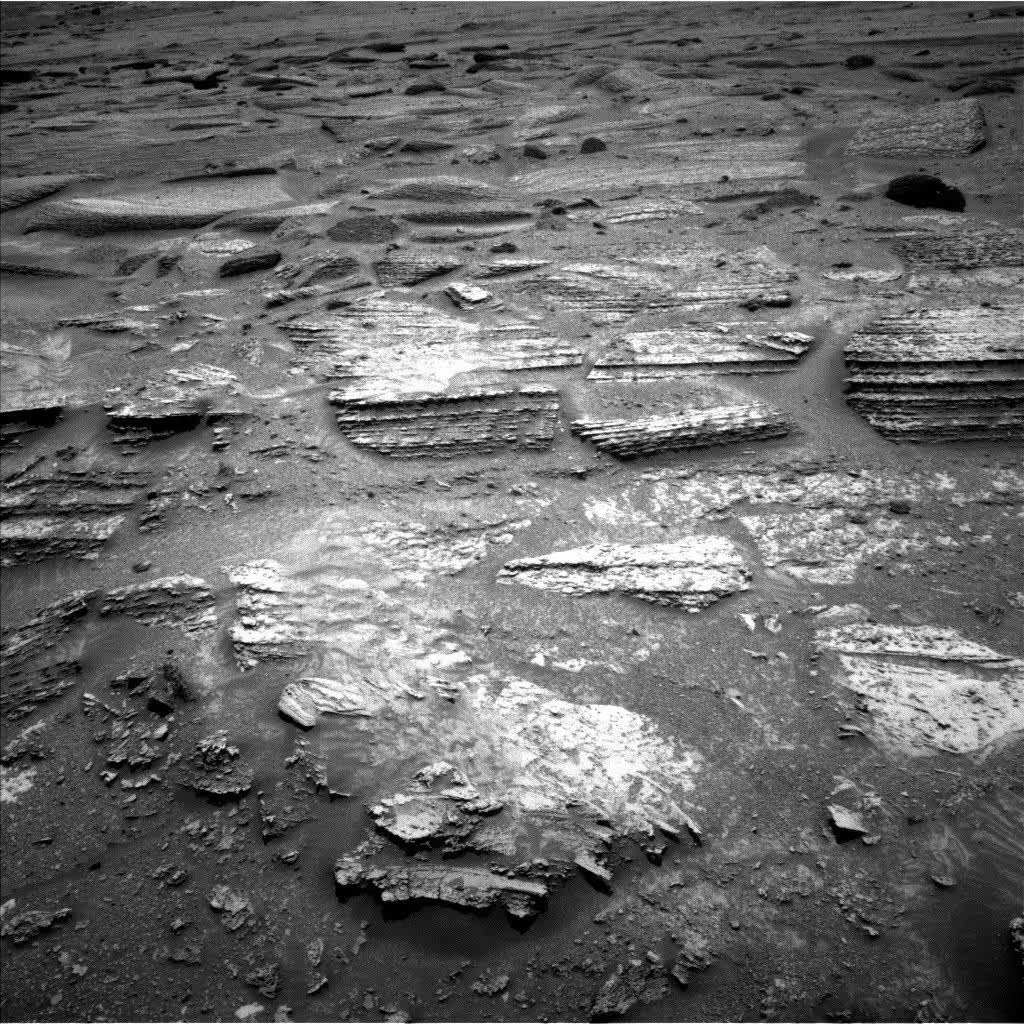
Among the most eye‑catching discoveries are a series of rocks bearing pronounced linear banding. Mission scientists refer to these as “pinstriped rocks,” noting their layered texture that contrasts sharply with nearby formations.
The rover arrived at this locale after navigating through a mosaic of sedimentary structures. Researchers suspect the layers may archive ancient shifts in water activity that once sculpted the Martian landscape.
These observations provide another avenue for probing how Mars transitioned from a world that supported lakes and streams to the arid planet observed today.
Instrument Suite Probes the Pinstriped Formations
NASA notes that Curiosity deployed multiple onboard tools to interrogate the newly identified rocks and adjacent targets, merging high‑definition imaging with in‑situ chemical testing.
The ChemCam laser spectrometer fired brief pulses at points labeled “Kunturiri” and “Toconce,” generating elemental data that reveal the rocks’ composition.
Using the Alpha Particle X‑ray Spectrometer, the rover examined samples from sites named “Malpartida” and “Pico Del Tunari,” enabling comparative mineralogical analyses across the region.
Close‑up pictures taken by the Mars Hand Lens Imager (MAHLI) displayed surface textures invisible to distant cameras, offering clues about formation mechanisms and post‑depositional alteration.
Together, these measurements are building a more nuanced reconstruction of Martian geological history and the ancient environmental conditions that prevailed.
Layered Deposits, Dunes and Potential Meteorite Clues
Beyond the striped rocks, Curiosity surveyed an array of features including sand‑laden ridges, exposed bedrock, and stratified structures that may record sediment accumulation within Gale Crater.
Targets such as “Laguna Fea” and “Laguna Lejia” were cleared with the Dust Removal Tool, exposing fresher material for analysis.
The rover also investigated the “Hornillos” outcrop, employing laser spectroscopy and detailed imaging despite the inability to brush the surface, thereby gathering additional geological metrics.
Near the Cordillera butte, darker boulders are being examined for signs of downslope movement, which could reflect past climate dynamics, including processes linked to ice.
Concurrent atmospheric monitoring captured dust activity, cloud formations, and the occasional dust devil, linking surface observations with broader environmental conditions.
Continuing the Quest Through Martian Time
Since its 2012 landing, Curiosity has reshaped scientific understanding of Gale Crater by probing ancient fluvial environments that may have once supported life.
The recent identification of pinstriped rock layers adds a fresh chapter to the rover’s long‑term study, supplying new evidence of Mars’ climatic evolution, surface reshaping, and historic habitats.
Future plans include deeper rock chemistry, expanded landscape imaging, and ongoing atmospheric measurements. The team is also gearing up to sample a sizable dark boulder that could represent a meteorite, offering a rare glimpse of extraterrestrial material on the Martian surface.
As Curiosity advances across the Red Planet, each geological clue—like the newly observed striped formations—brings scientists closer to deciphering the planet’s billion‑year story.
This article has been fact checked for accuracy, with information verified against reputable sources. Learn more about us and our editorial process.
Last reviewed on .
Article history
- Latest version
Reference(s)
- Carney, Stephen. “Curiosity Blog, Sols 4941-4947: (Pin)Stripes on the Fourth of July - NASA Science.”, July 14, 2026 NASA <https://science.nasa.gov/blog/curiosity-blog-sols-4941-4947-pinstripes-on-the-fourth-of-july/>.
Cite this page:
- Posted by Karan Das