Europe and China Are Launching a New Spacecraft That Will Fly 121,000 Kilometers Above Earth to Study Solar Storms
Researchers are gearing up to deploy a satellite built to examine explosive solar phenomena from an unprecedented vantage point.
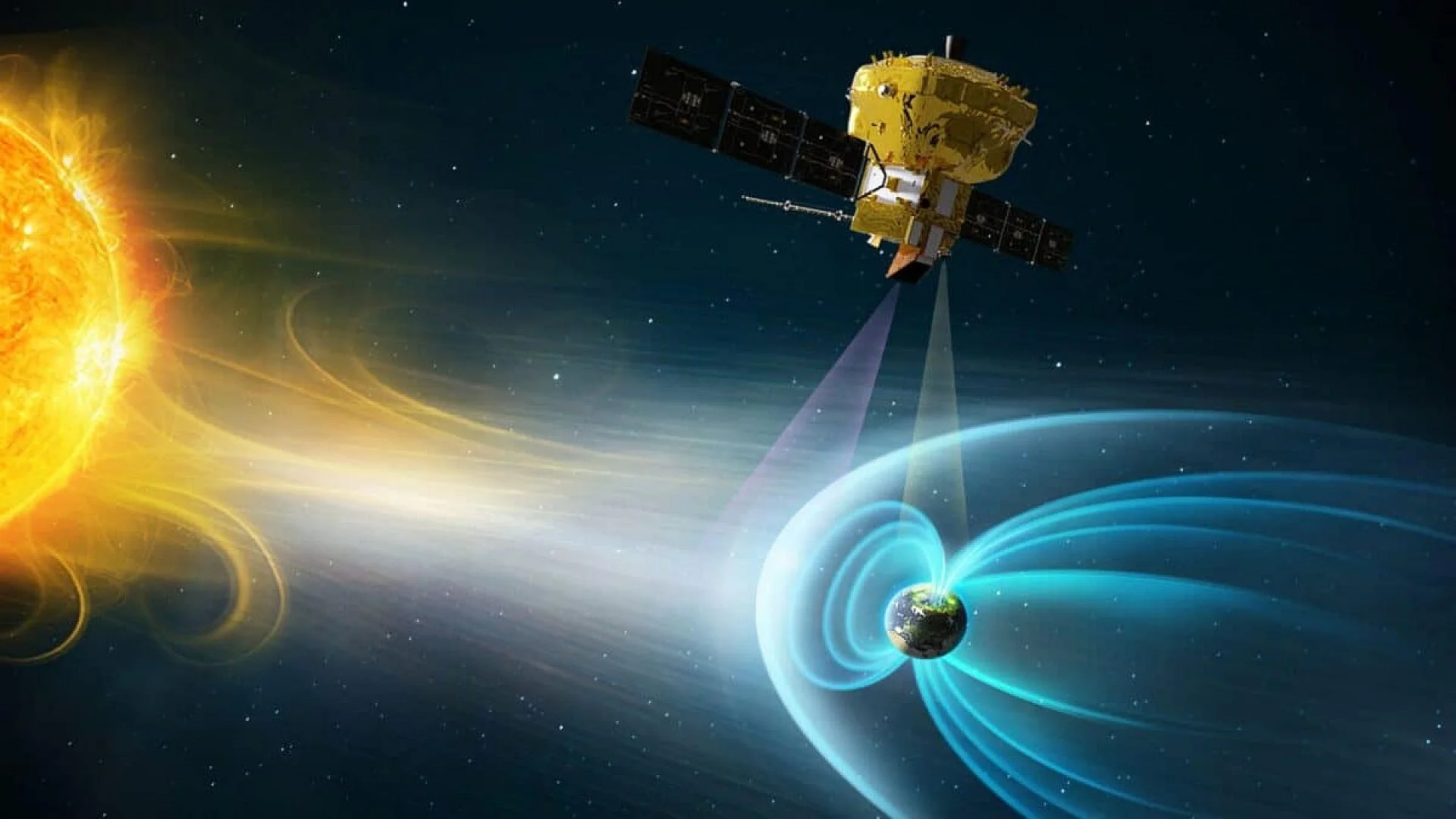
A groundbreaking joint European and Chinese space mission is set to blast off on Tuesday, aiming to unravel the mysteries of powerful solar storms and their impact on Earth’s magnetic field. The mission, dubbed SMILE, will make history by capturing the first-ever X-ray observations of the planet’s magnetosphere during these intense events.
Scientists behind the mission hope that the data collected will significantly enhance our understanding of space weather, a phenomenon that can have far-reaching consequences for satellites, astronauts, and communication systems on our planet. According to the European Space Agency, the SMILE spacecraft will lift off aboard a Vega-C rocket from the European Spaceport in Kourou, French Guiana.
The Solar Wind Magnetosphere Ionosphere Link Explorer, developed jointly by the ESA and the Chinese Academy of Sciences, is designed to investigate the intricate dance between solar particles and Earth’s protective magnetic shield. This fascinating interaction has the potential to disrupt our daily lives, causing power grid failures, communication network outages, and spectacular aurora displays in the polar regions.
Solar Storms: A Threat to Our Modern Infrastructure
The sun continuously releases a stream of charged particles known as the solar wind, which can intensify into massive plasma eruptions called coronal mass ejections. These events can travel at speeds of up to two million kilometers per hour, posing a significant threat to our modern infrastructure.
As Philippe Escoubet, an ESA scientist, explained, the mission aims to study the intricate relationship between Earth and the sun. The launch was initially scheduled for April 9 but was delayed due to a technical issue.
Once the solar storm reaches Earth, it can take one or two days to arrive. When it does, Earth’s magnetic field deflects most of the incoming particles, but stronger events can still allow part of that radiation to enter the upper atmosphere, causing spectacular aurora displays in the polar regions.
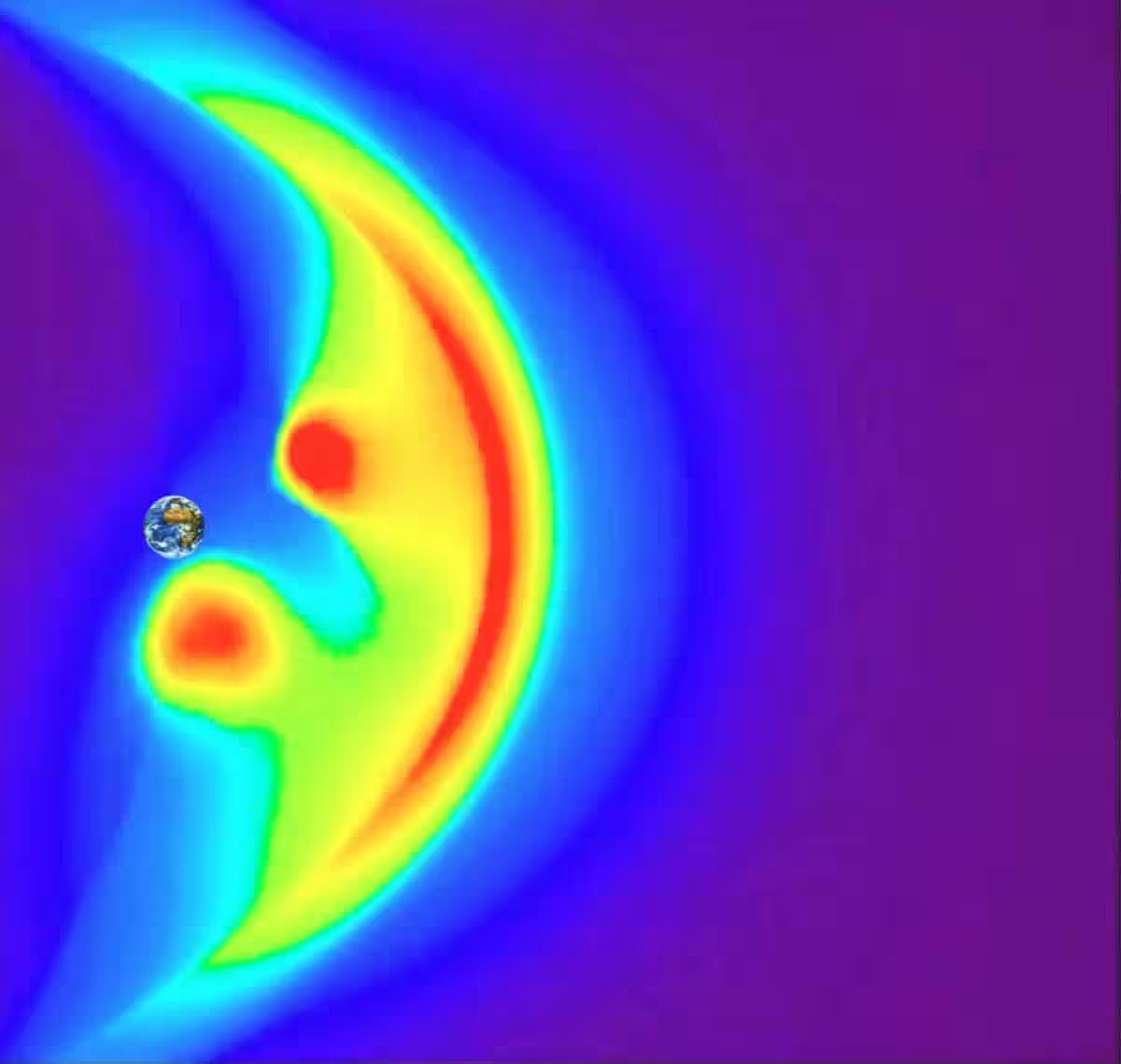
According to the source material, intense geomagnetic storms can cause widespread disruptions to our power grids and communication networks. They can also create spectacular aurora displays in the polar regions, as seen during the 1859 geomagnetic storm, which was reportedly the strongest on record.
As modern infrastructure continues to rely on satellites and space stations, the effects of severe solar activity have become increasingly significant. Satellites orbiting Earth and astronauts aboard space stations are now exposed to the effects of intense solar storms.
SMILE: Unveiling the Secrets of the Magnetosphere
SMILE’s primary mission is to detect X-rays produced when charged particles from the sun interact with neutral particles in Earth’s upper atmosphere. As ESA explained in a statement:
“SMILE will be the first mission to observe Earth’s magnetosphere in X-ray light, revealing exactly when, where and how the solar wind interacts with Earth’s magnetic environment.”
The spacecraft will observe several regions linked to Earth’s magnetic shield, including the magnetopause, where solar particles encounter the planet’s magnetic field. As Dimitra Koutroumpa of France’s CNRS institute explained, the mission will also observe areas above the poles where X-ray photons become visible.
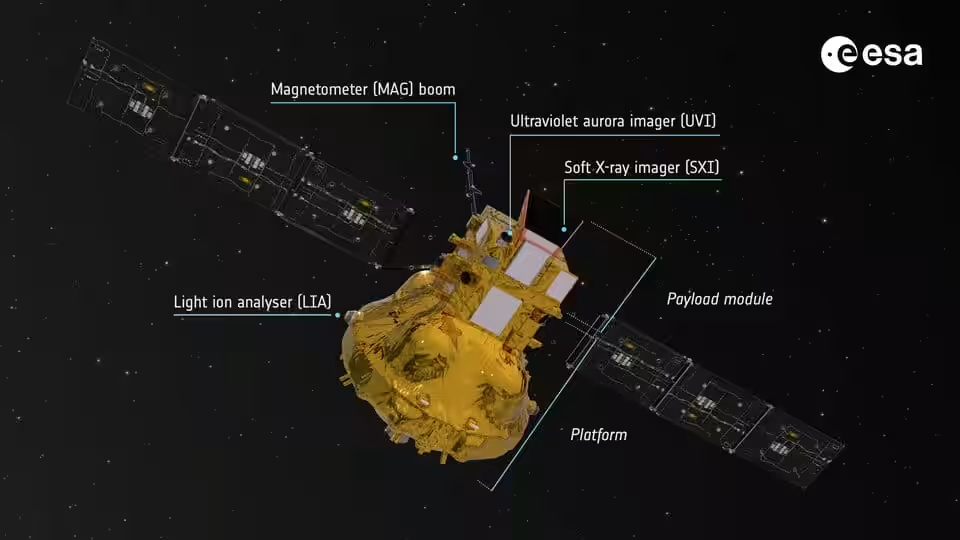
To carry out these observations, the spacecraft is equipped with four scientific instruments, including a UK-built X-ray imager, a UV imager, an ion analyzer, and a magnetometer produced by the Chinese Academy of Sciences.
A New Orbit Design for Longer Observations
After launch, SMILE will initially orbit around 700 kilometers above Earth before moving into a highly elliptical trajectory. The spacecraft will fly about 5,000 kilometers above the South Pole, where it will send data to the Bernardo O’Higgins research station in Antarctica. During its northern pass, SMILE will travel as far as 121,000 kilometers above Earth.
This orbit will allow the spacecraft to maintain long observation periods over the northern polar region. As the European Space Agency explained, the mission will be able to observe the northern lights continuously for up to 45 hours at a time.
The mission is planned to last three years, though ESA indicated that operations could continue longer if the spacecraft remains in good condition.
This article has been fact checked for accuracy, with information verified against reputable sources. Learn more about us and our editorial process.
Last reviewed on .
Article history
- Latest version
Reference(s)
- “C. Philippe Escoubet - Personal Profiles - Cosmos.” Personal Profiles <https://www.cosmos.esa.int/web/personal-profiles/philippe-escoubet>.
- <https://phys.org/news/2026-05-spacecraft-earth-shield-solar-storms.html>.
- “Smile factsheet.” <https://www.esa.int/Science_Exploration/Space_Science/Smile/Smile_factsheet2>.
- “Dimitra Koutroumpa.” CNRS Terre & Univers <https://www.insu.cnrs.fr/fr/personne/dimitra-koutroumpa>.
- “Smile's journey from launch to orbit.” <https://www.esa.int/ESA_Multimedia/Videos/2026/04/Smile_s_journey_from_launch_to_orbit/(lang)/cz>.
- “Call for interest: media programme for launch of Smile mission at Europe’s Spaceport.” <https://www.esa.int/Newsroom/Press_Releases/Call_for_interest_media_programme_for_launch_of_Smile_mission_at_Europe_s_Spaceport>.
Cite this page:
- Posted by Karan Das