Scientists Identified Asteroids That Could Help Humans Build Permanent Cities on Mars
What if the essential supplies for constructing Martian cities were already drifting through the cosmos?
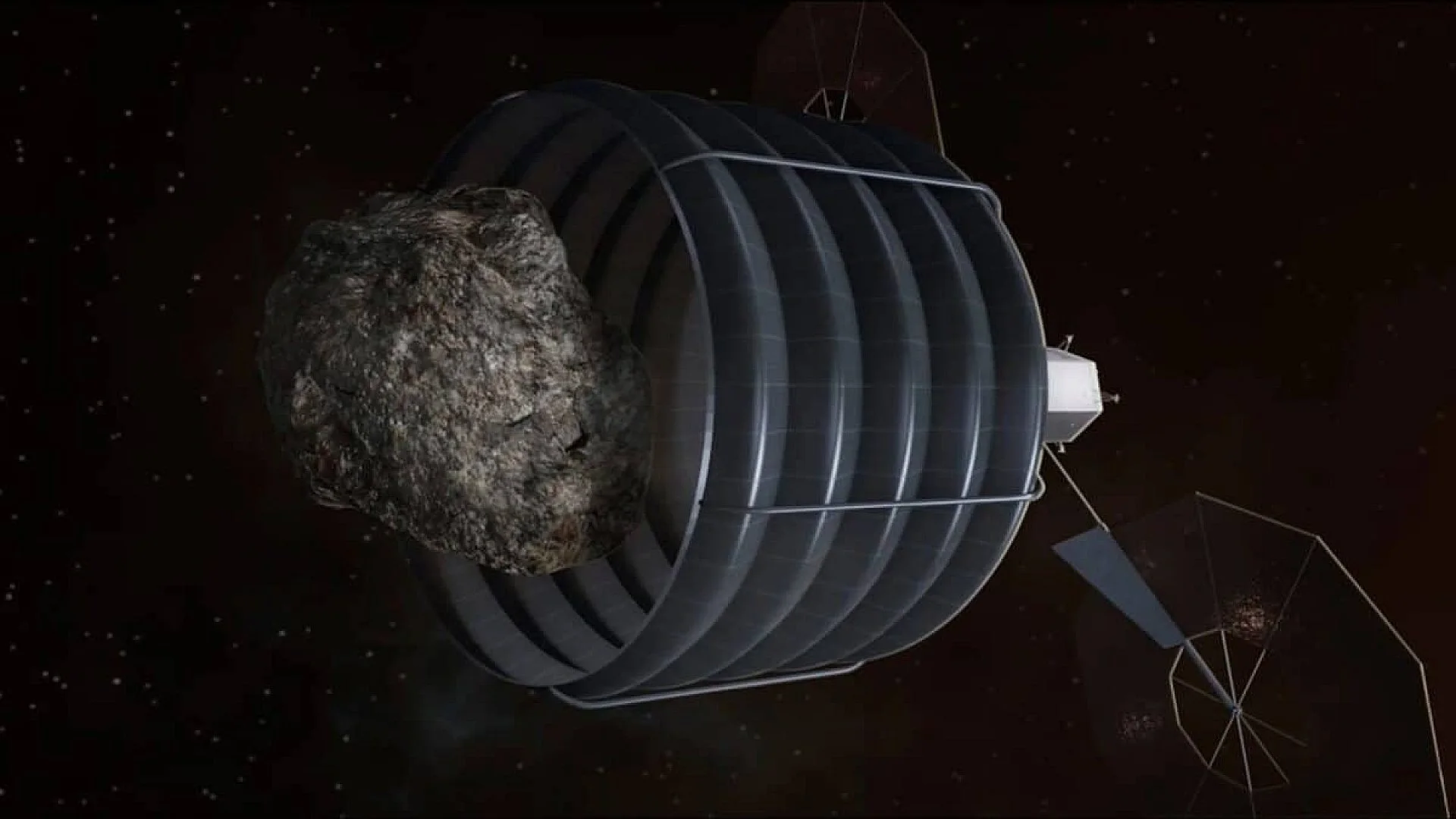
A team of researchers from the École Polytechnique Fédérale de Lausanne (EPFL) in Switzerland has explored the possibility of asteroids serving as a source of metals and fuel for future colonies on Mars. Their study examines the feasibility of spacecraft mining certain asteroids and transporting resources to the Red Planet without relying on shipments from Earth.
The idea may seem like science fiction, but the challenge is very real. A permanent settlement on Mars would require vast amounts of metal for habitats, tools, machines, and replacement parts. Launching these supplies from Earth would be expensive and time-consuming, with trips between the two planets taking up to nine months.
Published on arXiv, the study focuses on the logistics of asteroid mining rather than futuristic concepts. The researchers aimed to determine whether transporting resources from asteroids to Mars could make sense within realistic energy and fuel limits.
Asteroids Rich in Metals
The researchers concentrated on M-type asteroids, which are abundant in metals like iron and nickel. These celestial bodies are scattered throughout the solar system and could potentially serve as resource hubs for future space missions.
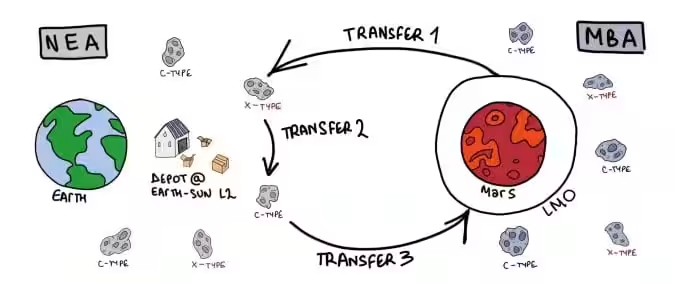
To assess the feasibility of asteroid mining, the team developed a computer model that analyzed thousands of possible routes between asteroids and Mars. The simulations considered fuel consumption, travel energy, and the amount of material that could be realistically extracted and delivered.
The results depended heavily on the chosen asteroid. Some targets required excessive energy to reach, making them poor candidates despite their resources. Others proved to be more accessible and efficient for transport missions.
The study emphasizes that selecting the right asteroid is a crucial factor in making the entire system work.
Asteroids as Fuel Sources
The paper also examined carbonaceous asteroids, which contain water ice and carbon-rich materials. These resources could potentially be used to produce rocket propellant directly in space.
This changes the equation significantly. Instead of carrying all the fuel from Earth, spacecraft could theoretically refuel near the asteroid before heading toward Mars. Researchers suggest that this could reduce launch mass and simplify future missions.
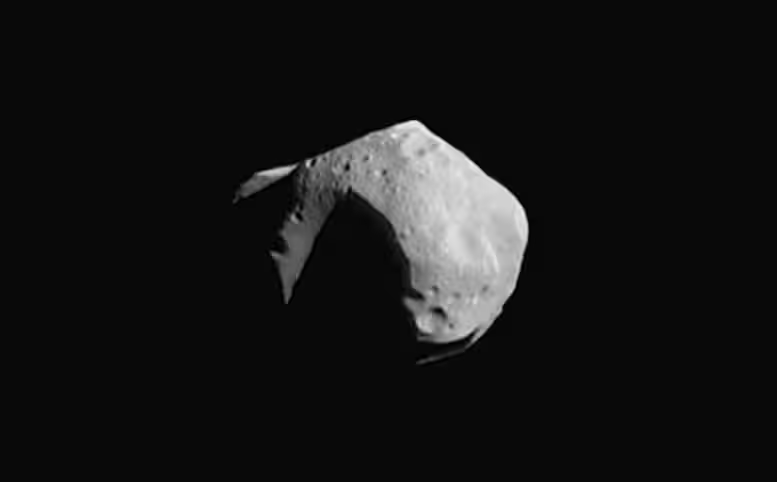
One asteroid mentioned in the study is 253 Mathilde, a carbon-rich object previously visited by NASA’s NEAR Shoemaker spacecraft. The concept of producing fuel in space is integrated into the team’s supply-chain calculations. In some cases, it made asteroid transport scenarios more practical.
Managing the Logistics
The study does not claim that asteroid mining is imminent. Significant technical challenges remain, particularly when it comes to extraction systems and operating machinery in space for extended periods.
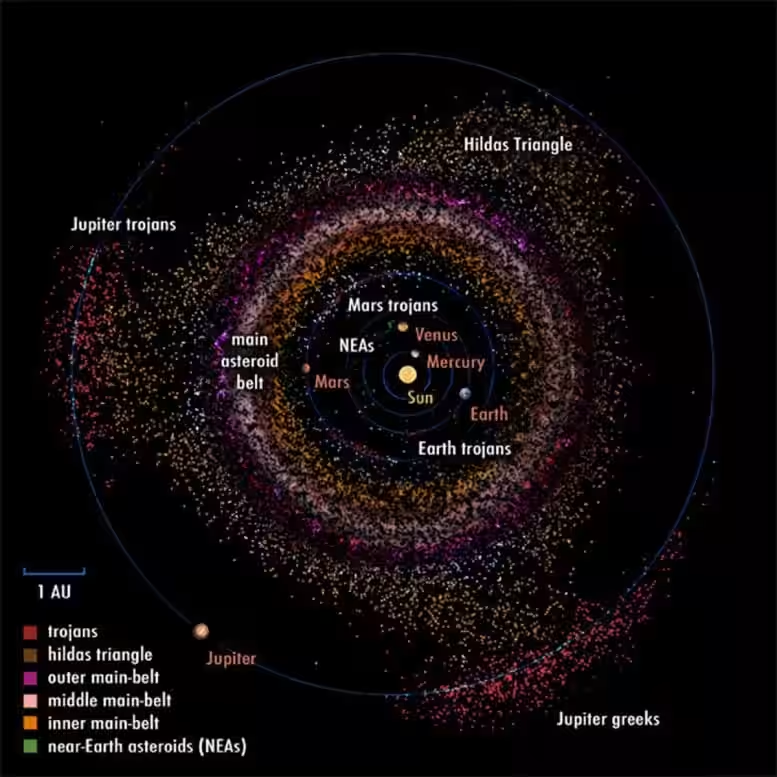
However, the researchers argue that the logistics side of the problem appears manageable under the right conditions. Their simulations identified several asteroid targets that could work with current or near-future spacecraft technology.
This article has been fact checked for accuracy, with information verified against reputable sources. Learn more about us and our editorial process.
Last reviewed on .
Article history
- Latest version
Reference(s)
- “Asteroid Mining to Sustain a Mars Colony: A Logistics Point of View.” <https://arxiv.org/pdf/2604.18664>.
- Cermak, Alicia. “253 Mathilde - NASA Science.”, November 18, 2017 NASA <https://science.nasa.gov/solar-system/asteroids/253-mathilde/>.
- Cermak, Alicia. “NEAR Shoemaker - NASA Science.”, December 21, 2017 NASA <https://science.nasa.gov/mission/near-shoemaker/>.
Cite this page:
- Posted by Karan Das