Earth’s Second Moon Could Be a Lost Piece of the Moon, Scientists Say
A small asteroid circling Earth might be a fragment of the moon, and a space probe is on the verge of uncovering its origins.
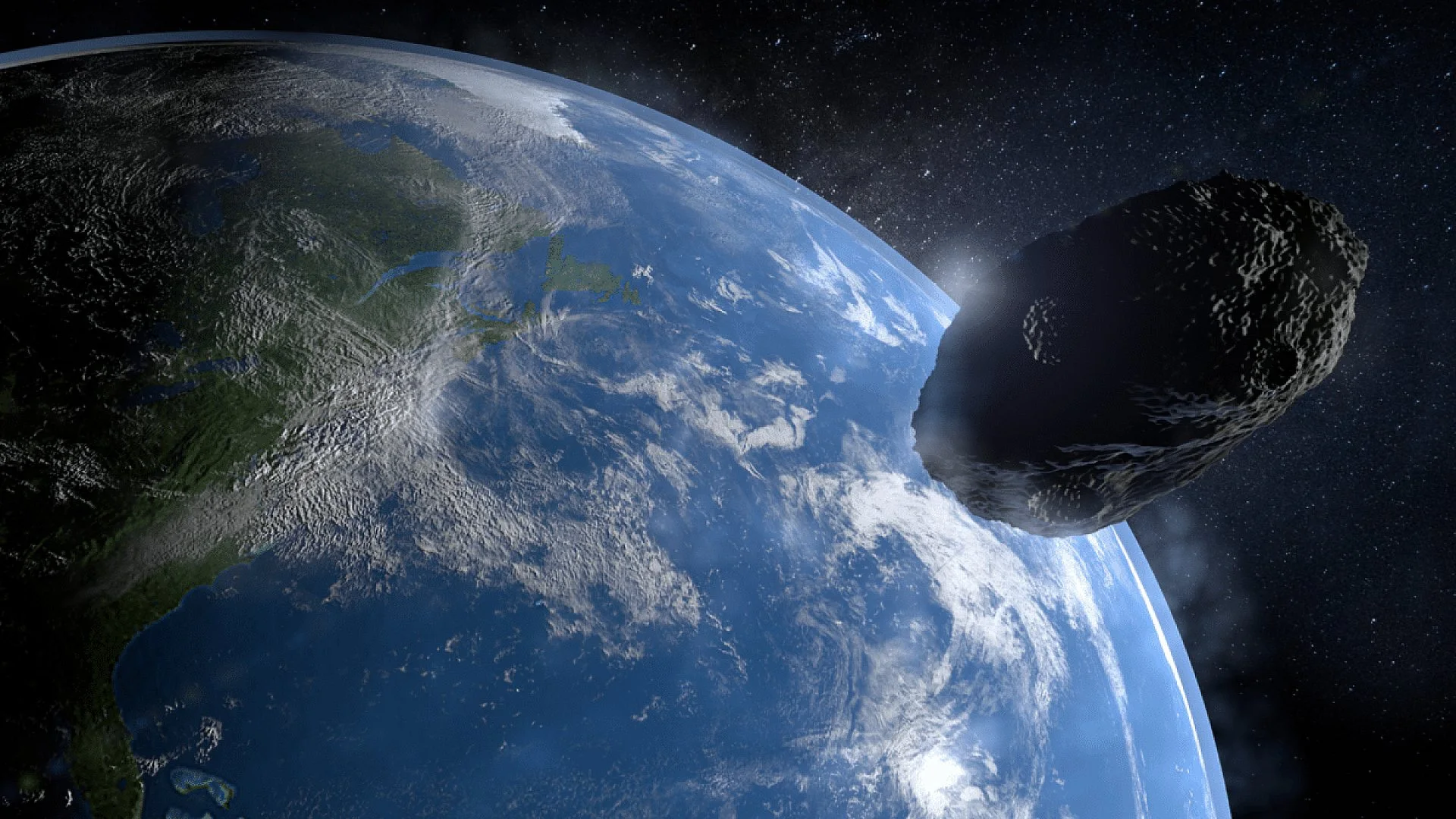
For years, astronomers have been tracking a small group of space rocks that share Earth’s orbit around the sun. Among them, Asteroid 2016 HO3 and the well-known quasi-satellite Kamo’oalewa have sparked intense debate: are these cosmic companions simply wandering asteroids from the main belt, or could they be fragments of the moon itself? According to a recent study published in Icarus, the latest simulations suggest the asteroid belt is the most likely origin, but the final answer may soon come from a spacecraft mission that promises to deliver physical samples to Earth.
The Fascinating World of Earth’s Co-Orbitals
Earth is not alone in its orbit; a small collection of objects known as co-orbitals silently accompanies us in our journey around the sun. These rocks, which range from mere meters across to tens of meters in diameter, occupy fascinating orbital patterns, including quasi-satellite orbits, horseshoe paths, and tadpole trajectories. Their movements are so tightly linked to Earth that they effectively share the planet’s solar year, making them true celestial companions.
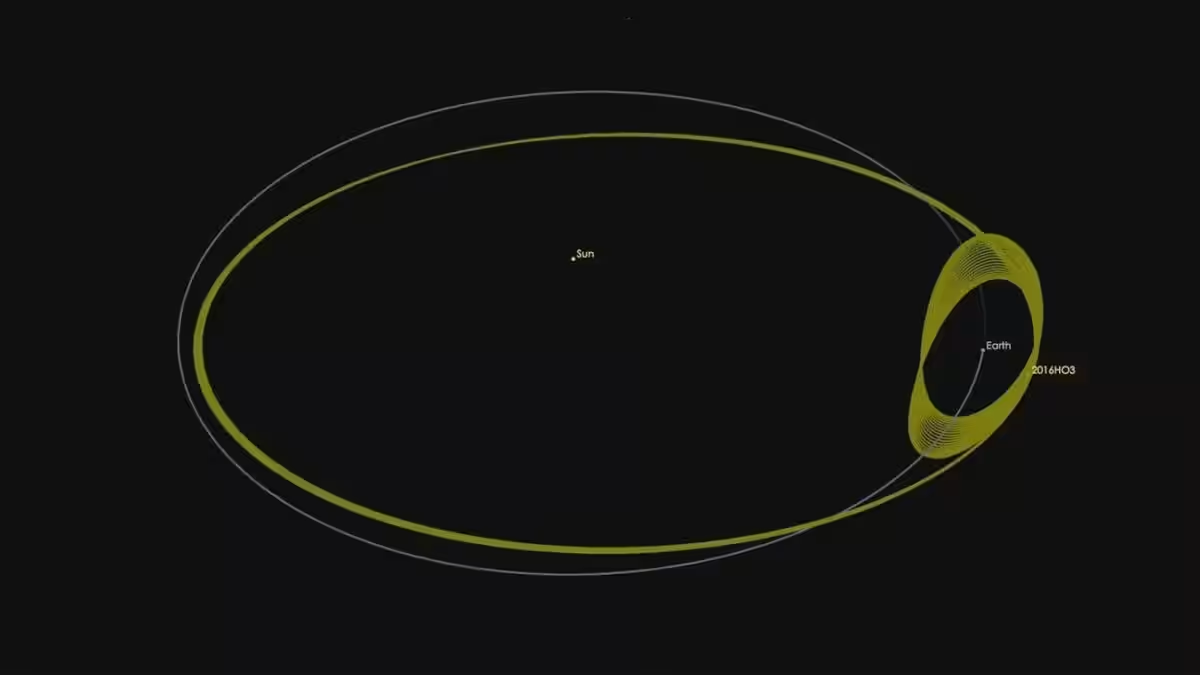
Credit: NASA/JPL-Caltech
Among these, Kamo’oalewa stands out not only for its stability but also for its unusual surface composition. Spectral analysis suggests it bears a striking resemblance to the space-weathered silicates found on the moon, an observation that reignited the long-standing debate about whether some co-orbitals could actually be lunar debris blasted into space by massive impacts.
The Lunar Origins Conundrum
The notion that Kamo’oalewa could be a piece of the moon is both captivating and contentious. Some scientists have speculated that it might have been ejected during the impact that created the Giordano Bruno crater, a colossal 22-kilometer-wide feature on the lunar far side that formed between 1 and 10 million years ago.
However, theoretical models indicate that propelling a 50-meter fragment from the lunar surface into a stable quasi-satellite orbit around Earth requires an almost unimaginable amount of energy. Recent simulations suggest that such an event would be expected only once every 20 billion years, far exceeding the age of the universe.
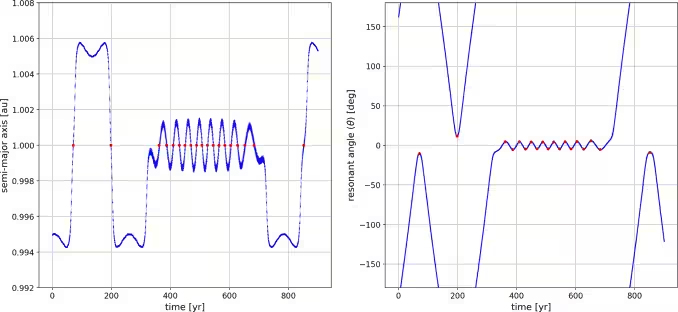
Credit: Icarus
Using these orbital mechanics, researchers estimate a 21% probability that Kamo’oalewa originated from the moon, suggesting that while intriguing, the lunar hypothesis remains statistically unlikely compared to the asteroid belt scenario.
Unlocking the Secrets of Rare Orbital Pathways
To investigate these possibilities, researchers Elisa Alessi and Robert Jedicke ran extensive simulations using supercomputers, launching 12,000 synthetic particles from the lunar surface at varying speeds and angles. They tracked these virtual objects over millions of years, analyzing how many could settle into long-term co-orbital positions around Earth.
The results were striking: only a small fraction, roughly 70 objects larger than 10 meters, achieved stable co-orbital orbits. In comparison, when the researchers modeled the flow of objects from the main asteroid belt using NEOMOD3, around 1,600 potential co-orbitals were predicted to arrive naturally near Earth.
These findings, published in Icarus, suggest that the majority of Earth’s current co-orbitals are far more likely to be captured asteroids rather than lunar fragments, though a few exceptions cannot be completely dismissed.
This article has been fact checked for accuracy, with information verified against reputable sources. Learn more about us and our editorial process.
Last reviewed on .
Article history
- Latest version
Reference(s)
- Alessi, Elisa Maria., et al. “The steady-state population of Earth ’s co-orbitals of lunar provenance.” Icarus, vol. 455, September 1, 2026, pp. 117109 Elsevier BV, doi: 10.1016/j.icarus.2026.117109. <https://www.sciencedirect.com/science/article/pii/S0019103526001752?via%3Dihub>.
Cite this page:
- Posted by Karan Das