NASA’s $500 Million Swift Telescope Rescue Mission Clears A Major Test Before Launch
NASA’s Swift Observatory is nearing the end of its operational altitude, prompting a swift response with a rescue mission that has just passed a critical pre-launch evaluation.
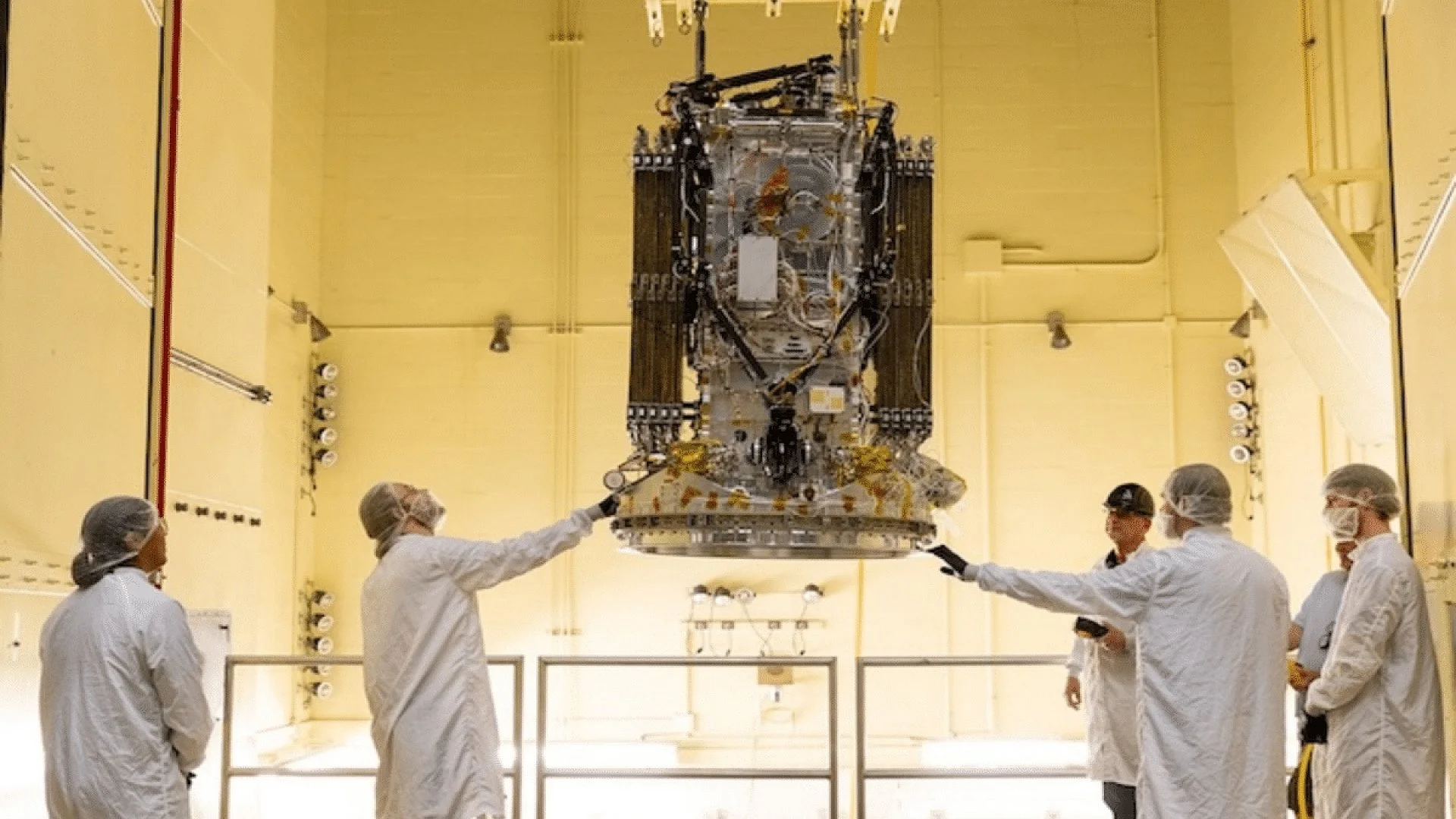
NASA’s Neil Gehrels Swift Observatory rescue mission has entered a critical phase after the Link spacecraft, designed to elevate the aging telescope into a safer orbit, completed rigorous environmental testing.
A Space Telescope Faces an Uncertain Future
The Neil Gehrels Swift Observatory has been a key player in the high-energy universe since 2004, providing scientists with critical insights into gamma-ray bursts, black holes, neutron stars, and other cosmic events that unfold far beyond Earth.
The spacecraft’s unique design enables it to rapidly respond to sudden explosions in deep space, sending data back to scientists while the events are still unfolding. This capability has made Swift one of NASA’s most productive astrophysics missions, but it now faces a challenge it was never designed to overcome.
Unlike many spacecraft, Swift lacks an onboard propulsion system capable of raising its orbit after years of gradual atmospheric drag. Its altitude has dropped from approximately 600 kilometers to about 400 kilometers, a decline accelerated by elevated solar activity that has expanded Earth’s upper atmosphere and increased drag on satellites in low Earth orbit.
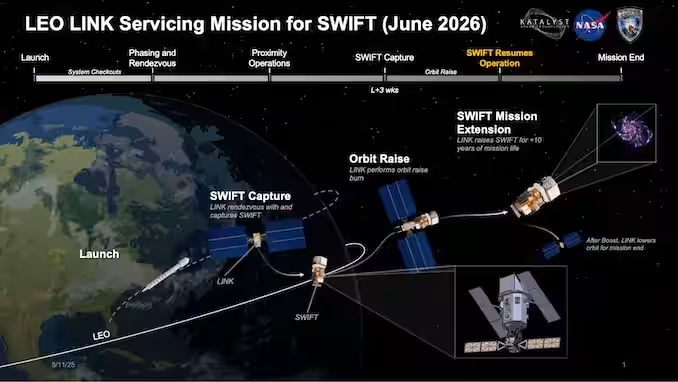
Without intervention, the observatory is expected to reenter Earth’s atmosphere later this year, ending the mission in a destructive plunge. This risk has prompted an unusually swift satellite servicing effort led by Katalyst Space Technologies, a company developing the Link spacecraft to dock with Swift and push it higher.

Image: NASA/Sophia Roberts
Link Completes Environmental Testing
The completion of environmental testing marks a significant milestone for the Link spacecraft, which is being prepared for a mission with little margin for delay. Testing at NASA Goddard was designed to show that the spacecraft can survive the stresses it will face after launch and still perform the precise operations needed to approach and boost Swift.
After concluding testing in the Space Environment Simulator on May 4, the spacecraft returned to Katalyst Space Technologies facilities in Broomfield, Colorado, for additional prelaunch work. The timeline is compressed because the target spacecraft is not waiting in a stable orbit; it is actively descending as drag continues to pull it closer to Earth.
This mission is different from standard satellite servicing demonstrations, where planners often have more flexibility to test, revise, and delay. Here, every week matters because the observatory’s altitude is falling toward a point where rescue becomes harder, riskier, or no longer possible.
“The Swift boost attempt is a fast, high-risk, high-reward mission,” said John Van Eepoel, Swift’s mission director at NASA Goddard. “Swift will likely re-enter the atmosphere sometime later this year if we don’t attempt to lift it to a higher altitude. Katalyst has gotten to this point in just eight months, and we’re glad they were able to use NASA’s facilities to test Link and draw on our expertise to help tackle questions that popped up along the way.”
Graphic: Katalyst Space Technologies
NASA’s Risk-Tolerant Rescue Strategy
NASA awarded Katalyst Space Technologies a $30 million contract in September 2025 to develop the rescue spacecraft, a relatively small sum compared with the estimated $500 million value of the observatory it is meant to preserve.
The logic behind the mission is direct: if Swift can be boosted into a higher orbit, NASA may keep using a proven astrophysics platform instead of replacing its capabilities with a new spacecraft, a process that would likely take years and cost far more.
The mission also carries broader implications for satellite servicing, because many valuable spacecraft were not designed for docking, refueling, or orbital rescue. A successful boost of Swift would show that commercial servicing vehicles can be used on a wider class of aging satellites, including spacecraft that were launched before satellite life-extension became a practical commercial field.
NASA has described the attempt as an example of accepting more schedule and operational risk in exchange for a chance to preserve a valuable national asset. “This is a forward-leaning, risk-tolerant approach for NASA. But attempting an orbit boost is both more affordable than replacing Swift’s capabilities with a new mission, and beneficial to the nation — expanding the use of satellite servicing to a new and broader class of spacecraft.”
The challenge is that Swift was not originally built with a propulsion-assisted rescue in mind, meaning Link must execute a technically demanding rendezvous and attachment operation under time pressure.
“We’re in an unusual situation where the schedule dictates how much risk we’re willing to accept, rather than the other way around,” said Kieran Wilson, Link’s principal investigator at Katalyst. “The clock is ticking on Swift’s descent, so we have to find a balance between testing and problem solving that gives the mission the best chance of success.”
Image: NASA/Sophia Roberts
Pegasus XL: A Unique Launch System
The launch plan adds another unusual element to the rescue effort. Because Swift occupies an orbit inclined only 20.6 degrees from the equator, the mission needs a launch system capable of reaching a low-inclination orbit on a tight timeline.
This requirement led Katalyst to select Northrop Grumman’s Pegasus XL, an air-launched rocket carried beneath an L-1011 aircraft before being released at altitude. Unlike a ground-launched rocket tied to a fixed launch site, Pegasus XL can be deployed from different locations, giving mission planners more flexibility to target specific orbital inclinations.
For this rescue attempt, that flexibility is central to the plan: Link is expected to integrate with Pegasus XL at NASA’s Wallops Flight Facility in Virginia early in the month, then be flown to the Marshall Islands for release later in the month.
Launching from that region helps the spacecraft reach the orbit needed to intercept Swift without wasting performance on a more difficult trajectory. “The versatility offered by Pegasus’ unique air-launch capability provides customers with a space launch solution that can be rapidly deployed anywhere on Earth to reach any orbit,” said Kurt Eberly, Director of Space Launch for Northrop Grumman.
The selection of Pegasus XL also shows how every part of the mission is being shaped by time and geometry. The spacecraft must not only work; it must launch from the right place, into the right orbit, soon enough to catch an observatory that continues to lose altitude.
If the launch and rendezvous sequence succeeds, Link will attempt to dock with Swift and raise its orbit, buying the telescope more time for science and giving NASA a rare demonstration of rapid-response orbital servicing. If it fails or arrives too late, one of NASA’s long-serving astrophysics observatories could be lost to atmospheric reentry after more than two decades in space.
This article has been fact checked for accuracy, with information verified against reputable sources. Learn more about us and our editorial process.
Last reviewed on .
Article history
- Latest version
Cite this page:
- Posted by Karan Das