NASA’s Voyager Probes Are Defying Time, And This Bold Plan Could Extend Their Mission for Decades
NASA’s Voyager probes, which have ventured through deep space for almost half a century, may keep operating into the 2030s thanks to a fresh engineering strategy designed to stretch their power supply.
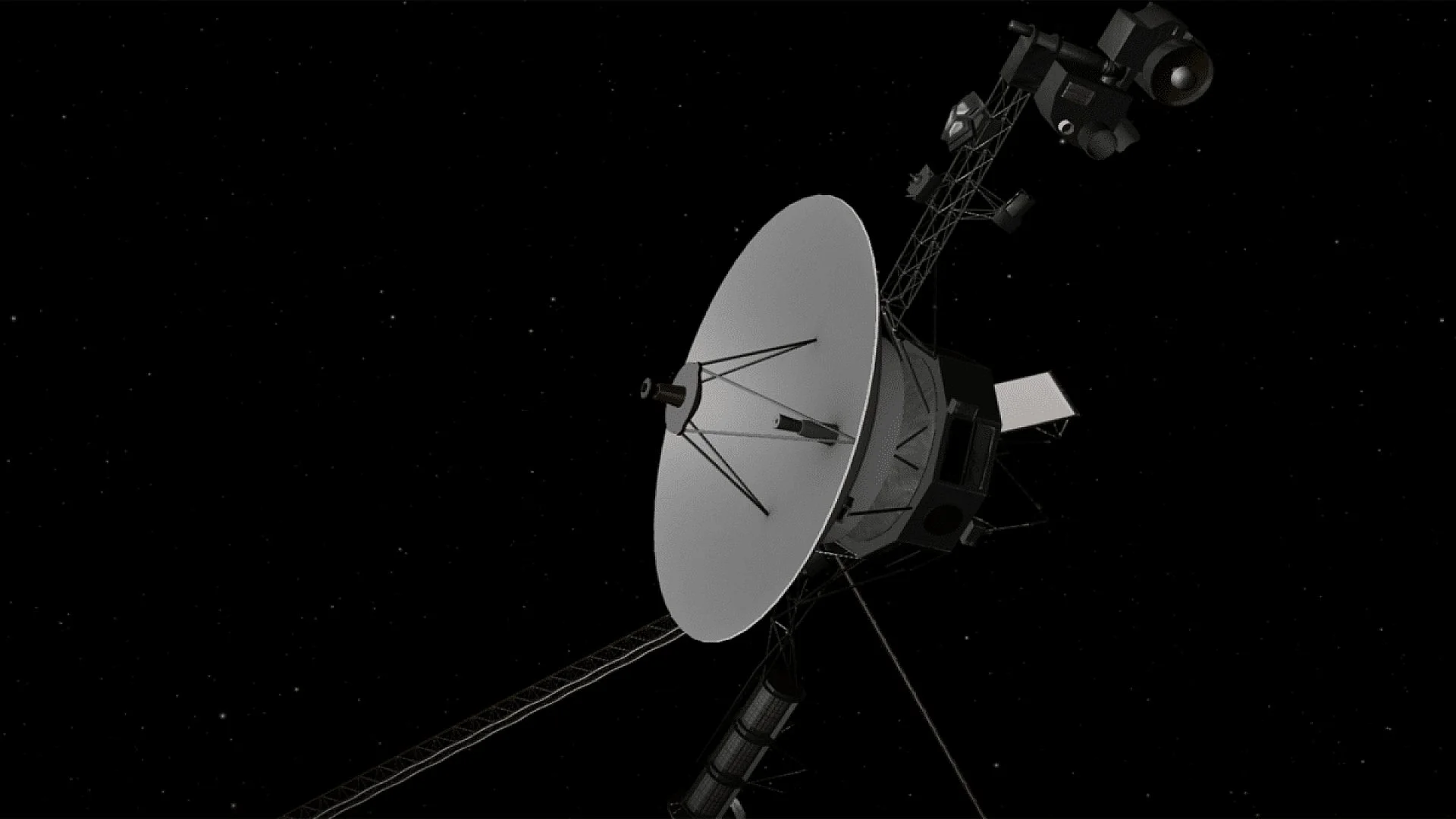
NASA’s Voyager 1 and Voyager 2 spacecraft, now approaching the 50-year mark of their groundbreaking journey, are facing a critical power depletion. However, a daring engineering strategy may extend their mission into the 2030s, potentially yielding even more groundbreaking scientific discoveries from interstellar space.
A High-Risk Maneuver to Extend the Lifespan
NASA’s Voyager spacecraft have long surpassed their expected lifespans, operating on a fraction of their original power as they venture farther into interstellar space. To keep them alive, NASA engineers are adopting innovative strategies, including a high-risk engineering maneuver known as the “Big Bang.”
“An upcoming engineering activity, nicknamed the ’Big Bang’, on NASA’s twin Voyager spacecraft will continue the agency’s efforts to maximize the science output of the mission,” said a NASA spokesperson in an email to Space.com. The plan involves turning off three devices that have been used to prevent the spacecraft’s thruster fuel lines from freezing. By replacing them with three new devices, engineers hope to conserve almost 10 watts of power, which is critical as the spacecraft’s power supply continues to shrink.

Credit: NASA/JPL
This maneuver could be the key to extending the life of the instruments that continue to gather valuable scientific data from the far reaches of the solar system and beyond. If the strategy proves successful, it may delay the need to shut down vital science instruments by at least one year. The team will begin testing the adjustments on Voyager 2 in May and June 2026, with plans to implement the changes on Voyager 1 shortly thereafter.
The Challenge of Power Depletion
Launched in 1977, both Voyager spacecraft were designed for a much shorter mission, to explore the outer planets of the solar system. However, their longevity and ability to transmit data from interstellar space have exceeded expectations, and they are still operating more than four decades later. Despite their success, both spacecraft are nearing the end of their operational lives as their power sources, nuclear batteries, continue to lose efficiency.
Each year, the spacecraft lose about four watts of power, leaving them with only a small margin of remaining energy to operate their instruments. By 2022, mission manager Suzanne Dodd reported that the spacecraft each had only five to six watts of extra power, barely enough to keep the systems functioning. The most power-hungry component? The transmitter that allows the spacecraft to send data back to Earth, which alone consumes around 200 watts.
The Voyager missions were not just a tour of the solar system. They used a rare alignment of the outer planets that happens roughly once every 176 years, allowing gravity assists to send them across the solar system with remarkable efficiency.
— Cosmos Archive (@cosmosarcive) May 7, 2026
Voyager 1 flew past Jupiter and… pic.twitter.com/LMfqmibn6w
The looming challenge of power depletion has prompted NASA engineers to turn off various instruments one by one. While some instruments, such as the cosmic ray detectors, have already been shut down, a few remain operational, including the plasma wave subsystems and magnetometers. However, NASA faces the constant pressure of balancing the need to conserve power with the desire to continue gathering data as long as possible.
A Stretch Goal for 2035?
While the upcoming “Big Bang” activity could buy more time for the Voyagers, the spacecraft are still on a countdown toward their eventual end. Alan Cummings, a co-investigator on the Voyager mission, explained that while the nuclear power source will never fully run out, the spacecraft will eventually lack the power needed to operate their systems. Despite this, the probes are already defying expectations by continuing to send back invaluable data from deep space.
“If we got really lucky, maybe doing some operating below some thresholds, we might be able to go out to the 2030s,” Dodd said in a 2022 statement.
This optimistic outlook is built on years of incredible engineering and a series of fortunate events that have kept the spacecraft operational for so long. The team’s ultimate stretch goal is for each spacecraft to reach 200 astronomical units (AU) from Earth, a milestone that could be achieved by 2035. Currently, Voyager 1 is at 169.8 AU and Voyager 2 is at 143.1 AU.

NASA/JPL-Caltech
Although this goal is ambitious, the Voyager mission has always been defined by its ability to exceed expectations. Engineers are hopeful that with a bit more luck and careful management, the spacecraft will continue to send back data for years to come, potentially reaching milestones no one thought possible when the probes were first launched.
This article has been fact checked for accuracy, with information verified against reputable sources. Learn more about us and our editorial process.
Last reviewed on .
Article history
- Latest version
Reference(s)
- Howell, Elizabeth. “NASA's twin Voyager spacecraft are very low on power after nearly 50 years. How long can they keep going?.”, May 9, 2026 Space <https://www.space.com/space-exploration/how-long-can-the-voyager-probes-keep-exploring-interstellar-space-nasa-gearing-up-for-big-bang-maneuver-to-boost-dwindling-power-levels>.
- “https://twitter.com/cosmosarcive/status/2052417777739419874/video/1.” <https://t.co/LMfqmibn6w>.
Cite this page:
- Posted by Karan Das