SpaceX Fired Up Its 33-Engine Starship ‘V3’ Super Heavy Rocket Booster, Paving the Way for Historic Launch
SpaceX has edged nearer to the Starship rocket’s inaugural launch after its 33-engine static fire test concluded successfully, setting the stage for a possible May 15 departure from the launchpad.
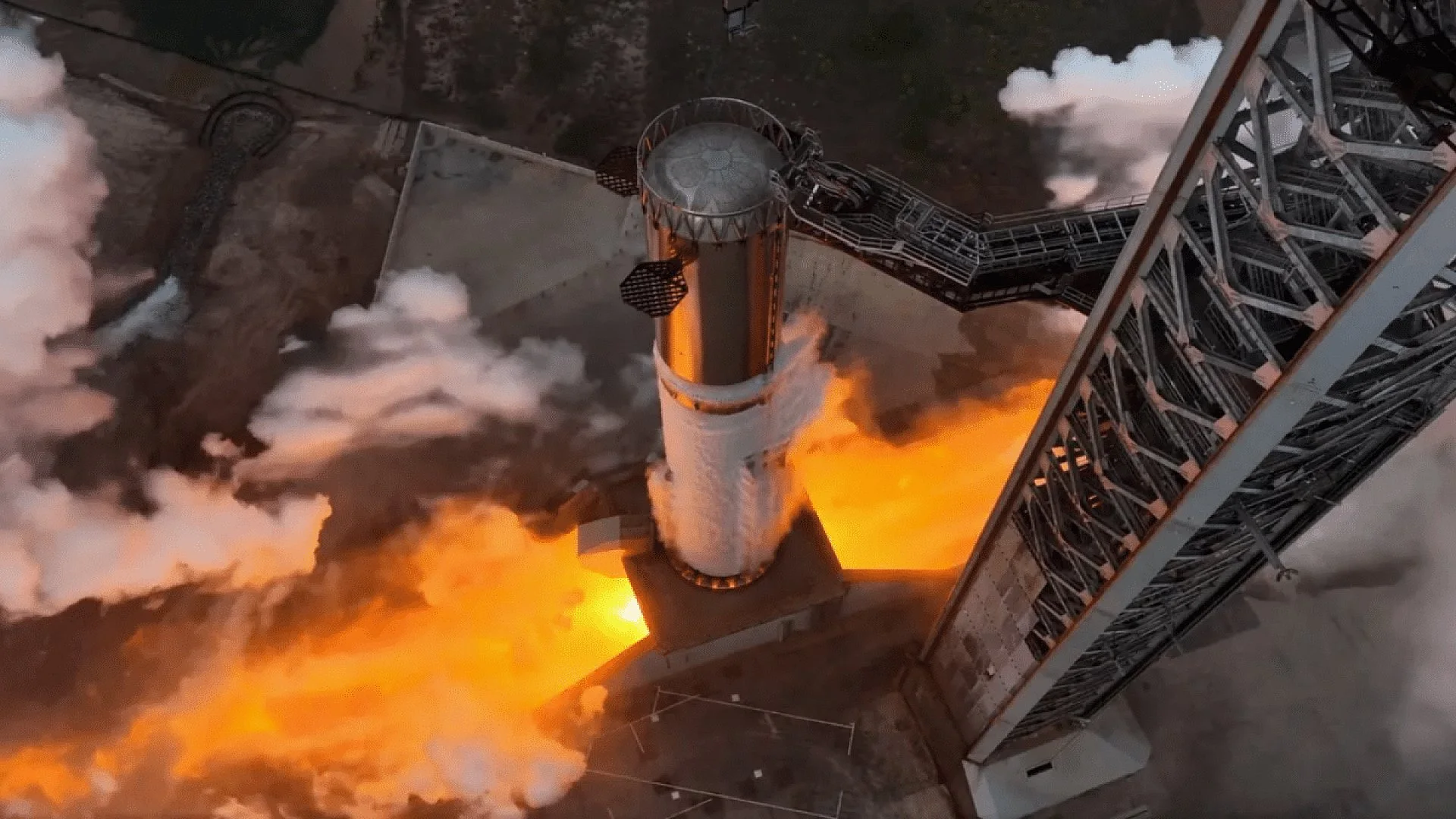
SpaceX has reached a pivotal milestone in its quest to launch the most powerful rocket in history, with the successful firing of the entire 33-engine Super Heavy V3 booster for the first time. The company is now targeting May 15 for its 12th Starship test flight, a crucial step towards its journey to Mars and the Moon. According to Space.com, this achievement marks a significant step towards refining the Starship system, a vital component of NASA’s Artemis missions and future interplanetary travel. If successful, the test flight could redefine space exploration and pave the way for a new era of space travel.
A Giant Leap Forward: Super Heavy V3 Breaks New Ground
On May 7, SpaceX completed a major milestone with the first full static-fire test of its Super Heavy V3 booster at its Starbase facility in Texas. The company fired up all 33 Raptor engines on the booster, marking a crucial step in preparation for an eventual orbital flight. The 14-second-long test was described as a success, with SpaceX confirming that the engines reached their full thrust and duration. This is the most powerful test of its kind for Starship, with the engines firing at maximum performance while the booster remained anchored to the ground.
— SpaceX (@SpaceX) May 7, 2026
“Full duration and full thrust 33-engine static fire with Super Heavy V3,” SpaceX wrote in a Thursday post on X, sharing two videos of the event. The booster, which stands over 230 feet tall, has undergone several earlier tests, including partial static fires in March and April, which were marred by issues with ground equipment. These earlier tests, although incomplete, demonstrated the complexity of preparing a rocket of this magnitude for liftoff.
The Visionary Solution for Long-Duration Space Travel
The Starship system, with its Super Heavy booster and Starship upper stage, is SpaceX’s visionary solution for long-duration space travel. At more than 400 feet tall, Starship dwarfs any rocket currently in operation, including NASA’s Saturn V, and is designed to carry more than 100 tons of cargo into low Earth orbit. With this kind of capacity, Starship is central to NASA’s Artemis program, which aims to return astronauts to the Moon and eventually send them to Mars.
Starship’s size and potential are not the only things that set it apart. SpaceX has designed the rocket to be fully reusable, drastically reducing the cost of space travel. The ability to refuel Starship in orbit would also allow missions to go far beyond Earth, with Mars being a key target. This reusability aspect is key to SpaceX’s broader goal of making space travel accessible and sustainable.
As part of NASA’s Artemis 3 mission, Starship will serve as a crew lander on the Moon by late 2027. This mission will be pivotal in testing rendezvous and docking procedures, as well as the compatibility of private space technologies with NASA’s deep-space goals.
Preparing for May 15: What’s Next for Starship?
According to Space.com, SpaceX is aiming for May 15 as the date for Starship’s 12th test flight, which will be a suborbital mission designed to further refine the vehicle’s capabilities. Unlike previous Starship tests, which were limited to suborbital flights, this will be the first major test for the newly designed V3 booster. If successful, it will pave the way for future orbital launches, as well as missions to the Moon and Mars.
However, the journey is far from over. The vehicle will need to be equipped with a life-support system before it can be used for crewed missions. Additionally, SpaceX will need to demonstrate that Starship can reach orbit and perform in-space refueling, a crucial requirement for deep-space missions.
This article has been fact checked for accuracy, with information verified against reputable sources. Learn more about us and our editorial process.
Last reviewed on .
Article history
- Latest version
Reference(s)
- Wall, Mike. “SpaceX just fired up its 33-engine Starship 'V3' Super Heavy rocket booster. When could it fly? (video).”, May 8, 2026 Space <https://www.space.com/space-exploration/launches-spacecraft/spacex-just-fired-up-its-33-engine-starship-v3-super-heavy-rocket-booster-when-could-it-fly>.
Cite this page:
- Posted by Karan Das