Moon’s Largest Crater May Hold Rare Mantle Samples for Artemis in 2028 Mission
Recent studies have uncovered remarkable findings about the moon’s South Pole–Aitken basin, presenting Artemis with an opportunity to gather lunar mantle samples during its planned 2028 expedition.
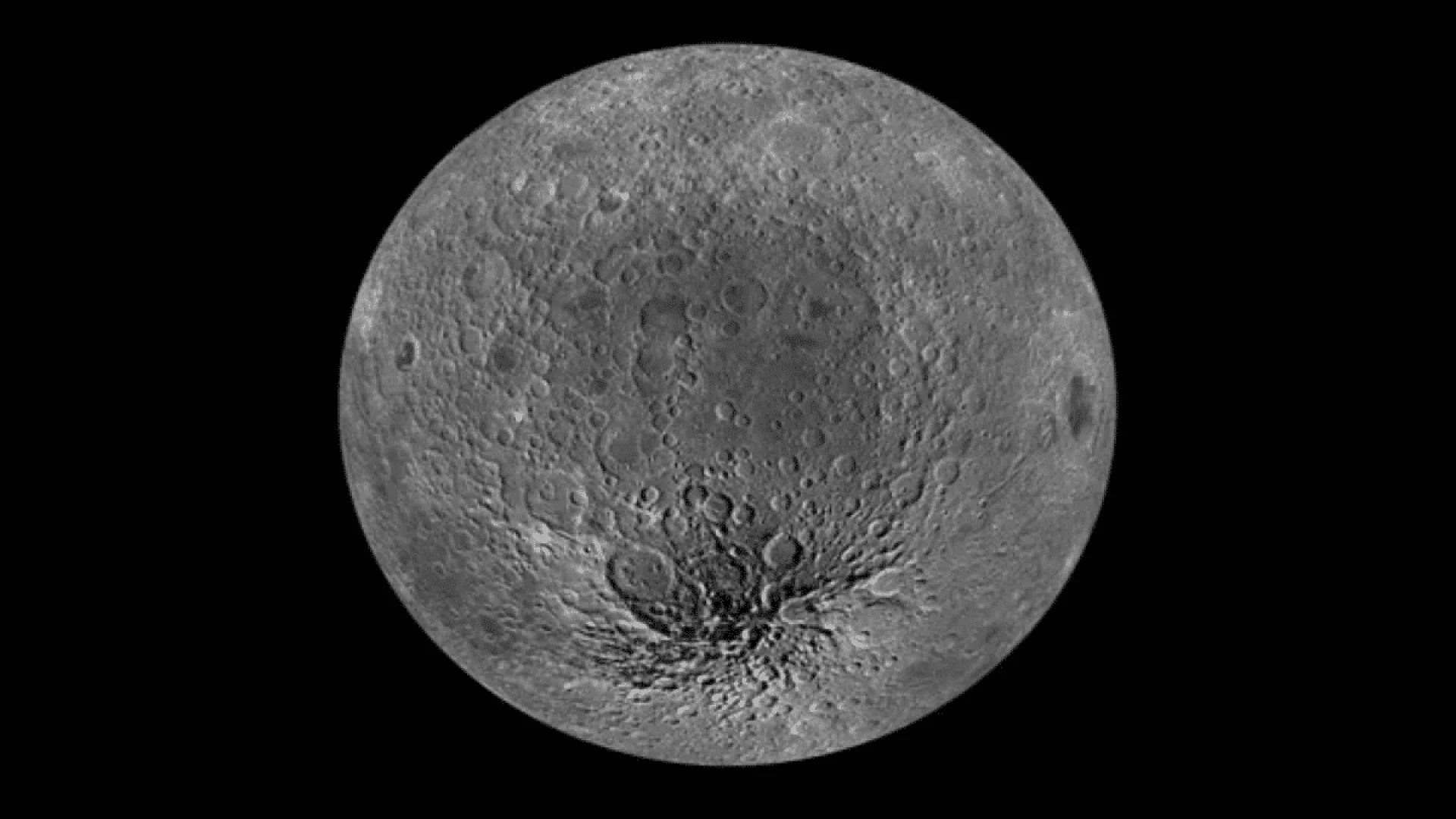
The South Pole-Aitken basin, the largest and oldest confirmed impact crater on the moon, has been the subject of intense scientific scrutiny for decades. A groundbreaking new study has shed light on the formation of this colossal depression, which stretches over 1,200 miles across the moon’s far side. The research, published in Science Advances, has provided a crucial understanding of the impactor’s trajectory and the moon’s mantle composition, which could significantly impact NASA’s Artemis mission scheduled for 2028. The SPA basin’s elliptical shape has long been a topic of debate among scientists, with two competing theories emerging: a northward impact or a southward one. However, the new study, using advanced 3D simulations, has revealed that the impactor likely traveled from north to south, creating the unique tapering structure of the basin. This refined understanding of the impact’s direction will play a vital role in guiding future lunar missions, particularly the Artemis program, which aims to land near the basin’s south pole. The study’s lead authors suggest that the impactor was a differentiated object with a dense core, approximately 260 kilometers wide. This object struck the moon at a shallow angle, creating the basin’s distinctive shape. The researchers also found that the impactor’s velocity, approximately 13 km/s, offers clues about its origin. According to the team, the most likely source of the SPA impactor was the Mars zone, rather than closer to Earth or Venus. One of the most exciting aspects of the study lies in its implications for the upcoming Artemis mission. The simulations suggest that the SPA impactor ejected mantle material, which landed in a distinctive pattern. The ejecta from the moon’s mantle was spread across the surrounding region in a “butterfly-like” shape, with material extending 550 kilometers beyond the basin’s rim in the downrange direction and 650 kilometers in the cross-range direction. This pattern presents a unique opportunity for Artemis to collect samples from the lunar mantle, something previous missions have not been able to do. The team writes, “For the previously assumed south-to-north impact, the Artemis landing region just beyond the post-collapse topographic rim would be devoid of ejecta from the lunar mantle. In contrast, for a north-to-south trajectory, our models predict that the Artemis III mission will land downrange of the impact point assuming our interpretation of a southward trajectory is correct.” These findings suggest that Artemis, by landing near the south rim of the SPA basin, may collect invaluable samples of lunar mantle material that were ejected during the ancient impact. This discovery would provide critical insights into the moon’s composition and its formation, which could, in turn, help us understand the early solar system’s evolution. The implications of this study are far-reaching and have significant consequences for our understanding of the moon’s history and the early solar system’s evolution. As we continue to explore the lunar surface, this discovery serves as a reminder of the importance of continued research and investigation into the moon’s mysteries. [Image: Crustal thickness distribution after the oblique impact. Credit: Science Advances (2026). DOI: 10.1126/sciadv.aea1984] [Image: Time series of our best-fitting SPA forming impact. Simulation is of a 260-km-diameter differentiated impactor striking at 30° and 13 km/s. Green color represents the impactor core, cream color represents the crust, and gray color represents the mantle, respectively. Black dashed lines indicate the original surface of the moon. (A) Initial state (i.e., before the impact), (B) decapitation (see also Fig. 2), (C) excavation, (D) formation of the uplift, (E) collapse of the uplift, and (F) final state of basin formation (see the main text for details). The white arrow in (A) indicates the impact direction. Movie S1 is an animation of this figure, and movie S2 is an animation in 3D. Credit: Science Advances] The Artemis mission, scheduled for 2028, has the potential to collect invaluable samples of lunar mantle material that were ejected during the ancient impact. This discovery would provide critical insights into the moon’s composition and its formation, which could, in turn, help us understand the early solar system’s evolution. [Image: The SPA basin, a colossal depression stretching over 1,200 miles across the moon’s far side, has puzzled scientists for decades. The basin’s elliptical shape has sparked debates about the trajectory of the impactor that created it. For years, researchers were divided between two competing theories: a northward impact or a southward one.] The South Pole-Aitken basin is a golden opportunity for the Artemis mission to collect samples from the lunar mantle. The simulations suggest that the SPA impactor ejected mantle material, which landed in a distinctive pattern. The ejecta from the moon’s mantle was spread across the surrounding region in a “butterfly-like” shape, with material extending 550 kilometers beyond the basin’s rim in the downrange direction and 650 kilometers in the cross-range direction. By landing near the south rim of the SPA basin, Artemis may collect invaluable samples of lunar mantle material that were ejected during the ancient impact. This discovery would provide critical insights into the moon’s composition and its formation, which could, in turn, help us understand the early solar system’s evolution. [Image: The South Pole-Aitken basin, the largest and oldest confirmed impact crater on the moon, has been the subject of intense scientific scrutiny for decades. A groundbreaking new study has shed light on the formation of this colossal depression, which stretches over 1,200 miles across the moon’s far side.] The South Pole-Aitken basin is a crucial piece of the moon’s puzzle, and its study has significant implications for our understanding of the moon’s history and the early solar system’s evolution. As we continue to explore the lunar surface, this discovery serves as a reminder of the importance of continued research and investigation into the moon’s mysteries. [Image: The SPA basin’s elliptical shape has long been a topic of debate among scientists, with two competing theories emerging: a northward impact or a southward one. However, the new study, using advanced 3D simulations, has revealed that the impactor likely traveled from north to south, creating the unique tapering structure of the basin.] The South Pole-Aitken basin is a golden opportunity for the Artemis mission to collect samples from the lunar mantle. The simulations suggest that the SPA impactor ejected mantle material, which landed in a distinctive pattern. The ejecta from the moon’s mantle was spread across the surrounding region in a “butterfly-like” shape, with material extending 550 kilometers beyond the basin’s rim in the downrange direction and 650 kilometers in the cross-range direction. By landing near the south rim of the SPA basin, Artemis may collect invaluable samples of lunar mantle material that were ejected during the ancient impact. This discovery would provide critical insights into the moon’s composition and its formation, which could, in turn, help us understand the early solar system’s evolution. [Image: The South Pole-Aitken basin, the largest and oldest confirmed impact crater on the moon, has been the subject of intense scientific scrutiny for decades. A groundbreaking new study has shed light on the formation of this colossal depression, which stretches over 1,200 miles across the moon’s far side.] The South Pole-Aitken basin is a crucial piece of the moon’s puzzle, and its study has significant implications for our understanding of the moon’s history and the early solar system’s evolution. As we continue to explore the lunar surface, this discovery serves as a reminder of the importance of continued research and investigation into the moon’s mysteries. [Image: The SPA basin’s elliptical shape has long been a topic of debate among scientists, with two competing theories emerging: a northward impact or a southward one. However, the new study, using advanced 3D simulations, has revealed that the impactor likely traveled from north to south, creating the unique tapering structure of the basin.] The South Pole-Aitken basin is a golden opportunity for the Artemis mission to collect samples from the lunar mantle. The simulations suggest that the SPA impactor ejected mantle material, which landed in a distinctive pattern. The ejecta from the moon’s mantle was spread across the surrounding region in a “butterfly-like” shape, with material extending 550 kilometers beyond the basin’s rim in the downrange direction and 650 kilometers in the cross-range direction. By landing near the south rim of the SPA basin, Artemis may collect invaluable samples of lunar mantle material that were ejected during the ancient impact. This discovery would provide critical insights into the moon’s composition and its formation, which could, in turn, help us understand the early solar system’s evolution. [Image: The South Pole-Aitken basin, the largest and oldest confirmed impact crater on the moon, has been the subject of intense scientific scrutiny for decades. A groundbreaking new study has shed light on the formation of this colossal depression, which stretches over 1,200 miles across the moon’s far side.] The South Pole-Aitken basin is a crucial piece of the moon’s puzzle, and its study has significant implications for our understanding of the moon’s history and the early solar system’s evolution. As we continue to explore the lunar surface, this discovery serves as a reminder of the importance of continued research and investigation into the moon’s mysteries. [Image: The SPA basin’s elliptical shape has long been a topic of debate among scientists, with two competing theories emerging: a northward impact or a southward one. However, the new study, using advanced 3D simulations, has revealed that the impactor likely traveled from north to south, creating the unique tapering structure of the basin.] The South Pole-Aitken basin is a golden opportunity for the Artemis mission to collect samples from the lunar mantle. The simulations suggest that the SPA impactor ejected mantle material, which landed in a distinctive pattern. The ejecta from the moon’s mantle was spread across the surrounding region in a “butterfly-like” shape, with material extending 550 kilometers beyond the basin’s rim in the downrange direction and 650 kilometers in the cross-range direction. By landing near the south rim of the SPA basin, Artemis may collect invaluable samples of lunar mantle material that were ejected during the ancient impact. This discovery would provide critical insights into the moon’s composition and its formation, which could, in turn, help us understand the early solar system’s evolution. [Image: The South Pole-Aitken basin, the largest and oldest confirmed impact crater on the moon, has been the subject of intense scientific scrutiny for decades. A groundbreaking new study has shed light on the formation of this colossal depression, which stretches over 1,200 miles across the moon’s far side.] The South Pole-Aitken basin is a crucial piece of the moon’s puzzle, and its study has significant implications for our understanding of the moon’s history and the early solar system’s evolution. As we continue to explore the lunar surface, this discovery serves as a reminder of the importance of continued research and investigation into the moon’s mysteries. [Image: The SPA basin’s elliptical shape has long been a topic of debate among scientists, with two competing theories emerging: a northward impact or a southward one. However, the new study, using advanced 3D simulations, has revealed that the impactor likely traveled from north to south, creating the unique tapering structure of the basin.] The South Pole-Aitken basin is a golden opportunity for the Artemis mission to collect samples from the lunar mantle. The simulations suggest that the SPA impactor ejected mantle material, which landed in a distinctive pattern. The ejecta from the moon’s mantle was spread across the surrounding region in a “butterfly-like” shape, with material extending 550 kilometers beyond the basin’s rim in the downrange direction and 650 kilometers in the cross-range direction. By landing near the south rim of the SPA basin, Artemis may collect invaluable samples of lunar mantle material that were ejected during the ancient impact. This discovery would provide critical insights into the moon’s composition and its formation, which could, in turn, help us understand the early solar system’s evolution. [Image: The South Pole-Aitken basin, the largest and oldest confirmed impact crater on the moon, has been the subject of intense scientific scrutiny for decades. A groundbreaking new study has shed light on the formation of this colossal depression, which stretches over 1,200 miles across the moon’s far side.] The South Pole-Aitken basin is a crucial piece of the moon’s puzzle, and its study has significant implications for our understanding of the moon’s history and the early solar system’s evolution. As we continue to explore the lunar surface, this discovery serves as a reminder of the importance of continued research and investigation into the moon’s mysteries. [Image: The SPA basin’s elliptical shape has long been a topic of debate among scientists, with two competing theories emerging: a northward impact or a southward one. However, the new study, using advanced 3D simulations, has revealed that the impactor likely traveled from north to south, creating the unique tapering structure of the basin.] The South Pole-Aitken basin is a golden opportunity for the Artemis mission to collect samples from the lunar mantle. The simulations suggest that the SPA impactor ejected mantle material, which landed in a distinctive pattern. The ejecta from the moon’s mantle was spread across the surrounding region in a “butterfly-like” shape, with material extending 550 kilometers beyond the basin’s rim in the downrange direction and 650 kilometers in the cross-range direction. By landing near the south rim of the SPA basin, Artemis may collect invaluable samples of lunar mantle material that were ejected during the ancient impact. This discovery would provide critical insights into the moon’s composition and its formation, which could, in turn, help us understand the early solar system’s evolution. [Image: The South Pole-Aitken basin, the largest and oldest confirmed impact crater on the moon, has been the subject of intense scientific scrutiny for decades. A groundbreaking new study has shed light on the formation of this colossal depression, which stretches over 1,200 miles across the moon’s far side.] The South Pole-Aitken basin is a crucial piece of the moon’s puzzle, and its study has significant implications for our understanding of the moon’s history and the early solar system’s evolution. As we continue to explore the lunar surface, this discovery serves as a reminder of the importance of continued research and investigation into the moon’s mysteries. [Image: The SPA basin’s elliptical shape has long been a topic of debate among scientists, with two competing theories emerging: a northward impact or a southward one. However, the new study, using advanced 3D simulations, has revealed that the impactor likely traveled from north to south, creating the unique tapering structure of the basin.] The South Pole-Aitken basin is a golden opportunity for the Artemis mission to collect samples from the lunar mantle. The simulations suggest that the SPA impactor ejected mantle material, which landed in a distinctive pattern. The ejecta from the moon’s mantle was spread across the surrounding region in a “butterfly-like” shape, with material extending 550 kilometers beyond the basin’s rim in the downrange direction and 650 kilometers in the cross-range direction. By landing near the south rim of the SPA basin, Artemis may collect invaluable samples of lunar mantle material that were ejected during the ancient impact. This discovery would provide critical insights into the moon’s composition and its formation, which could, in turn, help us understand the early solar system’s evolution. [Image: The South Pole-Aitken basin, the largest and oldest confirmed impact crater on the moon, has been the subject of intense scientific scrutiny for decades. A groundbreaking new study has shed light on the formation of this colossal depression, which stretches over 1,200 miles across the moon’s far side.] The South Pole-Aitken basin is a crucial piece of the moon’s puzzle, and its study has significant implications for our understanding of the moon’s history and the early solar system’s evolution. As we continue to explore the lunar surface, this discovery serves as a reminder of the importance of continued research and investigation into the moon’s mysteries. [Image: The SPA basin’s elliptical shape has long been a topic of debate among scientists, with two competing theories emerging: a northward impact or a southward one. However, the new study, using advanced 3D simulations, has revealed that the impactor likely traveled from north to south, creating the unique tapering structure of the basin.] The South Pole-Aitken basin is a golden opportunity for the Artemis mission to collect samples from the lunar mantle. The simulations suggest that the SPA impactor ejected mantle material, which landed in a distinctive pattern. The ejecta from the moon’s mantle was spread across the surrounding region in a “butterfly-like” shape, with material extending 550 kilometers beyond the basin’s rim in the downrange direction and 650 kilometers in the cross-range direction. By landing near the south rim of the SPA basin, Artemis may collect invaluable samples of lunar mantle material that were ejected during the ancient impact. This discovery would provide critical insights into the moon’s composition and its formation, which could, in turn, help us understand the early solar system’s evolution. [Image: The South Pole-Aitken basin, the largest and oldest confirmed impact crater on the moon, has been the subject of intense scientific scrutiny for decades. A groundbreaking new study has shed light on the formation of this colossal depression, which stretches over 1,200 miles across the moon’s far side.] The South Pole-Aitken basin is a crucial piece of the moon’s puzzle, and its study has significant implications for our understanding of the moon’s history and the early solar system’s evolution. As we continue to explore the lunar surface, this discovery serves as a reminder of the importance of continued research and investigation into the moon’s mysteries. [Image: The SPA basin’s elliptical shape has long been a topic of debate among scientists, with two competing theories emerging: a northward impact or a southward one. However, the new study, using advanced 3D simulations, has revealed that the impactor likely traveled from north to south, creating the unique tapering structure of the basin.] The South Pole-Aitken basin is a golden opportunity for the Artemis mission to collect samples from the lunar mantle. The simulations suggest that the SPA impactor ejected mantle material, which landed in a distinctive pattern. The ejecta from the moon’s mantle was spread across the surrounding region in a “butterfly-like” shape, with material extending 550 kilometers beyond the basin’s rim in the downrange direction and 650 kilometers in the cross-range direction. By landing near the south rim of the SPA basin, Artemis may collect invaluable samples of lunar mantle material that were ejected during the ancient impact. This discovery would provide critical insights into the moon’s composition and its formation, which could, in turn, help us understand the early solar system’s evolution. [Image: The South Pole-Aitken basin, the largest and oldest confirmed impact crater on the moon, has been the subject of intense scientific scrutiny for decades. A groundbreaking new study has shed light on the formation of this colossal depression, which stretches over 1,200 miles across the moon’s far side.] The South Pole-Aitken basin is a crucial piece of the moon’s puzzle, and its study has significant implications for our understanding of the moon’s history and the early solar system’s evolution. As we continue to explore the lunar surface, this discovery serves as a reminder of the importance of continued research and investigation into the moon’s mysteries. [Image: The SPA basin’s elliptical shape has long been a topic of debate among scientists, with two competing theories emerging: a northward impact or a southward one. However, the new study, using advanced 3D simulations, has revealed that the impactor likely traveled from north to south, creating the unique tapering structure of the basin.] The South Pole-Aitken basin is a golden opportunity for the Artemis mission to collect samples from the lunar mantle. The simulations suggest that the SPA impactor ejected mantle material, which landed in a distinctive pattern. The ejecta from the moon’s mantle was spread across the surrounding region in a “butterfly-like” shape, with material extending 550 kilometers beyond the basin’s rim in the downrange direction and 650 kilometers in the cross-range direction. By landing near the south rim of the SPA basin, Artemis may collect invaluable samples of lunar mantle material that were ejected during the ancient impact. This discovery would provide critical insights into the moon’s composition and its formation, which could, in turn, help us understand the early solar system’s evolution. [Image: The South Pole-Aitken basin, the largest and oldest confirmed impact crater on the moon, has been the subject of intense scientific scrutiny for decades. A groundbreaking new study has shed light on the formation of this colossal depression, which stretches over 1,200 miles across the moon’s far side.] The South Pole-Aitken basin is a crucial piece of the moon’s puzzle, and its study has significant implications for our understanding of the moon’s history and the early solar system’s evolution. As we continue to explore the lunar surface, this discovery serves as a reminder of the importance of continued research and investigation into the moon’s mysteries. [Image: The SPA basin’s elliptical shape has long been a topic of debate among scientists, with two competing theories emerging: a northward impact or a southward one. However, the new study, using advanced 3D simulations, has revealed that the impactor likely traveled from north to south, creating the unique tapering structure of the basin.] The South Pole-Aitken basin is a golden opportunity for the Artemis mission to collect samples from the lunar mantle. The simulations suggest that the SPA impactor ejected mantle material, which landed in a distinctive pattern. The ejecta from the moon’s mantle was spread across the surrounding region in a “butterfly-like” shape, with material extending 550 kilometers beyond the basin’s rim in the downrange direction and 650 kilometers in the cross-range direction. By landing near the south rim of the SPA basin, Artemis may collect invaluable samples of lunar mantle material that were ejected during the ancient impact. This discovery would provide critical insights into the moon’s composition and its formation, which could, in turn, help us understand the early solar system’s evolution. [Image: The South Pole-Aitken basin, the largest and oldest confirmed impact crater on the moon, has been the subject of intense scientific scrutiny for decades. A groundbreaking new study has shed light on the formation of this colossal depression, which stretches over 1,200 miles across the moon’s far side.] The South Pole-Aitken basin is a crucial piece of the moon’s puzzle, and its study has significant implications for our understanding of the moon’s history and the early solar system’s evolution. As we continue to explore the lunar surface, this discovery serves as a reminder of the importance of continued research and investigation into the moon’s mysteries. [Image: The SPA basin’s elliptical shape has long been a topic of debate among scientists, with two competing theories emerging: a northward impact or a southward one. However, the new study, using advanced 3D simulations, has revealed that the impactor likely traveled from north to south, creating the unique tapering structure of the basin.] The South Pole-Aitken basin is a golden opportunity for the Artemis mission to collect samples from the lunar mantle. The simulations suggest that the SPA impactor ejected mantle material, which landed in a distinctive pattern. The ejecta from the moon’s mantle was spread across the surrounding region in a “butterfly-like” shape, with material extending 550 kilometers beyond the basin’s rim in the downrange direction and 650 kilometers in the cross-range direction. By landing near the south rim of the SPA basin, Artemis may collect invaluable samples of lunar mantle material that were ejected during the ancient impact. This discovery would provide critical insights into the moon’s composition and its formation, which could, in turn, help us understand the early solar system’s evolution. [Image: The South Pole-Aitken basin, the largest and oldest confirmed impact crater on the moon, has been the subject of intense scientific scrutiny for decades. A groundbreaking new study has shed light on the formation of this colossal depression, which stretches over 1,200 miles across the moon’s far side.] The South Pole-Aitken basin is a crucial piece of the moon’s puzzle, and its study has significant implications for our understanding of the moon’s history and the early solar system’s evolution. As we continue to explore the lunar surface, this discovery serves as a reminder of the importance of continued research and investigation into the moon’s mysteries. [Image: The SPA basin’s elliptical shape has long been a topic of debate among scientists, with two competing theories emerging: a northward impact or a southward one. However, the new study, using advanced 3D simulations, has revealed that the impactor likely traveled from north to south, creating the unique tapering structure of the basin.] The South Pole-Aitken basin is a golden opportunity for the Artemis mission to collect samples from the lunar mantle. The simulations suggest that the SPA impactor ejected mantle material, which landed in a distinctive pattern. The ejecta from the moon’s mantle was spread across the surrounding region in a “butterfly-like” shape, with material extending 550 kilometers beyond the basin’s rim in the downrange direction and 650 kilometers in the cross-range direction. By landing near the south rim of the SPA basin, Artemis may collect invaluable samples of lunar mantle material that were ejected during the ancient impact. This discovery would provide critical insights into the moon’s composition and its formation, which could, in turn, help us understand the early solar system’s evolution. [Image: The South Pole-Aitken basin, the largest and oldest confirmed impact crater on the moon, has been the subject of intense scientific scrutiny for decades. A groundbreaking new study has shed light on the formation of this colossal depression, which stretches over 1,200 miles across the moon’s far side.] The South Pole-Aitken basin is a crucial piece of the moon’s puzzle, and its study has significant implications for our understanding of the moon’s history and the early solar system’s evolution. As we continue to explore the lunar surface, this discovery serves as a reminder of the importance of continued research and investigation into the moon’s mysteries. [Image: The SPA basin’s elliptical shape has long been a topic of debate among scientists, with two competing theories emerging: a northward impact or a southward one. However, the new study, using advanced 3D simulations, has revealed that the impactor likely traveled from north to south, creating the unique tapering structure of the basin.] The South Pole-Aitken basin is a golden opportunity for the Artemis mission to collect samples from the lunar mantle. The simulations suggest that the SPA impactor ejected mantle material, which landed in a distinctive pattern. The ejecta from the moon’s mantle was spread across the surrounding region in a “butterfly-like” shape, with material extending 550 kilometers beyond the basin’s rim in the downrange direction and 650 kilometers in the cross-range direction. By landing near the south rim of the SPA basin, Artemis may collect invaluable samples of lunar mantle material that were ejected during the ancient impact. This discovery would provide critical insights into the moon’s composition and its formation, which could, in turn, help us understand the early solar system’s evolution. [Image: The South Pole-Aitken basin, the largest and oldest confirmed impact crater on the moon, has been the subject of intense scientific scrutiny for decades. A groundbreaking new study has shed light on the formation of this colossal depression, which stretches over 1,200 miles across the moon’s far side.] The South Pole-Aitken basin is a crucial piece of the moon’s puzzle, and its study has significant implications for our understanding of the moon’s history and the early solar system’s evolution. As we continue to explore the lunar surface, this discovery serves as a reminder of the importance of continued research and investigation into the moon’s mysteries. [Image: The SPA basin’s elliptical shape has long been a topic of debate among scientists, with two competing theories emerging: a northward impact or a southward one. However, the new study, using advanced 3D simulations, has revealed that the impactor likely traveled from north to south, creating the unique tapering structure of the basin.] The South Pole-Aitken basin is a golden opportunity for the Artemis mission to collect samples from the lunar mantle. The simulations suggest that the SPA impactor ejected mantle material, which landed in a distinctive pattern. The ejecta from the moon’s mantle was spread across the surrounding region in a “butterfly-like” shape, with material extending 550 kilometers beyond the basin’s rim in the downrange direction and 650 kilometers in the cross-range
This article has been fact checked for accuracy, with information verified against reputable sources. Learn more about us and our editorial process.
Last reviewed on .
Article history
- Latest version
Cite this page:
- Posted by Karan Das