Space Launch Costs Plunge 96% Since 1960, Paving Way for Solar Power and Asteroid Mining
Cambridge researchers argue orbital solar power, asteroid mining and space manufacturing are nearing profitability as launch costs drop 96% since 1960.
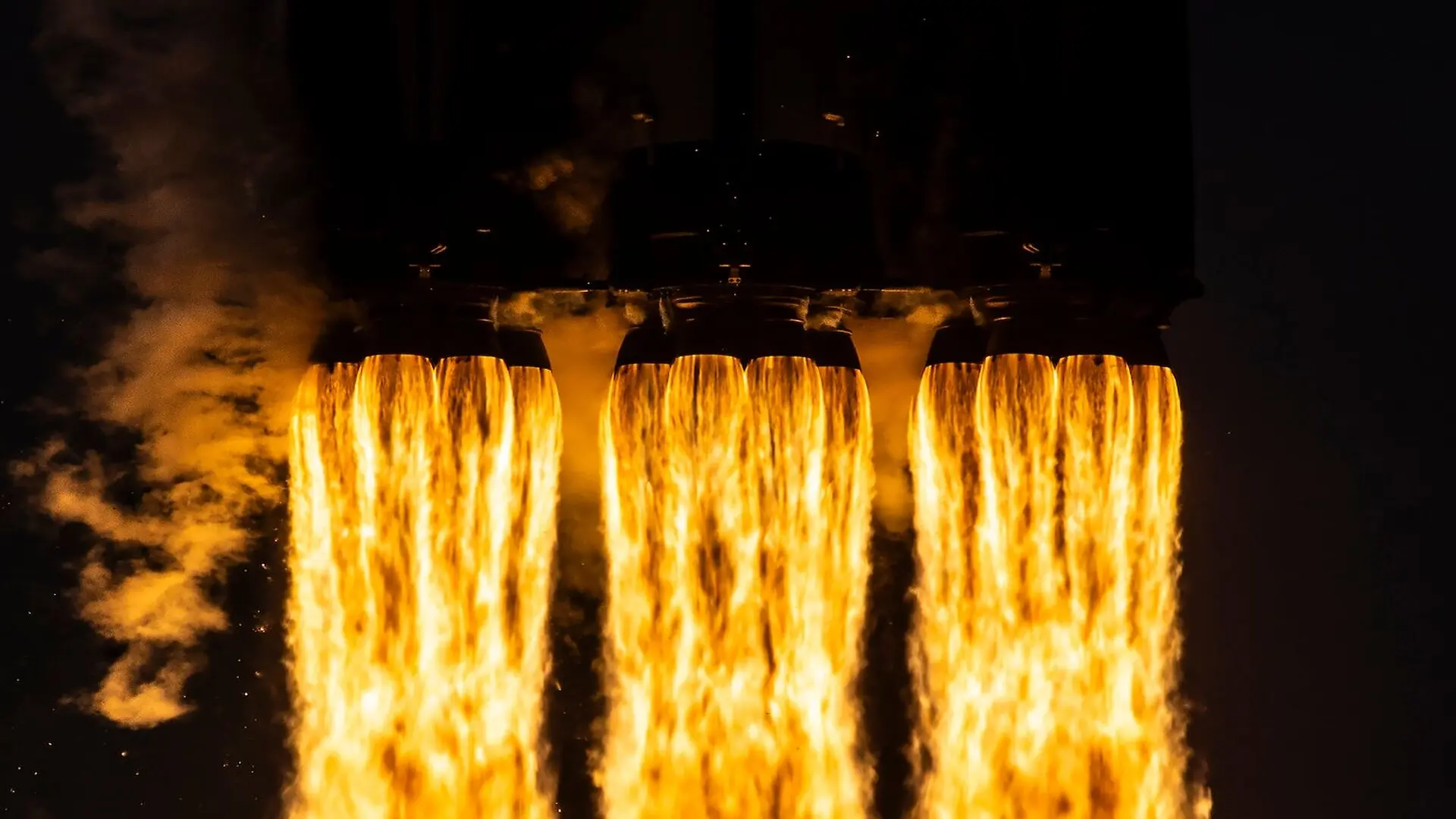
Researchers at Cambridge University argue that commercial prospects such as orbital solar farms, asteroid extraction and space‑based manufacturing are edging toward economic viability.
Launch prices are dropping at a pace that could reshape the economics of space activity, opening pathways to entire sectors that have previously existed only in speculative fiction.
During the early decades of the space era, the expense of delivering material to orbit was so prohibitive that only the wealthiest governments and corporations could afford it. In 1960, the cost of sending one kilogram into orbit exceeded $87,000 when adjusted to 2024 dollars.
Cambridge scholars now report that the same kilogram would cost roughly $3,868 by 2025—a reduction of about 96 percent. Their projections indicate the price could fall to $1,569 by 2030 and potentially reach $273 by 2040 if current trends persist.
The decline follows the well‑known pattern described by Wright’s Law, which predicts that unit costs drop predictably as cumulative production expands. The authors contend that this trajectory may soon render concepts such as orbital solar power, asteroid mining and manufacturing in microgravity commercially realistic.
“Space is transitioning from a realm of pure research and imagination to a marketplace,” said Alessio Terzi, lead author of the study, in a press release. “Continued reductions in launch expenses could unlock colonisation and commercial activities well beyond low‑Earth orbit.”
The team’s analysis, published in PNAS Nexus, compiled a dataset of more than 4,400 rocket flights representing over 330 distinct launch vehicle designs spanning from 1960 to 2025. For each mission they calculated a “unit flyaway cost,” encompassing manufacturing, maintenance and launch expenses while excluding research and development outlays.
When plotted against Wright’s Law, the data revealed that each time the total payload launched to orbit doubled, the average cost per kilogram fell by 21.2 percent. This learning‑curve rate surpasses many historic technologies.
Solar‑panel manufacturing is frequently cited as a benchmark for steep cost declines, having dropped 99.8 percent between 1975 and 2023. Yet, when adjusted for total production volume, solar panels exhibit a learning‑curve rate of roughly 20.2 percent—slightly slower than the 21.2 percent observed for launch vehicles.
For additional perspective, the researchers compared space launch economics with the 19th‑century steamship revolution, which achieved a 15.5 percent cost reduction per cargo‑volume doubling. “Space‑launch technology is now advancing faster than one of history’s most transformative transport shifts,” Terzi noted. “While steamships benefitted from massive trade expansion, space systems have delivered sharper cost drops at a far smaller scale, suggesting ample room for further improvement.”
Nonetheless, the study highlights vulnerabilities tied to market concentration. A single firm, SpaceX, currently delivers about 80 percent of orbital payloads, according to industry data. Continued success of its reusable, heavy‑lift Starship platform could drive costs even lower, but dominance by one provider also raises concerns about monopolistic behaviour and could discourage other nations and companies from relying on its services.
Another risk involves the growing density of debris in low‑Earth orbit, which could impede safe access as launch frequencies increase.
Should these challenges be managed, the economic ripple effects could be substantial. The authors envision viable business models for microgravity research, orbital tourism, and factories producing fiber‑optic cable or 3D‑bioprinted organs, all enabled by ever‑lower launch expenses.
This article has been fact checked for accuracy, with information verified against reputable sources. Learn more about us and our editorial process.
Last reviewed on .
Article history
- Latest version
Reference(s)
- Roser, Max. “Learning curves: What does it mean for a technology to follow Wright’s Law?.”, April 18, 2023 Our World in Data <https://ourworldindata.org/learning-curve>.
- “Space cargo costs could fall more than 90% by 2040, study suggests.” University of Cambridge <https://www.cam.ac.uk/stories/space-cargo-costs-set-to-plummet>.
- <https://academic.oup.com/pnasnexus/article/5/7/pgag217/8732400>.
- “Outsourcing The Final Frontier.” <https://www.bennettschool.cam.ac.uk/wp-content/uploads/2026/06/Outsourcing-the-final-frontier.pdf>.
Cite this page:
- Posted by Zara Tariq