Spacecraft Fleet Could Halve Solar Storm Damage by Boosting Earth’s Magnetic Shield
Scientists unveil a bold strategy to dampen solar storms before they hit Earth, aiming to protect our technology and power grids.
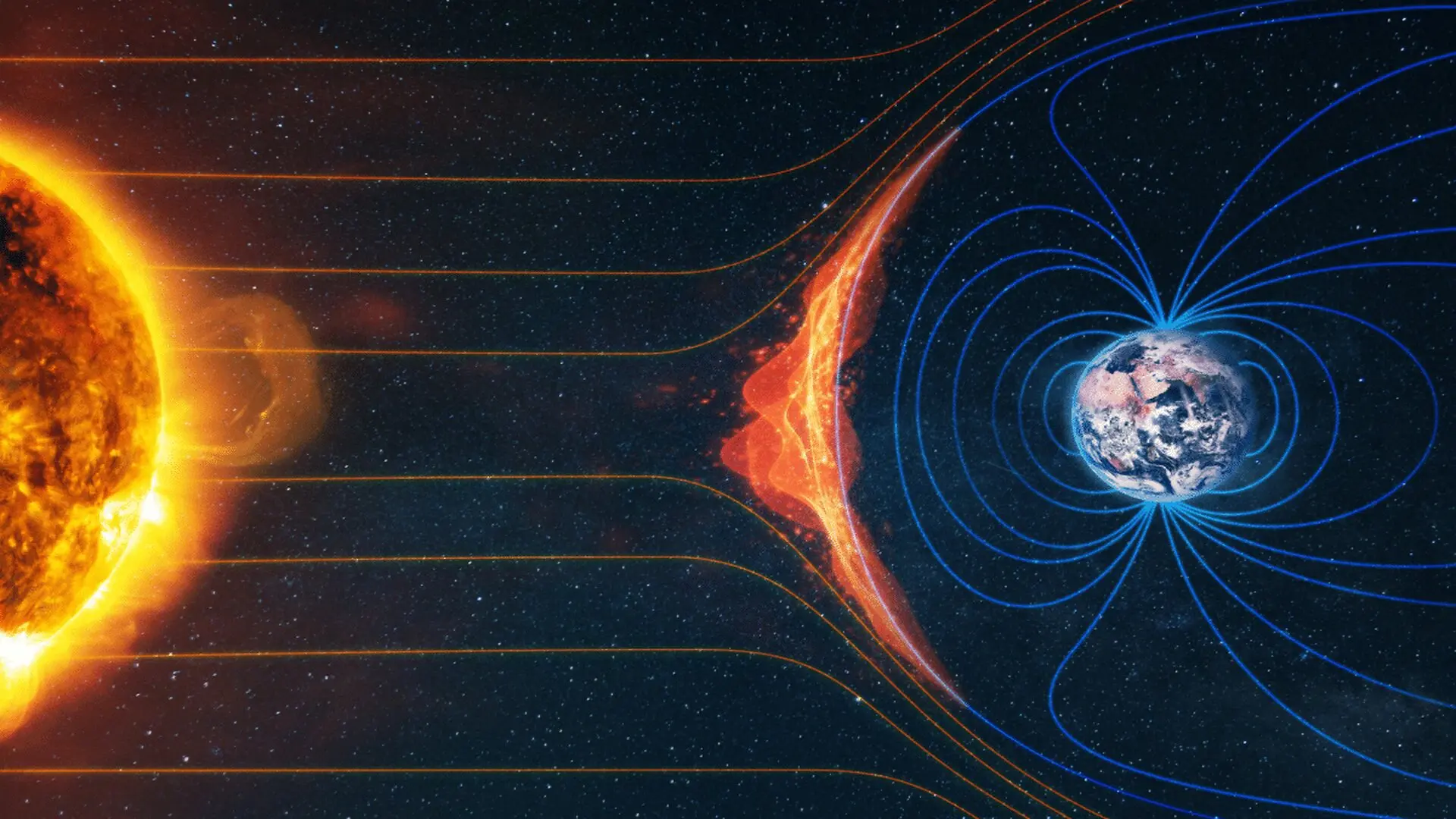
A recent paper highlighted by Advancing Earth and Space Sciences (AGU) proposes a proactive approach to solar‑storm protection, suggesting that humanity might be able to blunt the energy of an incoming event before it reaches the planet. If the concept survives further testing, it could add a new defensive layer for the satellites, navigation systems and power networks that modern life relies on.
Deploying a Fleet to Reinforce the Magnetosphere
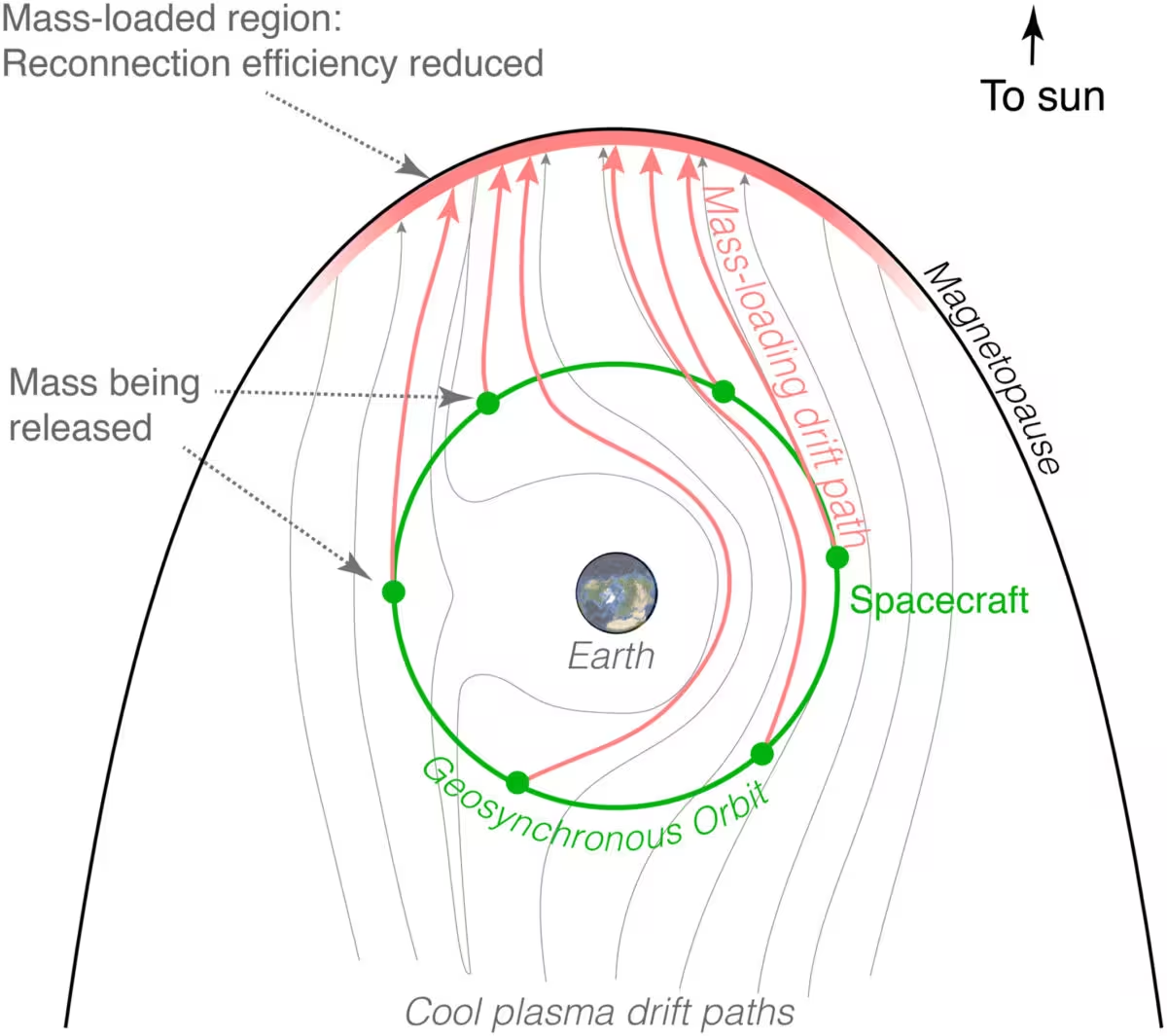
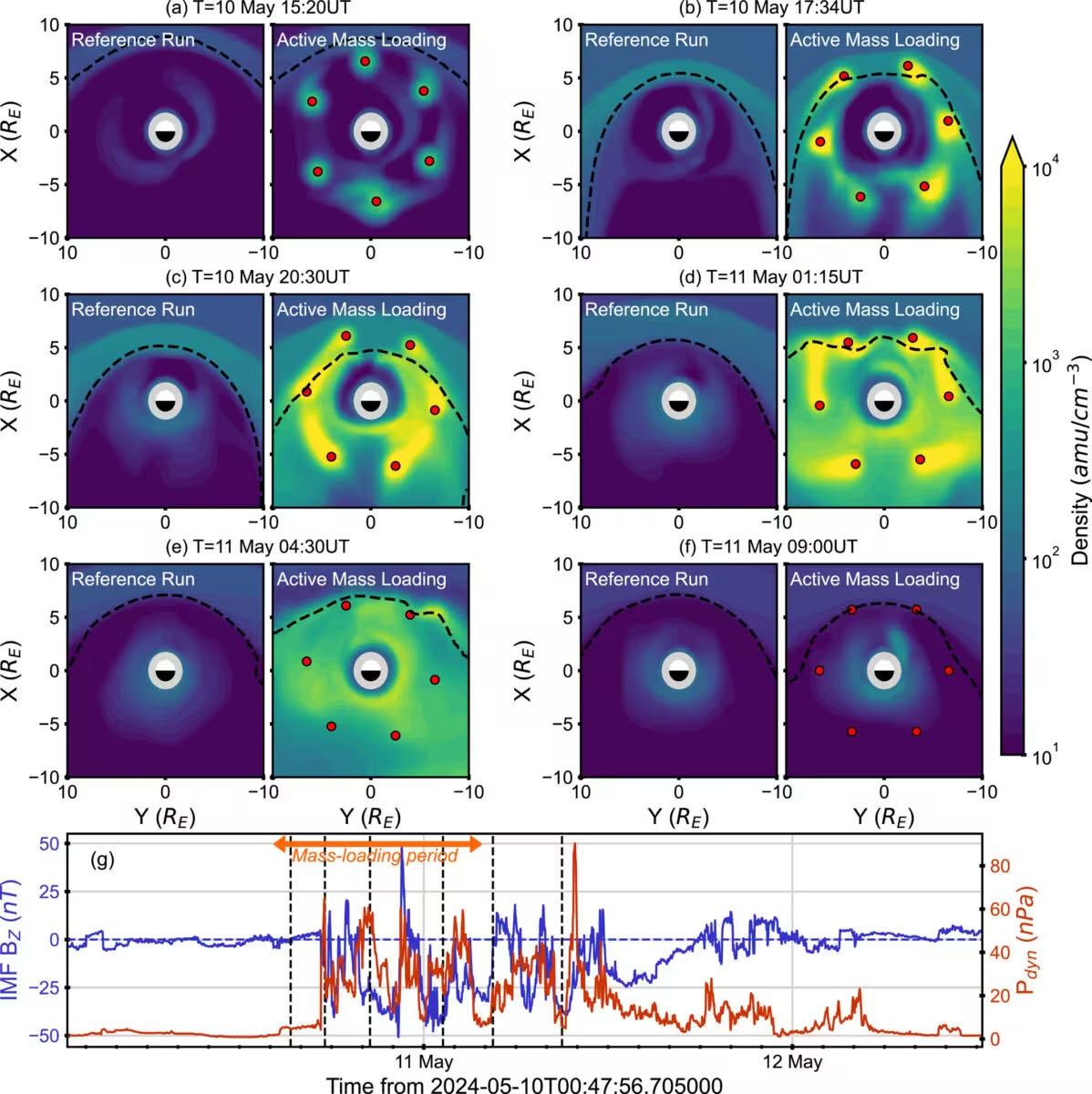
Earth’s magnetosphere acts as a giant magnetic bubble that deflects charged particles from the Sun. When a powerful coronal mass ejection (CME) arrives, the shield can become saturated, allowing geomagnetic disturbances to affect orbiting spacecraft and ground‑based infrastructure. The new study proposes placing a constellation of satellites in orbit, each stocked with a “mass‑loading” payload that can be released on demand. Once the material reaches the dayside magnetopause, sunlight would ionize it, forming a plasma cloud that interacts with the solar wind and dissipates a portion of its energy. Computer simulations indicate that such a system could cut the intensity of the most severe geomagnetic storms by 50 percent or more, thereby shielding critical technologies.
A Turn Toward Active Mitigation
Historically, space‑weather research has centered on improving warning systems so operators can brace for an approaching storm. The proposed strategy flips that mindset, aiming to alter the interaction between the solar wind and Earth’s magnetic field itself. “People have always thought, ‘space is huge, the sun is massive, we just have to sit here and take whatever it gives us,’” said Brian Walsh, associate professor of mechanical engineering at Boston University’s College of Engineering. “But what we found is that we can impact it.”
“People have always thought, ‘space is huge, the sun is massive, we just have to sit here and take whatever it gives us,’” Brian Walsh, an associate professor of mechanical engineering at Boston University’s College of Engineering, explained in a statement.
“But what we found is that we can impact it.”
The researchers stress that the hardware involved—satellites capable of storing and releasing material—relies on existing engineering practices rather than speculative technologies. In the proposed scenario, the fleet would remain dormant for years, activating only when space‑weather models flag an extreme event.
Why Solar Tempests Pose a Growing Risk
When the Sun ejects massive blobs of plasma and twisted magnetic fields, a directed eruption can trigger a geomagnetic storm that interferes with radio links, GPS signals, satellite electronics and power‑grid operations. Astronauts outside Earth’s protective envelope also face heightened radiation exposure. Today’s society is ever more intertwined with space‑based services—banking, aviation, emergency communications, weather forecasting, shipping, defense and internet connectivity all depend on reliable satellite assets. Consequently, the economic fallout from a severe geomagnetic disturbance could be far larger now than in previous decades.
Improved forecasting has already allowed operators to place spacecraft in safe modes and to harden power systems ahead of storm arrival. An operational mass‑loading system would complement those measures by weakening the storm itself, offering a dual line of defense against one of the planet’s most formidable technological hazards.
This article has been fact checked for accuracy, with information verified against reputable sources. Learn more about us and our editorial process.
Last reviewed on .
Article history
- Latest version
Cite this page:
- Posted by Zara Tariq