NASA’s Lunar Fire Test Could Redefine Safety for Future Moon Bases
NASA’s first lunar fire experiment may transform astronaut safety and shape future Moon missions.
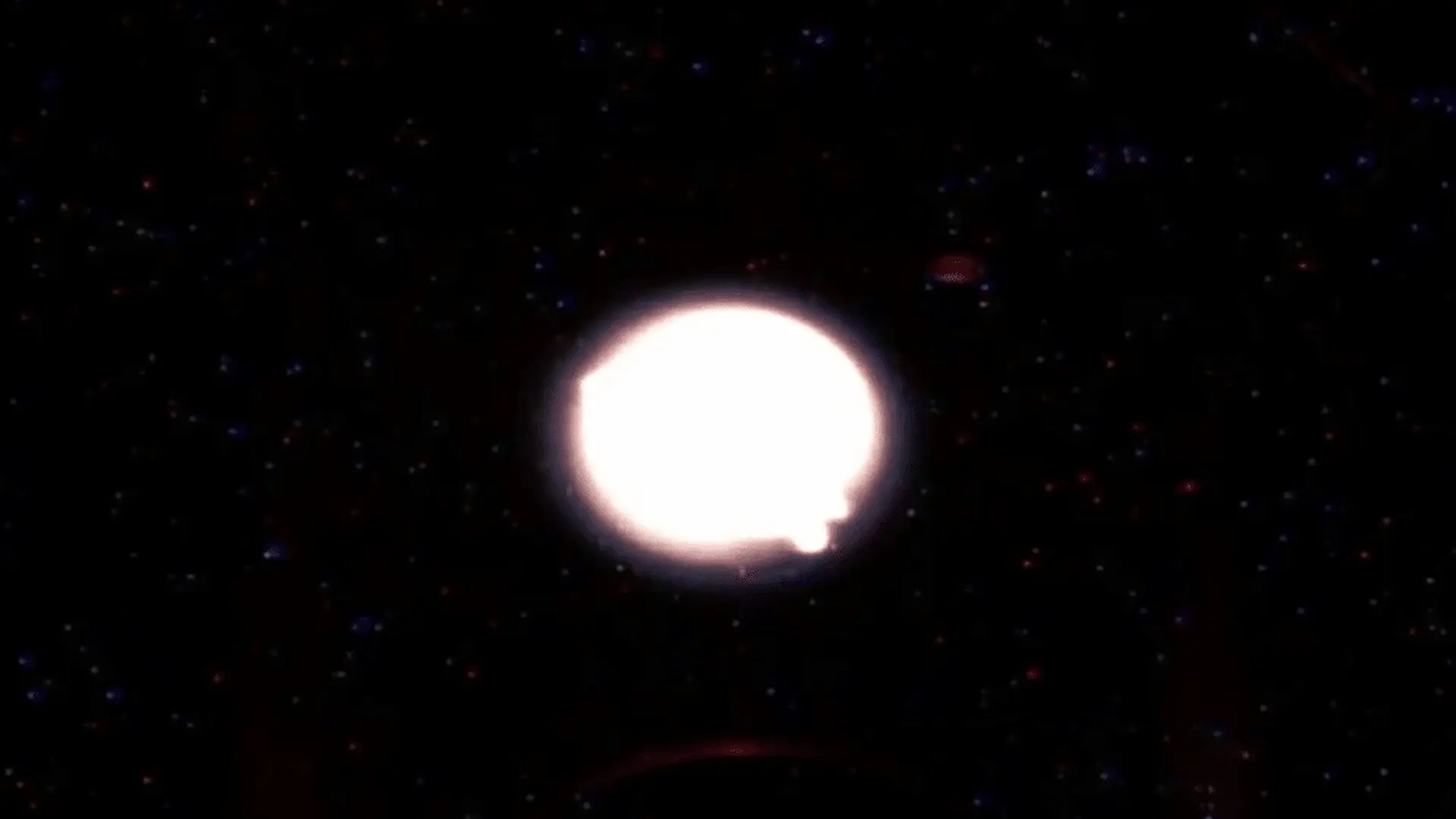
NASA is gearing up for a unique test that will light a flame in the Moon’s weak gravity, a step that could prove decisive for the agency’s Artemis agenda and the long‑term safety of lunar outposts.
Understanding Fire Risks Before Humans Settle on the Moon
Fire remains one of the most perilous hazards that could arise inside a spacecraft or a habitat on the lunar surface. While Earth‑based research has shaped fire‑resistant materials for current missions, the drastic reduction to roughly one‑sixth of Earth’s gravity may cause those same substances to behave unexpectedly.
In a low‑gravity environment, the buoyancy‑driven flow that normally pushes hot gases upward and draws fresh oxygen into a flame is dramatically weakened. This alteration can modify flame shape, propagation speed, and stability, sometimes making materials ignite more readily than ground‑based tests suggest.
As crews prepare for extended stays near the lunar south pole, designers need concrete data on how combustion proceeds under lunar conditions. Without it, safety models rely on simulations that may not capture the nuances of a real Moon‑based fire.
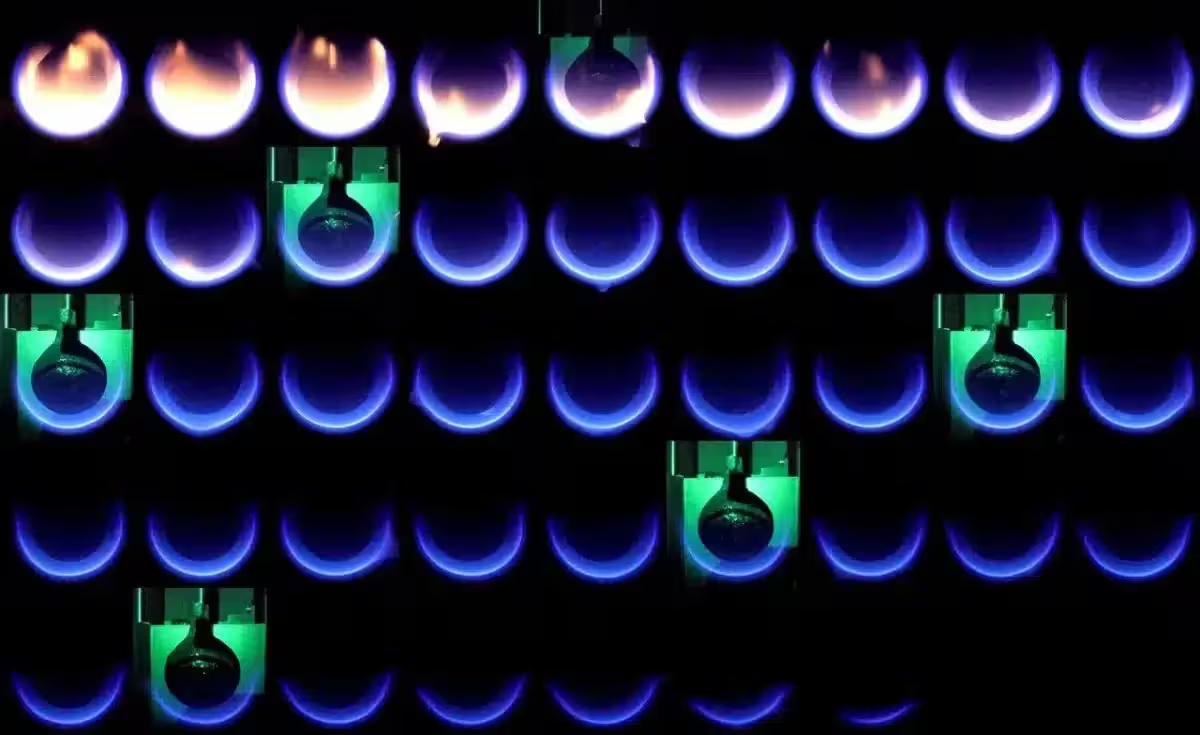
Lunar Test Will Capture Direct Combustion Data
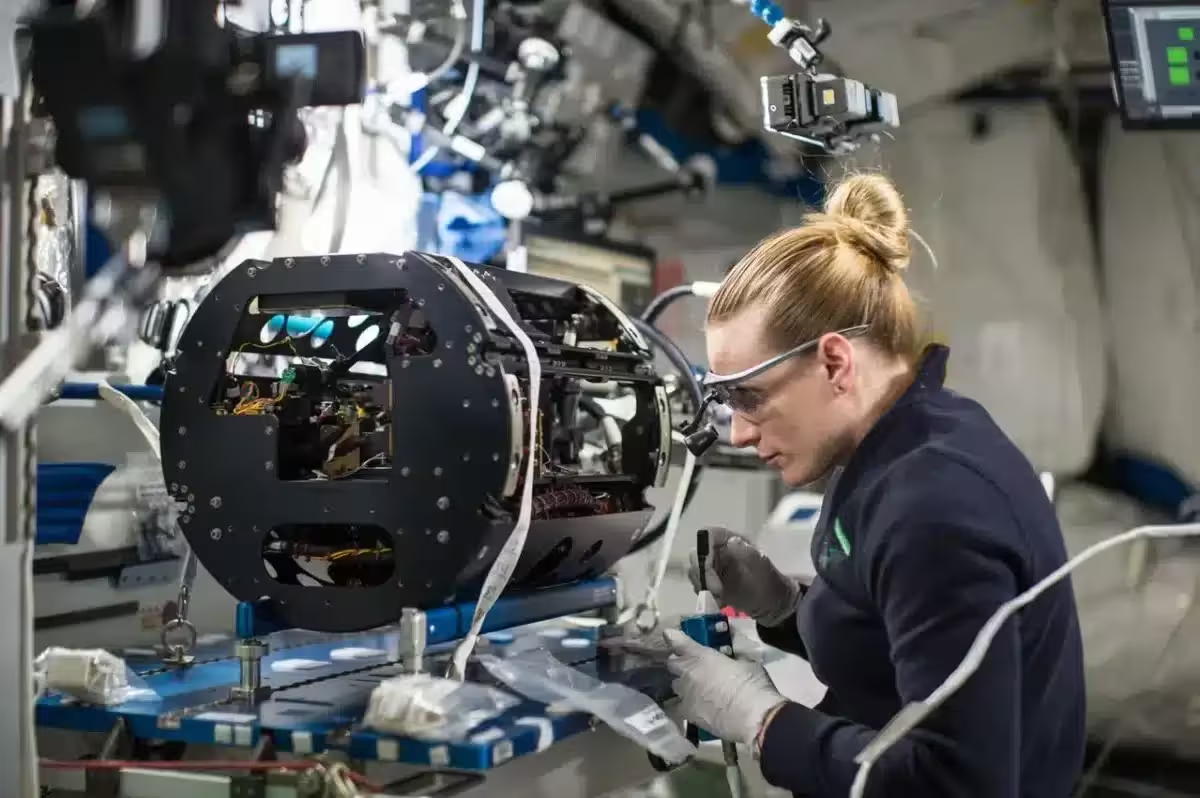
According to NASA, the upcoming mission will house four distinct solid‑fuel specimens inside a sealed combustion chamber engineered for the Moon’s environment. Each sample will be ignited under tightly regulated parameters while an array of sensors monitors every aspect of the burn.
The instrumentation suite will track flame development, heat flow, oxygen draw, radiative output, and temperature fluctuations from the moment of ignition until the fire self‑extinguishes. These observations will represent the first authentic measurements of combustion in true lunar gravity, bypassing the need to infer behavior from Earth‑based laboratories or orbital experiments.
Findings from this experiment could reshape the selection of construction materials for lunar habitats, spacecraft interiors, and even future Mars landers. If certain polymers prove more flammable under Moon gravity, certification standards may be tightened; conversely, materials that demonstrate superior resistance could become preferred choices for high‑risk zones.
How Weak Gravity Alters Flame Physics
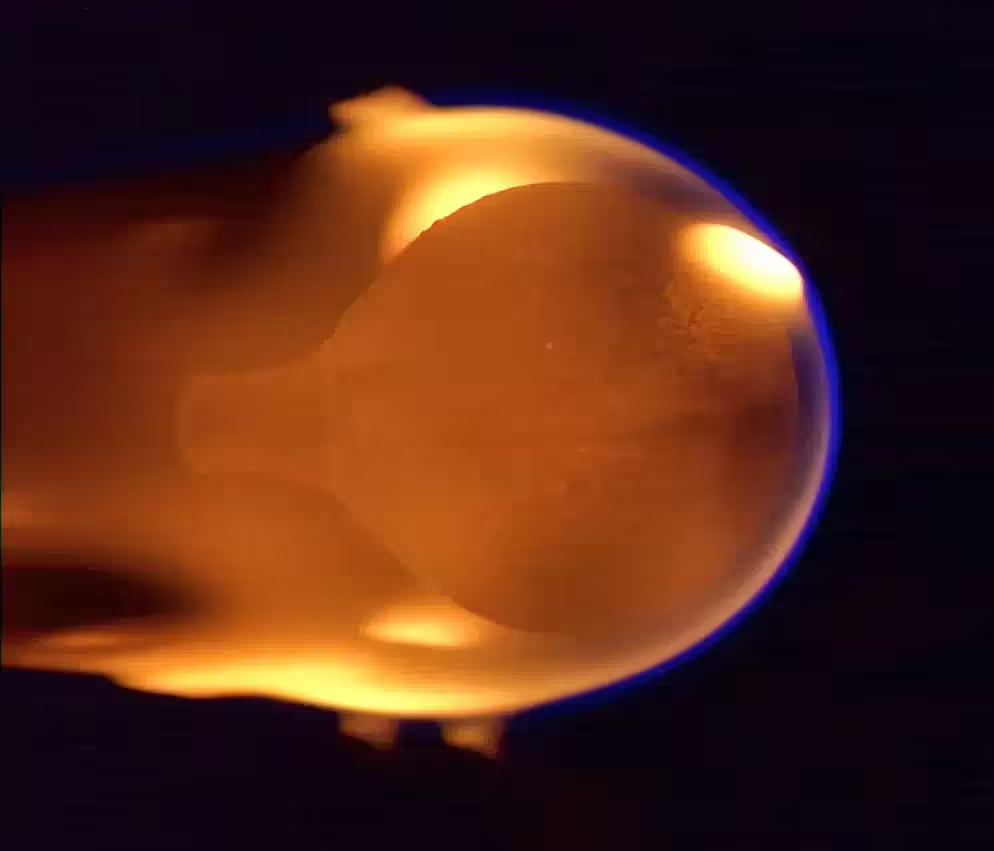
Combustion relies on a fine balance among fuel, heat, oxygen, and airflow. On Earth, gravity drives hot gases upward, establishing convection currents that continuously feed the fire while dispersing heat. The Moon’s reduced pull diminishes these currents, affecting nearly every stage of a burn.
In this altered regime, some flames may linger longer, while others could spread across surfaces in patterns unlike those seen on Earth. The effect becomes more pronounced inside pressurized habitats that operate at lower pressures but with elevated oxygen levels to aid astronaut mobility. Even modest shifts in oxygen concentration can accelerate flame spread, underscoring the need for precise testing before crews inhabit the surface for months at a time.
By recreating these atmospheric and gravitational conditions in a controlled lunar experiment, researchers aim to quantify the exact risks and develop mitigation strategies before any emergency arises.
A Modest Test With Far‑Reaching Consequences
Although only four compact fuel pellets will be burned, the data they generate will feed into the design of safer spacecraft, lunar habitats, cargo modules, and eventually Martian settlements.
The experiment will give engineers a rare chance to compare theoretical combustion models against actual measurements taken in lunar gravity, refining the predictive tools that guide future mission architecture.
As humanity moves toward a permanent foothold beyond Earth, mastering the fundamentals of fire behavior becomes as vital as mastering propulsion or life‑support systems. Even a brief, controlled blaze on the Moon could yield insights that protect astronauts throughout decades of deep‑space exploration.
This article has been fact checked for accuracy, with information verified against reputable sources. Learn more about us and our editorial process.
Last reviewed on .
Article history
- Latest version
Reference(s)
- Pritchard, Cinnamon. “Why NASA is studying flames in space..”, October 2, 2024 NASA <https://science.nasa.gov/biological-physical/resources/explainers-infographics/why-nasa-is-studying-flames-in-space/>.
Cite this page:
- Posted by Karan Das