NASA’s Latest Image Shows Star Formation Like Never Before
Discover the dazzling neon pink stars of Westerlund 2 in NASA’s latest cosmic nursery snapshot
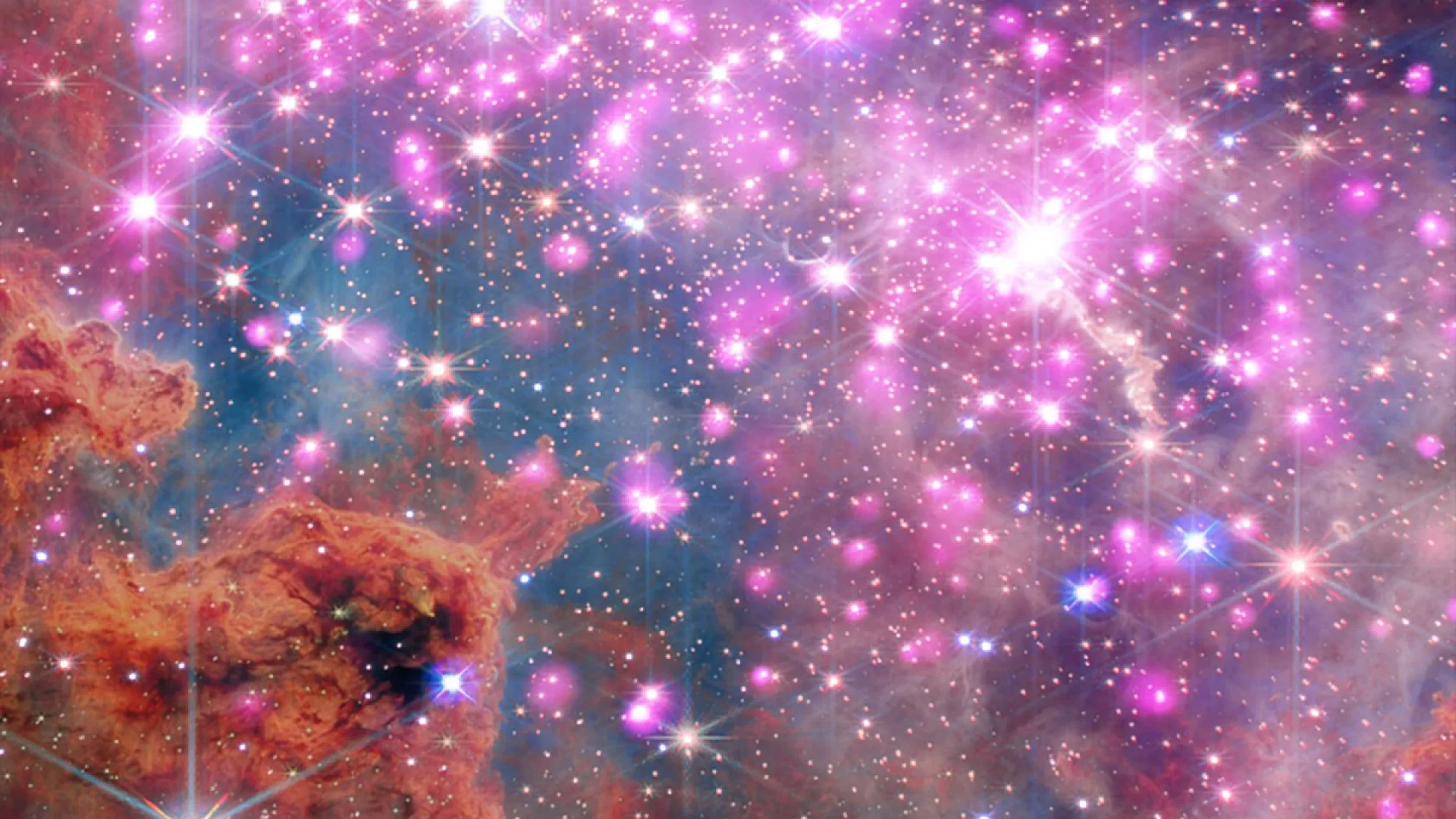
NASA unveiled a striking composite image on March 19, 2026 that captures the young star cluster Westerlund 2 glowing in vivid neon pink. The picture, assembled from data collected by the Chandra X‑ray Observatory and the James Webb Space Telescope, highlights a population of stars only one to three million years old surrounded by brick‑orange dust clouds that represent the raw material of ongoing star formation.
Westerlund 2 in the Heart of the Carina Constellation
Located within the Gum 29 region of the Carina constellation, Westerlund 2 sits roughly 20,000 light‑years from Earth. The environment is a turbulent, high‑energy stellar nursery where massive stars ignite rapidly. In the new composite, Chandra’s X‑ray data render dozens of nascent stars in neon pink, while Webb’s infrared observations display surrounding dust in shades of red, orange, green, cyan and blue. Together, the multi‑wavelength view lets astronomers probe the formation, evolution and composition of these youthful objects with unprecedented detail.
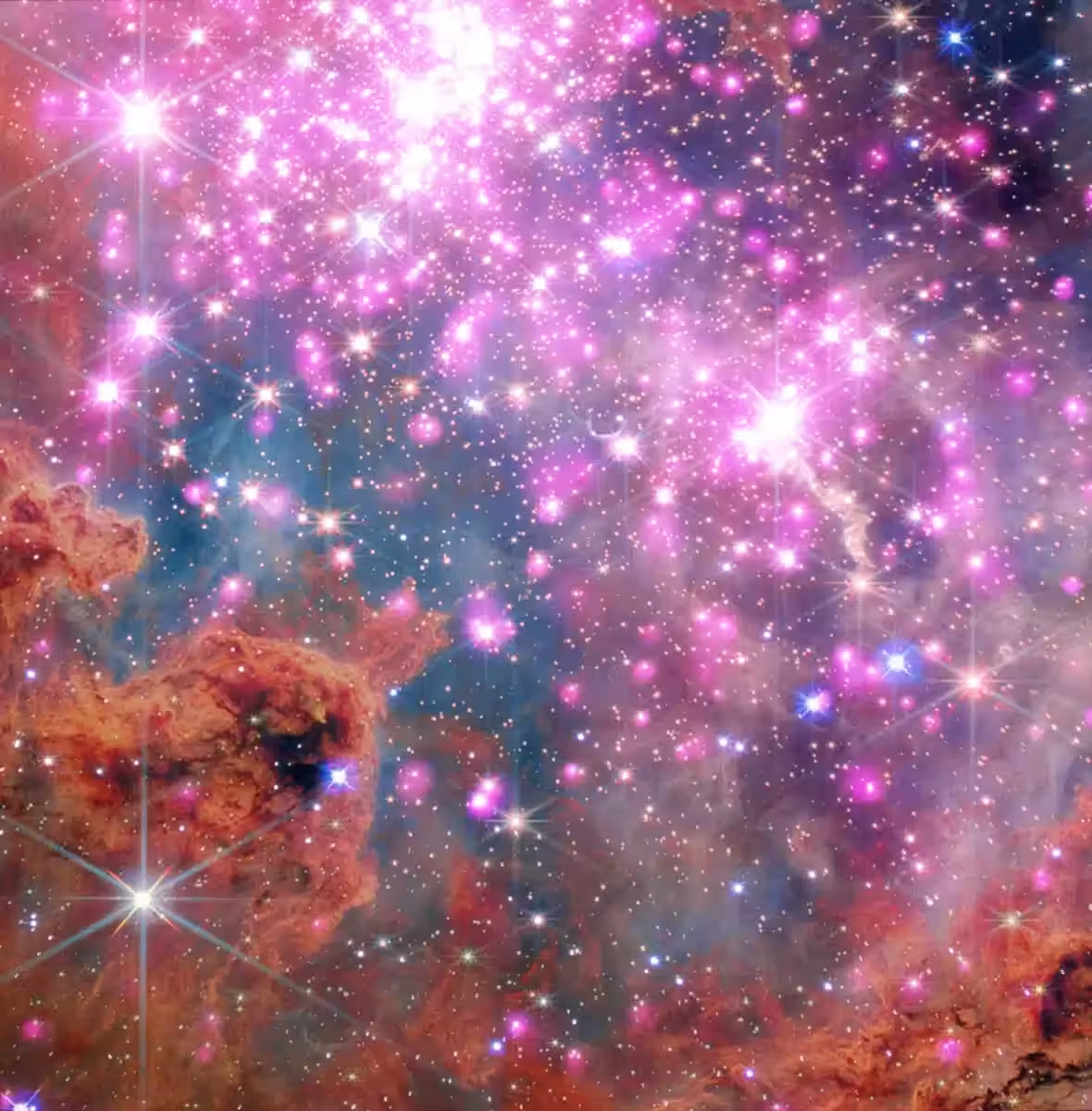
Image Processing: NASA/CXC/SAO/L. Frattare and K. Arcand
Why the Pink Glow Matters
The neon‑pink X‑ray emission signals intense magnetic activity in many of Westerlund 2’s young stars, including powerful flares. Such energetic processes can reshape the surrounding medium, dispersing dust and gas or even triggering the birth of additional stars nearby. By pairing these X‑ray signatures with Webb’s infrared map, researchers can chart both the hot, active stellar cores and the cooler material that envelopes them, delivering a comprehensive picture of the cluster’s dynamic environment.
A Natural Laboratory for Stellar Birth
Westerlund 2 offers astronomers a rare chance to study massive stars that are still tightly packed together. Observations of this cluster shed light on how massive stars form and interact within crowded regions, providing clues to the conditions that likely prevailed in the early Milky Way. The synergy of Chandra’s X‑ray data and Webb’s infrared imaging enables precise measurements of stellar temperatures, densities and radiation fields, enriching models of star formation under extreme circumstances. Insights gained may also inform theories of planet formation, as the dust clouds surrounding these stars are the precursors to planetary systems.
Linking Local Star Formation to Galactic Evolution
Comparisons between Westerlund 2 and other star‑forming regions across the Milky Way help astronomers piece together broader patterns of stellar evolution, cluster dynamics and galactic structure. NASA notes that images like this not only showcase the visual splendor of the cosmos but also provide essential data for scientific inquiry, bridging artistic inspiration with rigorous research.
The striking neon pinks and rich infrared hues demonstrate how multi‑wavelength astronomy can reveal phenomena invisible to the naked eye. As observational capabilities continue to improve, researchers anticipate even finer surveys of young clusters, promising deeper insights into the processes that govern star birth and the complex interplay of forces within these celestial cradles.
This article has been fact checked for accuracy, with information verified against reputable sources. Learn more about us and our editorial process.
Last reviewed on .
Article history
- Latest version
Cite this page:
- Posted by Karan Das