NASA’s X-59 Readies for Its First Supersonic Flight as the Quesst Mission Reaches a Turning Point
NASA’s X-59 sets stage for revolutionary quiet supersonic flight testing
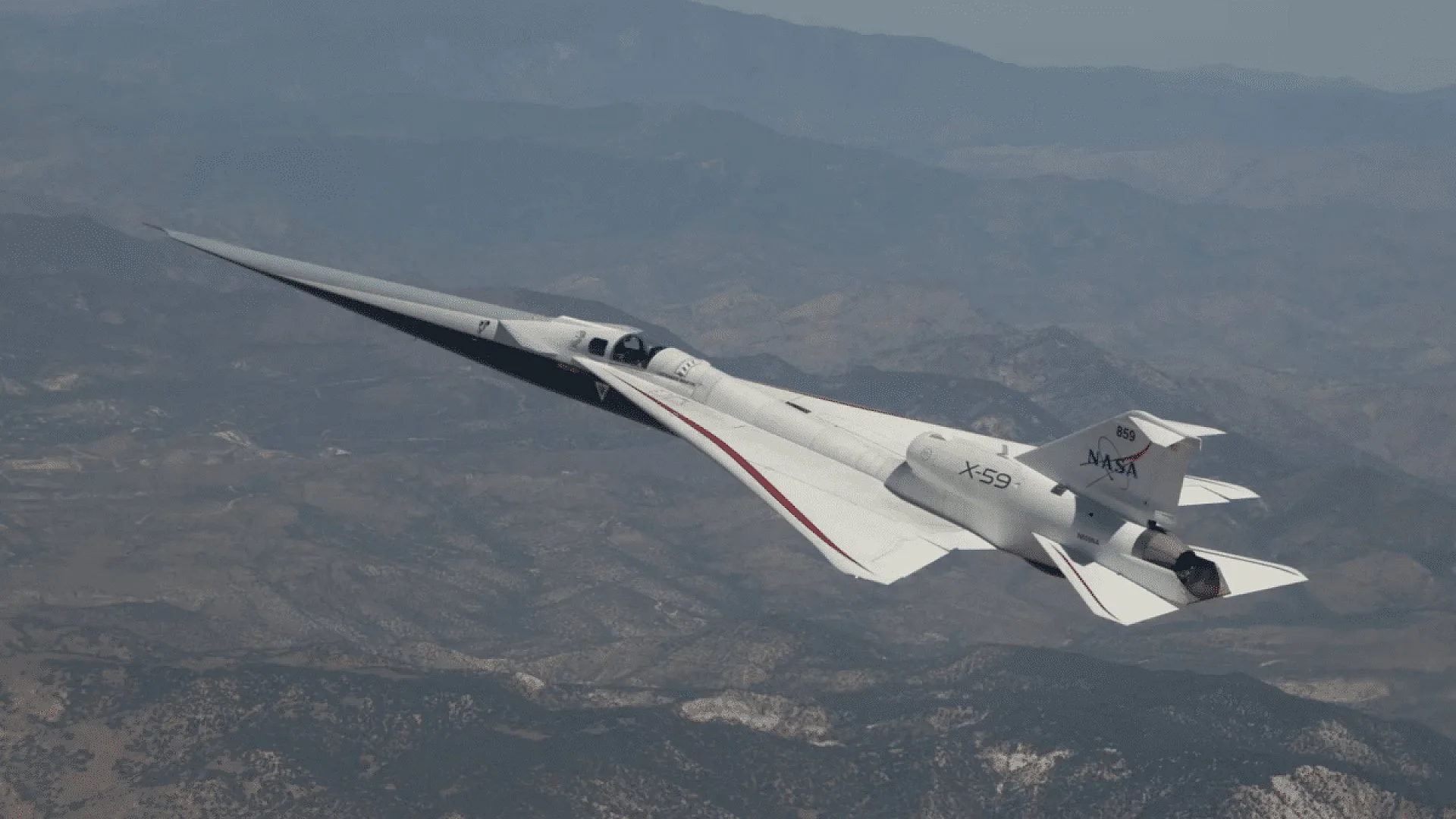
NASA’s experimental X-59 aircraft is on the cusp of a pivotal stage as it readies for its inaugural supersonic excursions. The agency says the quiet‑boom research jet is moving into a new testing regime that will push the vehicle beyond its earlier limits and bring it nearer to a future where commercial planes can cruise faster than sound without the disruptive booms that have long barred supersonic flight over populated areas.
Milestone Ahead for Low‑Boom Supersonic Flight
This upcoming flight series is more than a speed record; it is a direct test of the X-59’s purpose under NASA’s Quesst Mission, which aims to tame the sonic boom that has historically kept supersonic travel off‑limits over land. By curbing the intensity of shock‑wave noise, NASA hopes to reshape regulatory expectations and open the door to routine high‑speed routes.
Planned flights will first push the aircraft past 630 mph at roughly 43,000 ft, crossing the sound barrier for the first time. A subsequent mission‑profile sortie will target Mach 1.4—about 925 mph—at an altitude near 55,000 ft. These parameters mirror the flight envelope NASA intends to employ when the jet flies over U.S. communities to collect public reactions to its novel “low‑boom” acoustic footprint. NASA will use the data to gauge acceptance of the new sound signature.
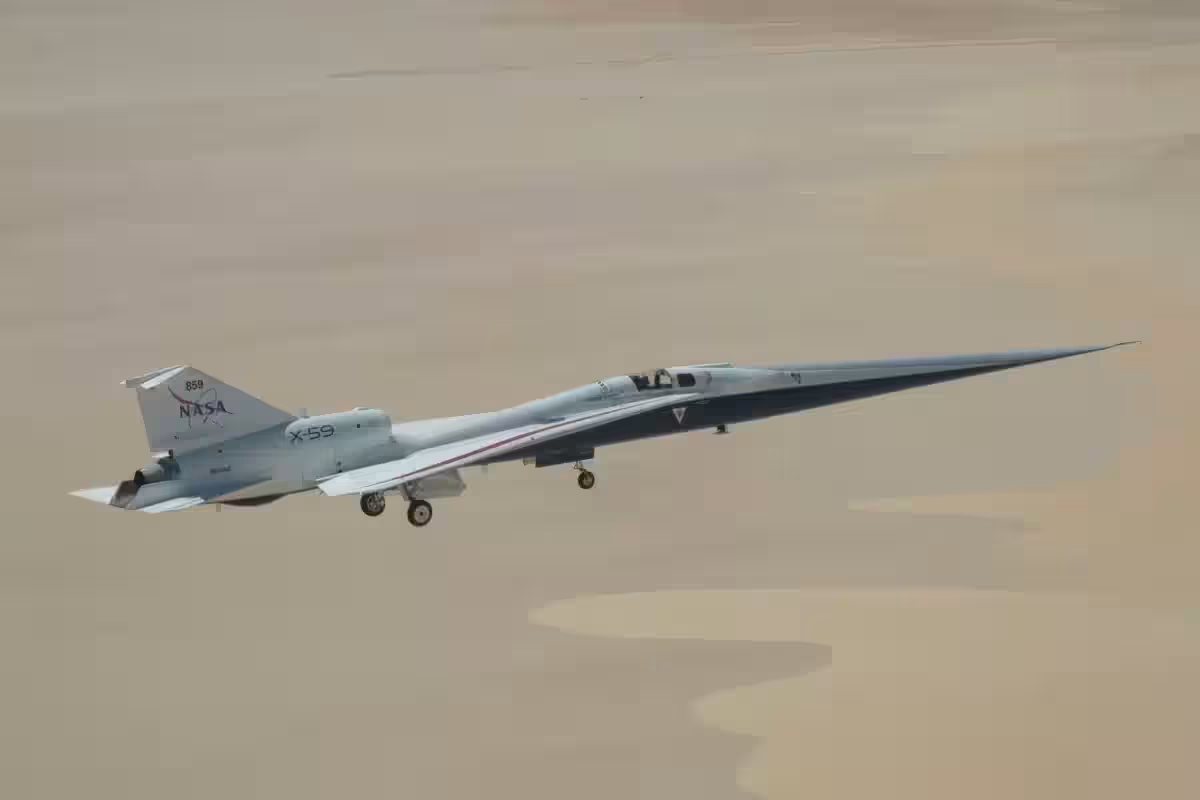
NASA/Jim Ross
“The next step will be the first time this unique aircraft flies supersonic,” said Cathy Bahm, project manager for NASA’s Low Boom Flight Demonstrator. “We are moving toward the mission‑conditions point the X‑59 was built to achieve.”
Distinct from conventional supersonic jets, the X‑59 employs a dramatically elongated nose and a meticulously shaped airframe to manipulate shock waves before they reach the ground. The goal is to replace a thunderous boom with a subtle “thump,” potentially paving the way for future commercial aircraft that can slash intercontinental travel times without alarming residents below.
Fifteen Test Flights Lay the Groundwork
Prior to this milestone, the X‑59 team executed a systematic series of developmental sorties that gradually broadened the aircraft’s operational envelope. After its inaugural flight in October 2025 and a scheduled maintenance interval, the jet returned to the skies in March 2026 and has since completed fifteen missions that probed its systems and performance limits.
Key achievements include the first retraction of the landing gear, allowing engineers to assess aerodynamic behavior in flight. The aircraft also ascended to 43,000 ft and approached supersonic speeds at Mach 0.95—about 627 mph—stopping just shy of breaking the sound barrier. Test crews accelerated the tempo by executing back‑to‑back flights and gathering data across a spectrum of speed regimes, from high‑speed runs to slower cruise profiles.
Throughout these efforts, engineers monitored critical onboard systems such as fuel, hydraulics, environmental controls, and the pioneering eXternal Vision System. Lacking a conventional forward windshield, the X‑59 relies on a network of high‑resolution cameras that stream imagery to cockpit displays. Distributed strain gauges along the structure have also supplied valuable insights into aerodynamic loads and structural responses during flight.
“Reaching supersonic speeds marks a major achievement for the X‑59 team,” Bahm said. “Each envelope expansion brings us nearer to proving the quiet‑supersonic capability at the heart of the Quesst mission. Completing the first mission‑conditions flight is especially meaningful—it’s the point where we begin validating the aircraft in the environment it was designed for.”
Next Phase: Capturing the Low‑Boom Signature
While the upcoming sorties will be the X‑59’s first supersonic outings, they are not yet intended to confirm the effectiveness of its low‑boom design. During these tests, the jet will be escorted by a conventional supersonic chase plane whose own boom would otherwise drown out any subtle acoustic cues from the X‑59.
Instead, the emphasis will be on gathering technical measurements. One of NASA’s F‑15 research aircraft will be equipped with specialized sensors to record the X‑59’s shock‑wave properties. The resulting data will inform engineers as they prepare for a more demanding series of experiments later in the year.
NASA describes these probing flights as a crucial bridge between confirming basic aircraft performance and evaluating whether the vehicle truly meets its low‑boom objectives. Analysts will compare atmospheric shock‑wave propagation data with computational models, refining predictions that will guide future operational demonstrations.
“These flights not only deepen our confidence in the X‑59’s performance – they mark our progression toward the future phases of the mission that will ultimately help shape the future of supersonic travel,” Bahm added.
Targeting Mach 1.6 and Shaping Future Air Travel
The current testing window still holds several ambitious targets. Beyond the Mach 1.4 mission‑conditions flight, the X‑59 is slated to reach its design ceiling of Mach 1.6—approximately 1,218 mph—and climb to about 60,000 ft. Hitting these benchmarks will give engineers a complete picture of the aircraft’s behavior across its full flight envelope.
These efforts fall under Phase 1 of the broader Quesst mission, which focuses on confirming safety, performance, and airworthiness. Once these objectives are met, NASA plans to transition to Phase 2**, where the emphasis shifts from vehicle validation to acoustic validation. In that stage, the team will directly measure the X‑59’s sound signature to verify whether it produces the gentle “thump” projected by years of simulation work.
“Aviation pioneer Otto Lilienthal once said, ‘To design a flying machine is nothing. To build one is something. But to fly is everything.’ The fifteen X‑59 flights we’ve completed since March have been everything to this team and the mission,” Bahm remarked. “Each flight has stretched the envelope further, reinforcing our confidence in the aircraft.”
Potential Game‑Changer for Overland Supersonic Travel
The implications of a successful low‑boom demonstration extend far beyond NASA’s test program. If the X‑59 validates quiet supersonic flight, regulators could acquire the data needed to revisit long‑standing bans on overland supersonic operations. Such a policy shift would dramatically alter commercial aviation, enabling passenger jets to cut travel times without imposing disruptive noise on communities below.
For NASA and its collaborators, the coming weeks represent a decisive chapter in a project that has demanded years of engineering ingenuity, rigorous testing, and steadfast perseverance. Every successful sortie brings the aircraft a step closer to proving that high‑speed travel and community acceptance can coexist.
“Looking ahead to the upcoming flights, we’re ready to push the envelope further – moving boldly toward the mission test point this aircraft was built to achieve,” Bahm concluded. “Flying supersonic and reaching these milestones isn’t just progress; it’s the culmination of years of innovation and teamwork. Each step brings us nearer to Phase 2 and the future of commercial supersonic flight.”
This article has been fact checked for accuracy, with information verified against reputable sources. Learn more about us and our editorial process.
Last reviewed on .
Article history
- Latest version
Reference(s)
- Dinius, Dede. “NASA’s X-59 Prepares for First Supersonic Flight - NASA.”, May 28, 2026 NASA <https://www.nasa.gov/centers-and-facilities/armstrong/nasas-x-59-prepares-for-first-supersonic-flight/>.
Cite this page:
- Posted by Karan Das