NASA Reveals 2025 ISS Discoveries That Could Transform Medicine And Technology
NASA revela avances en medicina espacial materiales y energía en la ISS 2025 impulsando exploración lunar y marciana
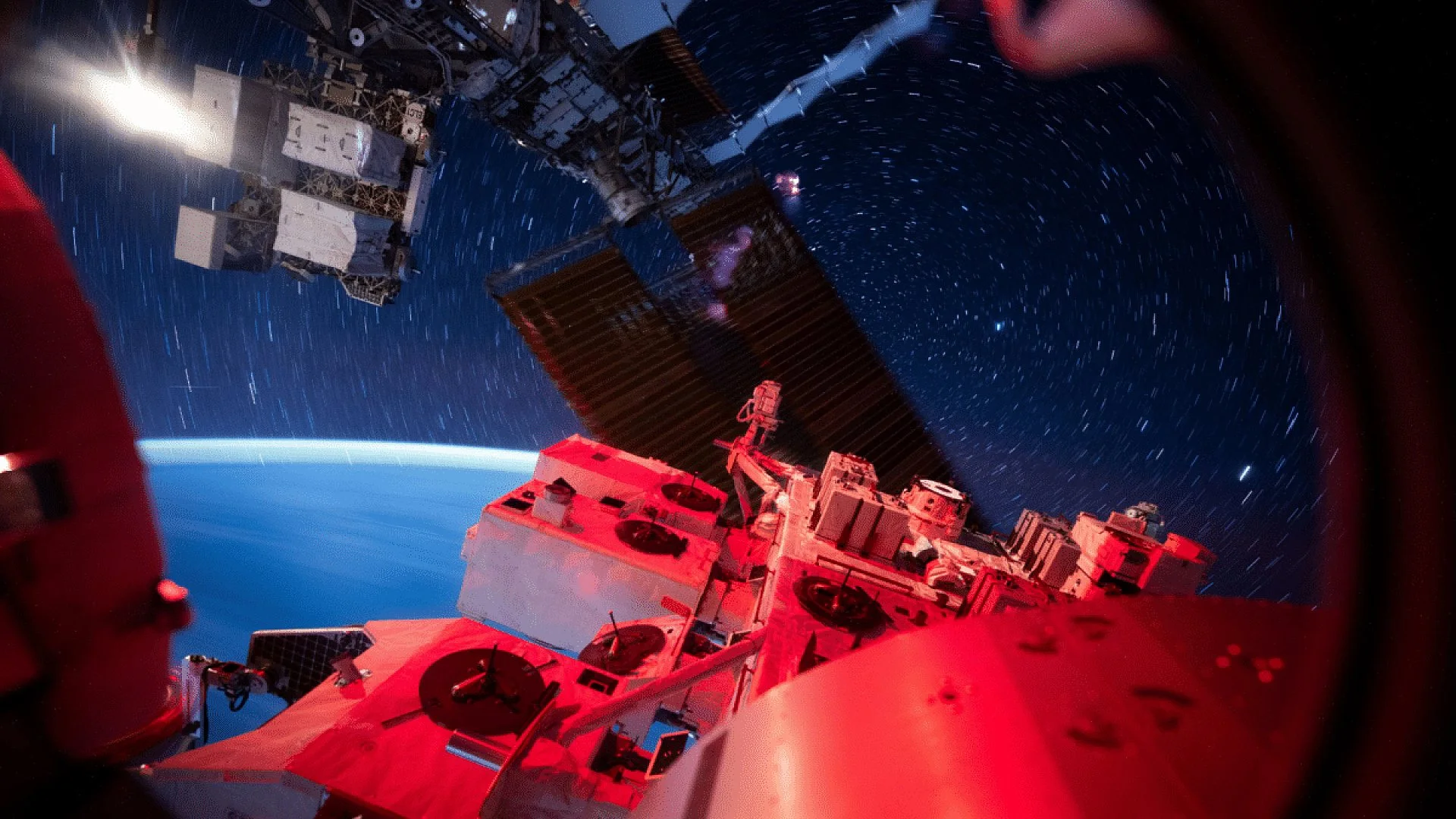
In 2025 the International Space Station served as a laboratory for more than 750 experiments, delivering findings that could reshape astronaut health, advanced manufacturing, energy storage and remote medical care, according to NASA’s 2025 Annual Highlights released in May 2026.
Space‑Based Robotic Surgery Demonstrates Viability Under Communication Lag
NASA scientists evaluated a compact robotic platform designed to carry out surgical tasks in orbit. By using elastic bands to mimic human tissue, the team examined how signal delays from Earth affected the robot’s movements. The data showed that while longer round‑trip times modestly increased the overall duration of procedures, the precision of cuts and sutures remained within acceptable limits.
The outcome suggests that similar systems could be deployed on lunar habitats or Martian outposts, providing a reliable alternative for complex medical interventions where human expertise is scarce. On Earth, the same technology could support emergency response teams in remote or disaster‑struck regions, offering a low‑mass, adaptable solution for critical care.
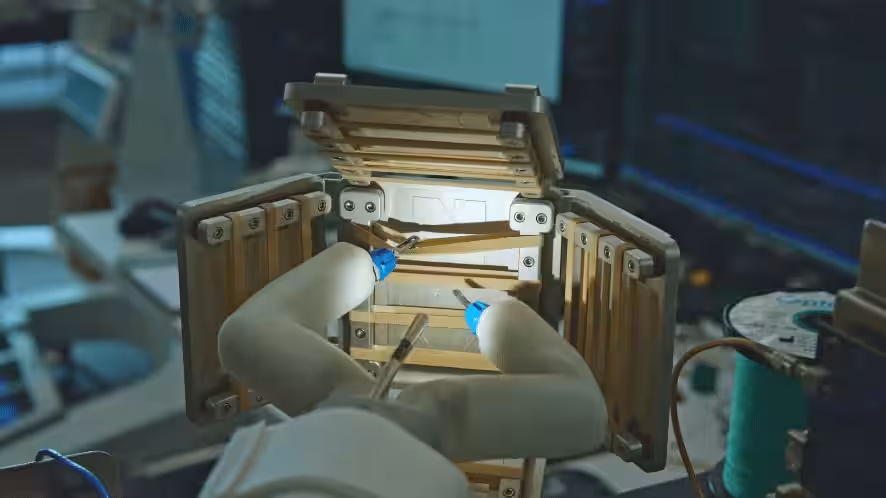
Virtual Incision.
Credit: NASA
Magnetic 3‑D Printing Enables On‑Demand Bone Scaffold Fabrication
A joint effort between Roscosmos and international partners introduced a magnetic levitation 3‑D printer that arranges calcium particles into bone‑like frameworks. The technique yielded highly ordered structures that support cell growth and could be manufactured directly in space.
Because microgravity accelerates bone loss, the ability to produce graft material on the spot would be a critical asset for long‑duration missions. The same approach holds promise for Earth‑based regenerative therapies, potentially shortening healing periods and improving surgical outcomes.
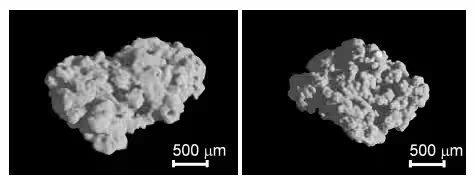
Credit: Komlev, Biomedical Technology
Fungal Melanin Provides Radiation‑Resistant Shielding in Orbit
NASA investigated the durability of polymers, thermal blankets and biological composites after prolonged exposure to the vacuum and high‑energy particles of space. Samples infused with melanin from fungi displayed remarkable resistance to radiation damage, maintaining structural integrity throughout the mission.
If adopted for spacecraft construction, such bio‑derived barriers could cut launch mass and lower costs while delivering safer protection for crews. The technology also translates to terrestrial applications, including hardened medical devices, UV‑blocking coatings and resilient building materials for extreme environments.
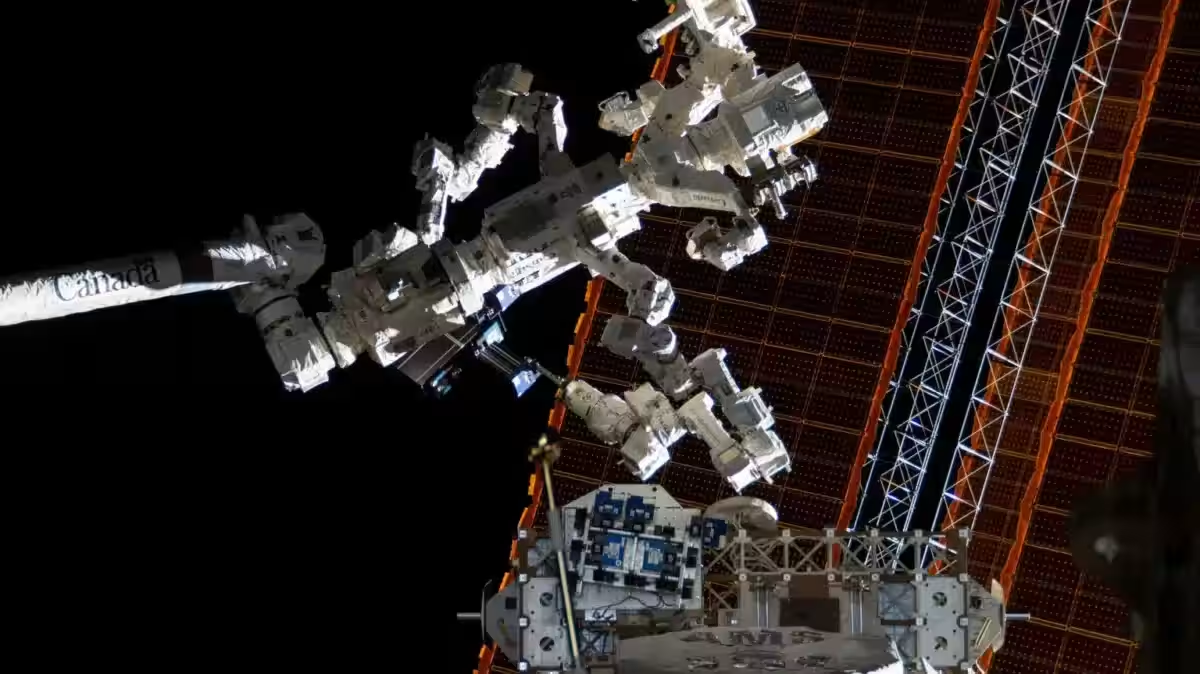
Credit: NASA
Solid‑State Lithium‑Ion Cells Show Minimal Degradation After One Year in Space
A JAXA‑led study placed all‑solid‑state lithium‑ion batteries on the exterior of the Japanese Experiment Module for 434 days, subjecting them to temperature swings and vacuum conditions. The units retained over 98 % of their original capacity, with only a slight shift in voltage performance.
These results point to a power source that could enhance safety and reliability for lunar bases, Martian habitats and other off‑world platforms. Their resistance to thermal runaway also makes them attractive for demanding Earth‑based settings where conventional batteries are prone to failure.
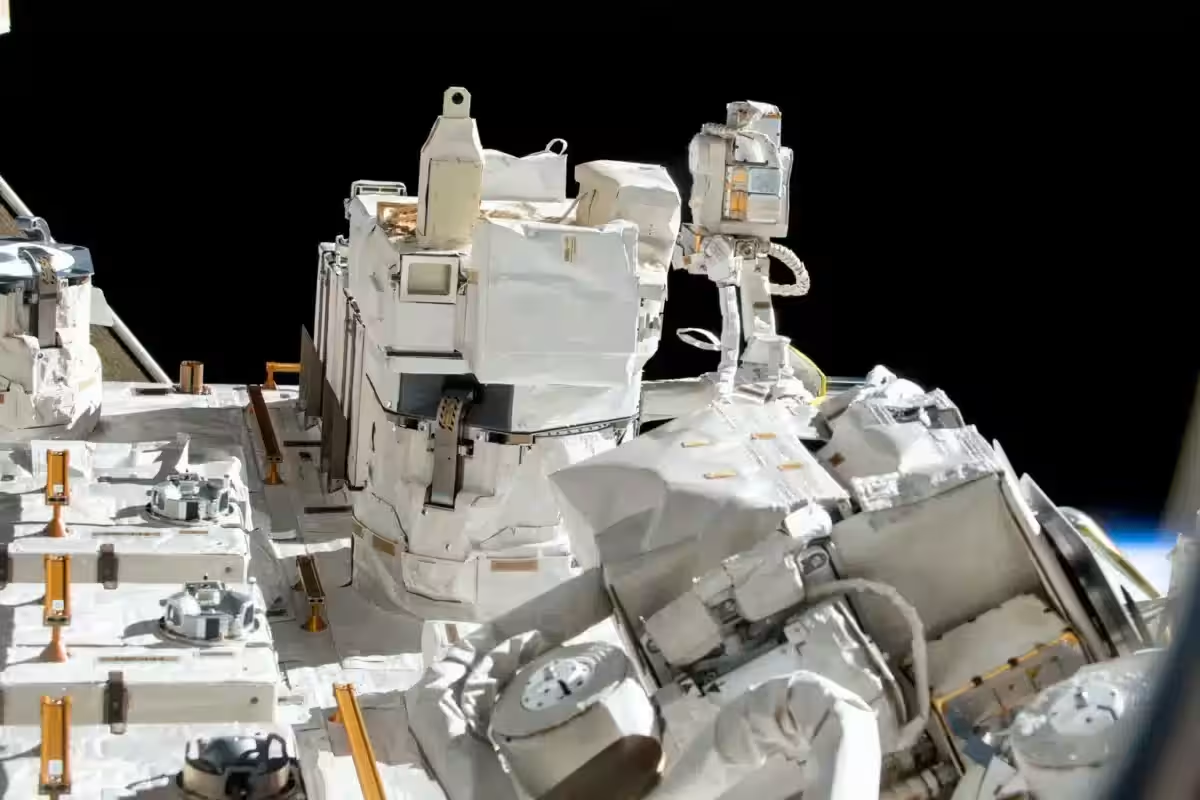
Credit: NASA
Manual Control Test Finds Temporary Decline in Pilot Performance Post‑Flight
NASA’s investigation into manual control examined how extended stays aboard the ISS affect an astronaut’s ability to steer a craft during re‑entry. Five crew members completed simulated landings before launch and after return, revealing slower reaction times and higher touchdown speeds during the post‑mission runs.
Performance metrics returned to baseline within a few hours, indicating that microgravity induces a short‑term impact on fine motor coordination. The findings support the need for targeted re‑training and countermeasure protocols before astronauts resume high‑precision flight duties.
Orbiting Observations Clarify Electrical Discharges Above Storms
European Space Agency researchers combined satellite imaging with ground‑based radio data to study transient luminous events—sprites, blue jets and elves—that erupt above thunderstorms. The analysis confirmed that intense lightning bursts can trigger these phenomena and that their brightness scales with the underlying electric current.
Improved knowledge of these upper‑atmospheric processes enhances weather forecasting, satellite operation planning and communication system resilience, especially during severe storm activity.
This article has been fact checked for accuracy, with information verified against reputable sources. Learn more about us and our editorial process.
Last reviewed on .
Article history
- Latest version
Reference(s)
- Getteau, Christian. “NASA Highlights 2025 International Space Station Science Results - NASA.”, May 21, 2026 NASA <https://www.nasa.gov/missions/station/iss-research/nasa-highlights-2025-international-space-station-science-results/>.
Cite this page:
- Posted by Karan Das