James Webb Captures First Daily Weather Cycle on a Planet 690 Light-Years Away
Researchers unveil first-ever real-time monitoring of exoplanet atmospheres hundreds of light-years away
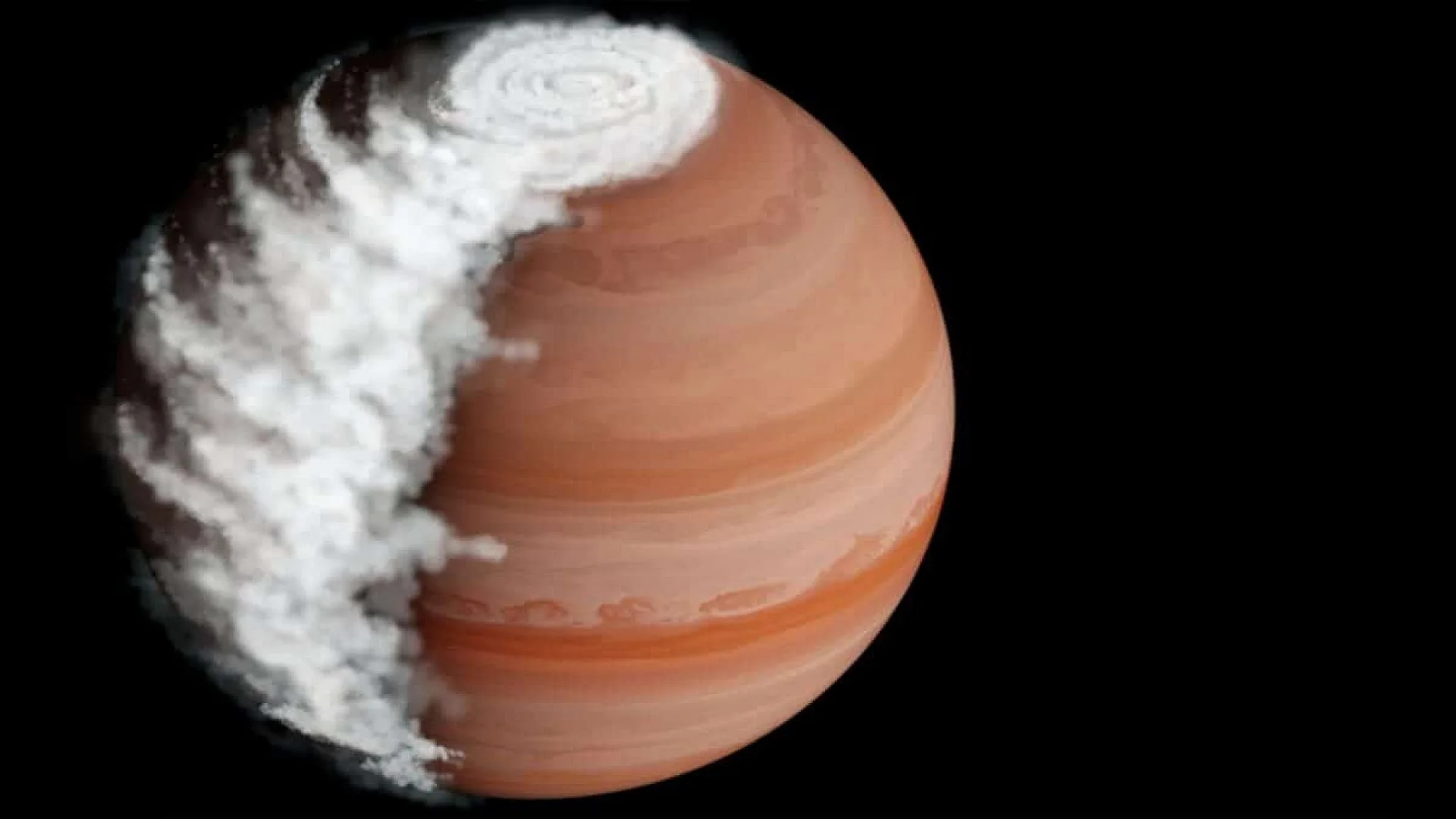
Astronomers have captured the first clear evidence that an exoplanet experiences a daily shift from a cloud‑filled morning to a cloud‑free evening, thanks to the unprecedented clarity provided by the James Webb Space Telescope.
JWST Maps a Weather Cycle on a Distant Giant
The planet, designated WASP‑94Ab, orbits a star in a wide binary system roughly 690 light‑years from Earth. It is a gas giant about 1.7 times the size of Jupiter, completing an orbit in just four days at a distance of 5.1 million miles (8.2 million kilometres) from its host star. Surface temperatures soar above 2,200 °F (1,200 °C), placing it squarely in the “hot Jupiter” category where intense stellar heating dominates atmospheric dynamics.
Hot Jupiters have long been difficult to study because their atmospheres are often shrouded in clouds made of vaporised metals and rock, which obscure direct spectroscopic measurements.
Transit Spectroscopy Reveals Morning‑Evening Cloud Contrast
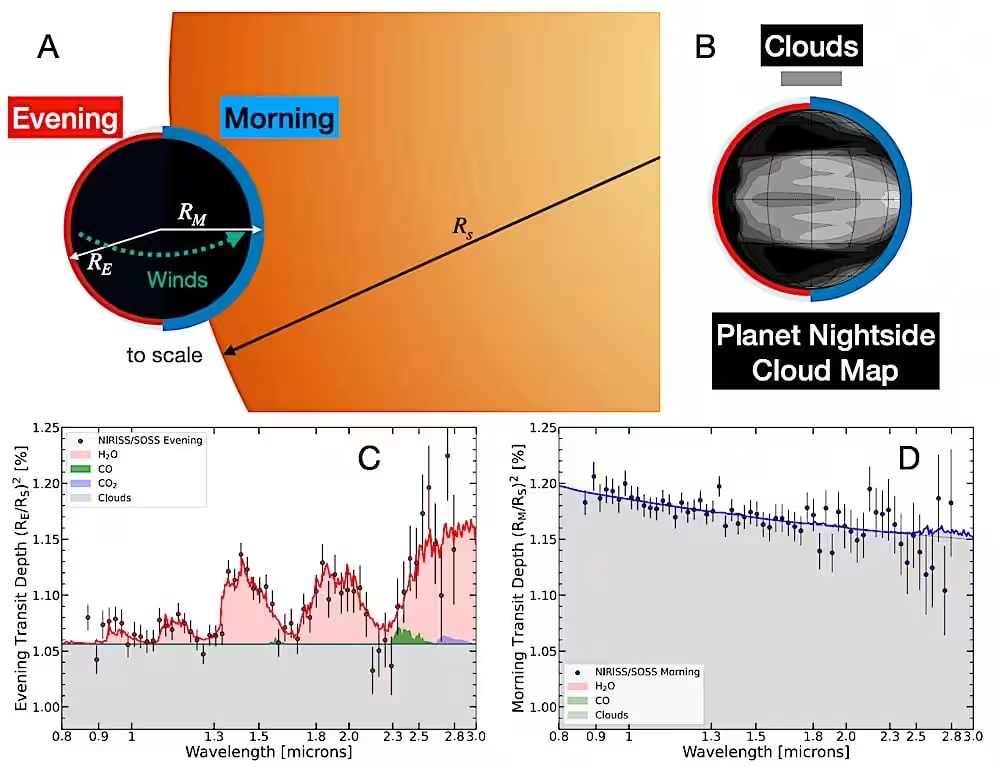
David Sing of Johns Hopkins University has called these high‑altitude clouds “a thorn in our side” for years. To probe WASP‑94Ab, Sing’s team employed transit spectroscopy, observing the planet as it crossed its star from JWST’s perspective.
“We’ve known for quite a while that clouds are pervasive on hot Jupiter planets, which is annoying because it’s like trying to look at the planet through a foggy window,” he explained in a peer‑reviewed publication.
The technique isolates starlight that filters through the planet’s limb, revealing the composition of gases and cloud layers. Results published in Science show that the leading, “morning” side—where atmospheric flow moves from night to day—hosts dense magnesium‑silicate clouds, while the trailing “evening” side appears largely cloud‑free.
“It was really surprising how different the two halves of the same planet are,” Sagnick Mukherjee, who led the study as a postdoctoral fellow at Arizona State University, stated. “What this tells us is: if we don’t know about the weather cycles on these distant planets, we won’t be able to measure their composition well.”
Earlier observations with Hubble could not separate the leading and trailing limbs, leading to inflated estimates of oxygen and carbon that were hundreds of times higher than Jupiter’s levels. JWST data refined those figures to roughly five times Jupiter’s abundance.
Tidally Locked Dynamics Drive Cloud Transport
WASP‑94Ab is likely tidally locked, meaning one hemisphere constantly faces its star while the opposite side remains in perpetual darkness. Strong winds at the day‑night boundary can loft magnesium‑silicate particles into the night‑side atmosphere. As these clouds drift into the daylight side, the extreme heat causes them to evaporate, producing the clear‑sky conditions observed in the evening spectrum.
An alternative interpretation suggests that the planet’s scorching temperatures simply melt the clouds during the day, analogous to fog dissipating under the sun on Earth. Both scenarios fit the observed pattern of condensation and evaporation occurring over a single planetary rotation.
“Not only have we been able to clear the view, but we can finally pin down what the clouds are made out of and how they’re condensing and evaporating as they move around the planet.”
Expanding the Survey to Other Hot Jupiters
Following the WASP‑94Ab observations, the team examined eight additional hot Jupiters with JWST. Two of those—WASP‑17b and WASP‑39b—displayed comparable morning‑evening cloud behavior. WASP‑17b is a low‑density, inflated gas giant on a retrograde orbit, while WASP‑39b shows a water‑rich atmosphere accompanied by carbon‑bearing and sulfur‑dioxide compounds.
These results imply that daily cloud cycles could be a common feature among hot Jupiters, although individual chemical make‑ups and atmospheric densities shape distinct patterns on each world.
The researchers plan to extend their investigation to planets on highly eccentric orbits, where dramatic temperature swings may produce even more extreme weather signatures detectable by JWST. The May 21 publication marks a milestone, demonstrating that next‑generation telescopes can monitor exoplanetary atmospheres over the course of a single day.
This article has been fact checked for accuracy, with information verified against reputable sources. Learn more about us and our editorial process.
Last reviewed on .
Article history
- Latest version
Reference(s)
- <https://physics-astronomy.jhu.edu/directory/david-sing/>.
- <https://www.eurekalert.org/news-releases/1128131?>.
- <https://www.eurekalert.org/releaseguidelines>.
- Mukherjee, Sagnick., et al. “Cloudy mornings and clear evenings on a gas giant exoplanet.” Science, vol. 392, no. 6800, May 21, 2026, pp. 858-862. American Association for the Advancement of Science (AAAS), doi: 10.1126/science.adx5903. <https://www.science.org/doi/10.1126/science.adx5903>.
Cite this page:
- Posted by Karan Das