Researchers Simulated 30 Million Routes to Find the Way to the Moon That Could Slash Space Fuel Costs
Researchers have discovered a concealed route to the lunar surface that might revolutionize spacecraft navigation.
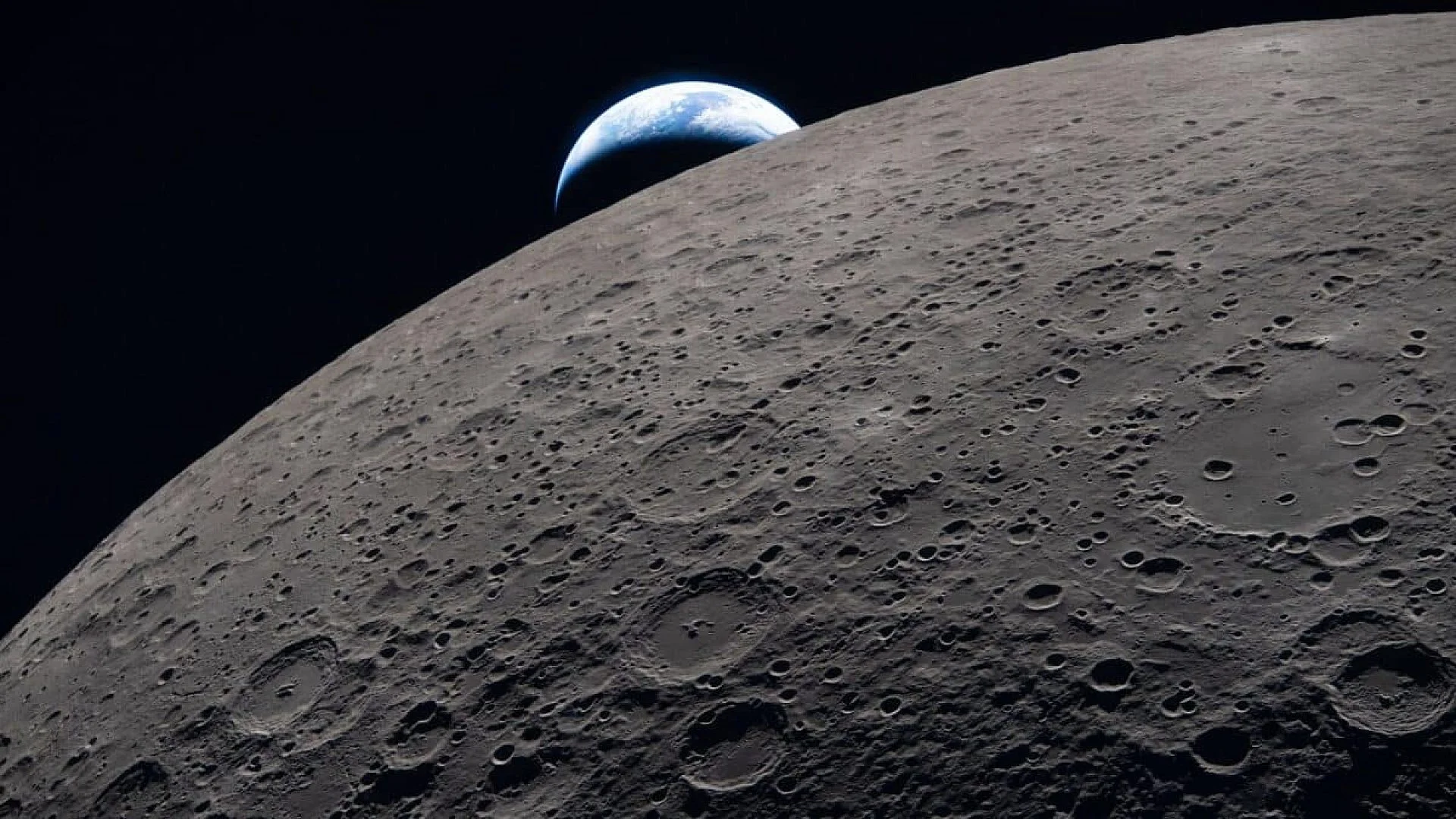
Scientists have identified a previously unknown route between Earth and the moon that enables spacecraft to conserve significant amounts of fuel. By harnessing the power of gravitational forces, the route also ensures continuous communication with Earth, eliminating signal disruptions experienced in past missions.
The research team emphasized that optimizing lunar trajectories is crucial, as every meter per second of fuel saved translates into substantial cost reductions for space missions.
The discovery was made possible through the use of advanced computer simulations. The researchers applied the theory of functional connections, a method that reduces computational demands while modeling complex orbital dynamics. They also reported in a study published by the journal Astrodynamics, that the researchers simulated 30 million potential paths, selecting 280,000 of the most promising for detailed analysis.
Harnessing Gravity for Efficient Space Travel
Spacecraft often rely on gravity rather than engines to navigate efficiently through space. The new route leverages the interplanetary transportation network, a set of gravitational pathways shaped by celestial bodies. The latest research found that entering the lunar-orbit variate from the side opposite Earth allows spacecraft to use gravity more effectively. Vitor Martins de Oliveira, postdoctoral researcher at the University of São Paulo, explained that:
“Instead of assuming it’s easier to choose the part of the variate closest to Earth, we can use systematic analysis with faster methods to try to find nontrivial solutions.”
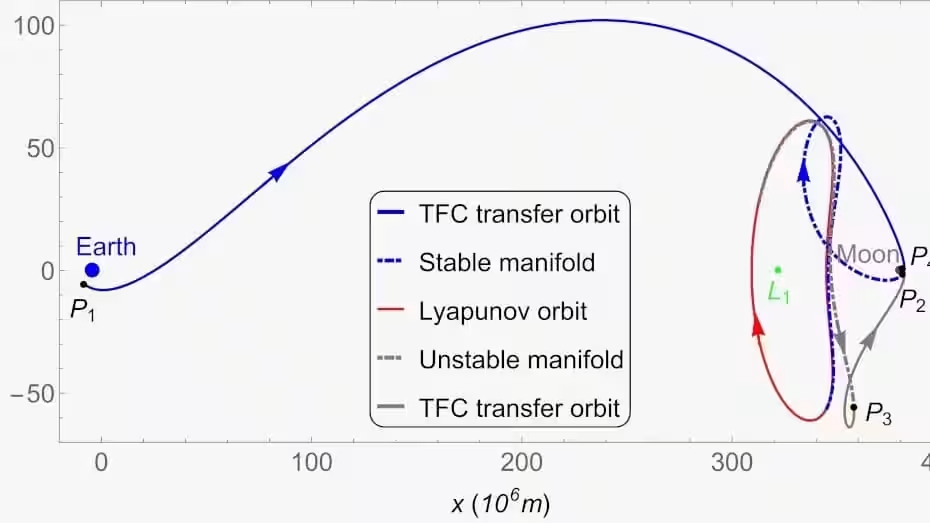
This approach reduces fuel use by 58.80 meters per second compared to the previously known most efficient path, a subtle but meaningful improvement for mission planning.
Maintaining Continuous Communication with Earth
The hidden trajectory also ensures uninterrupted contact with mission control. Past missions, such as Artemis 2, experienced temporary communication blackouts when passing directly behind the moon. Oliveira emphasized that the newly identified route avoids this problem.
“The Artemis 2 mission, for example, lost communication with Earth for a while because it was directly behind the moon,” he said. “The orbit we propose is a solution that maintains uninterrupted communication.”
Maintaining a steady connection is crucial for moon operations, allowing real-time monitoring of spacecraft systems and quick responses to unexpected events.
Future Lunar Expeditions in Light of New Findings
While the study focused on gravitational influences from Earth and the moon, the researchers suggest that including additional forces, such as solar gravity, could reveal even more efficient paths. Allan Kardec de Almeida Júnior, lead author from the University of Coimbra, Portugal, noted that:
“The systematic analysis we applied in our work is something that could be adopted more widely going forward.”
Published on April 10 in Astrodynamics, the research demonstrates how detailed simulations can uncover solutions that traditional trajectory planning might miss. The discovery illustrates that careful analysis of gravitational forces can optimize spacecraft trajectories, reduce fuel use, and improve mission reliability.

By revealing this hidden lunar pathway, the team has opened new possibilities for exploration. The trajectory combines efficiency, safety, and operational reliability, providing space agencies with a tangible method to enhance both crewed and robotic missions to the moon.
This article has been fact checked for accuracy, with information verified against reputable sources. Learn more about us and our editorial process.
Last reviewed on .
Article history
- Latest version
Reference(s)
- <https://www.researchgate.net/profile/Vitor-De-Oliveira-3>.
- “Allan Kardec de Almeida Junior - UT Austin Portugal.”, November 11, 2024 UT Austin Portugal <https://utaustinportugal.org/participants/allan-kardec-de-almeida-junior/>.
- de Almeida, Allan Kardec., et al. “Earth–Moon transfer via the L1 Lagrangian point using the theory of functional connections.” Astrodynamics, April 10, 2026 Springer Science and Business Media LLC, doi: 10.1007/s42064-025-0297-x. <https://link.springer.com/article/10.1007/s42064-025-0297-x?cjdata=MXxOfDB8WXww&utm_medium=affiliate&utm_source=commission_junction&utm_campaign=CONR_BOOKS_ECOM_GL_PBOK_06YUE_GL_ALWYS_DEEPLINK&utm_content=textlink&utm_term=PID100052171&CJEVENT=43126e2c552c11f181c001580a18b8fa>.
Cite this page:
- Posted by Karan Das