NASA Telescope Built for a Two Year Mission Finally Returns to Earth After 22 Years
NASA’s iconic space telescope has officially ceased operations, marking the end of a historic, decades-long mission that far exceeded all expectations.
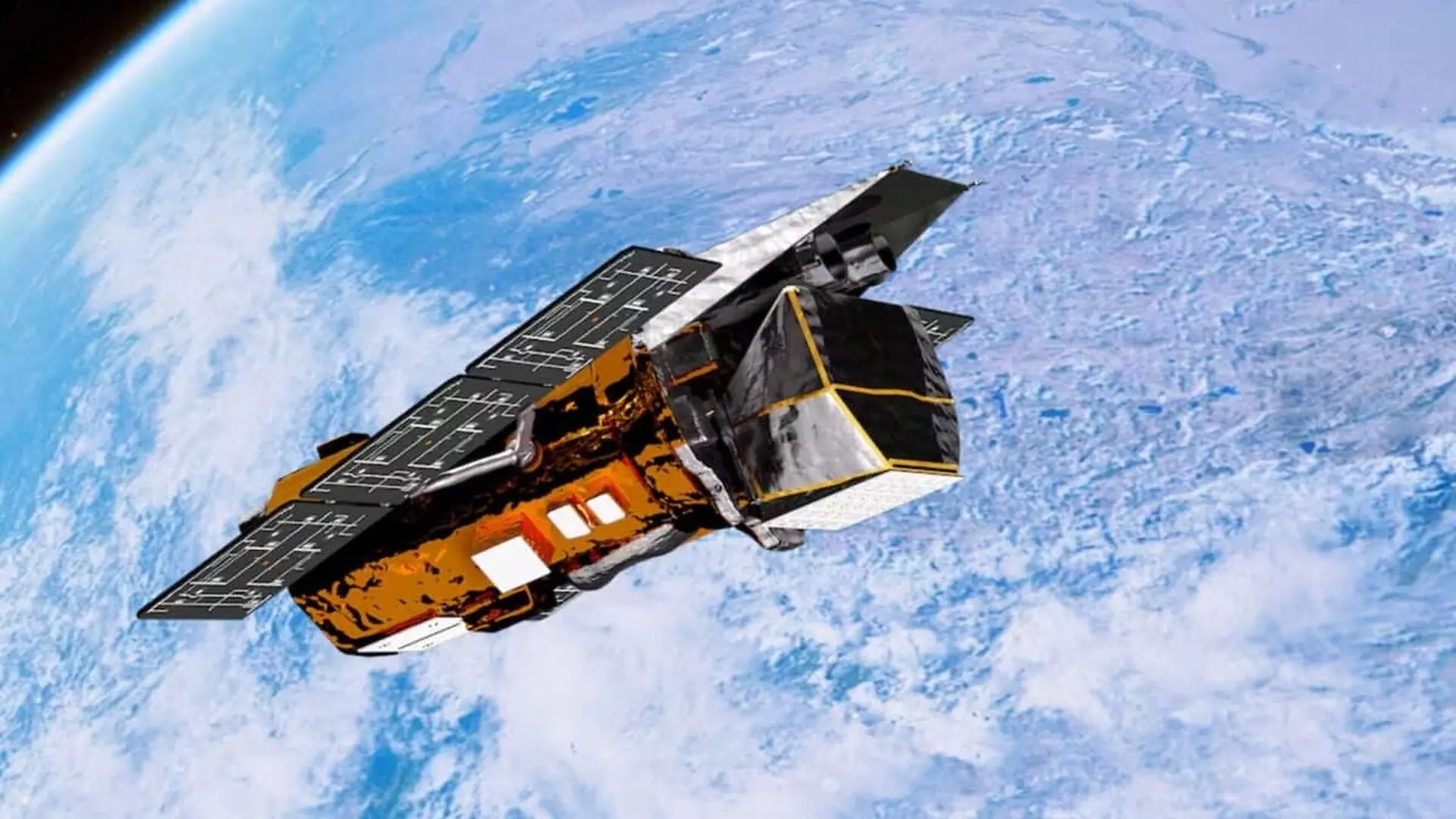
After more than two decades of monitoring the high-energy universe, NASA’s Neil Gehrels Swift Observatory has concluded its mission. The spacecraft, which far exceeded its initial operational lifespan, reentered Earth’s atmosphere on November 4, 2026. According to the U.S. Space Force, the satellite descended over North Sumatra, Indonesia, at 7:39 a.m. EST.
While the majority of the hardware was expected to disintegrate during the intense heat of reentry, mission officials noted that some components may have survived the descent to the surface. The final coordinates for the reentry were recorded at 3.4 degrees north latitude and 98.6 degrees east longitude.
A Two-Year Design, A Twenty-Year Legacy
Launched in 2004, the Swift observatory was originally slated for a modest two-year mission. Its primary objective was to solve the mystery of gamma-ray bursts—the most luminous and violent explosions known to physics. Because these cosmic flashes are notoriously fleeting, the spacecraft was engineered for extreme agility, capable of slewing rapidly to capture data while an event was still active.
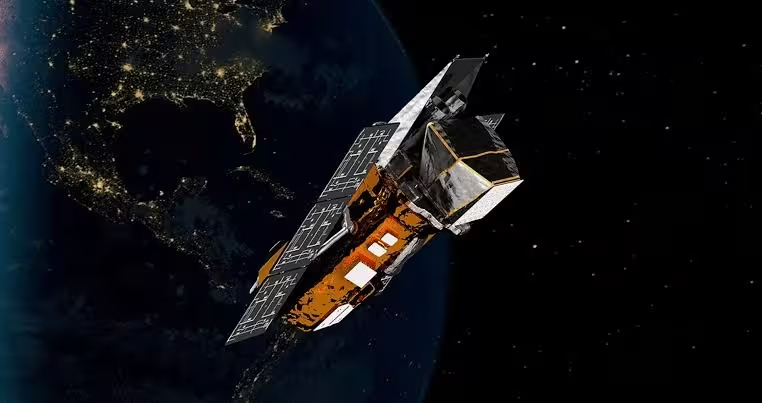
Swift utilized a suite of three onboard telescopes to observe targets across multiple light wavelengths simultaneously. This multi-messenger approach allowed it to act as a cosmic early-warning system, alerting ground-based observatories to pivot their own instruments toward incoming transients. This collaborative framework proved essential for studying dynamic phenomena that would have otherwise vanished into the vacuum of space.
Broadening the Horizon of Deep Space Exploration
Although gamma-ray bursts were its primary directive, the observatory’s scientific contributions eventually reached far beyond its original scope. Over its 22-year tenure, Swift provided critical data on the behaviors of supermassive black holes at the centers of active galaxies and tracked the intense X-ray output of stellar flares.
The telescope also became a key asset in studying supernovas and monitoring objects within our own solar system, including passing comets and asteroids. A report regarding the mission’s final days highlights how the observatory’s unexpected longevity turned it into a cornerstone of modern atmospheric and orbital research, far outlasting the engineers’ initial expectations for its hardware durability.
This article has been fact checked for accuracy, with information verified against reputable sources. Learn more about us and our editorial process.
Last reviewed on .
Article history
- Latest version
Reference(s)
- Fisher, Alise. “NASA’s Swift Observatory Re-Entered Atmosphere - NASA Science.”, November 2, 2026 NASA <https://science.nasa.gov/blogs/swift/2026/11/02/nasas-swift-observatory-to-re-enter-atmosphere/>.
- <https://scitechdaily.com/nasa-space-telescope-meets-fiery-end-after-nearly-22-years-in-orbit/>.
Cite this page:
- Posted by Nida Rehman