Astronomers Capture Rare X‑Ray Shock Breakout Revealing a Massive Star’s Violent Final Days
Astronomers reconstruct the final moments of a massive star before its dramatic supernova collapse, revealing new insights into stellar death.
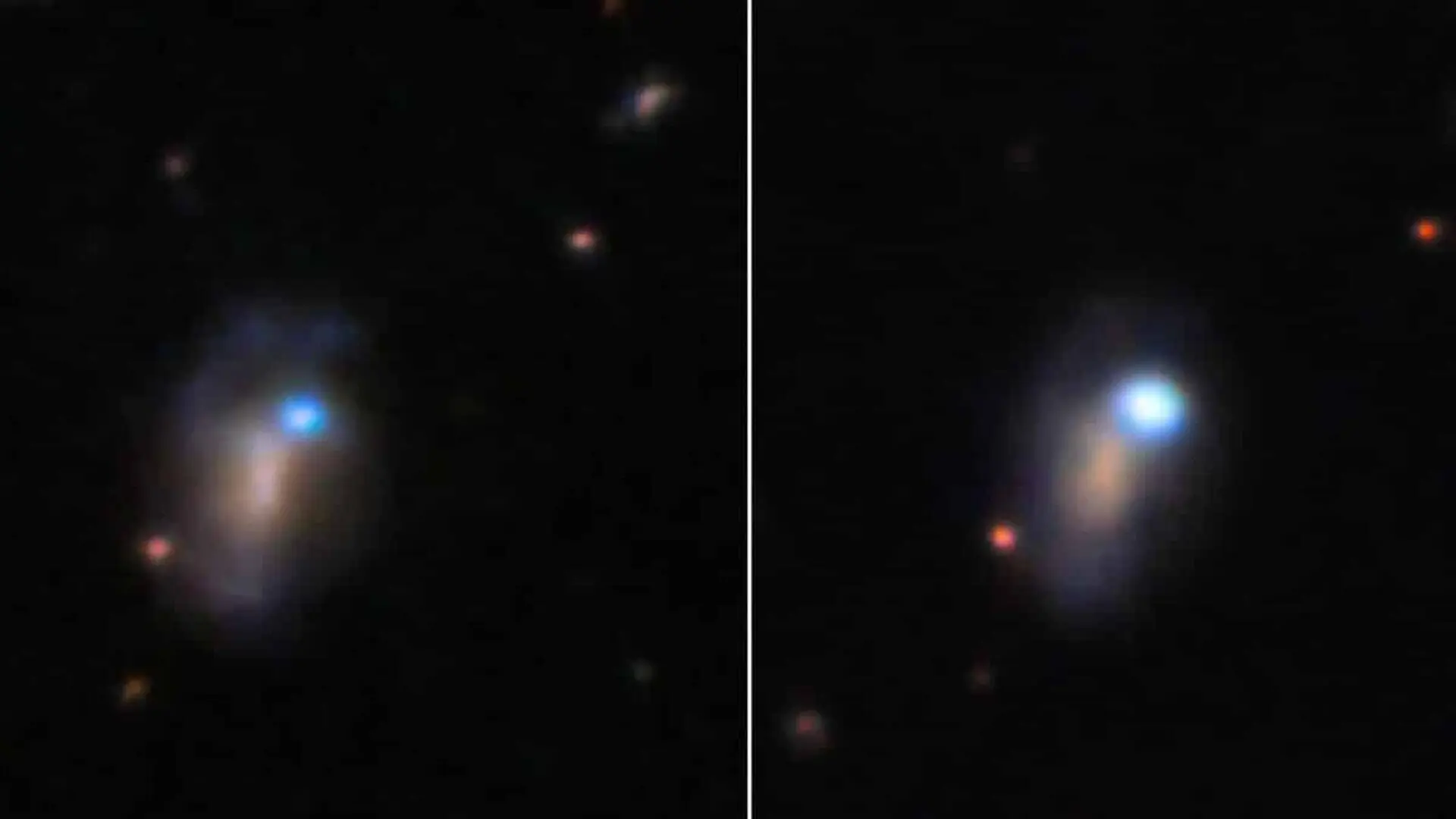
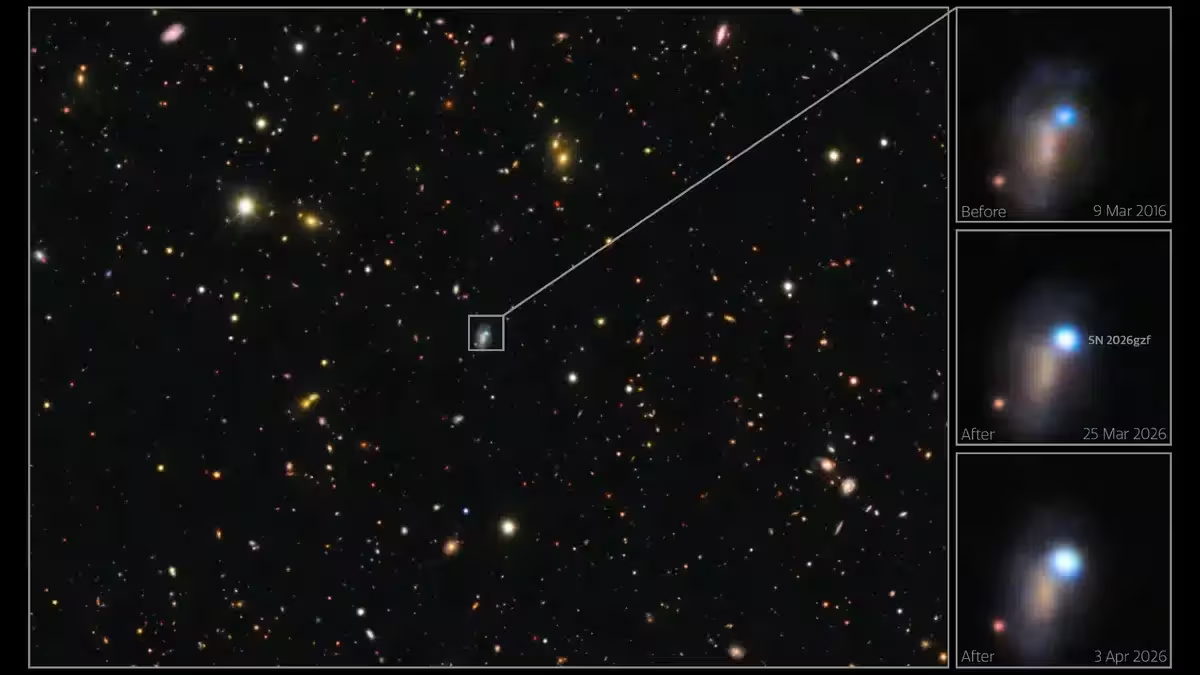
A team of astronomers has captured the complete sequence of a massive star’s demise, linking an X‑ray shock breakout, the ensuing supernova, and the surrounding circumstellar material that the star expelled before collapsing. The findings, published in The Astrophysical Journal Letters, provide an unprecedented glimpse of how a star’s turbulent pre‑death activity shapes the final explosion.
By stitching together observations from the earliest high‑energy flash to the later interaction of the blast wave with previously ejected gas, researchers have reconstructed the star’s late‑stage mass‑loss history and mapped the environment that framed its ultimate collapse.
Capturing the Last Breath of a Massive Star
Massive stars end their lives in some of the universe’s most violent outbursts, yet the moments surrounding core collapse are notoriously elusive. Traditional supernova surveys typically miss the initial flash, leaving a gap in our understanding of the star’s immediate pre‑explosion behavior.
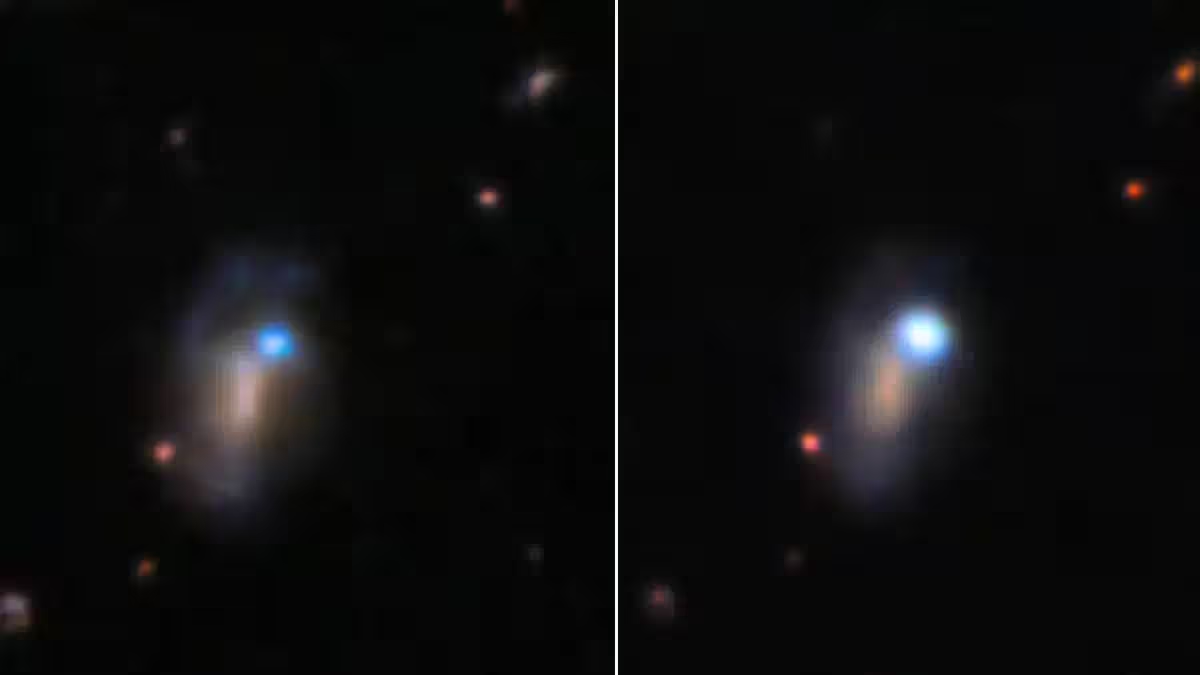
In this case, astronomers recorded a rapid X‑ray shock breakout—a fleeting burst of high‑energy photons released when the shock wave burst through the stellar surface—followed by the optical rise of the supernova and its subsequent collision with a shell of material shed during the star’s final years.
Together, these signals act as a forensic record, revealing that the progenitor experienced intense episodes of mass loss shortly before its core gave way.
Reconstructing the Pre‑Explosion Environment
The study, detailed in The Astrophysical Journal Letters, links the temporal evolution of the X‑ray flash to the density structure of the surrounding gas, enabling a layered portrait of the star’s final transformation.
Lead investigator Jillian Rastinejad described the achievement as a “tri‑part analysis” that captures the shock breakout, the supernova light curve, and the interaction of the ejecta with pre‑existing circumstellar material.
“Our observations allowed us to study the physics of three pieces of this explosion: the X‑ray shock breakout, the accompanying supernova, and the interaction of the supernova with material previously cast out by the dying star,” Jillian Rastinejad said. “With this information we were able to map out the structure of the material surrounding the star and understand the star’s violent lifestyle before it collapsed.”
This comprehensive view bridges the gap between a star’s mass‑loss episodes and the dynamics of its ultimate blast, offering clues about how massive stars shed their envelopes and set the stage for a supernova.
What Stripped Stars Reveal Before Collapse
The progenitor belongs to the class of “stripped stars,” objects that have lost most of their outer hydrogen layers prior to exploding. Because the stripping process unfolds long before a supernova becomes visible, such stars are difficult to catch in the act.
The new dataset supplies a benchmark for how these stars behave in their final days and whether a common pattern exists across similar objects.
Expanding the sample of such events will clarify whether the pre‑explosion mass‑loss signatures observed here are typical of stripped stars or represent a more diverse set of evolutionary pathways.
“Going forward, I’m excited to observe more shock breakout events in similar detail to test if all stripped stars have a comparable ‘lifestyle’ prior to collapse and what, if any, differences we see,” said Gokul Srinivasaragavan, a member of Rastinejad’s team.
Future campaigns with next‑generation space observatories and high‑energy telescopes are expected to capture additional shock breakout episodes, gradually assembling a statistically robust picture of how the most massive stars meet their end.
This article has been fact checked for accuracy, with information verified against reputable sources. Learn more about us and our editorial process.
Last reviewed on .
Article history
- Latest version
Reference(s)
- O’Connor, Brendan., et al. “EP260321a/SN 2026gzf: The Faintest Shock Breakout Associated with a Broad-lined Supernova.” The Astrophysical Journal Letters, vol. 1006, no. 1, July 14, 2026, pp. L13 American Astronomical Society, doi: 10.3847/2041-8213/ae84ba. <https://iopscience.iop.org/article/10.3847/2041-8213/ae84ba>.
Cite this page:
- Posted by Aisha Ahmed