Record-Breaking Solar Images Reveal Ubiquitous Kelvin-Helmholtz Vortices
High-resolution images show swirling magnetic structures covering much of the Sun’s surface, suggesting pervasive solar magnetism.
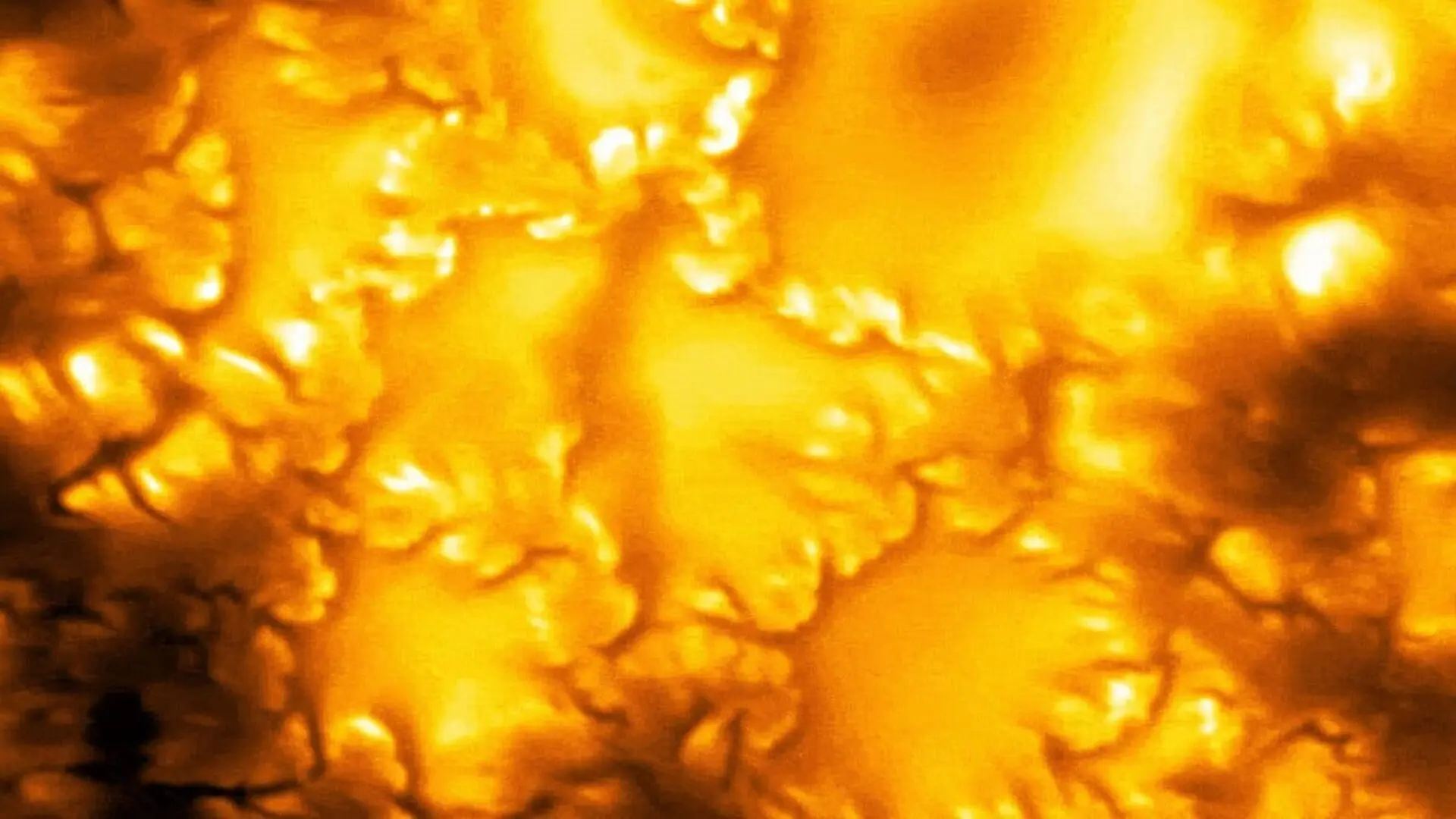
A team of solar researchers has identified a previously unseen layer of activity on the Sun, documenting extensive Kelvin‑Helmholtz vortices that thread the star’s magnetic surface. The discovery, reported in Nature, indicates that these swirling structures are far more common than earlier models predicted.
Record-Breaking Solar Images Unveil Hidden Dynamics
Using some of the sharpest solar observations ever recorded, scientists were able to resolve minute magnetic features with unprecedented clarity. The images, which capture the Sun in extraordinary detail, reveal rapid motions across regions that were previously considered too intricate to study at this scale. For more context, see the Sun’s far‑side magnetic map.
Kelvin‑Helmholtz Instabilities Take Center Stage
Kelvin‑Helmholtz instabilities (KHI) arise when layers of fluid or plasma slide past one another at differing speeds, producing wave‑like vortices. On Earth, similar patterns appear in cloud formations or ocean waves, while on the Sun they emerge from the interaction of moving magnetic patches with searing plasma.
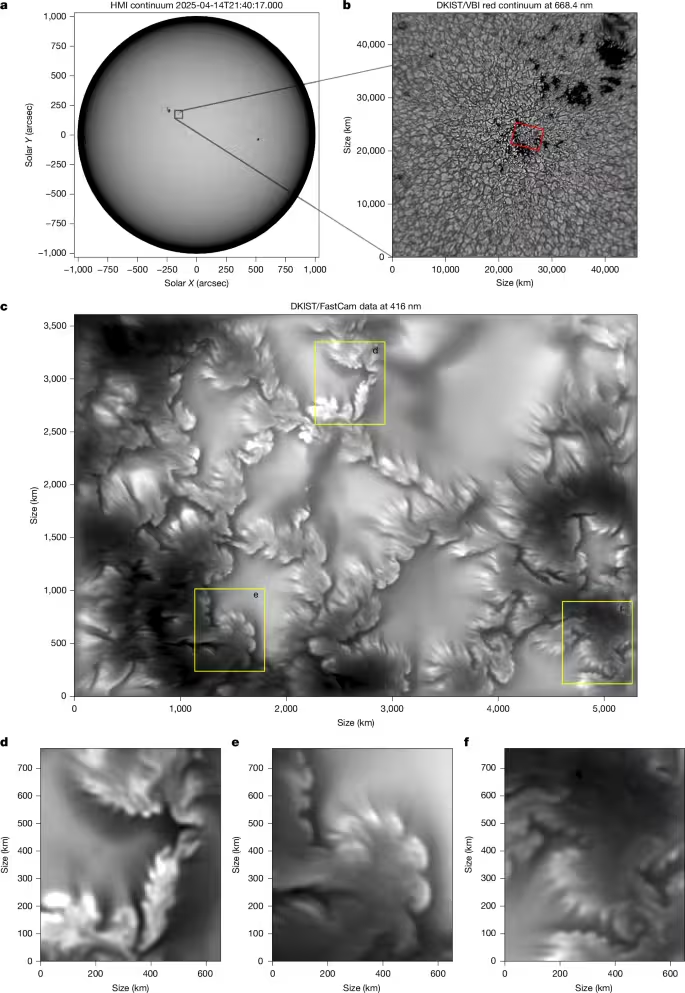
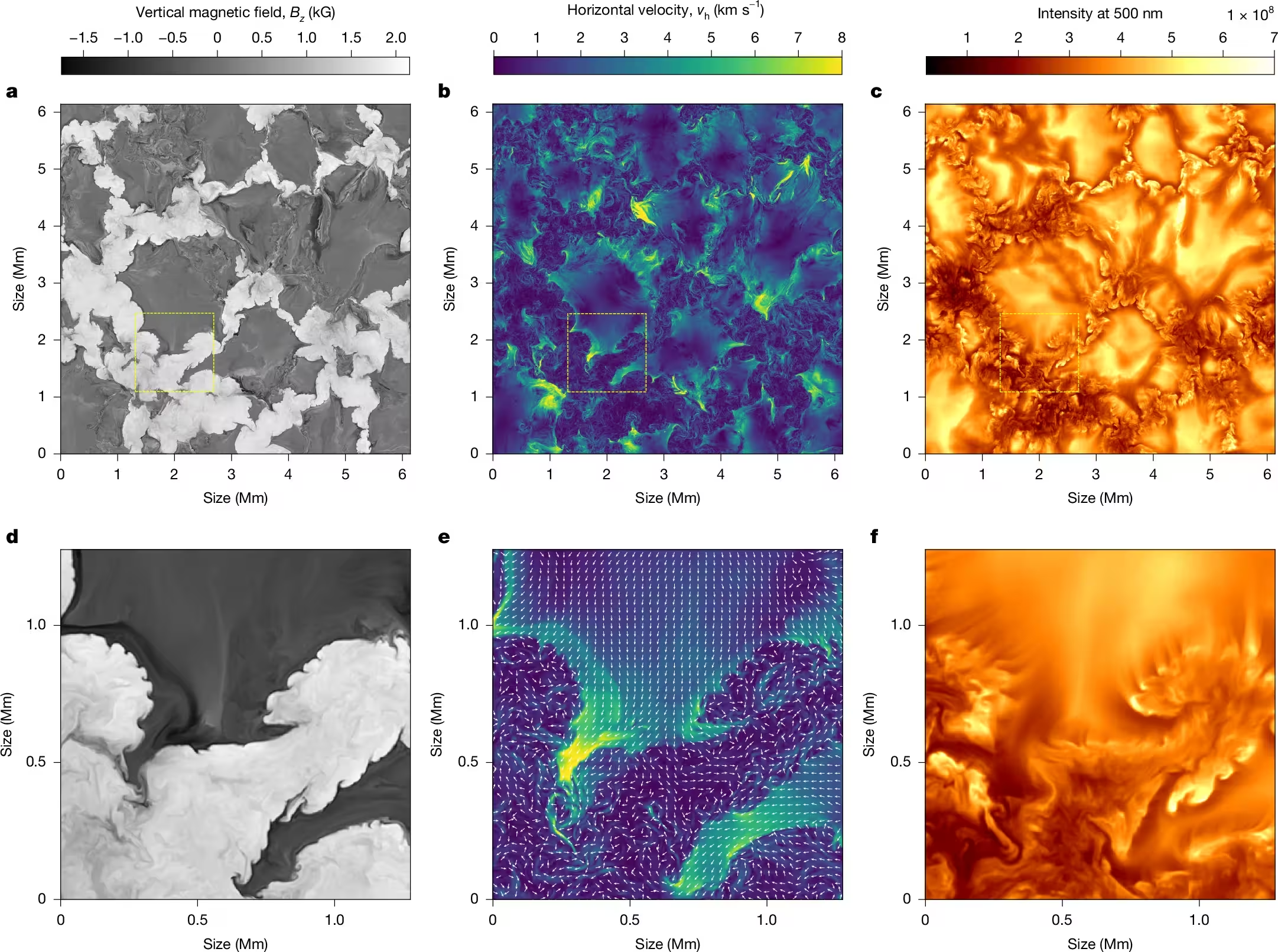
By merging data from cutting‑edge solar telescopes with high‑resolution numerical simulations, the team confirmed that the observed features represent genuine physical phenomena rather than imaging artefacts. The analysis demonstrated that KHI events are not rare outliers but occur under a broad range of solar conditions.
“Providing the evidence that ‘what looks, walks, and quacks like a duck actually is a duck’ is much more difficult, and could only be achieved with the highest spatial resolution data of the solar surface ever acquired, and the most complete and detailed numerical computer simulations ever performed (just for this purpose),” he told ScienceAlert.
Magnetic Boundaries Host Ubiquitous Vortices
The study found that KHI vortices line the edges of magnetic elements across the solar surface, indicating that this process is an integral part of solar dynamics. Researchers expressed surprise at the sheer frequency of these structures in the high‑resolution data set.
“We were truly amazed by the incredible amount of small‑scale detail and dynamic activity visible in the high‑resolution images,” solar physicist David Kuridze of the US National Solar Observatory told ScienceAlert.
Initial expectations suggested that generating KHI on the Sun would require a rare confluence of forces. The observations, however, reveal that the delicate balance between competing magnetic and plasma pressures is routinely satisfied at magnetic boundaries.
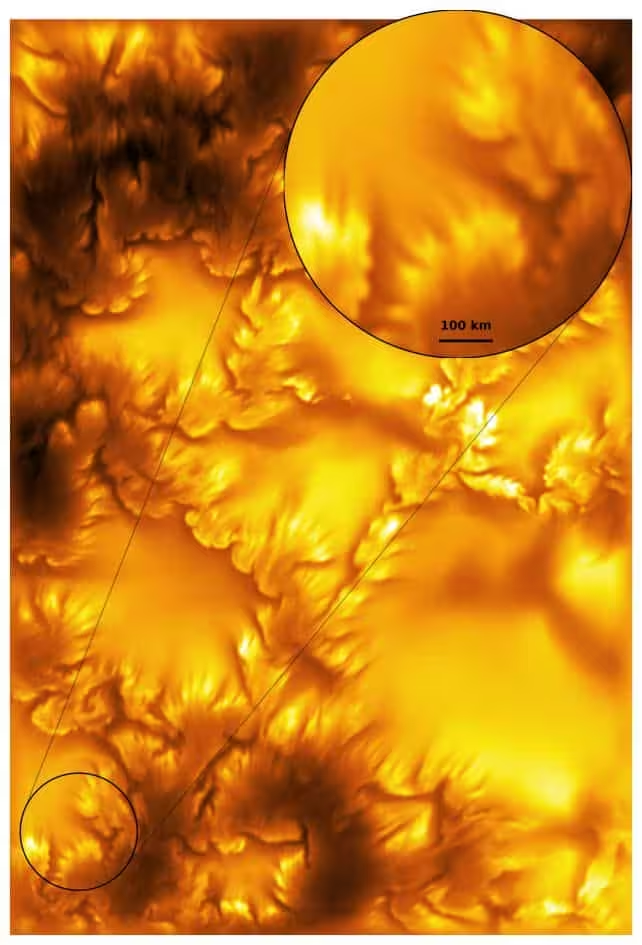
“The real surprise was seeing just how ubiquitous KHI actually is all across the surface,” Kuridze said.
“To generate it in a real physical system, you need a remarkably delicate balance between competing physical forces. So discovering that these strict requirements are satisfied practically everywhere at the boundaries of magnetic elements is simply astonishing.”
The results, detailed in Nature, provide fresh insight into how energy traverses the Sun’s atmosphere. By elucidating these minute processes, scientists hope to refine models of solar activity and better capture the mechanisms that shape the star’s outer layers.
Implications for Solar Energy Transport
Widespread KHI activity implies that the Sun’s magnetic surface is far more turbulent than previously documented. These small‑scale vortices may play a significant role in channeling energy and material through the solar atmosphere, influencing larger‑scale phenomena such as flares and coronal heating.
The breakthrough was made possible by next‑generation observational tools that deliver resolution previously unattainable. As one of the investigators noted, “It was a very exciting time because the implications could be so far‑reaching.”
Continued advances in solar imaging are expected to uncover additional hidden processes. “Every major discovery about the Sun adds another tiny piece to a very large puzzle, and the Sun has no shortage of unresolved mysteries,” the lead author remarked.
A New Window on Solar Mysteries
The detection of extensive magnetic vortices underscores how much remains unknown about our nearest star, even after decades of dedicated research. The findings suggest that small‑scale activity may have a larger impact on solar physics than previously recognized.
By probing these fine‑grained structures, scientists aim to clarify the interplay between magnetic fields, plasma flows, and the evolving conditions of the solar atmosphere. As imaging capabilities continue to improve, further hidden features of the Sun are expected to emerge from the data.
This article has been fact checked for accuracy, with information verified against reputable sources. Learn more about us and our editorial process.
Last reviewed on .
Article history
- Latest version
Reference(s)
- Starr, Michelle. “'Simply Astonishing': Record-Breaking Images Reveal The Sun Is Teeming With Whirling Vortices.”, August 5, 2026 ScienceAlert <https://www.sciencealert.com/simply-astonishing-record-breaking-images-reveal-the-sun-is-teeming-with-whirling-vortices>.
- Kuridze, David. “Ubiquitous Kelvin–Helmholtz instabilities driving plasma mixing on the Sun - Nature.”, August 5, 2026, pp. 1-7. Nature, doi: 10.1038/s41586-026-10871-3. <https://www.nature.com/articles/s41586-026-10871-3>.
Cite this page:
- Posted by Aisha Ahmed