Artificial Intelligence Use Drives Art Teachers to Explore New Career Paths
New research shows how generative artificial intelligence adoption and institutional support influence job security and career exploration among Chinese art educators.
Artificial intelligence tools are changing the daily work of Chinese art teachers, and a new study reveals how these educators respond professionally to the shifting technological landscape. The research shows that higher individual use of artificial intelligence is linked to more active career exploration among art teachers, driven by concerns about job security and professional identity.
Understanding AI and Career Exploration in the Classroom
Modern generative artificial intelligence systems are capable of producing visual artwork, imitating styles, and offering creative inspiration. While creative professions were once thought safe from technological replacement, these advanced capabilities challenge the core expertise of art educators. The study, published in PLOS One by Jia Li and Yun Gao, examined survey data from 381 Chinese art teachers to understand how these professionals adapt to technological changes in education.
Rather than simply avoiding new technology, the teachers who adopted artificial intelligence tools more frequently also reported higher levels of career exploration behavior. This included investigating alternative career possibilities, attending professional development programs, and actively seeking information about the job market. The authors analyzed survey data using statistical modeling to map out the connections between technology use, perceived workplace threats, and professional adaptation.
Why Job Security and Substitution Risks Matter
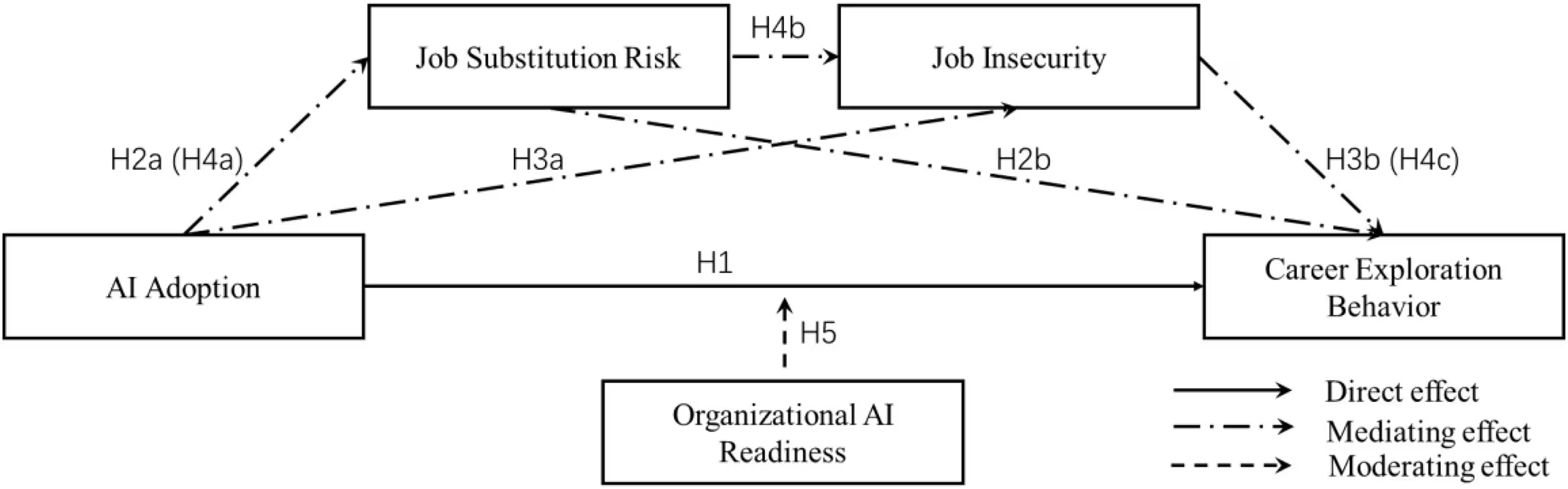
The research investigated two key psychological mediators: perceived job substitution risk and general job insecurity. When art teachers worry that artificial intelligence could automate their core teaching duties or devalue their artistic expertise, they experience heightened employment uncertainty. The statistical analysis confirmed that artificial intelligence adoption was positively associated with both job substitution risk and job insecurity.
These perceived threats act as a catalyst for action. When teachers feel that their professional resources are challenged, they tend to engage in exploratory behaviors to regain control over their careers. The data supported a sequential chain where technology use increases substitution risk, which in turn raises job insecurity, ultimately leading to greater career exploration. The study notes that such exploration can stem from a desire to protect one’s career against threats or from curiosity about new professional growth opportunities.
The Crucial Role of Institutional Support
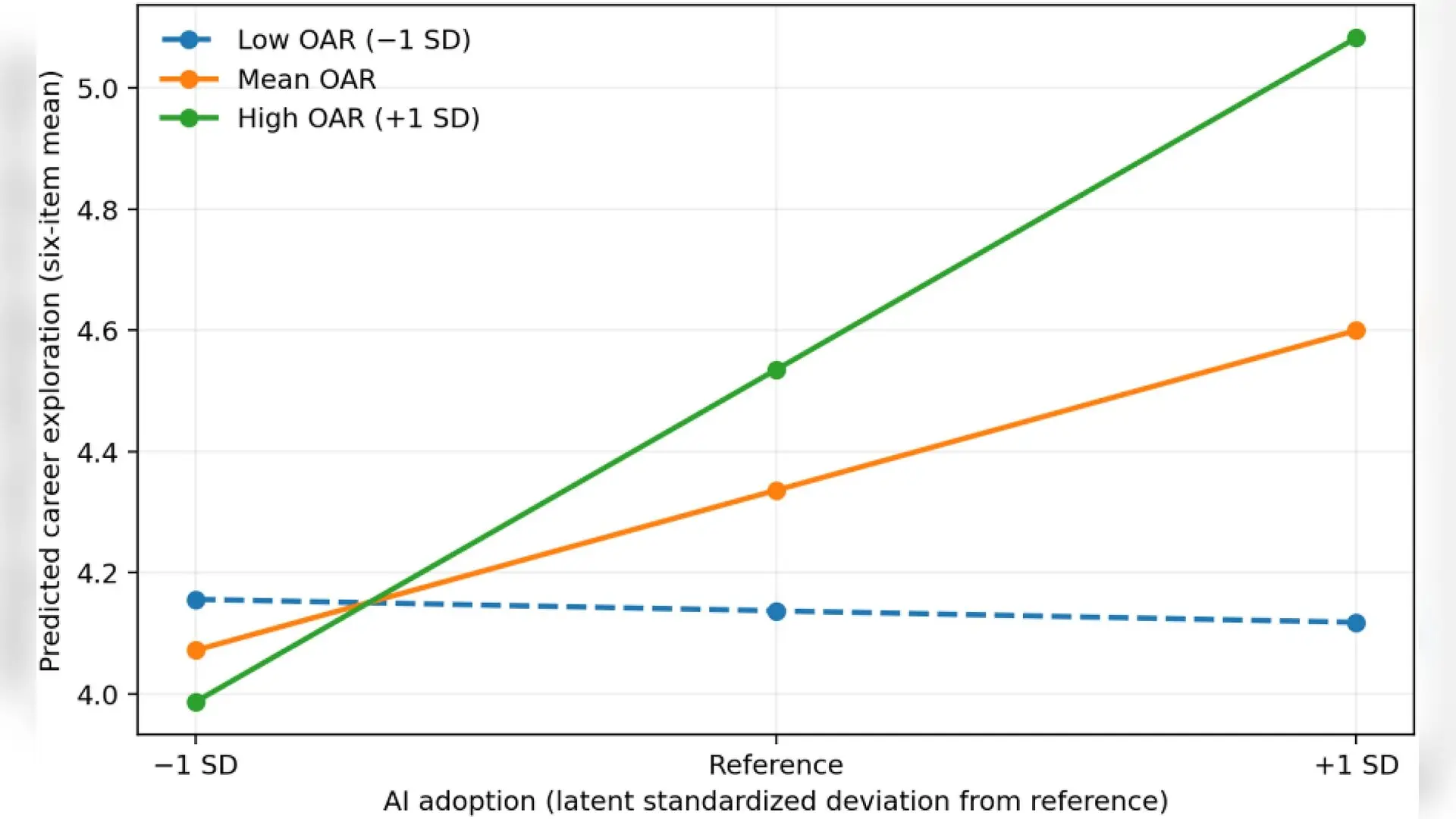
Another major finding centers on organizational artificial intelligence readiness, which measures an institution’s technological infrastructure, financial resources, and leadership support. The researchers discovered that institutional readiness significantly moderates the relationship between technology adoption and career exploration. When schools provide robust support and resources, the positive association between artificial intelligence adoption and career exploration becomes much stronger.
In environments with low institutional readiness, the link between technology use and career exploration was not statistically significant. This suggests that supportive schools do more than just ease anxiety, they provide the necessary resources and training that empower teachers to experiment with new digital roles and interdisciplinary practices.
Study Limitations and Next Steps
Because this project relied on cross-sectional survey data collected from July to September 2025, the authors emphasize that the findings represent statistical associations rather than proven causal relationships. It is possible that teachers who are already proactive in their careers are simply more willing to adopt new technology. Furthermore, the survey measured overall career exploration without separating threat-driven motivations from growth-driven aspirations.
Future research will need to use longitudinal designs to track these professional changes over time and include teachers from other academic disciplines. Policymakers and school administrators can use these insights to build transparent communication channels, offer targeted digital training, and ensure that artificial intelligence is introduced as a supportive teaching assistant rather than a replacement for human educators.
The research was published in PLOS One on November 6, 2026.
This article has been fact checked for accuracy, with information verified against reputable sources. Learn more about us and our editorial process.
Last reviewed on .
Article history
- Latest version
Reference(s)
- Li, Jia., et al. “Artificial intelligence (AI) adoption and Chinese art teachers’ career exploration behavior: The roles of job substitution risks, job insecurity, and organizational AI readiness.” PLOS One, vol. 21, no. 11, November 6, 2026, pp. e0362478 Public Library of Science (PLoS), doi: 10.1371/journal.pone.0362478. <https://doi.org/10.1371/journal.pone.0362478>.
Cite this page:
- Posted by James Whitmore