Piezoelectric Circuit Mimics Neural Firing Rhythms
A novel dual-capacitor electronic model demonstrates how mechanical pressure alters neuronal oscillations, paving the way for advanced brain-machine interfaces.
Tiny pressure changes can dramatically alter how synthetic nerve cells fire, according to a recent engineering study examining a new hardware model of neuronal activity. The research demonstrates how a specialized electronic circuit incorporating piezoelectric materials, which generate electricity from physical pressure, can accurately mimic the complex electrical rhythms of biological neurons while opening new doors for advanced brain-machine interfaces and neuromorphic computing architectures.
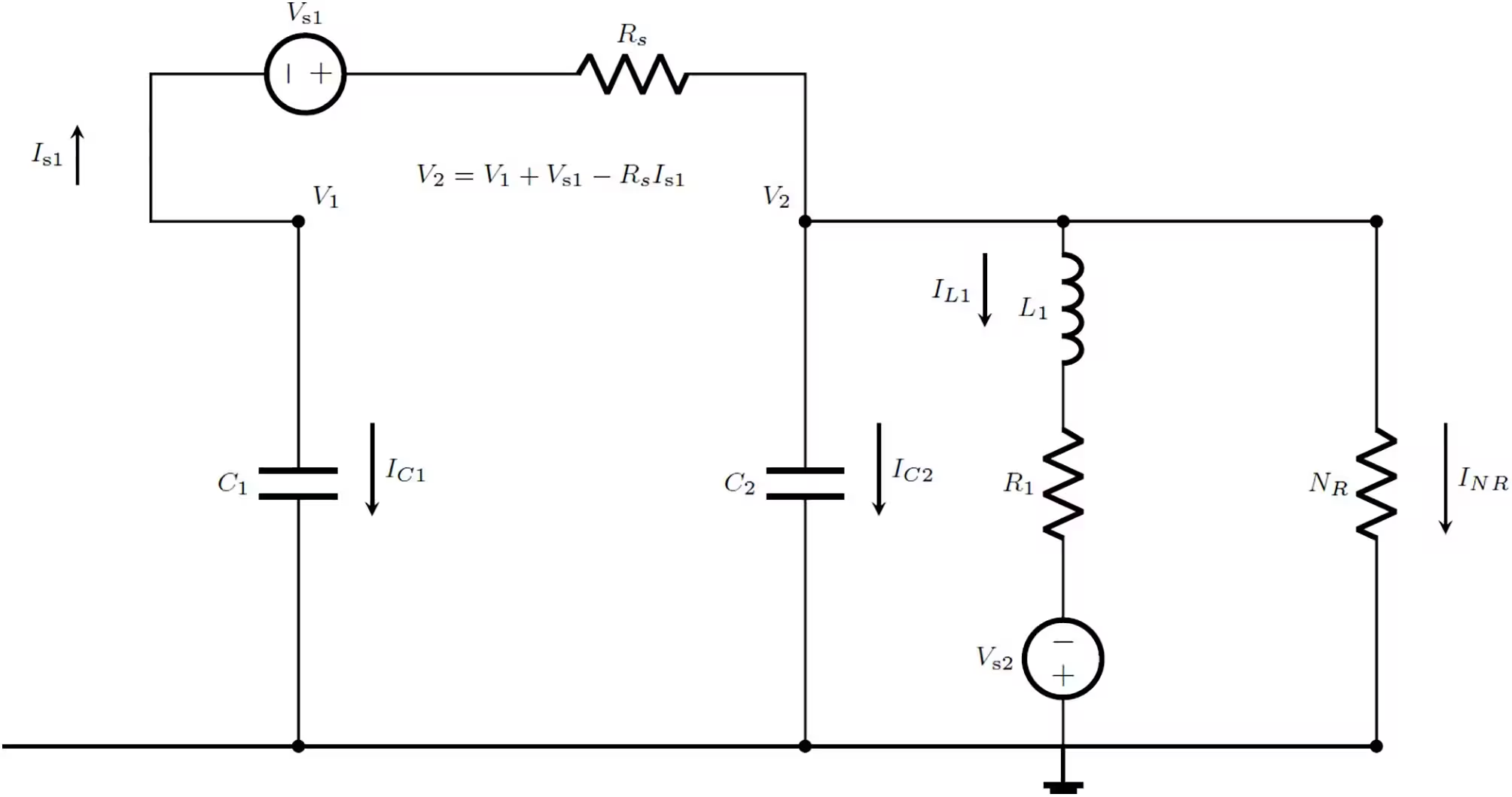
Investigating the intricate electrical properties of actual nerves has long challenged engineers and neuroscientists alike. Traditional mathematical representations often rely on simplified assumptions that ignore the physical realities of intracellular environments and membrane capacitance. To bridge this gap, researchers designed an electronic neuron circuit that uses two parallel capacitors separated by a piezoelectric bi-membrane. This configuration translates physical pressure and mechanical stress into electrical responses, closely mirroring how biological sensory receptors convert touch or sound into neural signals.
The system was evaluated through comprehensive mathematical modeling published in PLOS One by researchers Haiqa Ehsan, Haseeba Sajjad, Adil Jhangeer, and Lubomír Říha. The authors derived the governing equations of the circuit using Kirchhoff’s laws to account for nonlinear interactions, oscillatory behavior, and stability. By scaling parameters and variables into dimensionless forms, the team analyzed how different circuit components influence voltage and current dynamics.
Mapping the Stability and Parameter Space
To understand how the circuit behaves under various configurations, the researchers conducted a systematic parameter space classification across multiple dimensions. They tested a thousand different parameter combinations and initial conditions to map out regions of divergent, non-diverging, and periodic activity. Statistical analysis revealed that while unstable and diverging trajectories dominate large portions of the parameter space, periodic oscillatory behavior emerges under specific, tightly controlled conditions.
Eigenvalue analysis of the Jacobian matrix further categorized the local linear stability of the system. The findings indicate that the circuit is exceptionally sensitive to parameter tuning rather than initial states. Small variations in conductance, capacitance ratios, and inductance can swiftly push the system from stable rhythms into unstable states. This high sensitivity underscores the necessity of precise calibration when designing hardware for brain-inspired computing.
Energy Balance and External Forcing Responses
The team also investigated the energetic behavior of the circuit by constructing a Hamilton energy function. This approach allowed them to track instantaneous energy-balance rates, separating internal dissipation through resistance from energy supplied by voltage sources and external forcing terms. The calculations demonstrated continuous energy exchange among the nonlinear circuit components, confirming that the active system dynamically balances storage and dissipation.
When an external periodic forcing term was introduced to simulate acoustic or mechanical stimulation, the circuit exhibited rich dynamical regimes. Through power spectrum analysis, return maps, and stroboscopic Poincare sections, the authors tracked transitions from quasi-periodic motion on a two-torus to phase-locked periodic firing. As the forcing amplitude increased past a threshold of approximately 2.8, scattered stroboscopic points collapsed into smooth curves, revealing that the external signal successfully synchronized the internal oscillations.
Implications for Neuromorphic Hardware Design
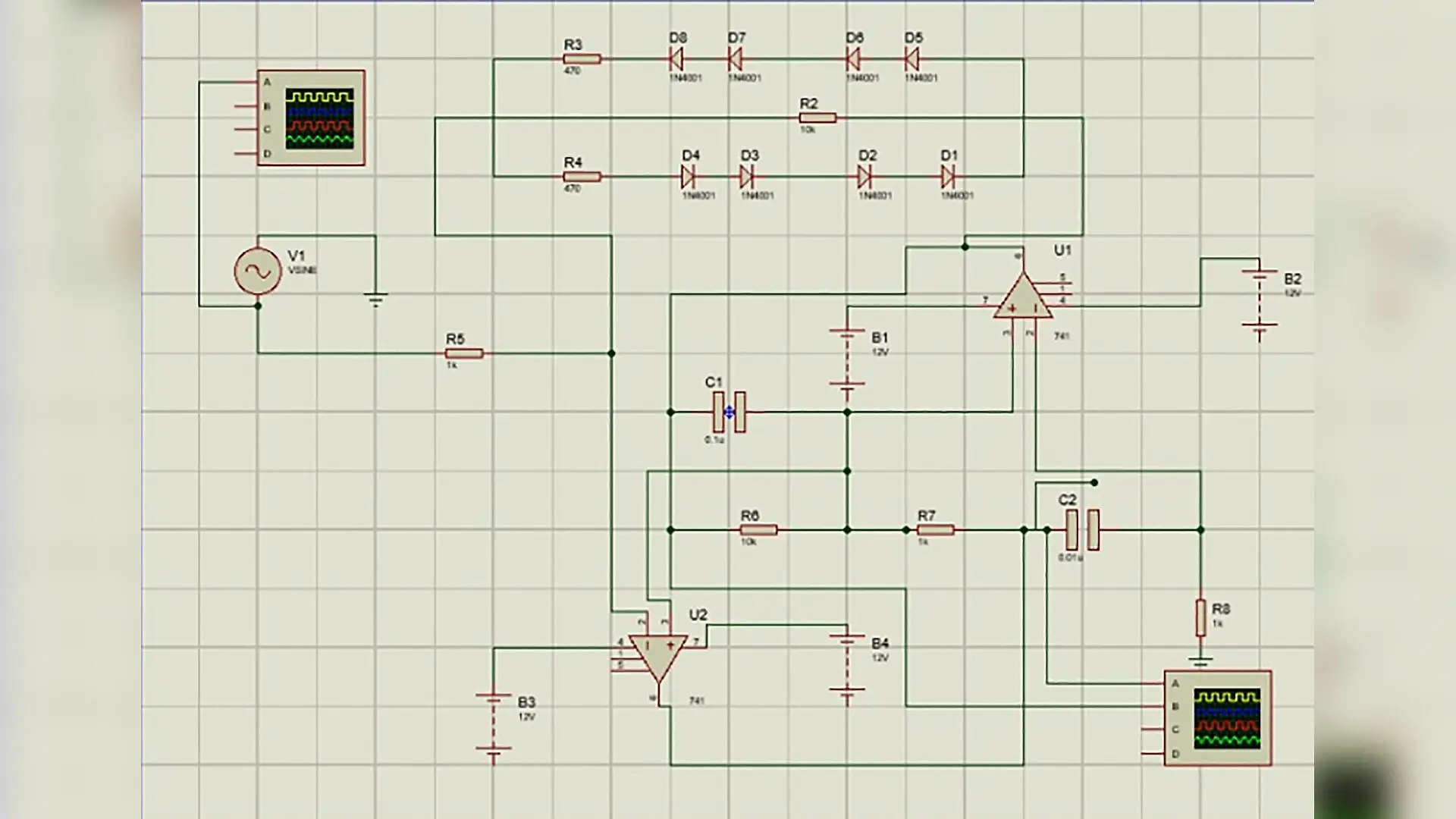
Lyapunov exponent calculations confirmed that the system maintains non-positive exponents across the investigated forcing amplitudes, indicating regular quasi-periodic and periodic dynamics without transitioning into deterministic chaos. Furthermore, hardware simulations using Multisim verified that the theoretical predictions align closely with practical electronic realizations.
Because the design avoids complex analog multipliers while successfully reproducing action potentials and stimulus-dependent firing patterns, it offers significant advantages for physical implementation. The findings provide a robust framework for developing low-power bio-inspired sensors, smart sensor networks, and advanced neural prosthetics capable of communicating seamlessly with biological tissue.
The research was published in PLOS One on November 6, 2026.
This article has been fact checked for accuracy, with information verified against reputable sources. Learn more about us and our editorial process.
Last reviewed on .
Article history
- Latest version
Reference(s)
- Ehsan, Haiqa., et al. “Experimental and theoretical investigation of parameter-driven stability and chaos in a non-linear neuron circuit model.” PLOS One, vol. 21, no. 11, November 6, 2026, pp. e0360729 Public Library of Science (PLoS), doi: 10.1371/journal.pone.0360729. <https://doi.org/10.1371/journal.pone.0360729>.
Cite this page:
- Posted by Asif Iqbal