Smart Battery Strategy Cuts Data Center Power Costs by 2.6 Times
New mathematical models forecast electricity prices and server loads to optimize battery dispatch in real time.
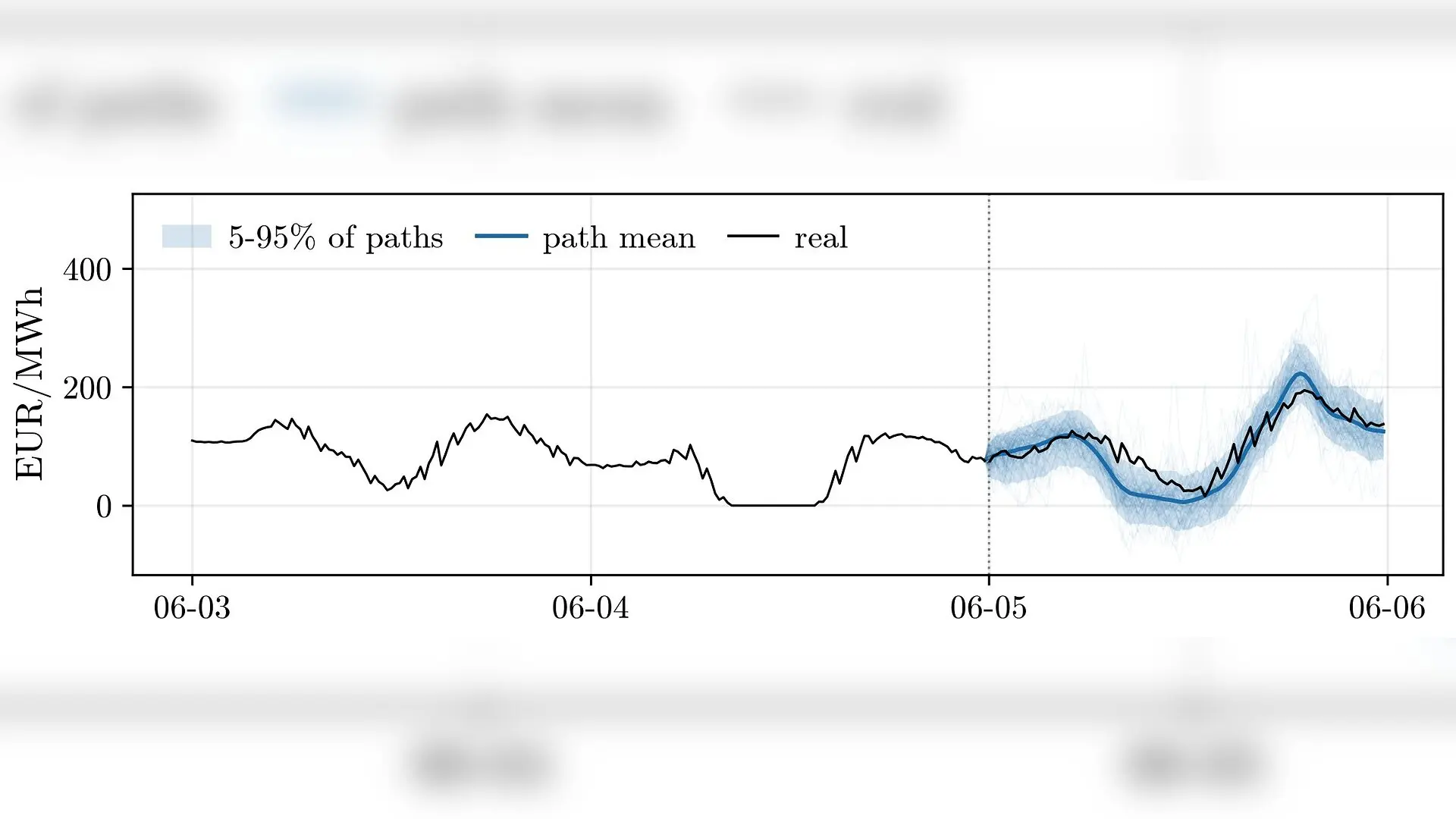
Smart battery systems cut data center electricity bills by more than half in new tests, offering a powerful way to handle surging power demands from artificial intelligence and cloud computing. Large server facilities consume massive amounts of electricity, creating severe market volatility and high operating expenses for operators trying to keep pace with modern computing workloads.
To tackle this challenge, a team of researchers developed a real-time forecasting and battery dispatch framework that harnesses advanced mathematical models to predict electricity prices and data center power usage. The study, available on the arXiv preprint server, demonstrates that intelligent battery management can dramatically outperform conventional fixed-threshold strategies.
How Polynomial Diffusion Models Predict Power Markets
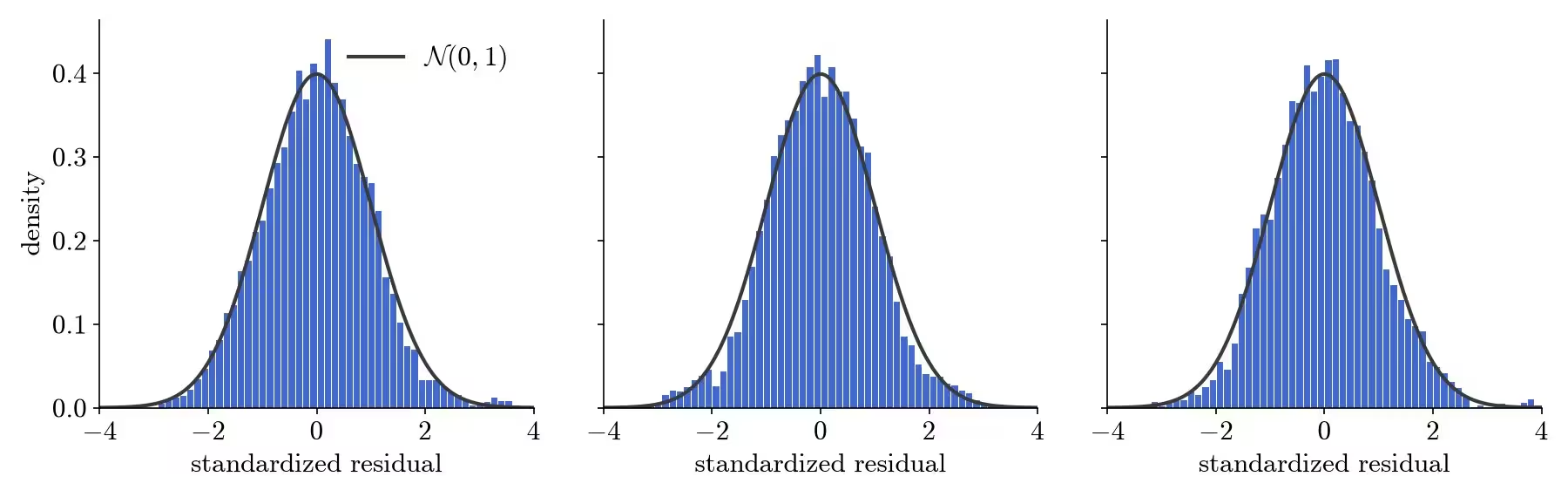
The research team, consisting of Matthew Van Ham, Yiping Liu, and Xiaozhe Wang, utilized polynomial diffusion models to capture complex stochastic dynamics in both electricity markets and server power loads. These specialized mathematical models transform hidden Gaussian latent factors into non-Gaussian processes, allowing the system to accurately simulate extreme price spikes and variable data center workloads. By leveraging closed-form conditional expectations, the framework calculates future price and load trajectories through efficient matrix operations instead of heavy stochastic simulations.
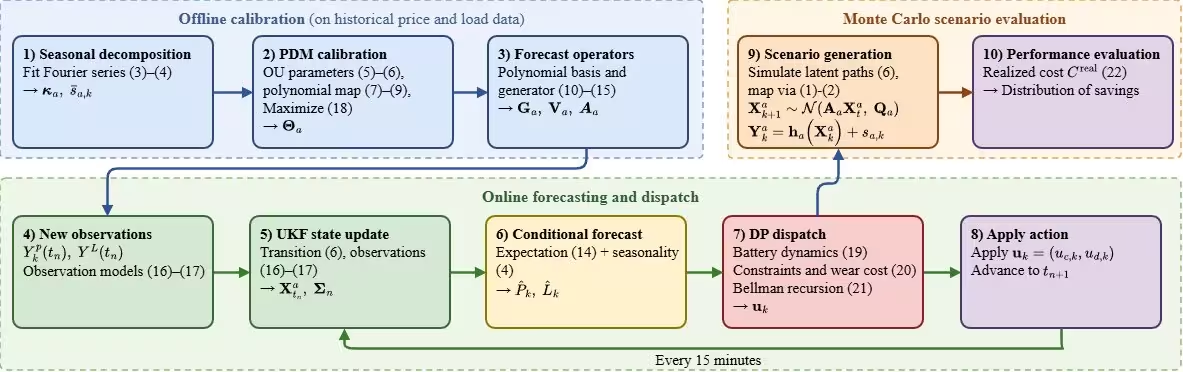
The authors integrated these rolling forecasts into a receding-horizon dynamic programming framework, which acts as a mathematical decision engine. Every fifteen minutes, the system updates its forecasts using new observations and solves the optimization problem to determine the most cost-effective charging and discharging schedule. The framework accounts for battery degradation costs, round-trip efficiency constraints, and the imperative to avoid exporting power back to the grid during scheduled operations.
Testing Cost Savings Across Different Battery Configurations
To evaluate the performance of their approach, the investigators simulated a 20-megawatt data center paired with various battery energy storage system configurations over a five-out-of-sample period spanning 1,000 simulations. The price model was calibrated using historical German intraday electricity prices, while the load model drew upon public Google data center power traces.
The results show that the dynamic programming strategy achieved a mean daily cost savings of 5,029 euros per day. In contrast, a standard rule-based threshold strategy achieved only 1,959 euros per day under the same conditions. Across four different battery capacity configurations, the proposed framework consistently delivered between 2.53 and 2.74 times greater cost reductions, yielding an aggregate savings ratio of 2.63.
Understanding Storage Duration Limits and Next Steps
The team also analyzed how storage duration, defined as the ratio of maximum energy capacity to maximum power, affects overall financial returns. Their analysis revealed that daily cost savings increase as storage duration grows, though the marginal financial gains begin to level off at larger capacities. The findings suggest that forecast-based dispatch systems can better exploit the operational flexibility of longer-duration storage assets compared to rigid rule-based approaches.
While the models effectively captured major temporal variations, the evaluation noted that the simulations slightly overestimated price and load variability during certain periods. The authors note that future work will focus on incorporating higher-order predictive moments into the framework to support risk-aware battery operations as data center energy demands continue to evolve.
The study was posted to the arXiv preprint server on November 5, 2026.
This article has been fact checked for accuracy, with information verified against reputable sources. Learn more about us and our editorial process.
Last reviewed on .
Article history
- Latest version
Reference(s)
- Van Ham, Matthew. “Joint Electricity Price and Load Forecasting for Data Center Battery Dispatch Using Polynomial Diffusion Models.” arXiv.org <http://arxiv.org/abs/2611.08470v1>.
Cite this page:
- Posted by Asif Iqbal