How AI Is Designing Ultra-Precise CRISPR Gene Editors From Scratch
Researchers harness AI tools like AlphaFold to engineer more precise CRISPR gene editors, boosting editing efficiency and safety.
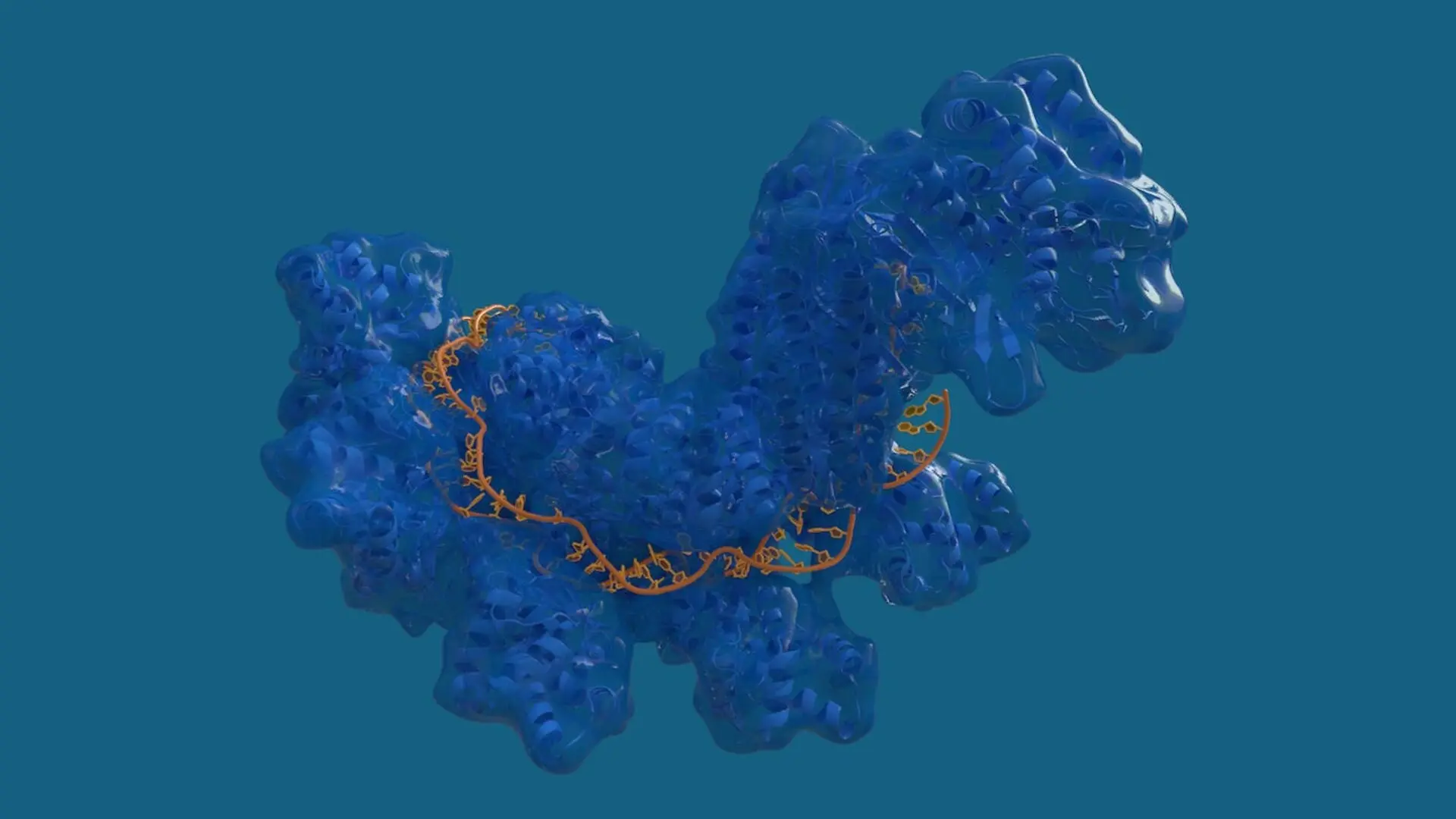
Researchers are turning to artificial‑intelligence platforms like DeepMind’s AlphaFold to boost CRISPR’s accuracy.
Gene‑editing works like a delicate matchmaking process: the protein “scissors” must latch onto a precise DNA segment, and a deviation as small as a single hydrogen atom can cause the enzyme to slip onto a similar, unintended site. In therapeutic contexts, such mis‑pairings can lead to harmful off‑target activity.
Artificial intelligence is now being used to improve that match.
One recent investigation employed machine‑learning methods to redesign CRISPR components, achieving higher fidelity than earlier variants. In a separate effort, AI was tasked with creating entirely new editing proteins from the ground up; despite their unconventional structures, the synthetic enzymes succeeded in modifying genes across several species.
“Tailoring the three‑dimensional architecture of genome‑editing tools will accelerate the development of safer, more efficient therapies,” noted Hoi Yee Chu and Alan Wong of the University of Hong Kong, who were not involved in the work (source).
Before these engineered scissors can be deployed clinically, they must be evaluated in living organisms. Meanwhile, researchers continue to mine natural nucleases for insights that can further inform AI‑driven design.
Why Precision Remains a Central Challenge
CRISPR has reshaped modern biology, moving from a laboratory curiosity to a therapeutic platform capable of tackling blood disorders, inherited blindness, and even high cholesterol (overview). Its ability to reprogram immune cells has also opened new avenues for cancer treatment.
Nonetheless, the system is not infallible. The nuclease component, guided by a short RNA sequence, must locate and cut a specific DNA stretch. Early versions sometimes missed their target, prompting critics to label them “genetic vandalism.” Moreover, “bystander editing,” where neighboring nucleotides are unintentionally altered, poses additional safety concerns.
Improving specificity is a longstanding goal, but even minor tweaks to the protein’s amino‑acid composition can cripple its activity. Researchers have attempted incremental modifications and large‑scale screens to identify variants with better selectivity (study 1; study 2), yet these approaches explore only a narrow slice of possible protein designs.
AI‑Guided Discovery of Safer Scissors
A team in China leveraged DeepMind’s AlphaFold 3 to predict not only protein structures but also their interactions with DNA. Rather than examining a single protein‑DNA complex, they used the model to assess how various regions of the CRISPR nuclease might engage different DNA sequences.
After cataloguing the outcomes of base‑editing experiments in human kidney cells, the researchers compared thousands of on‑target and off‑target events. They then built an AI tool called ContactSeek, which highlighted protein surfaces frequently associated with off‑target activity, pinpointing candidates for redesign.
Applying ContactSeek, the team introduced just two mutations into a base editor that converts adenine to guanine, producing a variant that outperformed several high‑fidelity editors currently on the market. They also generated alternative CRISPR configurations that maintained robust editing efficiency while exhibiting tighter DNA‑recognition profiles.
ContactSeek’s strength lies in extracting patterns from massive interaction datasets, revealing subtle contact points that single‑experiment methods might overlook. The model’s accuracy, however, depends on the quality and breadth of its training data; future iterations could benefit from additional datasets and complementary tools such as RoseTTAFoldNA.
In a parallel effort, CRISPR pioneer Jennifer Doudna and collaborators turned to AI to generate wholly novel nucleases (study). Focusing on compact proteins related to the Cas12 family, they fed an AI system the three‑dimensional structures of existing enzymes and asked it to redesign them. The algorithm produced thousands of synthetic candidates, but without a ranking mechanism, exhaustive testing would have been impractical.
To narrow the field, the team trained a second AI model to recognize which protein regions interact with each other and with DNA. This secondary model learned permissible alterations and ultimately selected a small set of promising designs. These engineered nucleases diverged from their natural templates by roughly 30 %, a degree of variation far exceeding earlier AI‑generated CRISPR enzymes (analysis).
Despite their synthetic origins, several of the new nucleases successfully edited genes in bacterial, plant, and human cells, and a few even surpassed natural counterparts in efficiency. As with the ContactSeek creations, the next hurdle is in‑vivo validation to ensure they avoid immune detection and achieve therapeutic levels of editing.
Neither study directly tackled the issue of bystander editing, but the complementary nature of the two AI approaches—one refining existing enzymes, the other inventing entirely new ones—suggests a roadmap for future breakthroughs.
This article has been fact checked for accuracy, with information verified against reputable sources. Learn more about us and our editorial process.
Last reviewed on .
Article history
- Latest version
Reference(s)
- Meng, Haowei. “Precise DNA base editing using AlphaFold3-based contact modelling - Nature.”, July 22, 2026, pp. 1-11. Nature, doi: 10.1038/s41586-026-10794-z. <https://www.nature.com/articles/s41586-026-10794-z>.
- Chu, Hoi. “AI identifies interactions in CRISPR complexes to improve specificity of DNA editing.”, July 22, 2026, doi: 10.1038/d41586-026-02042-1. <https://www.nature.com/articles/d41586-026-02042-1>.
- “Checking your browser - reCAPTCHA.” <https://pubmed.ncbi.nlm.nih.gov/30082871/>.
- Choi, Gigi. “Combinatorial mutagenesis en masse optimizes the genome editing activities of SpCas9 - Nature Methods.”, vol. 16, no. 8, pp. 722-730. Nature, doi: 10.1038/s41592-019-0473-0. <https://www.nature.com/articles/s41592-019-0473-0>.
- Abramson, Josh. “Accurate structure prediction of biomolecular interactions with AlphaFold 3 - Nature.”, vol. 630, no. 8016, pp. 493-500. Nature, doi: 10.1038/s41586-024-07487-w. <https://www.nature.com/articles/s41586-024-07487-w>.
- Baek, Minkyung. “Accurate prediction of protein–nucleic acid complexes using RoseTTAFoldNA - Nature Methods.”, vol. 21, no. 1, pp. 117-121. Nature, doi: 10.1038/s41592-023-02086-5. <https://www.nature.com/articles/s41592-023-02086-5>.
- Skopintsev, Petr., et al. “Structure and evolution-guided design of minimal RNA-guided nucleases.” Science, vol. 393, no. 6808, July 16, 2026, pp. 313-318. American Association for the Advancement of Science (AAAS), doi: 10.1126/science.aed6123. <https://www.science.org/doi/10.1126/science.aed6123>.
- Notin, Pascal. “AI expands the repertoire of CRISPR-associated proteins for genome editing.”, vol. 645, no. 8080, pp. 325-326., doi: 10.1038/d41586-025-02135-3. <https://www.nature.com/articles/d41586-025-02135-3>.
Cite this page:
- Posted by Asif Iqbal