Study Shows Saline Aquifers Could Store 90% of Future AI Data Center Carbon
Data centers now pose a major energy challenge in the AI era, driving urgent sustainability and power‑efficiency solutions.
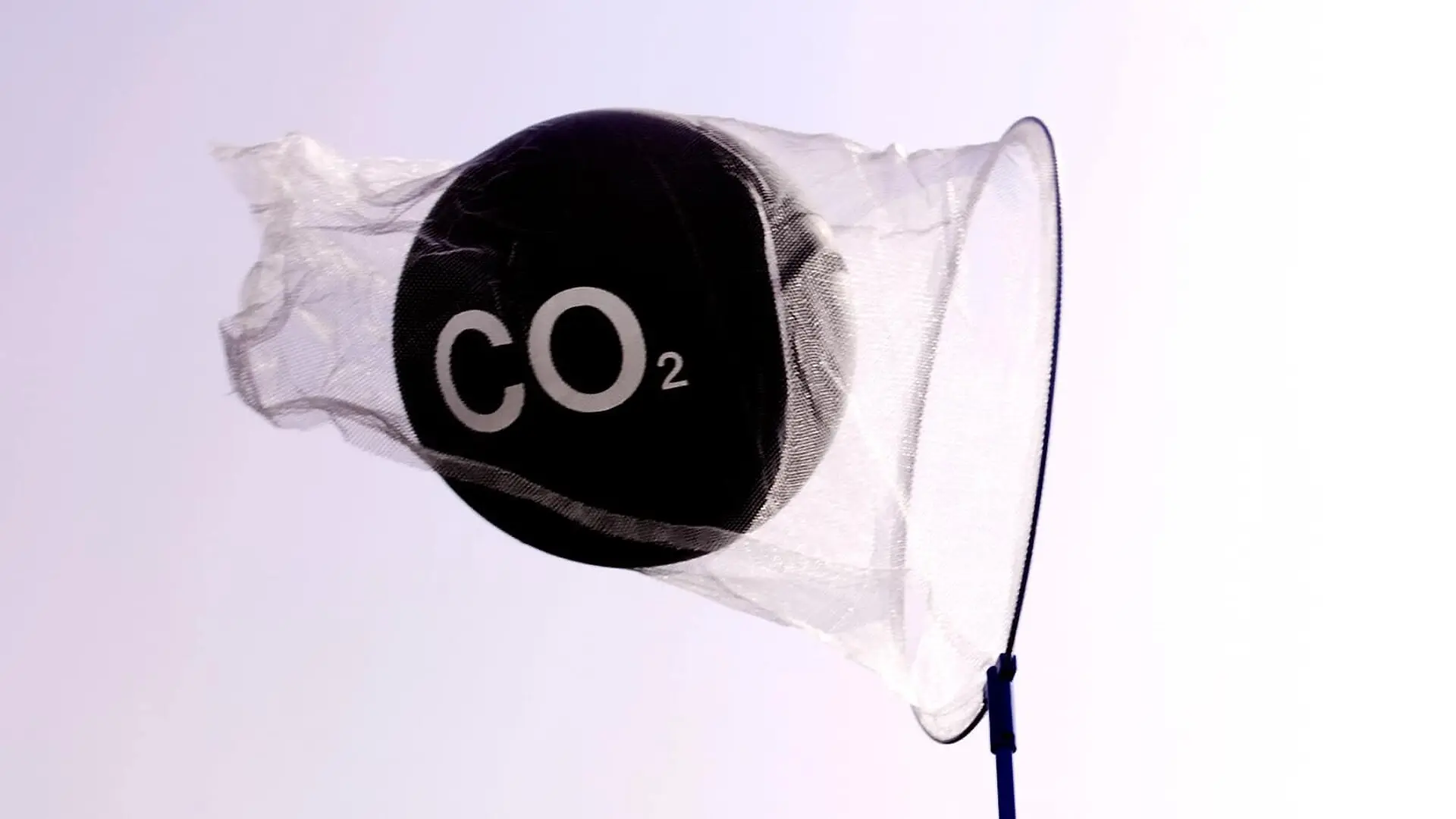
Carbon capture may curb emissions from rapidly expanding U.S. data centers
New research indicates that storing captured carbon underground could play a pivotal role in tempering the climate impact of data centers that are scaling up to meet the surge in artificial‑intelligence workloads.
Massive capacity increase projected
The analysis, published in Energy & Fuels, projects U.S. data‑center power capacity to climb from roughly 40 gigawatts in 2025 to about 169 gigawatts by 2030—a more than fourfold rise within five years.
If emission‑control measures are not introduced, carbon dioxide released by fossil‑fuel generators feeding these centers could swell from an estimated 90 million metric tons annually in 2025 to over 404 million metric tons by 2030.
Expert perspective on the energy challenge
“Data centers are becoming one of the defining energy challenges of the AI era,” says Hon Chung Lau. “The question is not only whether we can build enough computing infrastructure, but whether we can power it in a way that is reliable, affordable, and compatible with decarbonization goals.”
Study methodology and key findings
Researchers Hon Chung Lau, an adjunct professor in Rice University’s chemical and biomolecular engineering department and founder of Low Carbon Energies LLC, teamed with Steve C. Tsai, an energy‑transition consultant at the same firm. They compiled publicly announced data‑center projects across the United States, extracting projected power needs, fuel sources and site locations. Emissions were then estimated using each state’s electricity generation mix, and the potential for underground storage in saline aquifers was evaluated.
The analysis highlights rapid expansion in Texas, Virginia, Pennsylvania, Ohio, Arizona, Colorado, Utah and Illinois, with Texas alone projected to add roughly 25 gigawatts of capacity by 2030 to satisfy local demand.
Because data centers require uninterrupted, round‑the‑clock electricity, the authors identified natural‑gas combined‑cycle plants equipped with carbon‑capture technology as a viable near‑term option for low‑carbon power. Natural gas is plentiful in the United States, emits less CO₂ than coal, and many of the fastest‑growing data‑center regions sit atop saline aquifers suitable for long‑term carbon storage.
Geologic storage potential across the nation
The study finds that 34 states possess sufficient saline‑aquifer capacity to accommodate more than a century’s worth of projected data‑center‑related CO₂ emissions beyond 2030. In 2025, these aquifers could store an estimated 59 million metric tons of CO₂—about 66 % of the sector’s emissions for that year. By 2030, the storage potential could rise to roughly 299 million metric tons, representing about 74 % of projected emissions.
When the analysis includes out‑of‑state storage options, the authors estimate that over 90 % of data‑center‑related CO₂ could be mitigated through carbon‑capture and storage technologies.
Implications and limitations
“This does not mean carbon capture is the only solution,” Lau cautions. “But it does show that the geology exists to make a meaningful impact, especially in states where data‑center growth is strongest.”
The researchers acknowledge that their figures are conservative. Only data centers with publicly disclosed power requirements were counted, and any unspecified power sources were assumed to draw from the state grid with a static energy mix through 2030.
Despite these constraints, the work offers a state‑by‑state framework for aligning digital‑infrastructure expansion with climate‑reduction objectives.
“The AI economy will require enormous amounts of energy,” Lau adds. “Our study helps identify where that demand is growing, where emissions are likely to rise, and where carbon storage could help.”
This article has been fact checked for accuracy, with information verified against reputable sources. Learn more about us and our editorial process.
Last reviewed on .
Article history
- Latest version
Reference(s)
- Lau, Hon Chung., et al. “The Role of Carbon Capture and Storage in Decarbonizing U.S. Data Centers.” Energy & Fuels, vol. 40, no. 21, May 15, 2026, pp. 11455-11468. American Chemical Society (ACS), doi: 10.1021/acs.energyfuels.6c01309. <https://doi.org/10.1021/acs.energyfuels.6c01309>.
Cite this page:
- Posted by Asif Iqbal