Hidden Bone Discovery Reveals Secret of Iconic Dinosaur
The first-ever tongue bone found for a pachycephalosaurian offers new clues about how dome-headed dinosaurs fed without using their arms.
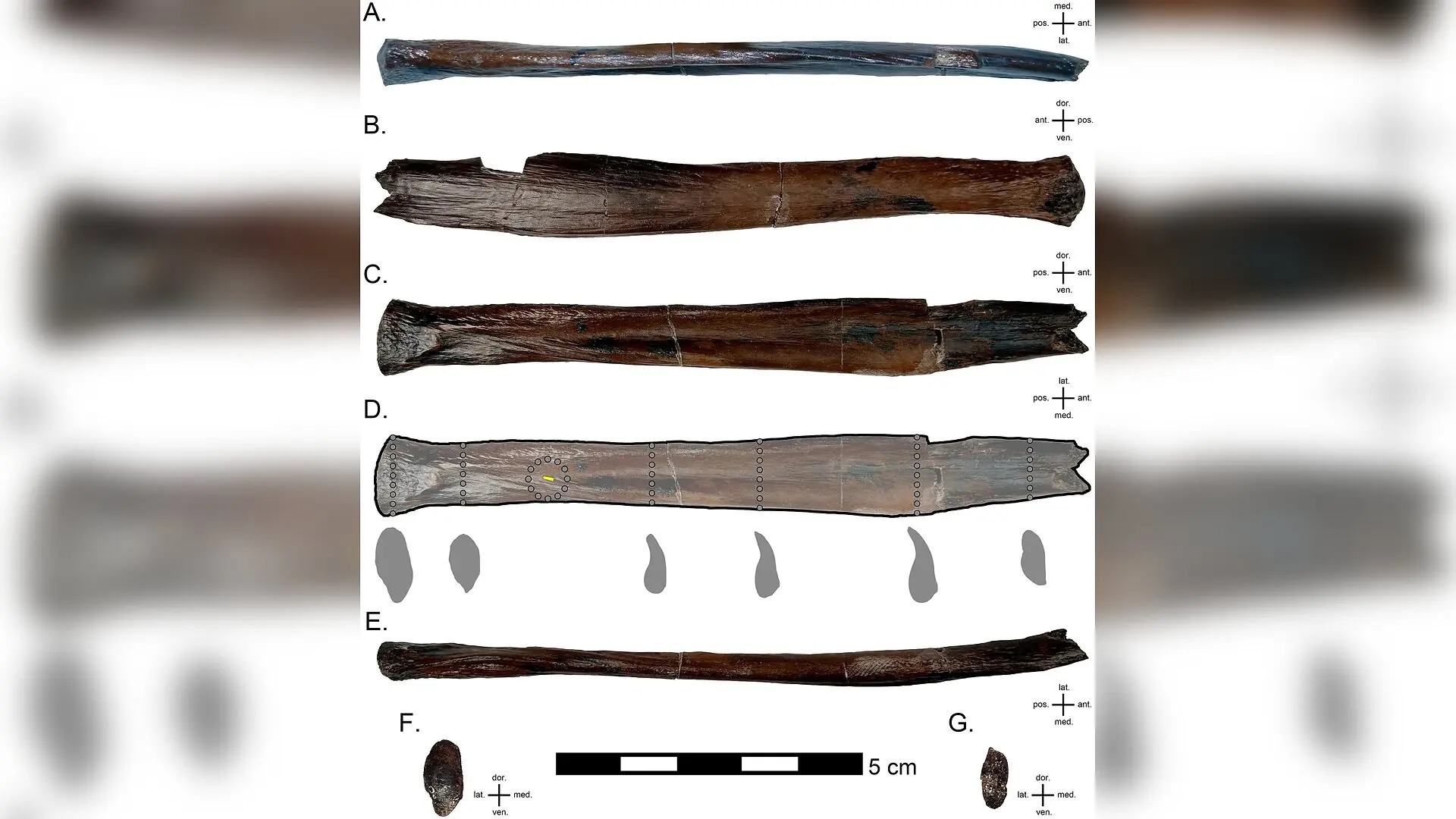
A tiny, delicate bone collected decades ago alongside the controversial dinosaur skull known as Dracorex hogwartsia has turned out to be a groundbreaking anatomical first. Palaeontologists have identified the fragment as a partial ceratobranchial, marking the very first time any part of the tongue-supporting hyoid skeleton has been discovered in a pachycephalosaurian dinosaur. The fragile 121.9-millimetre-long rod was originally unearthed approximately 61 centimetres away from the famous holotype skull housed at The Children’s Museum of Indianapolis. Because pachycephalosaurians are almost exclusively known from their heavily armored, dome-like skulls, finding any postcranial element is exceptionally rare, and hyoid bones are notoriously difficult to preserve in the fossil record due to their delicate structure and proximity to heavily scavenged tissues.
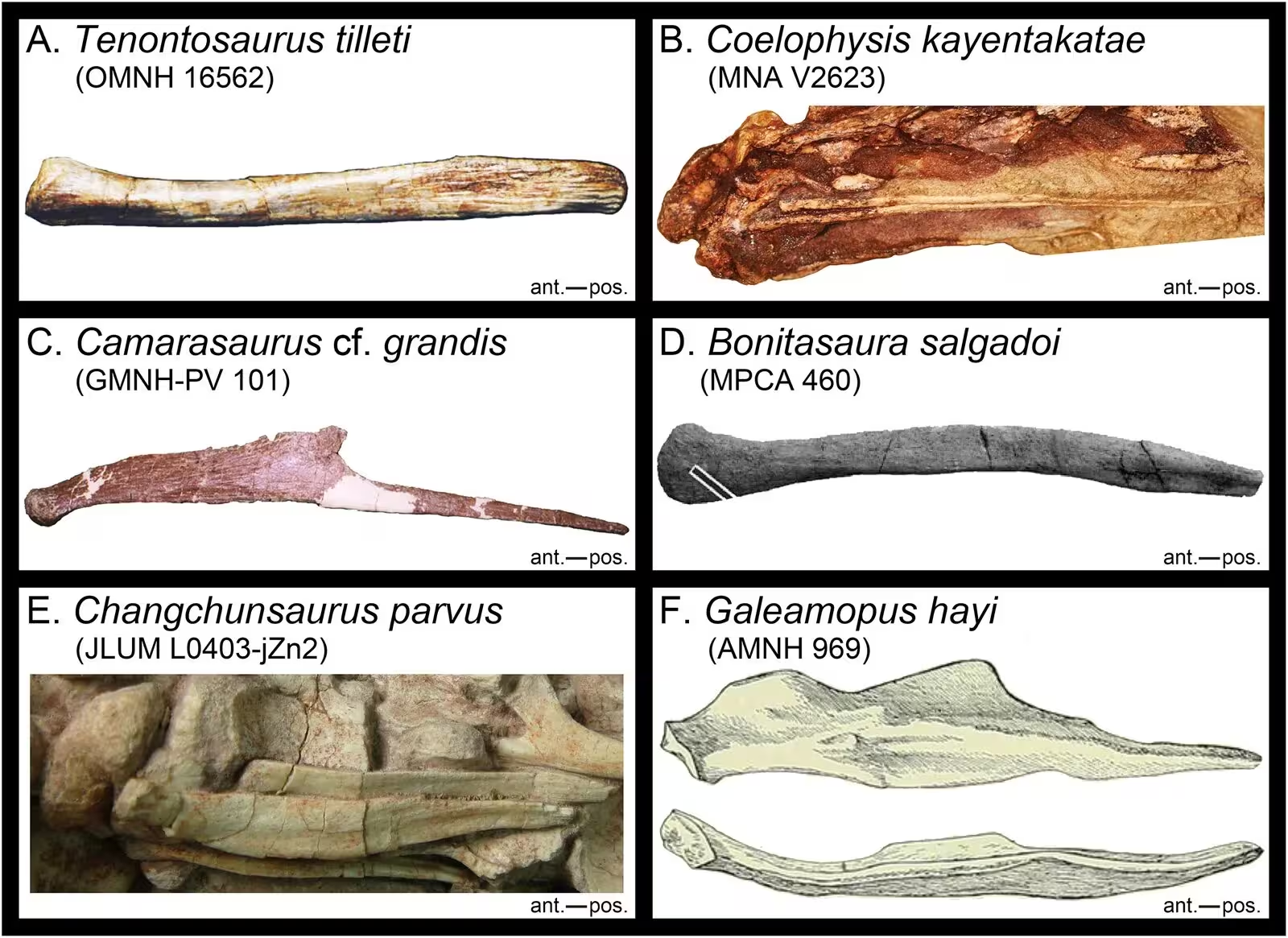
The detailed findings were published in PeerJ, shedding new light on the hidden anatomy of these iconic dome-headed plant-eaters. The research team, comprising D. Cary Woodruff, Holly N. Woodward, Laura Rooney, and Joseph Frederickson, carefully examined the morphology of the fossil to rule out other possible identities, such as a cervical rib. While the specimen shares a general rod-like shape with some neck ribs, its distinctive cross-section and lack of a tapering point ruled out those alternatives. Instead, the team matched the curved dorsal ridge, rounded ventral border, and expanded posterior articular surface to the ceratobranchials found in other dinosaurs and modern archosaurs, confirming its identity as a right ceratobranchial.
What Does a Hidden Tongue Bone Reveal About Dinosaur Diets?
The discovery allows scientists to make the first-ever estimates of tongue mobility and feeding mechanics in dome-headed dinosaurs. By comparing the length of the ceratobranchial to the overall skull size, the researchers found that the bone accounts for roughly 30 percent of the skull length in the Dracorex specimen. Across various dinosaur groups, a longer ceratobranchial relative to the skull often correlates with increased tongue mobility and a greater reliance on the tongue for manipulating food inside the mouth, particularly in species with reduced forelimbs that could not easily grasp vegetation.
Pachycephalosaurians are famous for having remarkably short, stubby arms that would have been largely useless for handling food. The unusually large proportion of the hyoid apparatus suggests that these animals may have compensated for their tiny limbs by developing a highly agile, muscular tongue to process their plant-based diet. Similar proportional patterns appear in other dinosaurs with limited forelimb dexterity, such as certain long-necked sauropods and predatory tyrannosauroids, pointing to a broader evolutionary strategy among dinosaurs with restricted arm mobility.
Could the Tongue Bone Help Solve a Fierce Palaeontological Debate?
The specimen also touches upon one of the most contentious taxonomy disputes in dinosaur research. The holotype fossil associated with this ceratobranchial, cataloged as TCMI 2004.17.1, represents the flat-headed Dracorex hogwartsia, which many palaeontologists suspect is actually a juvenile growth stage of Pachycephalosaurus wyomingensis or Stygimoloch spinifer. Because traditional skeletal elements used for age determination, like leg bones, are missing from the holotype, establishing the exact maturity of the animal has remained nearly impossible.
Recent studies on other controversial dinosaur specimens have suggested that ceratobranchial bones might hold microscopic growth rings capable of revealing an animal’s age and maturity. However, the study authors urge extreme caution regarding destructive sampling. They point out that potential biological complications, such as bone drift during growth and a lack of robust comparative baselines in modern reptiles, mean that using tongue bones for age tracking requires much more validation before scientists can settle the debate over whether Dracorex was a distinct species or merely an adolescent.
The research was published in PeerJ on January 1, 2026.
This article has been fact checked for accuracy, with information verified against reputable sources. Learn more about us and our editorial process.
Last reviewed on .
Article history
- Latest version
Reference(s)
- Woodruff, D. Cary., et al. “The first occurrence of a probable pachycephalosaurian hyoid element.” PeerJ, vol. 14, October 21, 2026, pp. e21719 PeerJ, doi: 10.7717/peerj.21719. <https://doi.org/10.7717/peerj.21719>.
Cite this page:
- Posted by Priya Sharma