Olive Leaf Waste Holds Health Compounds But Fails to Blend Into Oil
Scientists find that while almond enzymes successfully convert leaf extracts into potent antioxidants, stubborn molecular barriers prevent them from infusing into cooking oil.
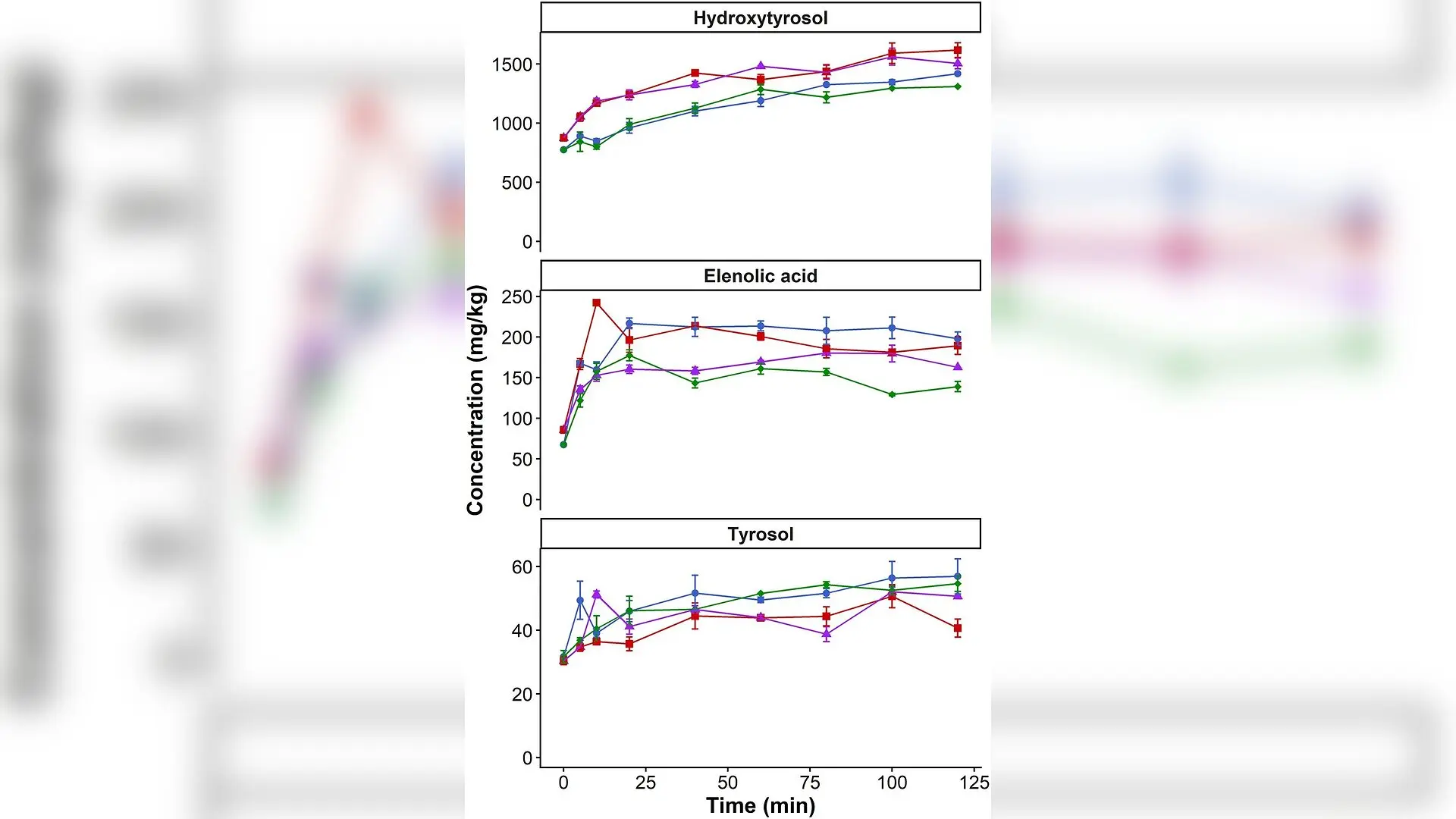
Olive leaves left over from pruning and oil production could offer a rich, sustainable source of health-boosting antioxidants, but scientists have discovered a stubborn chemical barrier keeping these valuable compounds from blending into cooking oil. Researchers set out to capture oleuropein, a bitter, highly concentrated polyphenol found in olive leaves, and transform it into its lipophilic form, known as oleuropein aglycone, to fortify everyday culinary oils. While the enzymatic conversion process worked remarkably well, transferring the resulting beneficial compounds into an oil phase proved surprisingly difficult due to stubborn molecular hurdles.
The work, published in Food Science & Nutrition, investigated how agricultural waste from the olive industry might be repurposed to enhance the nutritional profile of olive oil. Olive trees produce massive amounts of leafy waste every year, with leaves containing up to 60 to 90 milligrams of oleuropein per gram of dry weight. This concentration far surpasses what is found in the fruit itself, making the discarded foliage an attractive target for functional food development.
How Temperature and Drying Time Shape Plant Extracts
To extract the targeted antioxidant compounds, the research team steeped whole olive leaves in boiling water to create an olive leaf aqueous extract. Before doing so, they tested different drying methods to see how processing affected the final yield. Fresh leaves and leaves dried at room temperature were compared against samples dried in an oven at 70 degrees Celsius for three days. The team found that drying the foliage at 70 degrees Celsius significantly increased the concentration of oleuropein in the resulting extract, largely because elevated heat quickly deactivated endogenous enzymes that would otherwise break down the valuable glycosides prematurely.
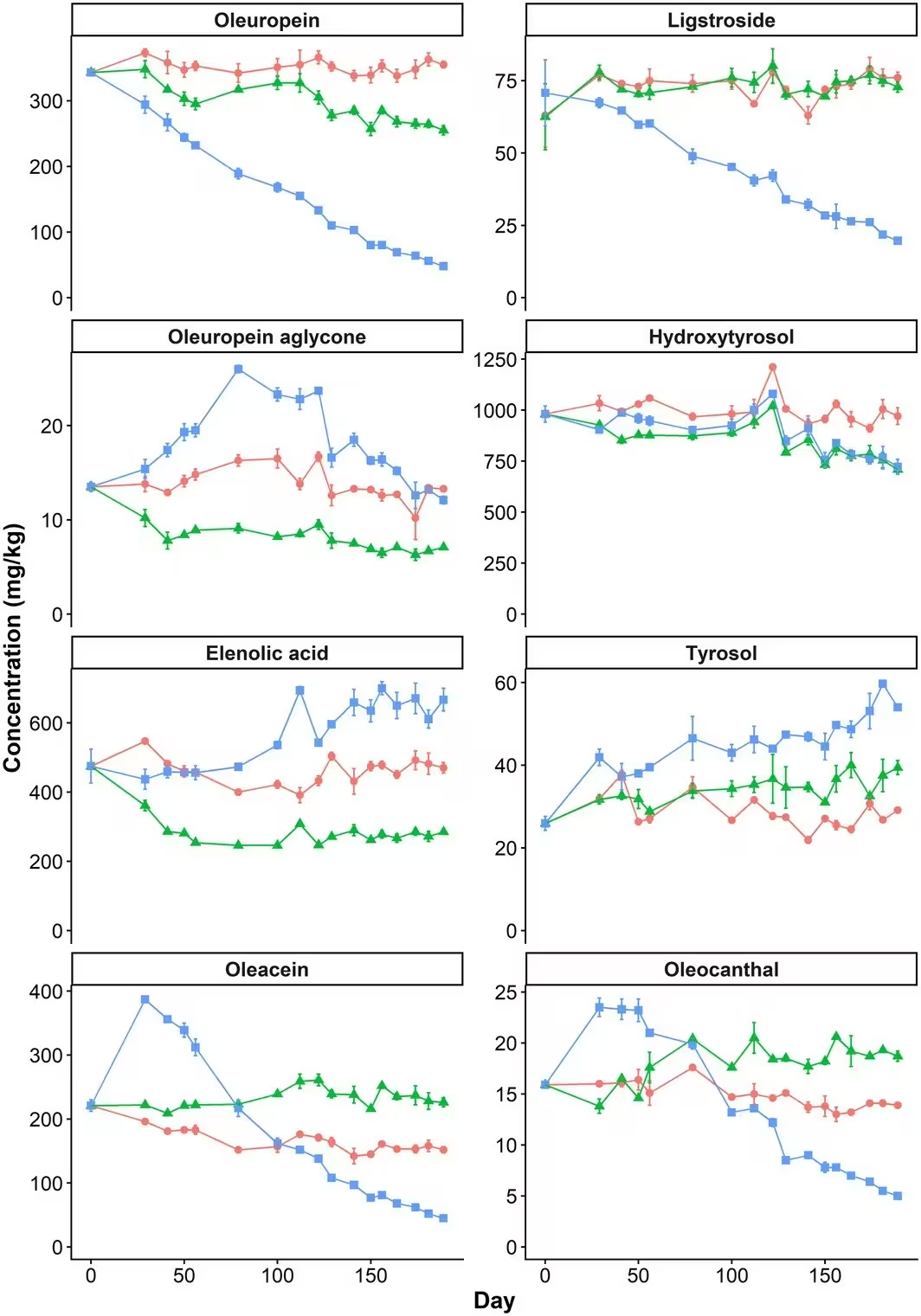
However, managing the stability of the extract requires careful temperature control. When the researchers stored the liquid extracts at various temperatures for up to 189 days, they observed that freezing at minus 20 degrees Celsius preserved the phenolic compounds perfectly, whereas storage at room temperature or 40 degrees Celsius led to significant degradation and the accumulation of secondary breakdown products like hydroxytyrosol and tyrosol.
Enzymatic Conversion and the Almond Milk Solution
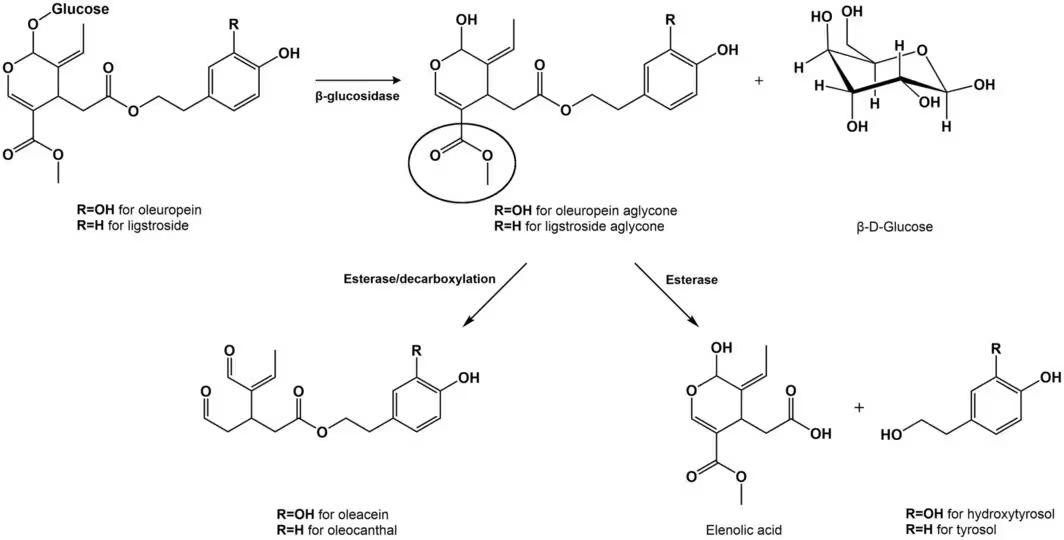
Unlocking the full health benefits of oleuropein requires converting the glycoside into oleuropein aglycone using an enzyme called beta-glucosidase. While olive leaves contain this enzyme naturally, its activity is often insufficient for rapid processing. To speed up the reaction, the authors evaluated food-compatible enzyme sources such as commercial almond flour, raw almond meal, and homemade almond milk.
Adding almond flour to the extract achieved a greater than 99 percent reduction in oleuropein and ligstroside within just 12 hours at 40 degrees Celsius. However, fresh almond meal outperformed older commercial flours by up to 4.5 times, likely because industrial blanching processes denature some of the beneficial enzymes. When the team substituted almond flour with almond milk to eliminate solid particulate matter, they noticed that the liquid enzyme preparation also helped stabilize the newly formed aglycones in the aqueous phase.
The Stubborn Mass Transfer Barrier
Despite successfully converting oleuropein into its oil-soluble aglycone form, the researchers encountered an unexpected obstacle when trying to infuse it into olive oil. Even after applying vigorous mechanical homogenization and testing various oil types with different baseline phenolic contents, very little of the aglycone successfully migrated across the liquid boundary into the oil phase.
Further analysis revealed that the aglycones were becoming trapped inside tiny structures called micelles within the water phase, stabilized by the components of the almond milk and their own hydrophobic interactions. Filtration tests confirmed these micelle structures persisted even after removing particulates, effectively locking the antioxidants away and preventing them from transferring into the lipid layer. Salting and sugaring techniques also failed to force the compounds out of the water.
The findings indicate that while agricultural leaf waste can successfully yield high concentrations of bioactive compounds through controlled enzymatic processing, overcoming these complex phase interactions will require entirely new emulsification or extraction strategies. Future commercial efforts to enrich culinary oils with leaf-derived antioxidants must focus on disrupting micellar stabilization to ensure the valuable nutrients actually reach the final product.
The research was published in Food science & nutrition on October 1, 2026.
This article has been fact checked for accuracy, with information verified against reputable sources. Learn more about us and our editorial process.
Last reviewed on .
Article history
- Latest version
Reference(s)
- te Bogt, Jade., et al. “Using Olive Leaves to Enrich Olive Oil With Oleuropein Aglycone.” Food Science & Nutrition, vol. 14, no. 10, October 23, 2026 Wiley, doi: 10.1002/fsn3.72421. <https://doi.org/10.1002/fsn3.72421>.
Cite this page:
- Posted by Priya Sharma