Ediacaran Fossil Reveals Right‑Handed Bias, the Oldest Known Handedness
Fossil study of Spriggina floundersi uncovers 550‑million‑year‑old movement patterns, hinting that modern animal traits have far older evolutionary roots.
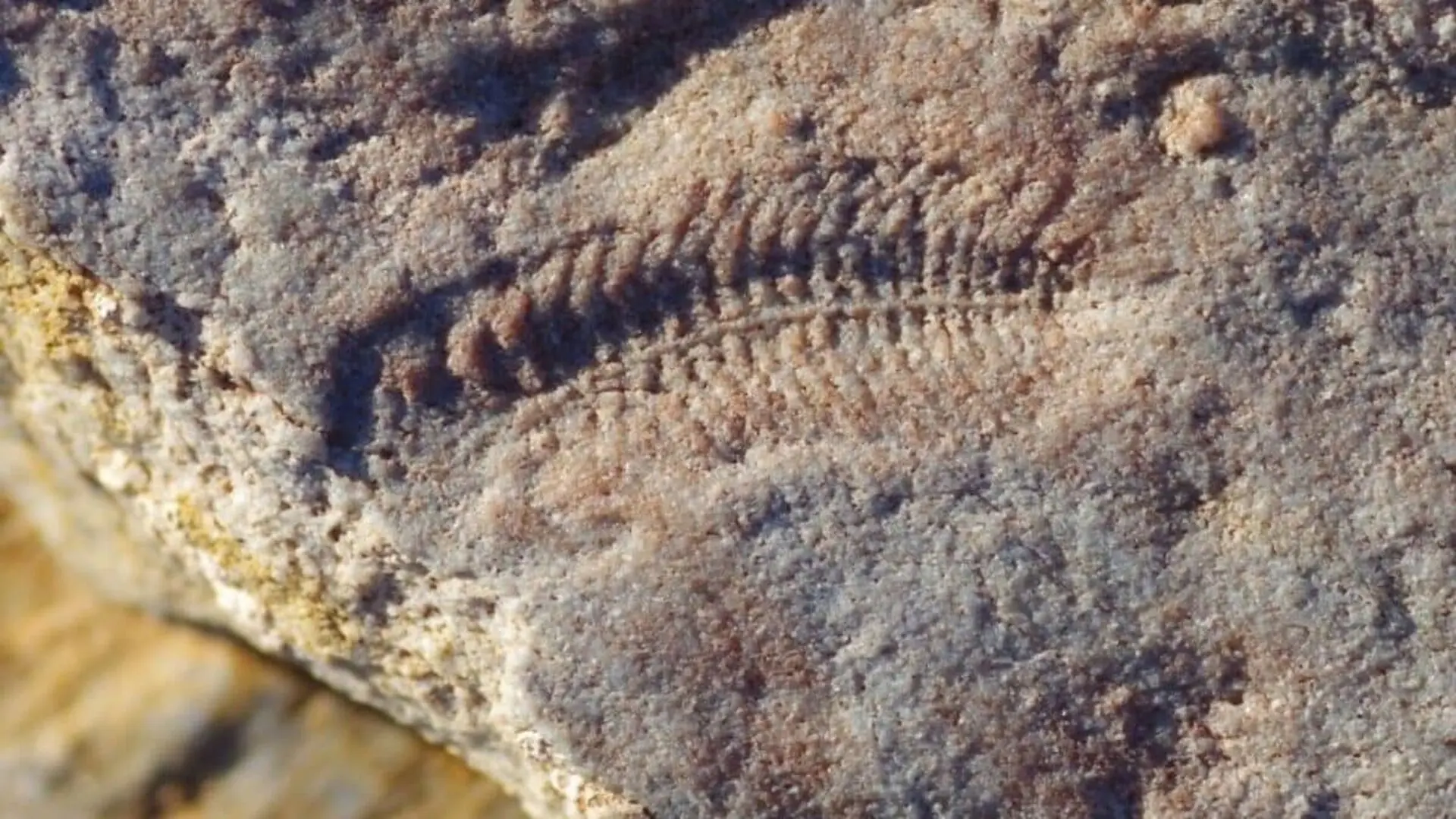
A team of paleontologists has identified a directional bias in the body curvature of an ancient marine animal that lived more than half a billion years ago, offering the oldest glimpse of what scientists call lateralized behavior.
The organism, Spriggina floundersi, inhabited the seafloor during the Ediacaran Period (approximately 635–538 million years ago). Its fossilized imprints, recovered from sites in South Australia such as Nilpena Ediacara National Park and the South Australia Museum, preserve the outlines of the creature’s soft body as it was quickly buried by storm‑driven sediments.
Because the impressions are mirror images of the living animal, researchers had to correct for the reversal. After accounting for this effect, the scientists found that a majority of the specimens displayed a bend to the right, with roughly twice as many right‑curving traces as left‑curving ones. This pattern suggests that the animals did not flex randomly but consistently favored one side.
“When most people think of handedness they picture a pen or a soccer ball,” explained Scott Evans, lead author and assistant curator of invertebrate paleontology at the American Museum of Natural History. “Our data indicate that an organism lacking limbs still exhibited a population‑wide inclination to bend in a particular direction.”
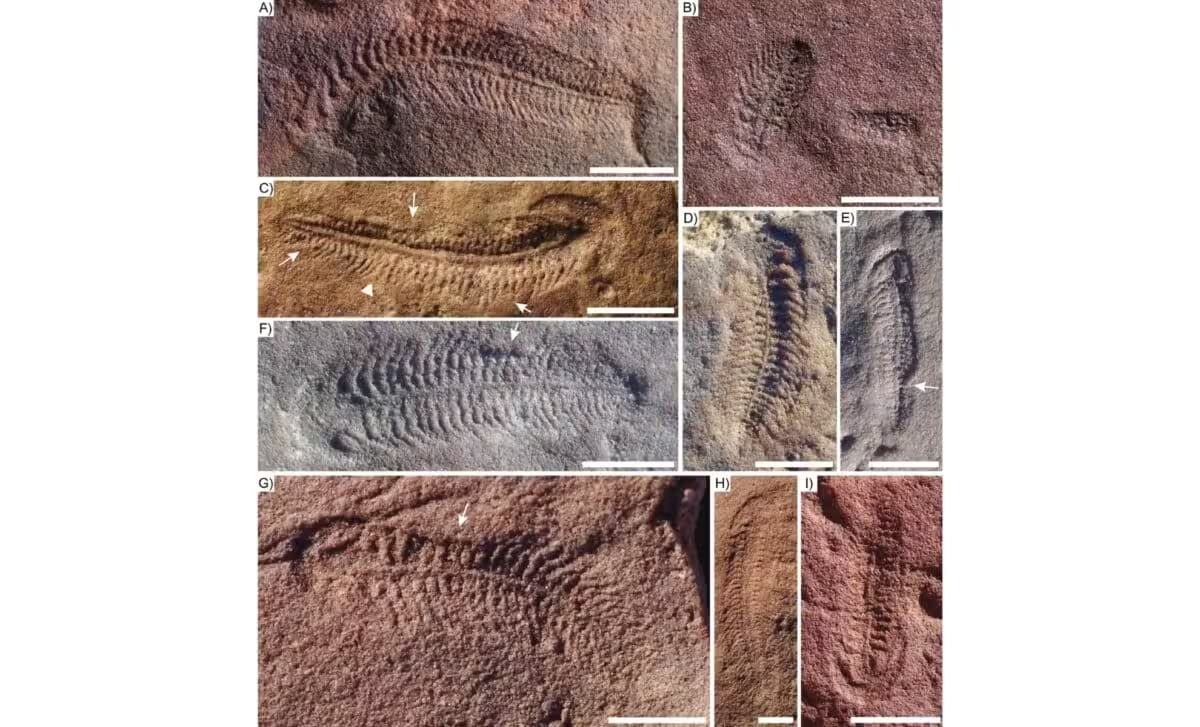
The discovery pushes the emergence of lateralized movement back to a time when multicellular life was just beginning to explore active locomotion. In modern animals, such biases often correlate with specialized sensory processing and more intricate nervous systems.
“Insects, octopuses, birds and mammals all show handedness linked to complex neural circuits,” noted Mary Droser, paleontologist at the University of California, Riverside and co‑author of the study. “Finding a comparable pattern in an Ediacaran bilaterian suggests that the roots of neural organization may extend much farther than previously appreciated.”
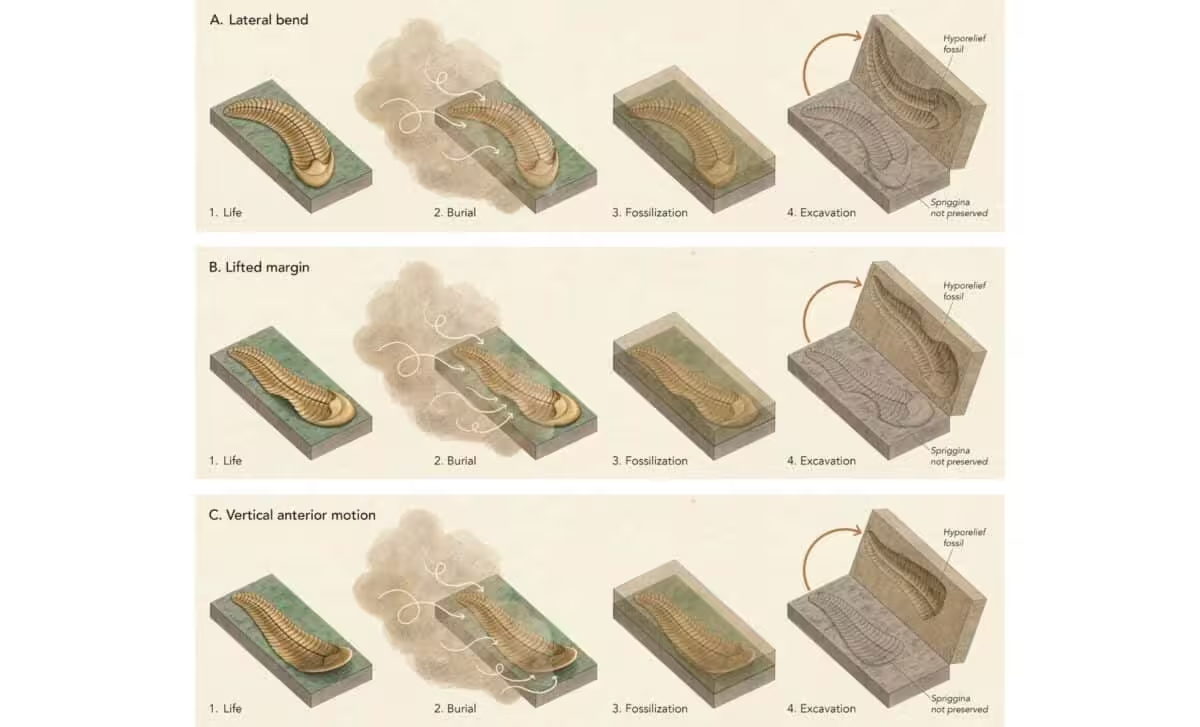
While the study, published in Scientific Reports, does not reconstruct the exact architecture of Spriggina’s nervous system, it documents a behavioral signature preserved across dozens of specimens. The authors argue that such a signature provides a window into the early evolution of organized movement and sensory integration.
As one of the earliest known bilaterians—organisms with distinct left‑right and front‑back axes—Spriggina floundersi exemplifies a body plan that would later dominate animal life. The new evidence of directional bending adds a behavioral dimension to our understanding of how complex traits may have originated long before the diversification of modern animal phyla.
This article has been fact checked for accuracy, with information verified against reputable sources. Learn more about us and our editorial process.
Last reviewed on .
Article history
- Latest version
Cite this page:
- Posted by Hassan Raza