Tiny 190‑Million‑Year‑Old Indian Sauropod May Have Swung Its Tail to Deter Predators
Scientists discover a 190‑million‑year‑old Indian dinosaur that defies typical sauropod expectations, reshaping our view of these giants.
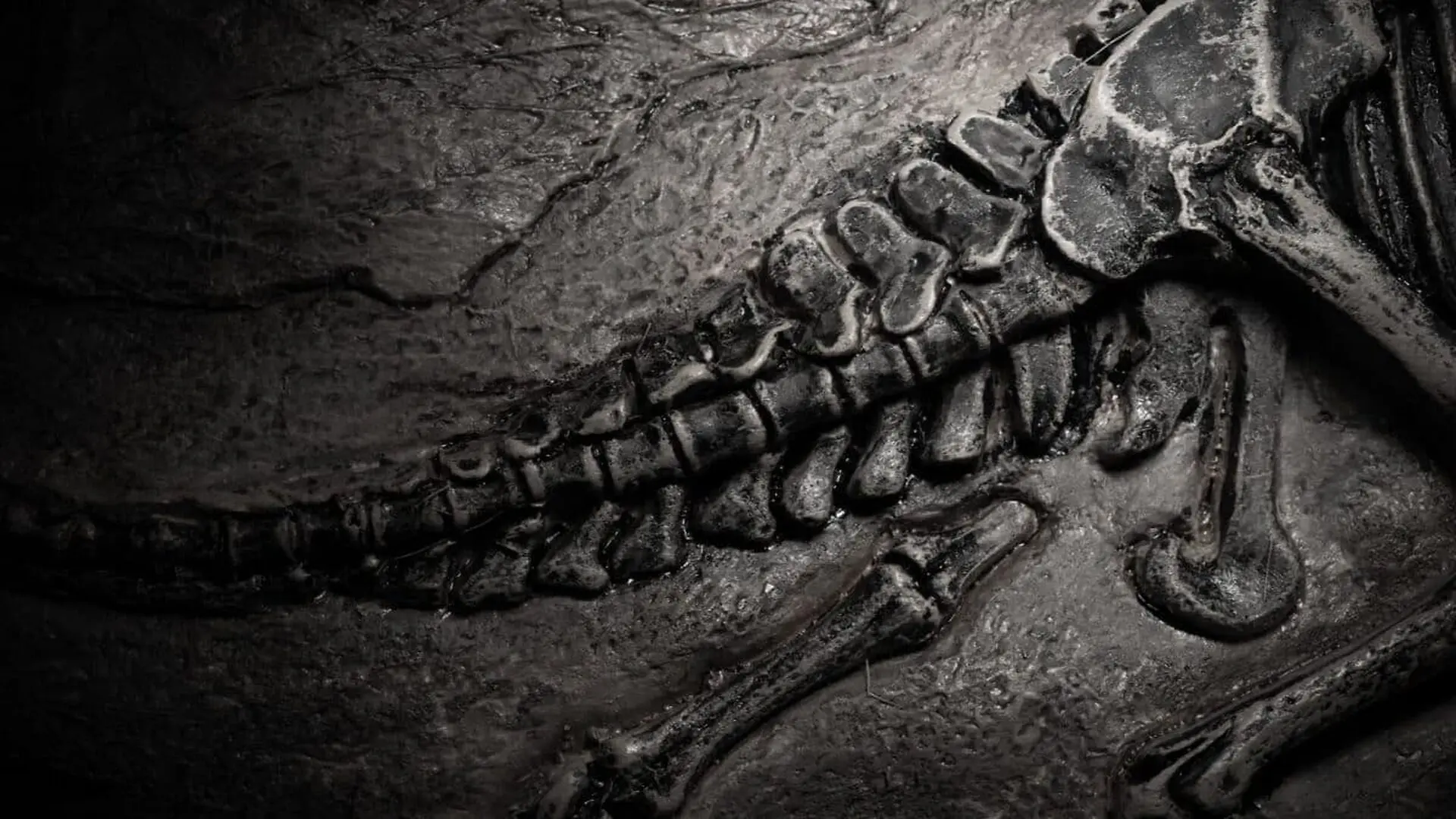
A newly identified sauropod from the Kachchh Basin of Gujarat is reshaping scientists’ view of how early members of the most successful long‑necked dinosaur clade spread across the globe. Named Ceratocaudia antiqua, the animal measured roughly 7 metres (23 feet) long, placing it among the modest‑sized representatives of a lineage that would later produce some of the planet’s biggest terrestrial vertebrates.
New Gujarat Find Sheds Light on Early Sauropod Evolution
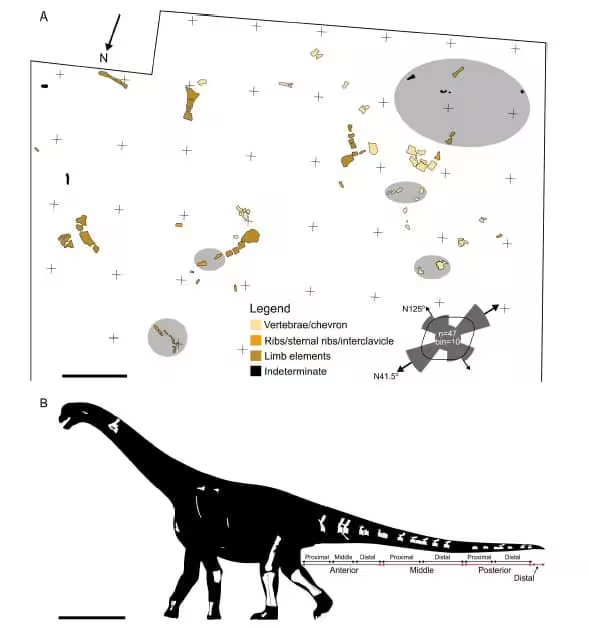
The specimen, described in a paper published in the Journal of Vertebrate Paleontology, consists of 181 bone fragments recovered from a single site within the Kaladongar Formation. The assemblage includes vertebrae, ribs, fore‑ and hind‑limb elements, all attributed to a single individual.
These fossils are curated at the Vertebrate Palaeontology Lab of the Department of Earth Sciences, Indian Institute of Technology Bombay. Stratigraphic analysis places the surrounding rocks somewhere between the Early Jurassic Pliensbachian and the Middle Jurassic Bajocian stages, suggesting an age of roughly 190 million years.
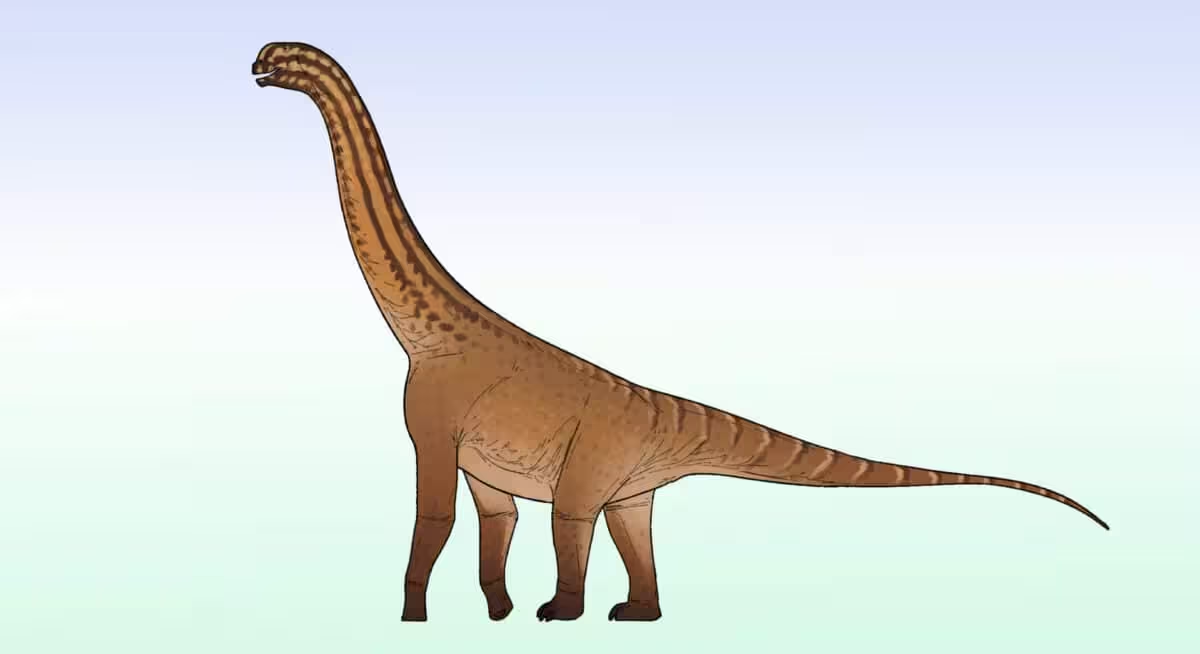
Because early neosauropod fossils are scarce and often poorly preserved, each new specimen helps fill a critical gap in the record. The Gujarat find offers a rare glimpse into a period when the group’s diversification was just beginning.
Miniature Ancestor of Later Giant Macronarians
Phylogenetic analysis positions Ceratocaudia antiqua as an early member of the Macronaria branch of Neosauropoda, a lineage that later gave rise to massive taxa such as Diplodocus and Brachiosaurus. Comparative studies with Chinese neosauropods—Dashanpusaurus dongi and Yuzhoulong qurenensis—support the notion that these dinosaurs achieved a near‑global distribution by the Middle Jurassic, well before the Bajocian stage.
The Indian specimen now ranks among the oldest unequivocally identified neosauropods, providing a clearer picture of how this clade expanded and set the stage for its later dominance in Jurassic and Cretaceous ecosystems.
Tail Reconstruction Suggests Possible Defensive Role
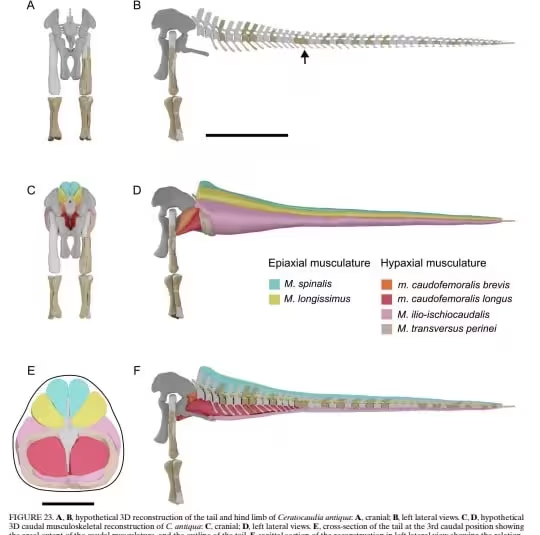
Researchers modeled the tail musculature by comparing the fossil anatomy with that of modern crocodilians and lizards. The simulation indicates a horizontally held tail capable of sweeping motions, hinting that the structure may have acted as a mild deterrent against predators, even though it lacks the specialized whip‑like tail seen in later flagellicaudatans.
“The hypothetical model of Ceratocaudia antiqua suggests that the sauropod tail may have been useful as a mild deterrent to predators even without specialized adaptations like the whip‑tail of flagellicaudatans,” researchers explained.
Together, the Gujarat specimen and comparable Asian finds underscore a rapid, early worldwide dispersal of neosauropods, offering fresh insight into the origins of a group that would come to dominate Mesozoic landscapes.
This article has been fact checked for accuracy, with information verified against reputable sources. Learn more about us and our editorial process.
Last reviewed on .
Article history
- Latest version
Reference(s)
- Natarajan, Abhishek., et al. “A new diminutive Jurassic neosauropod from the Kaladongar Formation (Khadir Uplift) of the Kachchh Basin, western India.” Journal of Vertebrate Paleontology, July 16, 2026 Informa UK Limited, doi: 10.1080/02724634.2026.2677749. <https://www.tandfonline.com/doi/full/10.1080/02724634.2026.2677749>.
Cite this page:
- Posted by Hassan Raza