99‑Million‑Year‑Old Gecko Fossil in Amber Reveals Rare Male Reproductive Bulge
A 99-million-year-old gecko trapped in amber reveals hidden tropical forest secrets scientists can’t usually see in fossils.
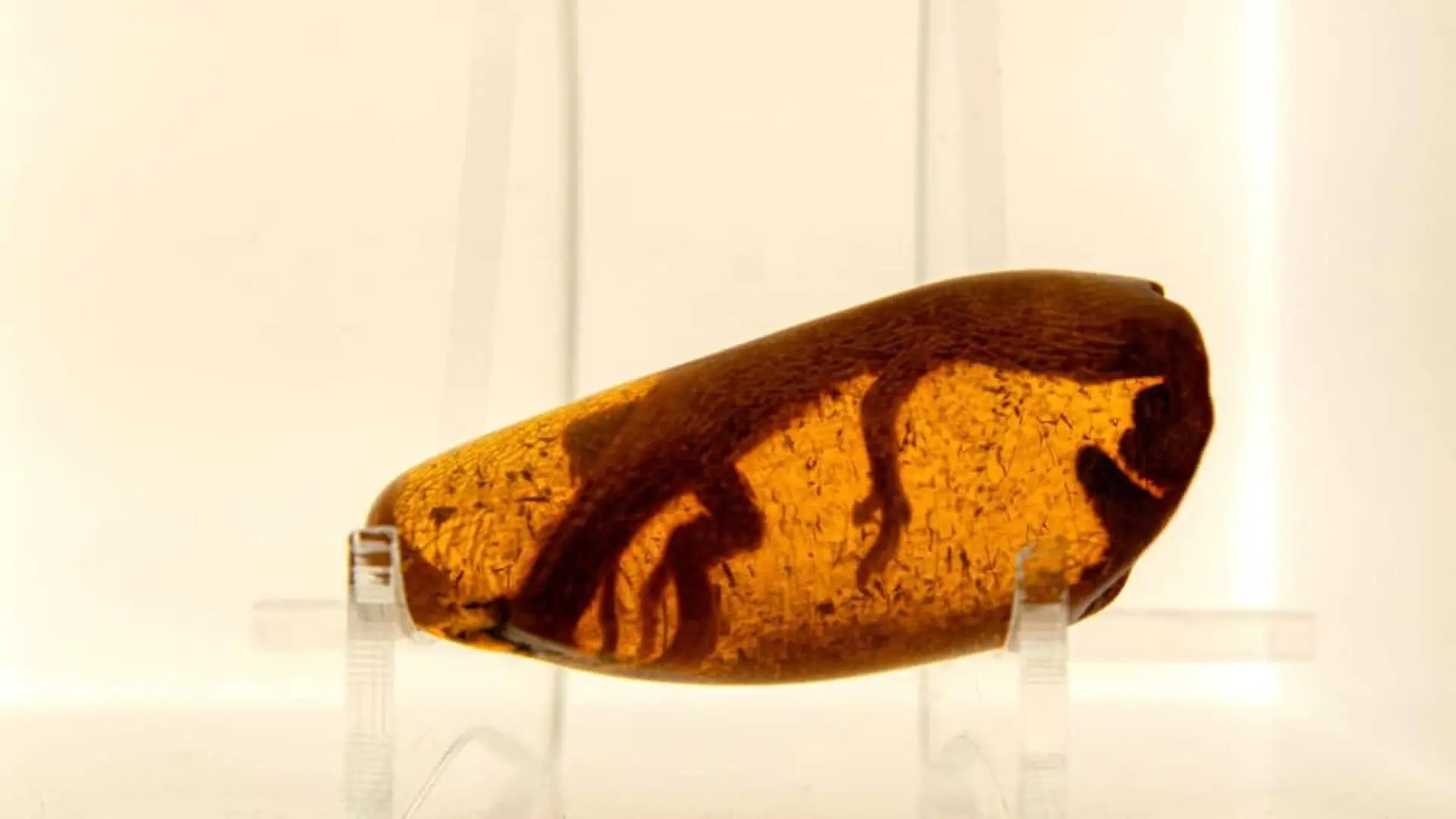
A minuscule gecko encased in Myanmar amber for nearly 99 million years has offered researchers a glimpse of one of the earliest known male lizards. The fossil of Carinasquama rusmithii retains a subtle tail swelling that may indicate the presence of ancient male reproductive structures.
The specimens come from two pieces of Kachin amber excavated in Myanmar’s Kachin province. Dating to the mid‑Cretaceous, the animal measured only 1.6–2.2 cm from snout to vent, comparable in size to the tiniest geckos living today.
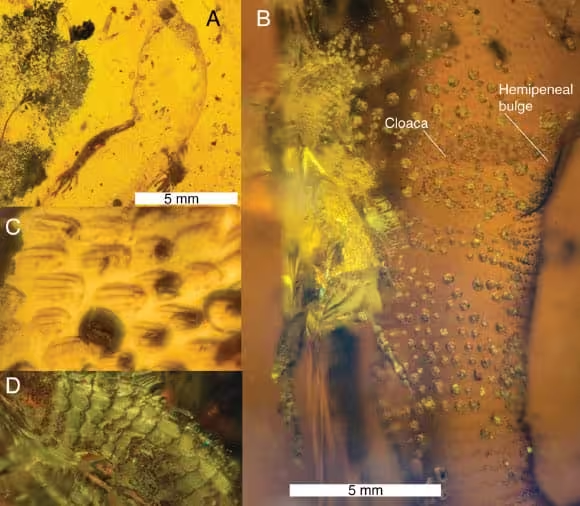
Because fossilization rarely captures sex‑specific details, the discovery is remarkable. Lead author Juan Daza of Sam Houston State University identified a bulge near the tail base that matches the morphology of a hemipenal swelling, a feature associated with the paired hemipenes of male squamates.
Tail Bulge Provides a Rare Clue to Sex
The findings were published in the Swiss Journal of Palaeontology. Rather than its diminutive stature, the fossil’s significance lies in an unusual protrusion at the tail’s base, which the authors interpret as a hemipenal bulge—an external indication of hemipenes, the paired copulatory organs found in male lizards and snakes.
In contemporary lizards and snakes, these organs are tucked inside the tail and seldom leave fossil evidence. Soft tissues typically decompose, leaving only bones and hard parts for paleontologists to examine.
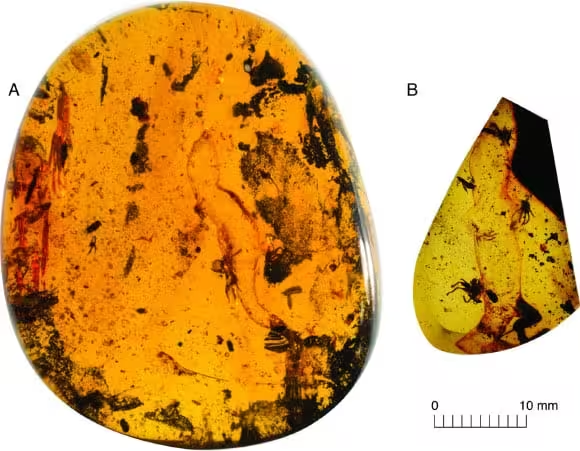
The authors describe the fossil as one of the oldest lizard specimens that can be confidently identified as male. Determining the sex of extinct species is often problematic because sexually dimorphic traits usually do not survive deep time. Paleontologists typically rely on skeletal differences, body proportions, or comparative series of fossils to infer gender.
“Sex can sometimes be estimated when embryos or eggs are found within a female specimen or associated with the specimen, although other sex-specific traits are rarely preserved in fossils,” explained the authors.
Amber Captures Details Lost in Rock Fossils
To study the specimens, the team employed micro‑CT scanning, generating three‑dimensional reconstructions of the inclusions. The scans revealed that most of the animal’s interior had vanished, leaving a hollow cavity within the amber.
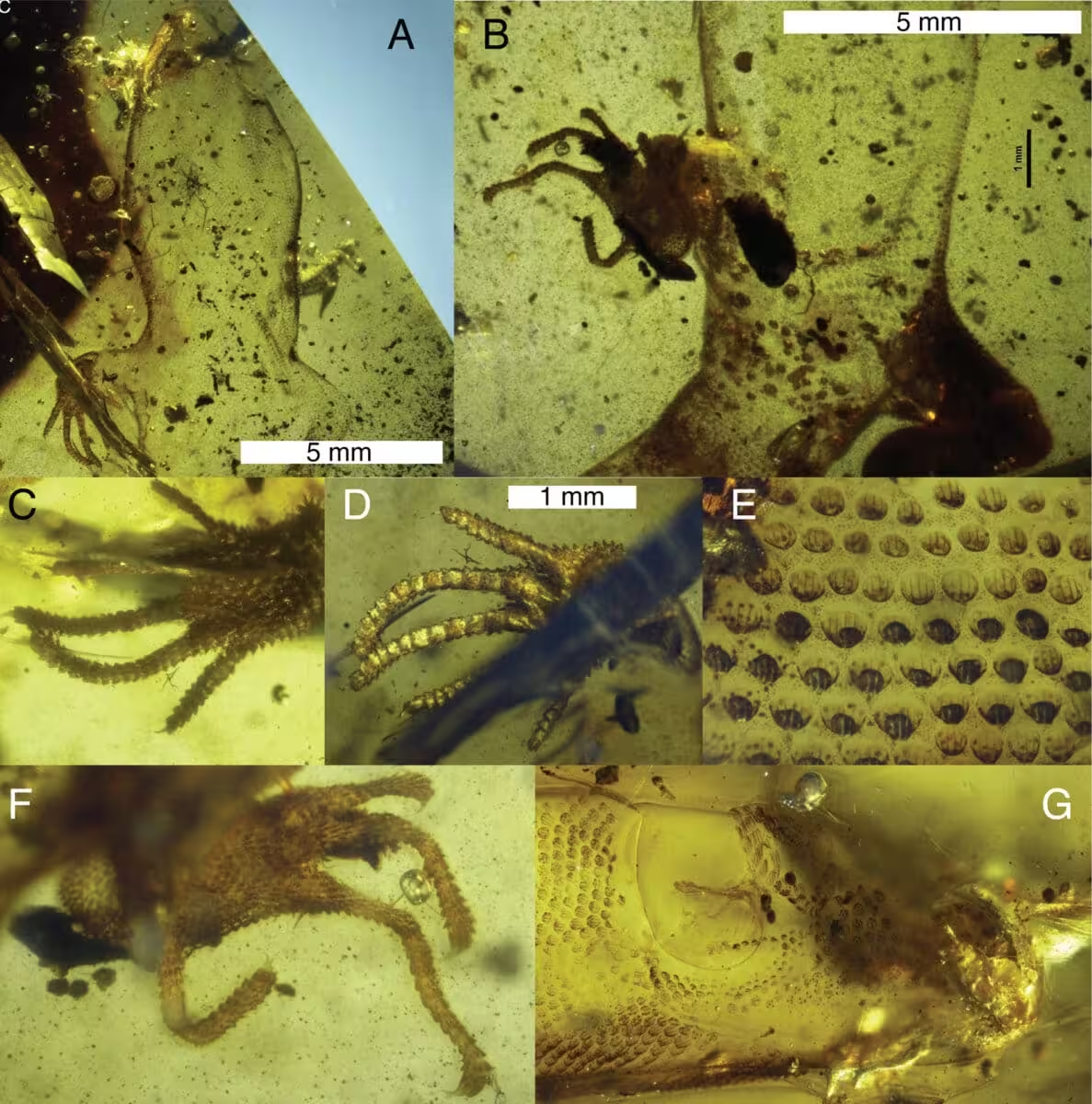
Nevertheless, the external surface remained exceptionally detailed. Impressions of scales, skin texture, and the outline of the cloaca were still visible.
The fossil shares several characteristics with modern gekkotans, including granular head scales, fused eyelids, similarly sized body scales, and visible inter‑scale skin.
Such fidelity underscores why amber inclusions are prized by paleontologists: unlike many rock‑bound fossils, amber can retain delicate structures that would otherwise be lost.
Phylogenetic Placement Remains Ambiguous
Although the specimen sheds light on early gecko anatomy, its exact position within the gecko family tree is still uncertain.
The researchers tentatively assign the species to Pan‑Gekkota, a broad clade encompassing geckos and close relatives, while noting that additional material will be needed to refine its classification.
“This hemipenal bulge in one of the fossils documents the presence of hemipenes in the Squamata, during the mid‑Cretaceous, although their origin was probably much earlier likely with the origin of the group.”
This article has been fact checked for accuracy, with information verified against reputable sources. Learn more about us and our editorial process.
Last reviewed on .
Article history
- Latest version
Reference(s)
- Daza, Juan. “Evidence of male anatomy in a mid-Cretaceous Burmese miniaturised amber gecko.”, vol. 145, July 8, 2026, pp. 785-799. Pensoft Publishers, doi: PropertyValue. <https://sjp.pensoft.net/article/188227/>.
Cite this page:
- Posted by Hassan Raza