130-Million-Year-Old Fish Traces Push Deep-Sea Vertebrate Record Back 80 Million Years
Mysterious stone markings reveal a hidden chapter of Earth’s past, offering unexpected fossil evidence that reshapes our understanding of ancient life.
Researchers have identified enigmatic depressions and linear marks in ancient Italian sedimentary rocks that extend the record of vertebrate activity in the deep ocean by tens of millions of years. Radiometric dating places these traces at roughly 130 million years old, indicating that fish were exploiting abyssal habitats during the Early Cretaceous, long before the previous oldest deep‑sea fish fossils dated to about 50 million years.
Deep‑Sea Footprints Reveal Early Cretaceous Fish Behavior
The fossilized features consist of shallow, bowl‑shaped pits up to four centimeters across and a sinuous groove interpreted as a tail‑drag mark left by a swimming fish. Unlike classic skeletal remains, these impressions capture feeding and locomotion activities on a muddy seafloor that lay thousands of meters beneath the ocean surface.
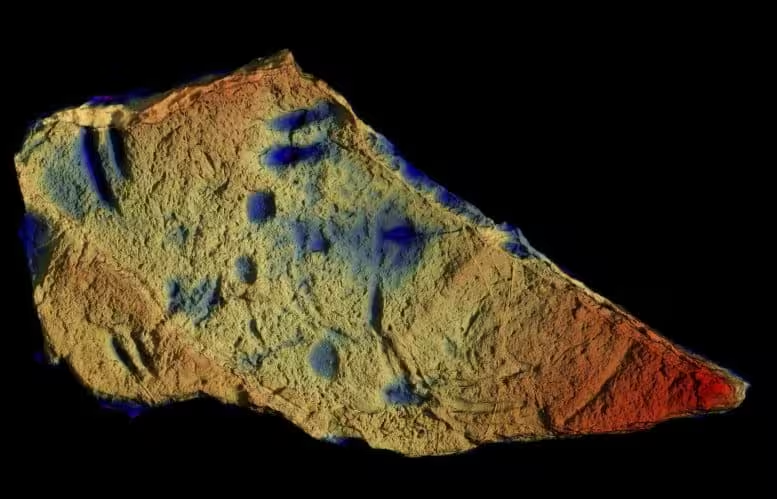
Baucon emphasized the age of the marks: at 130 million years they predate any previously documented deep‑sea fish evidence by roughly 80 million years.
“The new fossils show the activity of fishes on a dinosaur‑age seafloor that was thousands of meters deep,” Baucon added.
Modern Deep‑Sea Analogues Shed Light on Ancient Marks
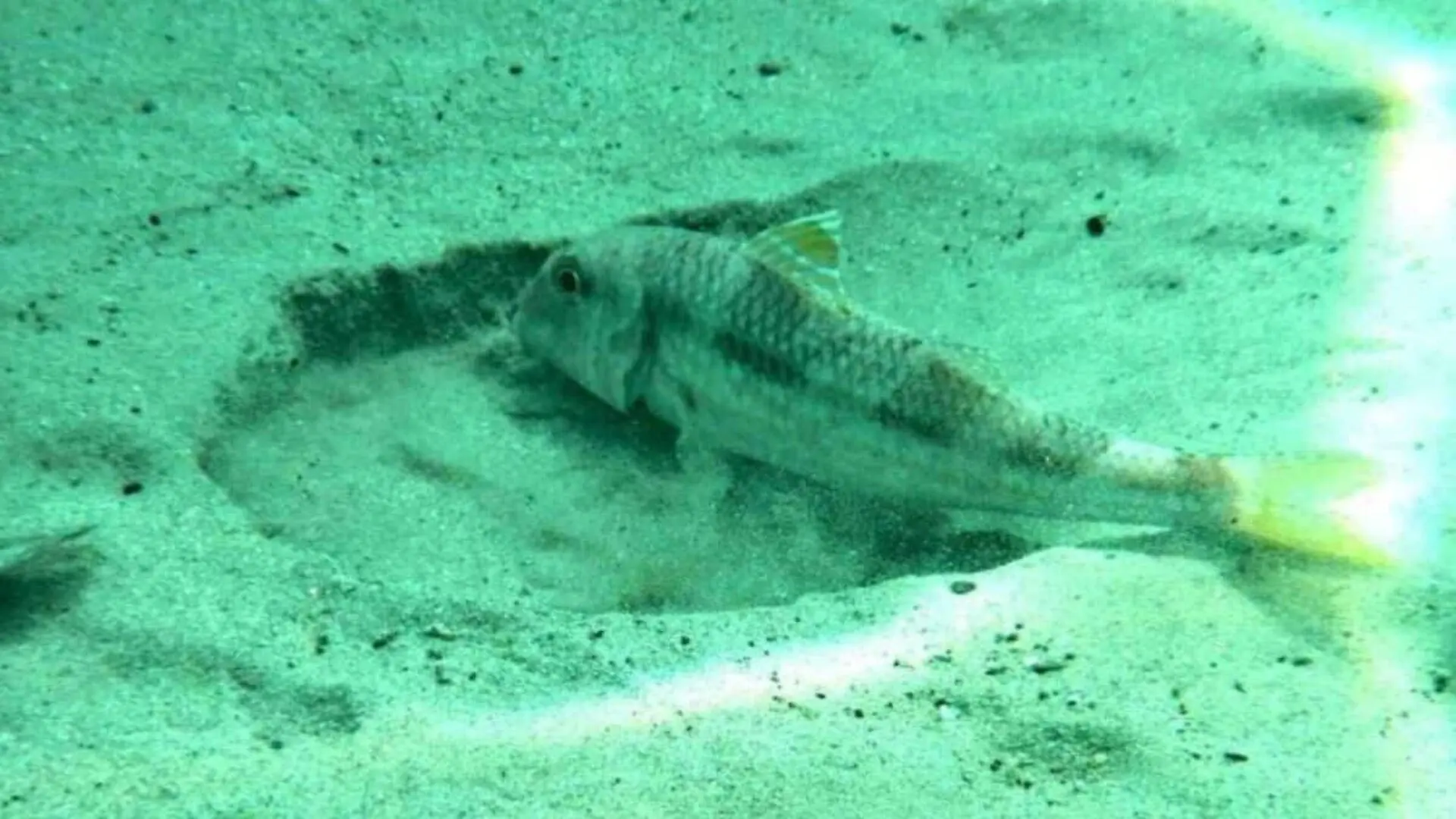
To interpret the Cretaceous traces, the team examined living deep‑sea species, particularly chimaeras—commonly called ghost sharks. Video of a chimaera in the Kermadec Trench descending to a depth of 1,544 meters and probing the sediment with its mouth mirrors the pit‑forming behavior inferred for the ancient fish.
Contemporary deep‑water fishes employ suction or abrasive digging to access buried prey, producing surface impressions identical to the fossil pits and tail‑drag grooves observed in the Northern Apennines.
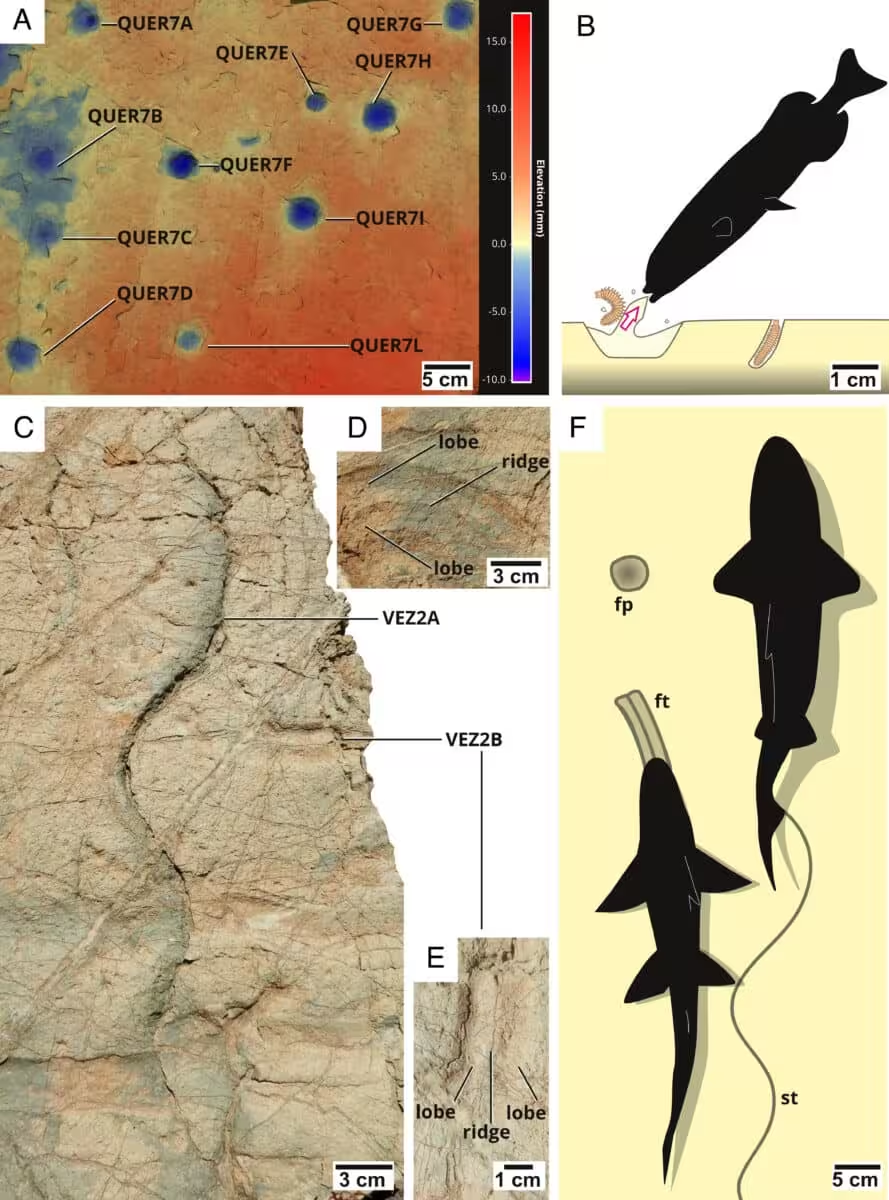
Fossil pits and trails reveal ancient fish activity on a 130‑million‑year‑old deep seafloor. Credit: PNAS
The patterns also echo feeding strategies seen in Neoteleostei, a clade that includes modern jellynose and lizard fishes.
Mário Cachão noted that deep‑sea deposits occasionally preserve microscopic remains of surface‑dwelling organisms such as phytoplankton and zooplankton, yet direct vertebrate activity traces like these are exceedingly rare.
Why Early Cretaceous Fish Ventured Into the Abyss
The authors propose that a surge of organic material reaching the deep ocean between the Late Jurassic and Early Cretaceous created a food bonanza on the seafloor. This influx supported abundant benthic worms, which in turn attracted fish capable of excavating or suction‑feeding within the sediment.
All of the activity occurred beneath the ancient Tethys Ocean, a vast marine basin that existed from roughly 250 million to 50 million years ago and later gave rise to the modern Mediterranean Sea.
Subsequent tectonic forces uplifted and deformed the sedimentary layers, eventually exposing them as part of the Northern Apennine mountain range during the Miocene and Pliocene epochs.
This article has been fact checked for accuracy, with information verified against reputable sources. Learn more about us and our editorial process.
Last reviewed on .
Article history
- Latest version
Reference(s)
- “Mário Cachão — IDL.” IDL <https://idl.ciencias.ulisboa.pt/mario-cachao>.
Cite this page:
- Posted by Divya Iyer