Tonga’s Eruption Punched Into the Edge of Space. The Stratosphere Cooled, and It Still Has Not Recovered
After three years of intensive research, scientists finally unraveled the mystery behind this volcano’s baffling behavior, which defied all their predictions. Their groundbreaking discovery is set to revolutionize our understanding of atmospheric phenomena.
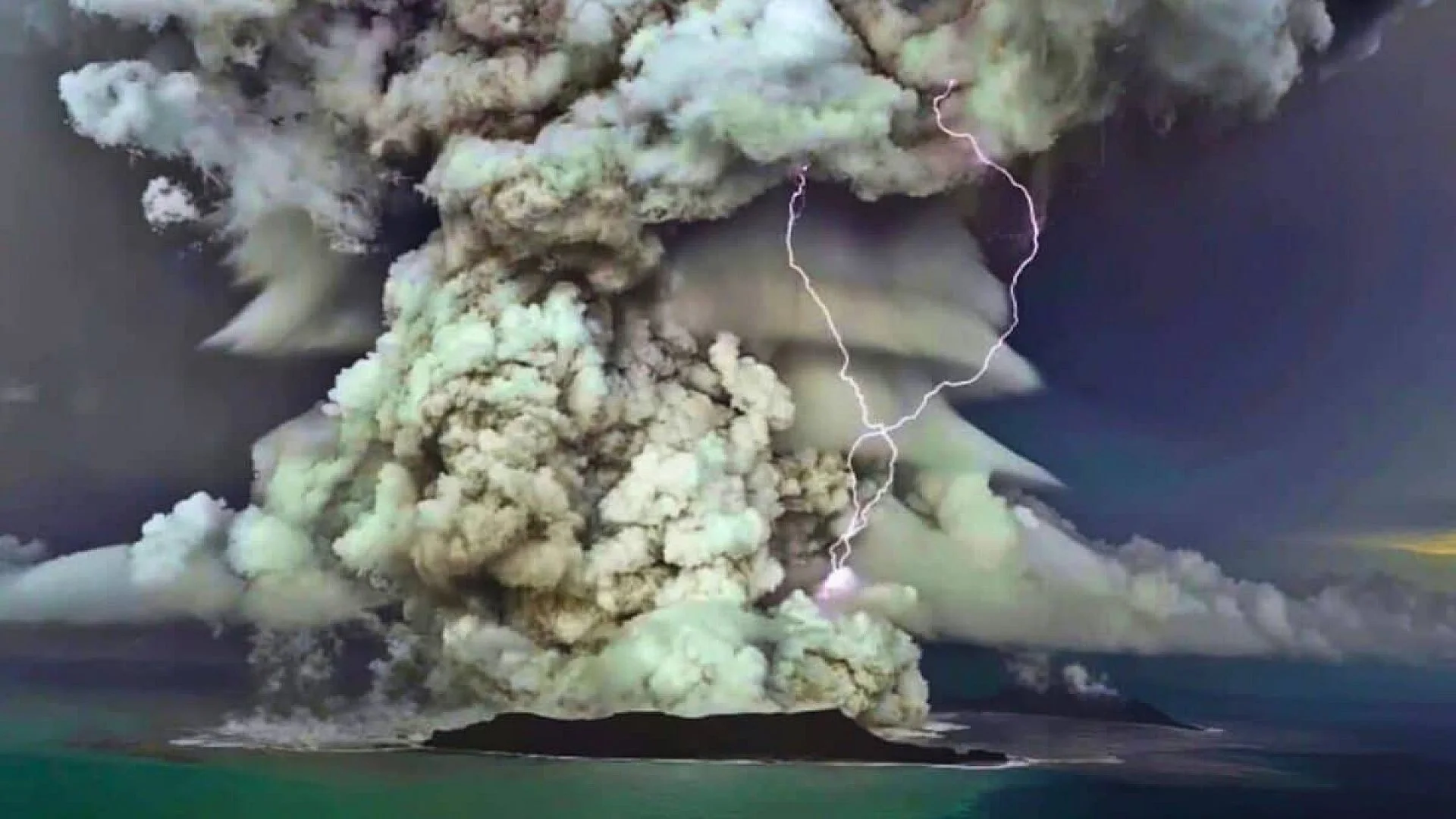
The year 2022 marked a pivotal moment in the Earth’s atmospheric history when a cataclysmic volcanic eruption rocked the South Pacific on January 15th. The Hunga Tonga-Hunga Haʻapai volcano, situated 490 feet beneath the ocean’s surface, unleashed a force so immense that it punched a plume 35.4 miles into the sky, leaving scientists stunned and scrambling to understand the implications.
Initial expectations suggested the eruption would follow the typical pattern: sulfur aerosols drifting upward, a slight warming of the stratosphere, and a subsequent cooling of surface temperatures for a year or two. However, the reality was far more complex. The atmosphere cooled in a layer where it was supposed to warm, and three years of international research were needed to unravel the mystery.
A recent scientific assessment revealed that the Hunga Tonga-Hunga Haʻapai eruption had a profound impact on the stratosphere, chilling it rather than warming it. Furthermore, it left no measurable fingerprint on the record global temperatures of 2023 and 2024, and drove more water into the upper atmosphere than any eruption scientists have been able to measure.
The figure at the center of the story is 146 teragrams, the mass of water vapor the eruption delivered to the stratosphere. This equals 10 percent of all the moisture already sitting in that atmospheric layer. A study led by atmospheric scientist Luis Millán at NASA’s Jet Propulsion Laboratory, published in Geophysical Research Letters, revealed that the total was nearly four times the water contribution of the 1991 Mount Pinatubo eruption, which had been the modern benchmark for volcanic atmospheric disruption.
The Unique Characteristics of the Hunga Caldera
Nearly every unusual feature of this eruption can be attributed to one fact: the Hunga caldera sat 490 feet below the ocean surface. This depth placed it in a narrow physical window, allowing the erupting magma to superheat vast volumes of seawater into vapor while also preventing ocean pressure from muffled the explosion. A few hundred feet in either direction, and the eruption likely would have unfolded as an ordinary event.
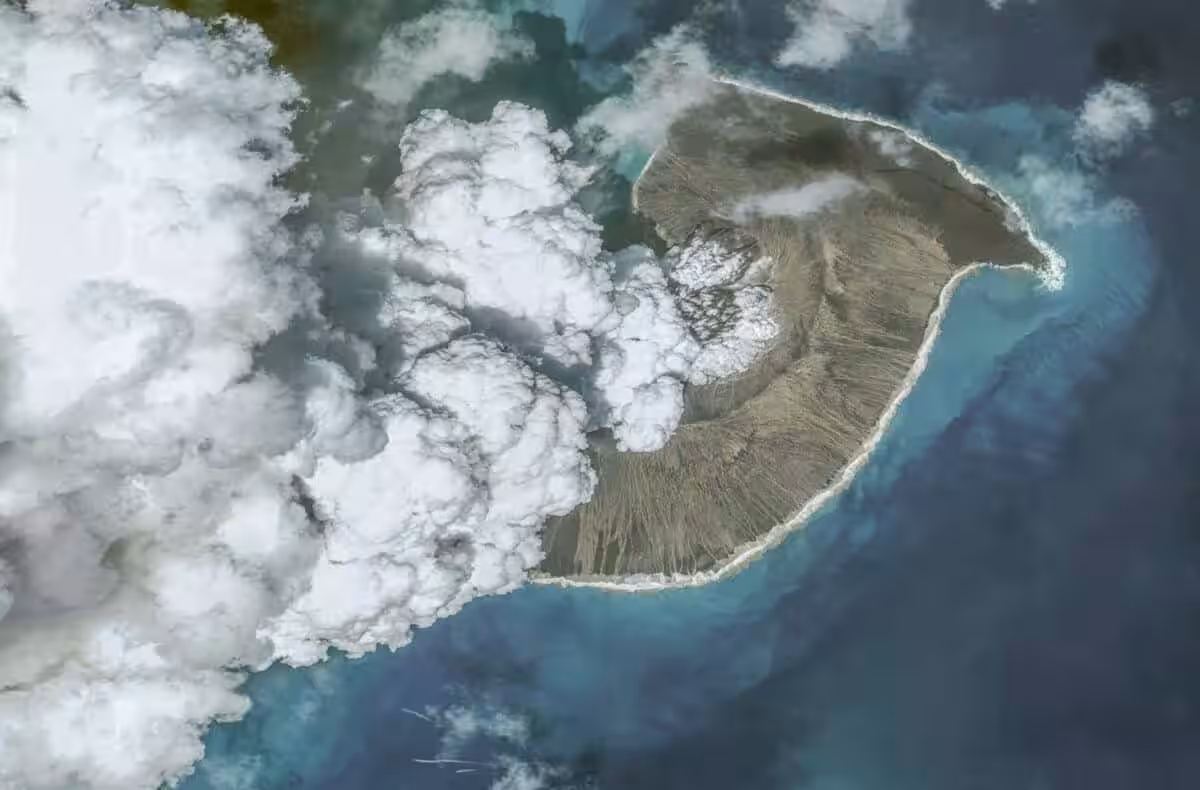
The seawater that fueled the plume also blocked something. In most large eruptions, sulfur dioxide climbs into the stratosphere, where it forms aerosol particles that absorb solar radiation and warm the layer from within. At Hunga Tonga, the water intercepted most of that sulfur before it could escape upward, leaving a negligible sulfate signal compared to Pinatubo’s. What reached the stratosphere instead was water, in quantities the atmosphere had not absorbed from a single eruption in the observational record.
A study in the Journal of Volcanology and Geothermal Research proposed the blast was driven by gas-forced hydraulic failure, where expanding gas shattered rock and vaporized seawater at an accelerating rate. Seafloor surveys by New Zealand’s National Institute of Water and Atmospheric Research estimated the explosion excavated roughly 2.3 cubic miles of rock.
The Unprecedented Impact of Water Vapor
This is the core of why the eruption defied expectations. Sulfate aerosols act like a lid, trapping solar energy inside the stratosphere and raising its temperature. Water vapor behaves the opposite way: at high altitude, it emits heat back toward space, pulling energy out of the layer rather than concentrating it.
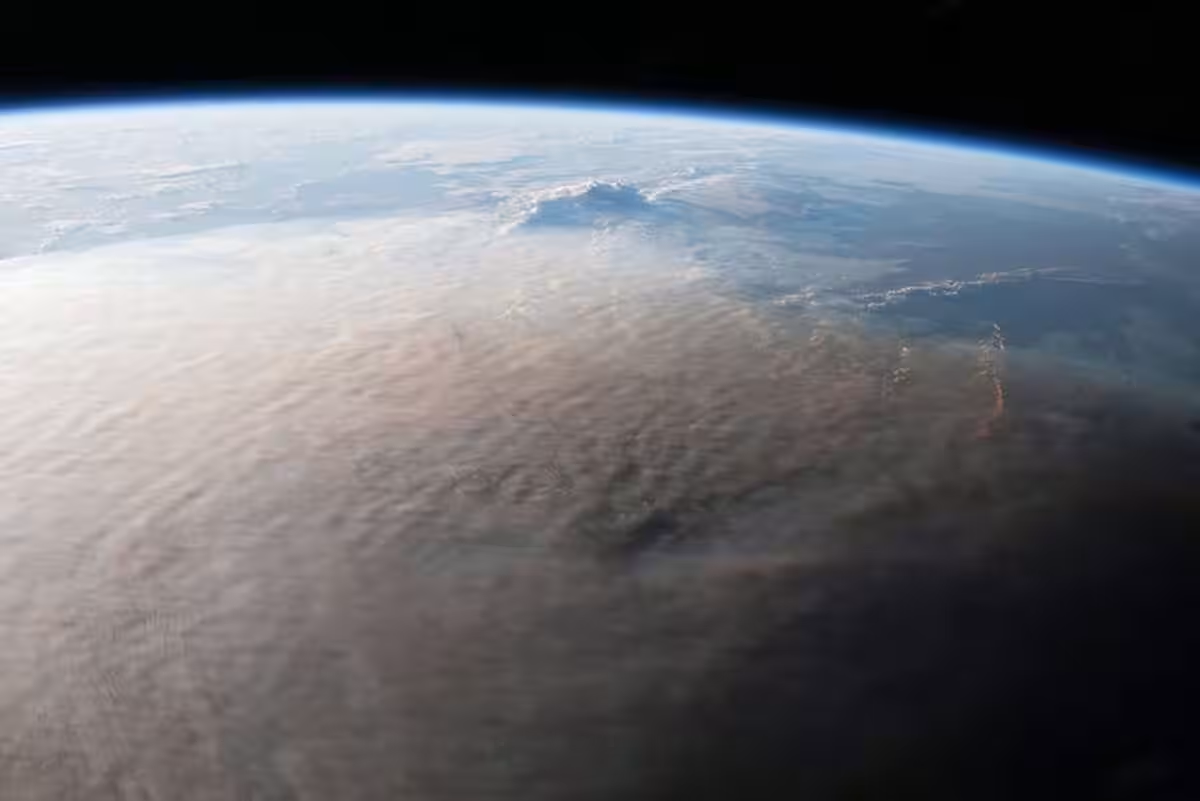
The result was stratospheric cooling of 0.5 to 1 degree Celsius across broad regions of the upper atmosphere, according to the assessment. Researchers at the University of Colorado Boulder described this as behavior with no clear parallel in the modern eruption record. At ground level, the effect was barely detectable, a surface temperature shift of around 0.05 degrees Celsius. Pinatubo, by comparison, cooled the surface by 0.25 to 0.5 degrees.
Professor Amanda Maycock of the University of Leeds confirmed the eruption had no measurable role in the record heat years of 2023 and 2024. That finding closed a question climate scientists had been working through since those temperatures were recorded.
The Record-Breaking Plume
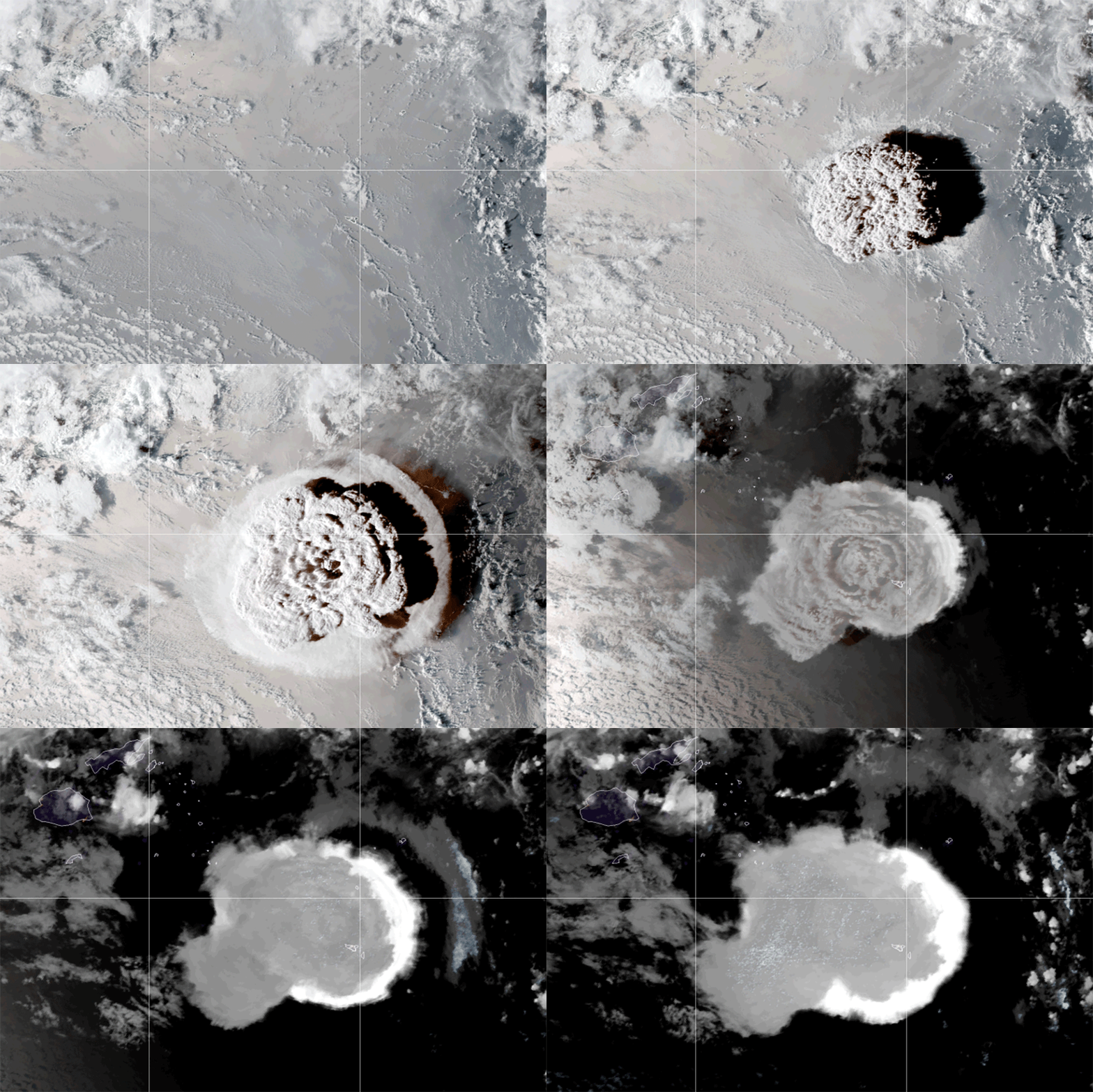
National Geographic confirmed the eruption column reached 35.4 miles, making it the tallest volcanic plume on record. It did not stop at the stratosphere but pierced into the mesosphere, the layer above, where air is so thin that meteors burn out on entry.
The force of the blast also sent atmospheric pressure waves looping around the planet four times over six days. Those waves were strong enough to push ocean water upward in distant basins. In the Mediterranean, sea levels rose by about a foot, a phenomenon scientists call a meteo tsunami, driven not by a submarine earthquake but by the atmosphere itself. The last time something comparable was documented was the 1883 Krakatau eruption.
Nearer to Tonga, the collapse of the caldera floor generated a conventional tsunami. Waves hit surrounding shores at heights above 50 feet in some locations. Both events happening simultaneously from a single eruption had no precedent in the instrumental record.
The Lingering Impact of the Eruption
As of late 2025, stratospheric water vapor levels from the eruption remain above normal. Dr. Sandip Dhomse of the University of Leeds said the elevated moisture is expected to linger for several more years, a longer atmospheric footprint than sulfate-driven eruptions typically leave. Across parts of the Southern Hemisphere, short-term ozone losses were detected in the months after the eruption, linked to shifts in air circulation rather than direct chemical breakdown of ozone molecules. Antarctic ozone remained within seasonal ranges.
Dr. Yunqian Zhu, a senior research scientist at the University of Colorado Boulder, said the eruption exposed a gap in how scientists model water-rich volcanic events and their capacity to reshape stratospheric conditions. The moisture Hunga Tonga injected is projected to keep affecting atmospheric chemistry into the late 2020s.
This article has been fact checked for accuracy, with information verified against reputable sources. Learn more about us and our editorial process.
Last reviewed on .
Article history
- Latest version
Reference(s)
- Greicius, Anthony. “Tonga Eruption Blasted Unprecedented Amount of Water Into Stratosphere - NASA.”, August 2, 2022 NASA <https://www.nasa.gov/earth/tonga-eruption-blasted-unprecedented-amount-of-water-into-stratosphere/>.
- Henley, Richard W.., et al. “The 15 January 2022 Hunga (Tonga) eruption: A gas-driven climactic explosion.” Journal of Volcanology and Geothermal Research, vol. 451, July 1, 2024, pp. 108077 Elsevier BV, doi: 10.1016/j.jvolgeores.2024.108077. <https://www.sciencedirect.com/science/article/pii/S0377027324000696>.
- “Home.” University of Colorado Boulder <https://www.colorado.edu/>.
- “1 Tonga Eruption 1041.” <https://www.nasa.gov/wp-content/uploads/2022/07/1-tonga-eruption-1041.gif>.
- “University of Leeds.” <https://www.leeds.ac.uk/>.
- Wei-Haas, Maya. “Tonga's strange volcanic eruption was even more massive than we knew.”, November 21, 2022 National Geographic <https://www.nationalgeographic.com/science/article/tonga-volcano-largest-eruption-pacific-ocean-tallest-plume>.
Cite this page:
- Posted by Divya Iyer