Nuclear Submarine at Ocean Floor Still Leaking, But Not in the Way Scientists Feared
A Cold War nuclear submarine resting deep in the Norwegian Sea is still releasing radioactive material decades after it sank, but new research reveals a complex picture of intermittent leaks, rapid dilution, and limited environmental impact so far.
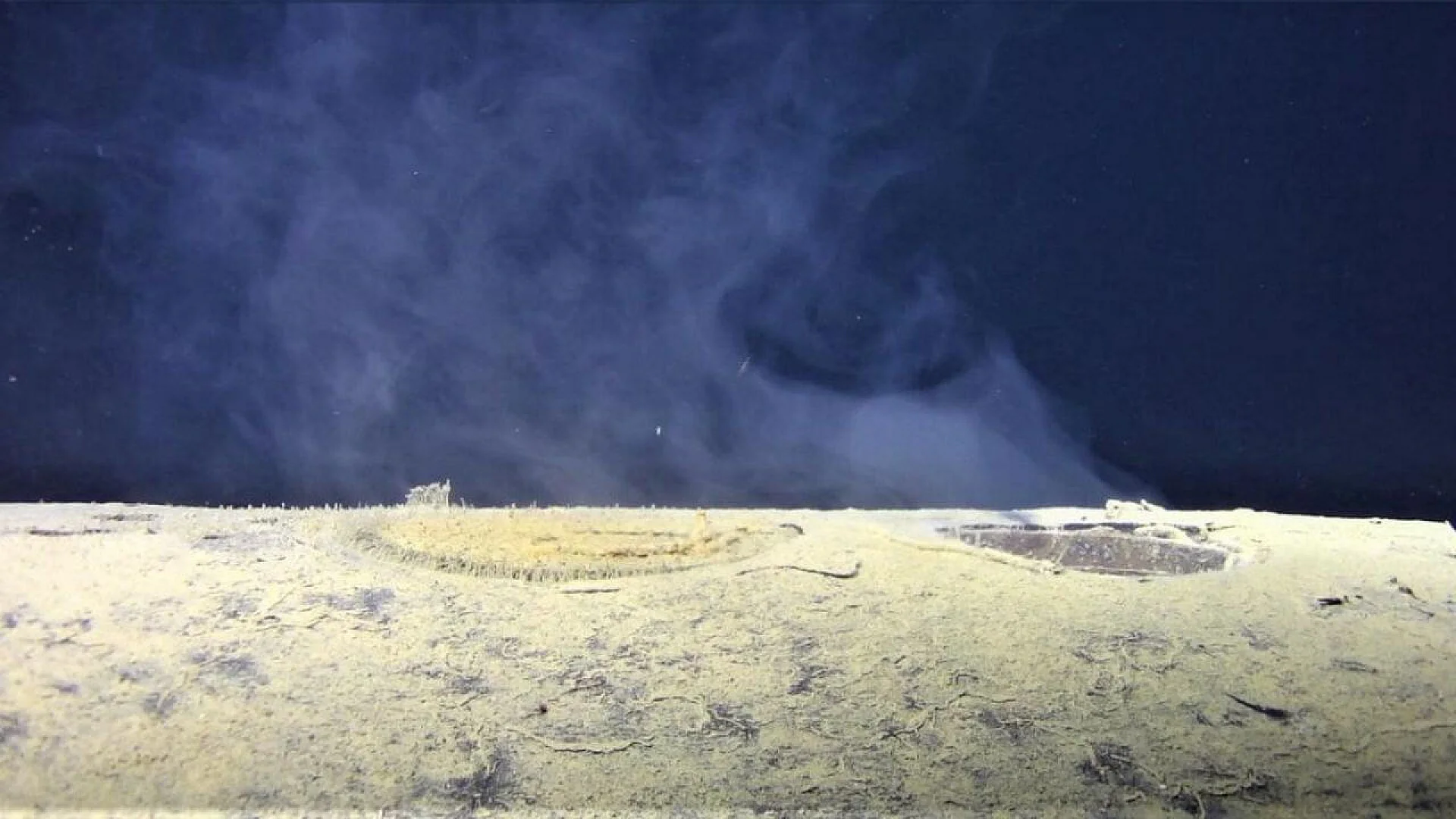
In the near-freezing darkness nearly 1,700 meters below the surface of the Norwegian Sea, a relic of the Cold War lies quietly on the seafloor.
The Soviet submarine K-278 Komsomolets sank in 1989 after a catastrophic onboard fire. It carried not only a nuclear reactor, but also nuclear-armed torpedoes, leaving behind a long-standing concern about radioactive contamination in one of the planet’s most remote environments.
For decades, scientists have returned to this site, searching for signs that the wreck might be releasing dangerous materials into the ocean.
Now, the most detailed investigation yet reveals a paradox. The submarine is indeed leaking radioactive material, but the broader environment around it remains largely unaffected.
A Mission to Revisit a Deep-Sea Time Capsule
The latest study is based on a dedicated expedition carried out in 2019, where researchers deployed remotely operated vehicles to inspect the wreck and collect water and sediment samples.
Their goals were precise. They wanted to understand how badly the submarine had been damaged, whether radioactive material from its nuclear weapons had escaped, and whether the reactor itself was still releasing contaminants.
What they found was both reassuring and unsettling.
The submarine’s outer structure, built from titanium, has resisted widespread corrosion. Large portions of the hull remain intact, with only limited biological growth visible on its surface.
But the damage is concentrated in critical areas, especially the forward section near the torpedo compartment. Cracks, деformations, and openings suggest multiple pathways through which seawater can enter and interact with internal components.
No Evidence of Leaks From Nuclear Warheads
One of the most feared scenarios was the release of plutonium from the submarine’s nuclear torpedoes.
Earlier reports had suggested that seawater might have reached these weapons after the sinking. That raised concerns about long-term contamination from weapons-grade nuclear material.
The new study, however, found no evidence that plutonium from the warheads has leaked into the surrounding environment.
Water samples collected near the torpedo compartment showed isotopic signatures consistent with global background radiation rather than weapons-grade material. Sediment samples told the same story.
This indicates that the containment measures applied in the 1990s, including sealing the torpedo tubes and covering damaged sections, are still holding.
A Reactor That Has Not Gone Silent
The situation is different when it comes to the submarine’s nuclear reactor.
Researchers observed that radioactive material is still being released, not as a steady flow, but in intermittent bursts.
Using underwater vehicles, the team documented visible plumes emerging from specific points on the wreck, including a ventilation pipe and a nearby structure believed to be part of the exhaust system.
These plumes were not constant. Instead, they appeared sporadically, suggesting that internal processes, possibly linked to corrosion or pressure changes, are driving periodic releases.
When scientists sampled these plumes directly, they found striking concentrations of radioactive isotopes.
Levels of strontium-90 and cesium-137 were measured at up to 400,000 and 800,000 times higher than typical background levels in the Norwegian Sea.
Such numbers might sound alarming. But they come with an important caveat.
Rapid Dilution Limits the Spread
Despite the extreme concentrations detected near the source, the radioactive material does not travel far.
Measurements taken just a few meters away from the submarine showed a dramatic drop in contamination levels.
By the time water samples were collected a short distance above the wreck, radiation levels had fallen close to normal background values.
This rapid dilution appears to be a key factor limiting environmental impact.
Ocean currents, combined with the vast volume of surrounding water, disperse the radioactive material quickly. As a result, it does not accumulate significantly in nearby sediments or the broader marine environment.
Signs of a Slowly Corroding Reactor
While the immediate environmental impact may be limited, the underlying process driving these leaks is more concerning.
The study provides strong evidence that the nuclear fuel inside the reactor is gradually breaking down.
By analyzing isotopes of uranium and plutonium, researchers were able to detect signatures that point to active corrosion of the fuel.
These isotopes behave differently depending on their source. The ratios observed in the samples closely matched those expected from reactor fuel, rather than from historical nuclear fallout.
This confirms that the material is not just residual contamination from past events, but is actively being released from within the submarine.
In simple terms, the reactor is slowly deteriorating, and its contents are beginning to interact with seawater.
A Deep-Sea Environment That Absorbs More Than It Stores
One of the more surprising findings is how little of this radioactive material ends up in the surrounding sediments.
Core samples taken from the seabed show only modest levels of cesium, comparable to those found in other parts of the Norwegian Sea.
There are signs that some radioactive material has been deposited over time, especially in the upper layers of sediment. However, the amounts are relatively low, even after more than three decades of intermittent leakage.
This suggests that the deep-sea environment, at least in this case, is more effective at dispersing contaminants than retaining them.
Still, scientists caution that this does not mean the system is risk-free.
Why This Matters
The Komsomolets wreck offers a rare real-world case study of what happens when nuclear materials are left on the ocean floor for decades.
Understanding this process is becoming increasingly important.
Across the world’s oceans, there are other sunken vessels, dumped reactors, and legacy waste from past military and industrial activities. As geopolitical tensions rise and naval operations expand, the risk of future accidents involving nuclear-powered vessels remains real.
This study shows that while catastrophic contamination is not inevitable, long-term monitoring is essential.
It also highlights a key uncertainty. The submarine’s structure will continue to degrade over time. What is now a slow, intermittent leak could evolve into a different pattern as corrosion progresses.
The Limits of What We Know
Despite the detailed data collected, significant uncertainties remain.
Scientists still do not fully understand the mechanisms behind the observed releases. It is unclear exactly how seawater is interacting with the reactor, or how the internal structure is changing over time.
The intermittent nature of the leaks also complicates monitoring efforts. A sample taken at one moment may show little activity, while another taken hours later could capture a burst of radioactive material.
There are also limits to how closely researchers can approach the wreck, both for safety reasons and due to technical constraints at such extreme depths.
As a result, the picture we have is incomplete, though more detailed than ever before.
A Slow-Burning Legacy of the Cold War
The story of Komsomolets is not just about a single submarine. It reflects a broader legacy of the Cold War, when nuclear technology was deployed rapidly, often without full consideration of long-term consequences.
Today, that legacy rests quietly on the ocean floor.
The new findings suggest that the immediate risks may be lower than once feared. There is no evidence of widespread contamination, and the most dangerous materials remain contained.
But the situation is not static.
The reactor continues to release radioactive material. The fuel is corroding. And the structure of the submarine will not remain intact forever.
In the deep ocean, change happens slowly. But it does happen.
Continued Monitoring Is Essential
Researchers emphasize that ongoing surveillance of the site is crucial.
Future studies will aim to better understand the corrosion processes, track changes in release patterns, and assess how the remaining nuclear material evolves over time.
Komsomolets provides a unique window into these processes. It is, in effect, an unintended long-term experiment in nuclear contamination under extreme marine conditions.
The lessons learned here could prove invaluable, not only for managing existing risks, but also for preparing for future incidents.
The research was published in PNAS on March 23, 2026.
This content has been reviewed by subject-matter experts to ensure scientific accuracy. Learn more about us and our editorial process.
Last reviewed on .
Article history
- Latest version
Reference(s)
- Gwynn, Justin P.., et al. “Status of the sunken nuclear submarine Komsomolets in the Norwegian Sea.”, vol. 123, no. 13, 23 March 2026 Proceedings of the National Academy of Sciences, doi: 10.1073/pnas.2520144123. <https://doi.org/10.1073/pnas.2520144123>.
Cite this page:
- Posted by Divya Iyer