A 13-Year-Old Boy Found a Bronze Coin in the Dirt. It Turned Out to Be Berlin’s First Ancient Greek Treasure
It was unearthed in the ruins of ancient Troy and concealed in German soil long before the Roman legions marched across Europe. The secrets it holds about antiquity have scholars reconsidering long-held historical assumptions.
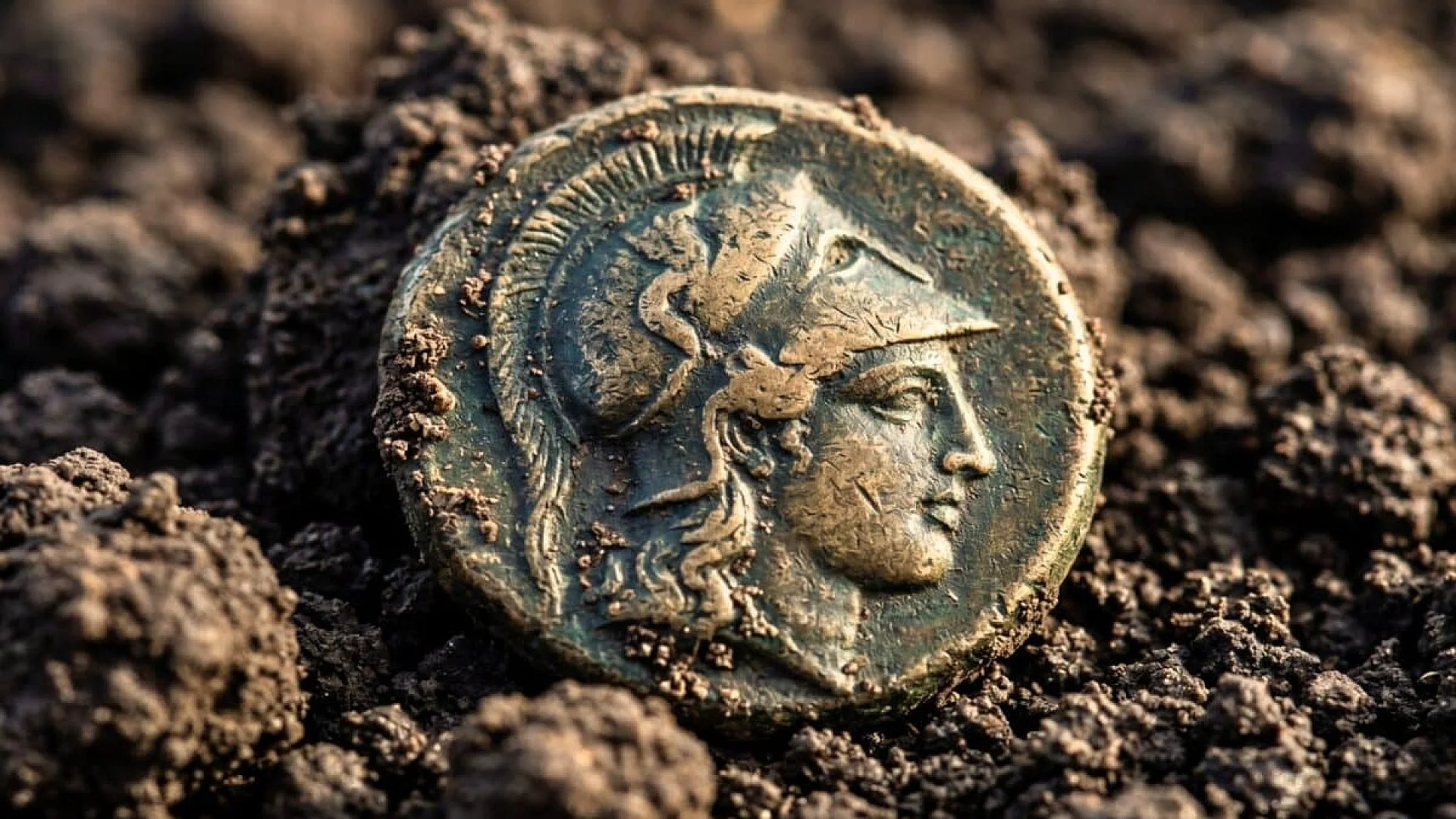
A 13-year-old boy’s chance discovery on a farm field on the outskirts of Berlin has unearthed a small bronze coin, confirmed as the first artifact from ancient Greece ever found in the German capital. The coin, struck in the city of Troy in the third century B.C., is now on display at an archaeology lab in Berlin, offering researchers a rare physical link between the Mediterranean world and northern Europe during the Iron Age.
Measuring just 12 millimeters across and weighing roughly 7 grams, the coin is smaller than an American dime, making it an exceptionally small object. Archaeologist Jens Henker of the Berlin Heritage Authority, who led the analysis, noted that the coin’s size contributed to its survival, as it offered little incentive for the Germanic-speaking communities living in the region to melt it down and reuse it.
The teenager showed the coin to researchers during a November 2025 school visit to Petri Berlin, an interactive archaeology lab built atop the foundations of a medieval Latin school. From there, the object moved through the hands of specialists until an expert at the Münzkabinett Berlin confirmed its origin.
Unveiling the Secrets of a 2,500-Year-Old Coin
Numismatists have dated the bronze piece to the Hellenistic period, between 281 and 261 B.C. Its imagery is unmistakable, featuring a profile of Athena in a Corinthian helmet on the obverse and Athena wearing a kalathos headdress, a spear in her right hand, and a spindle in her left on the reverse.
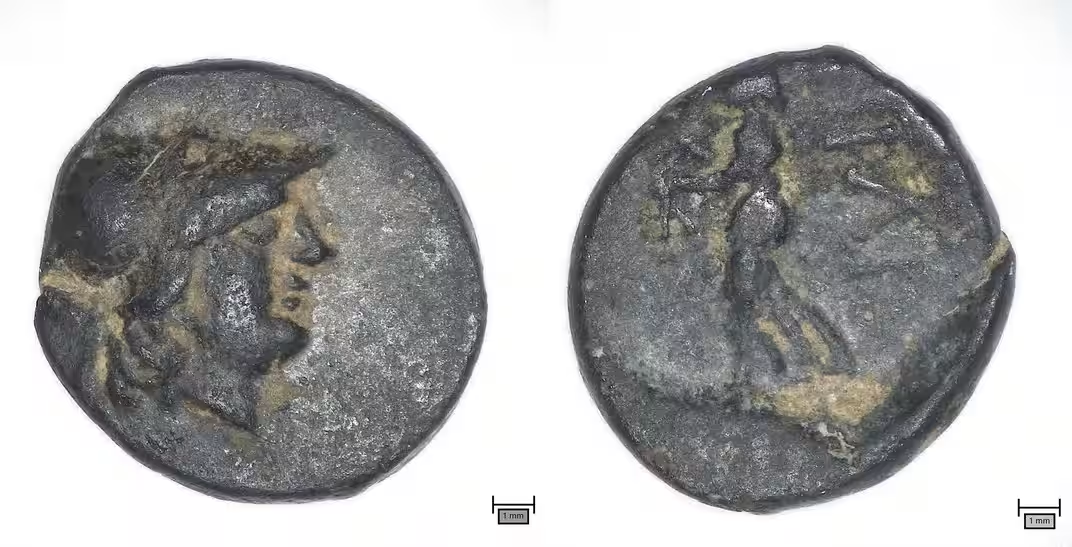
The coin’s mint was Troy, the city in present-day western Turkey that Homer immortalized in the Iliad. By the third century B.C., Troy had been rebuilt and renamed Ilion, a settlement of modest size but significant symbolic weight within the Hellenistic kingdoms that followed Alexander the Great’s campaigns. The use of bronze, rather than silver or gold, indicates that the coin was everyday currency, not a repository of stored wealth.
Unraveling the Mystery of the Coin’s Journey
Once the coin’s origin was confirmed, Henker turned his attention to the question of how it reached Spandau, a neighborhood in western Berlin. The boy provided a precise location on a map, which researchers matched to Berlin’s archaeological site register, revealing a larger picture.
Crews from Berlin’s Museum for Pre- and Early History had surveyed the field repeatedly since the 1950s, uncovering ceramic fragments, a bronze button, a Slavic knife sheath fitting, and burnt human bone. Together, the finds identified the site as a burial ground, likely first used in the early Iron Age, around 800 to 450 B.C., and revisited for centuries afterward.
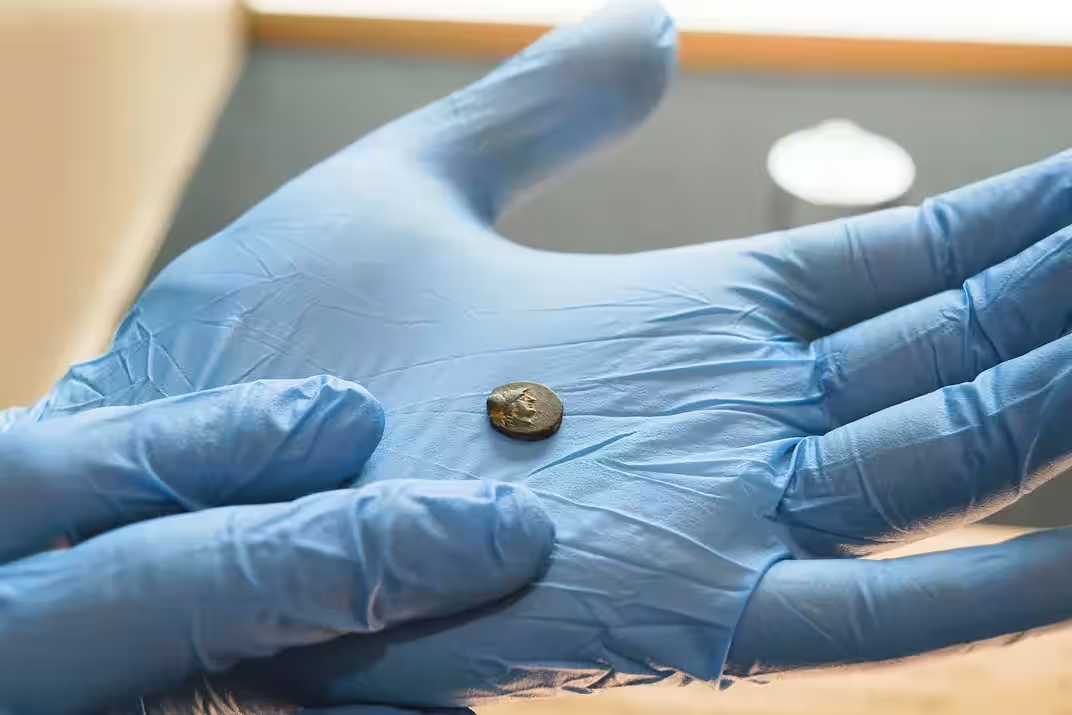
Henker notes that metal objects rarely survive on ancient settlement sites because inhabitants recycled them. Graves, however, preserve a different record. “Metal was sometimes put in graves as a kind of grave gift,” he said. “This appears to be like a souvenir, used to remember something, perhaps even an experience in one’s life.”
Following the Trail of the Coin’s Journey
How a Trojan coin reached the North European Plain is still an open question. Trade offers the most straightforward possibility. Greek objects have surfaced elsewhere in Germany, and Greek graves have yielded amber from the Baltic, worked into jewelry and ornaments. The Amber Road stands as one of the few documented exchange routes linking the Mediterranean and northern Europe.
Written evidence for contact between the two regions is thin but real. Around 320 B.C.E., a Greek navigator from Massalia, modern Marseille, sailed north to the British Isles and perhaps as far as the Arctic Ocean. His name was Pytheas. He recorded northern lights, frozen seas, and the people he met. His contemporaries largely dismissed him, saying, “He’s spinning this. There’s no way that it exists.”
Reconstructions of Pytheas’s lost account suggest Greeks understood that tin, amber, and gold flowed from somewhere along Europe’s Atlantic edge. But cultural distance remained wide. “The Greeks don’t write about us in Germany; they considered us barbarians,” Henker said. “And the people here didn’t write at all, so we really depend on these finds to learn more about potential connections.”
A New Chapter in Archaeological Discovery
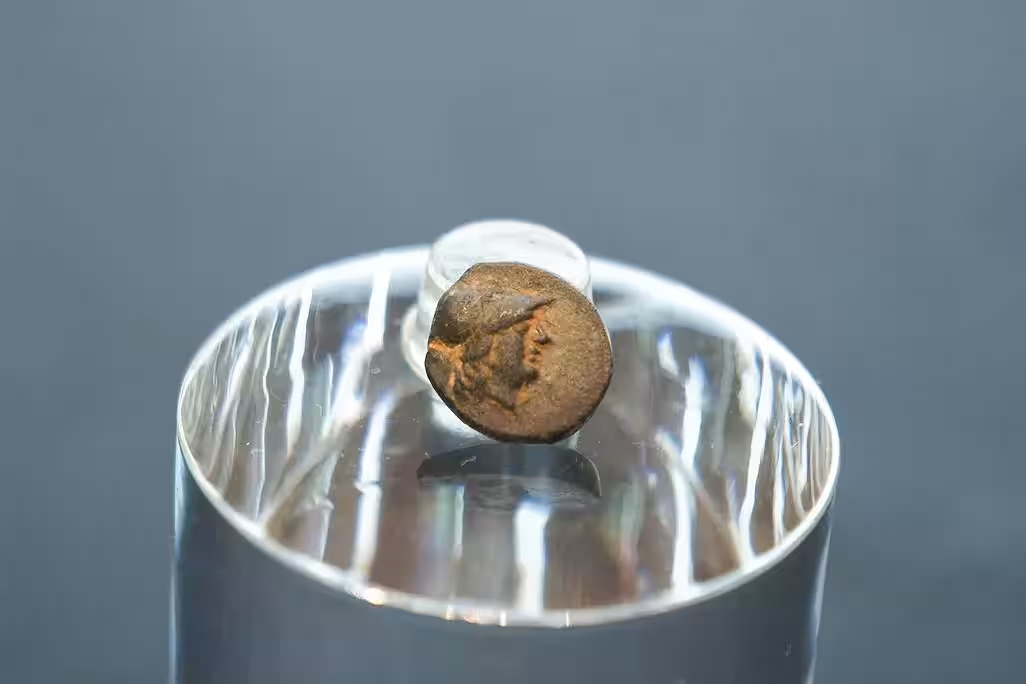
The coin went on public display at Petri Berlin on April 15, 2026, in the museum’s current finds exhibition. It is the first object of Greek antiquity found within Berlin’s city limits to be presented to the public. For archaeologists, the find adds a concrete data point to a period when the Greek world and northern Europe were not sealed off from one another but occasionally touched, producing objects that outlasted the people who carried them and the memory of how they moved.
The excavation record at the Spandau site indicates more material remains in the ground. Berlin’s Museum for Pre- and Early History has repeatedly noted the area’s potential. What else lies beneath the surface is unknown, but even a farmed field on the urban periphery has now yielded an artifact that complicates assumptions about cultural contact in the pre-Roman Iron Age.
The teenager who spotted the coin remains unnamed in official statements. His choice to hand the object to professionals rather than pocket a curiosity has given Berlin an archaeological first. The coin’s passage from a Hellenistic mint to an Iron Age grave to a museum case covers more than two thousand years. Its complete story is not yet written.
This article has been fact checked for accuracy, with information verified against reputable sources. Learn more about us and our editorial process.
Last reviewed on .
Article history
- Latest version
Reference(s)
- “Griechische Münze aus dem 3. Jahrhundert v. Chr. in Berlin-Spandau entdeckt | PETRI Berlin.”, April 15, 2026 PETRI Berlin <https://www.petri.berlin/presse/griechische-muenze-aus-dem-3-jahrhundert-v-chr-in-berlin-spandau-entdeckt/>.
Cite this page:
- Posted by Divya Iyer