Russia Successfully Launches Soyuz 5 In High-Stakes Debut
Russia’s Soyuz 5 rocket has successfully completed its inaugural test flight, representing a significant milestone in the nation’s ambitious space exploration agenda.
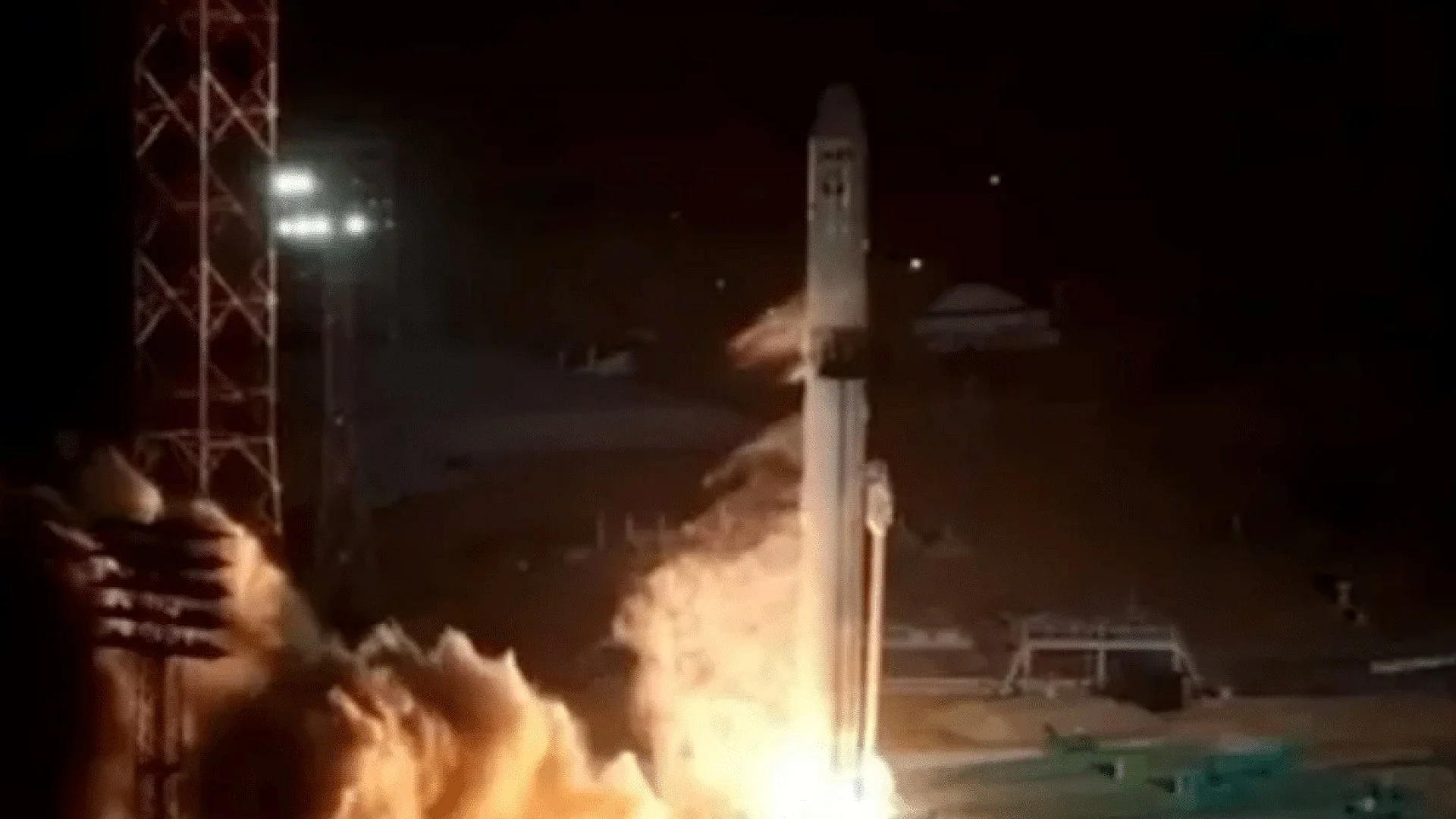
The wait is finally over for Russia’s ambitious space program as the Soyuz 5 rocket has successfully completed its maiden test flight, marking a significant milestone in the nation’s pursuit of independent launch capabilities.
Russia’s Space Ambitions Take Flight
After years of development setbacks and geopolitical challenges, Roscosmos has achieved a major breakthrough with the inaugural launch of Soyuz 5 from the historic Baikonur Cosmodrome in Kazakhstan. The rocket soared into the sky on April 30 at 2:00 p.m. EDT, executing a suborbital test designed to validate its early-stage performance and flight stability.
The mission was a controlled “shakeout” flight, a standard approach used to test new launch systems before committing to full orbital missions. This first outing focused on the performance of the rocket’s initial stages and trajectory accuracy, rather than payload deployment. The vehicle carried a mock payload, which followed a planned path before reentering Earth’s atmosphere over a designated zone in the Pacific Ocean.
Officials quickly confirmed the mission’s success, hailing it as a crucial step towards Russia’s goal of rebuilding and modernizing its launch infrastructure in the face of shifting global alliances and increasing isolation in the space sector.
“The first test launch of the new Soyuz 5 rocket was a resounding success!” representatives from Roscosmos announced via Telegram. They elaborated further: “The first and second stages of Soyuz 5 performed flawlessly, and a mockup was launched onto the calculated suborbital trajectory, followed by a precise reentry into an area in the Pacific Ocean previously closed to shipping and aviation.”
This milestone represents more than a routine test – it signals Russia’s determination to regain control over its space operations and restore its competitive edge in the global launch market.
A New Era for Russia’s Space Program
The Soyuz 5 program began in 2017 with a clear objective: to replace the aging Zenit rocket family, historically produced in Ukraine. That dependency became a critical vulnerability following the deterioration of relations between the two nations, particularly after the 2022 invasion of Ukraine.
By developing a fully domestic alternative, Russia aims to regain control over a key segment of its space operations and establish a foundation for a future super-heavy launch system, a project that could enable deep-space missions and expanded lunar ambitions.
According to Space.com, the broader strategic vision includes reinforcing Russia’s autonomy in space technology while maintaining a competitive edge. Roscosmos had initially positioned Soyuz 5 as a cost-effective solution capable of supporting both national missions and commercial launches. As noted in industry analysis, the agency originally hoped “that the low-cost vehicle would complement the Angara family of rockets for domestic needs and would make Russia competitive again on the international launch market.”
However, the ambition now faces a more complex reality, with international partnerships diminishing sharply and the global launch market evolving rapidly, dominated by reusable systems and private-sector innovation.
A Technical Comparison That Raises Questions
In terms of raw capability, Soyuz 5 enters the medium-lift category, with a payload capacity of roughly 20 tons to low Earth orbit. This places it in direct comparison with SpaceX’s Falcon 9, one of the most widely used rockets in the world today.
Yet the similarities largely end there. While Falcon 9 has redefined cost efficiency through first-stage reusability, Soyuz 5 remains an expendable system, with each launch requiring a completely new rocket. This significantly increases operational costs over time and limits competitiveness in a market increasingly driven by sustainability and rapid turnaround.
This contrast highlights a broader technological gap. While Russia continues to demonstrate strong engineering fundamentals, the absence of reusable architecture could hinder its ability to attract commercial clients, especially in a landscape where launch costs are a decisive factor.
Still, the successful debut proves that Soyuz 5 is operationally viable, a necessary first step before any further evolution or upgrades can be considered.
This article has been fact checked for accuracy, with information verified against reputable sources. Learn more about us and our editorial process.
Last reviewed on .
Article history
- Latest version
Reference(s)
- Wall, Mike. “Russia's new homegrown Soyuz 5 rocket aces debut launch.”, April 30, 2026 Space <https://www.space.com/space-exploration/launches-spacecraft/russias-new-homegrown-soyuz-5-rocket-aces-debut-launch>.
Cite this page:
- Posted by Divya Iyer