Centuries-Old Bank Vault Yields the Lost 137-Carat Florentine Diamond After 100 Years
A century‑old suitcase uncovered in a Canadian bank vault revealed a legendary royal treasure thought lost forever, sparking worldwide intrigue.
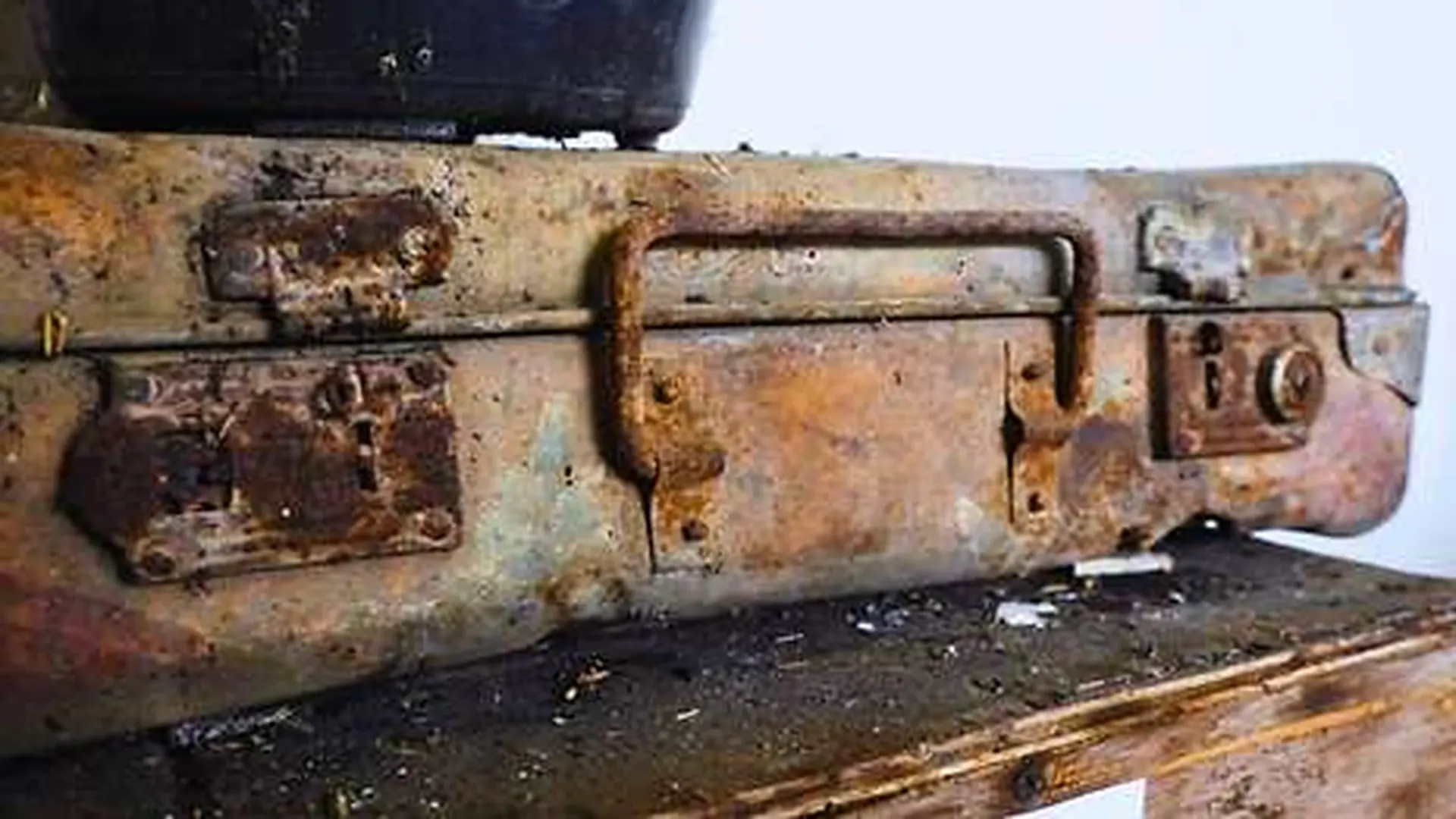
After almost a century locked away in a Canadian bank vault, a modest cardboard case was opened by members of the Habsburg lineage, revealing the long‑lost Florentine Diamond. The gem, which had haunted historians, auction houses, and gemologists for decades, was found exactly where Empress Zita had stored it.
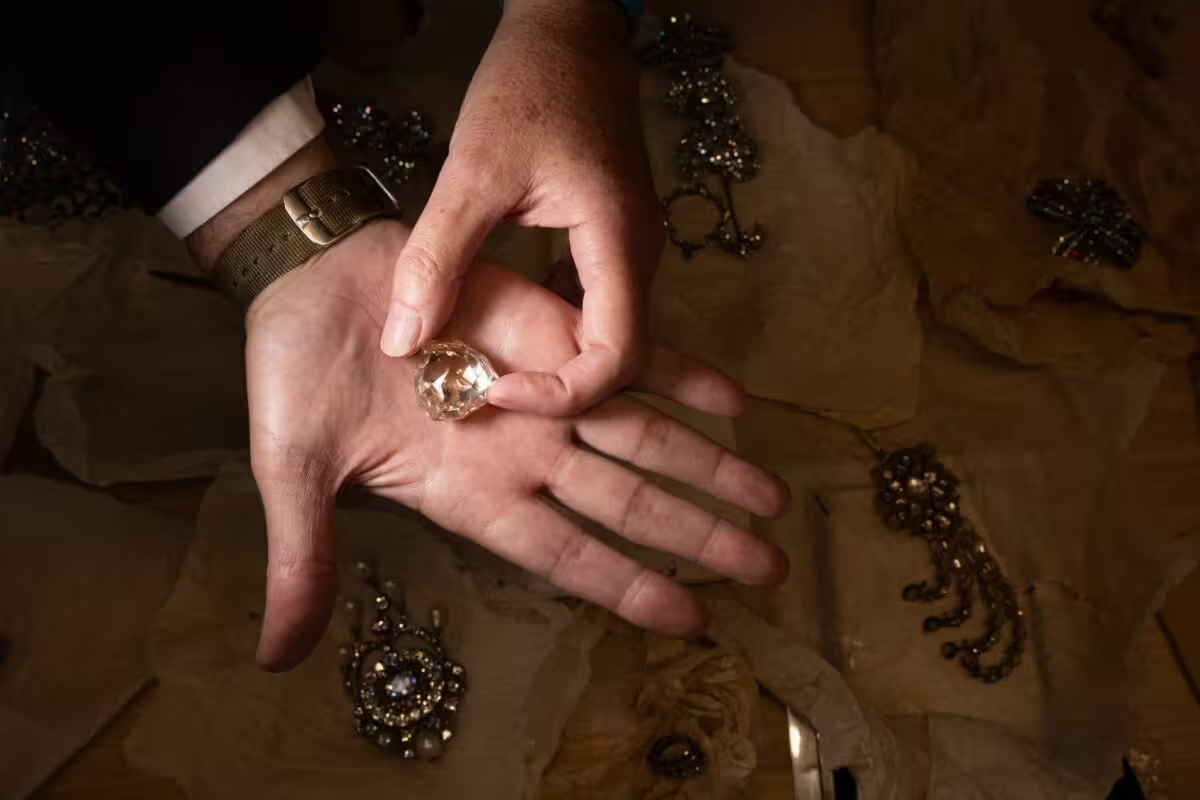
Weighing 137.27 carats, the diamond displays a pale yellow hue tinged with a faint green cast. Its nine‑sided double rose cut—featuring triangular facets on both faces—was originally intended to capture candlelight, a characteristic that contributed to its fame across Europe before it vanished from records after the First World War.
Karl von Habsburg-Lothringen, who announced the discovery, confirmed that several pieces thought to be lost have in fact survived. He indicated that the jewels will be loaned to a Canadian museum for public display before being returned to a secure repository, framing the move as a tribute to Canada’s wartime refuge.
From Renaissance Courts to Imperial Regalia
The earliest reliable reference to the Florentine Diamond dates to 1657, when French jeweler‑explorer Jean Baptiste Tavernier observed it among the treasures of Grand Duke Ferdinando II de’ Medici. The Medici, prominent patrons of artists such as Michelangelo and Leonardo da Vinci, used the stone as a visual emblem of Florentine wealth.
Following the extinction of the Medici line, the diamond passed to the Habsburgs through Francis Stephen of Lorraine, husband of Empress Maria Theresa. It entered the Austrian crown jewels and was set into Francis Stephen’s coronation regalia when he became Holy Roman Emperor in 1745, where contemporary appraisals placed its value at $750,000.
The Diamond’s Journey Through Turbulent Times
As World War I drew to a close in 1918, Emperor Charles I ordered the imperial jewels to be transferred to Switzerland, after which the Florentine Diamond disappeared from official inventories. Over the ensuing decades, theories ranged from theft by household staff to clandestine resale or even recutting to mask its identity.
Empress Zita’s Secret Safekeeping
The stone never left the family’s possession. Empress Zita, widow of Charles I, fled Europe amid the rise of fascism, eventually reaching Quebec after a perilous escape through Belgium, France, Spain, and Portugal. There she placed the suitcase in a bank’s safe‑deposit box, sharing its location only with her sons Robert and Rodolphe and instructing them to keep it concealed for a century after Charles’s death in 1922.
The brothers passed the secret to their children, who continued paying the vault fees and honoring the confidentiality clause while scholars and journalists speculated about the gem’s whereabouts.
Inside the Century‑Old Casket
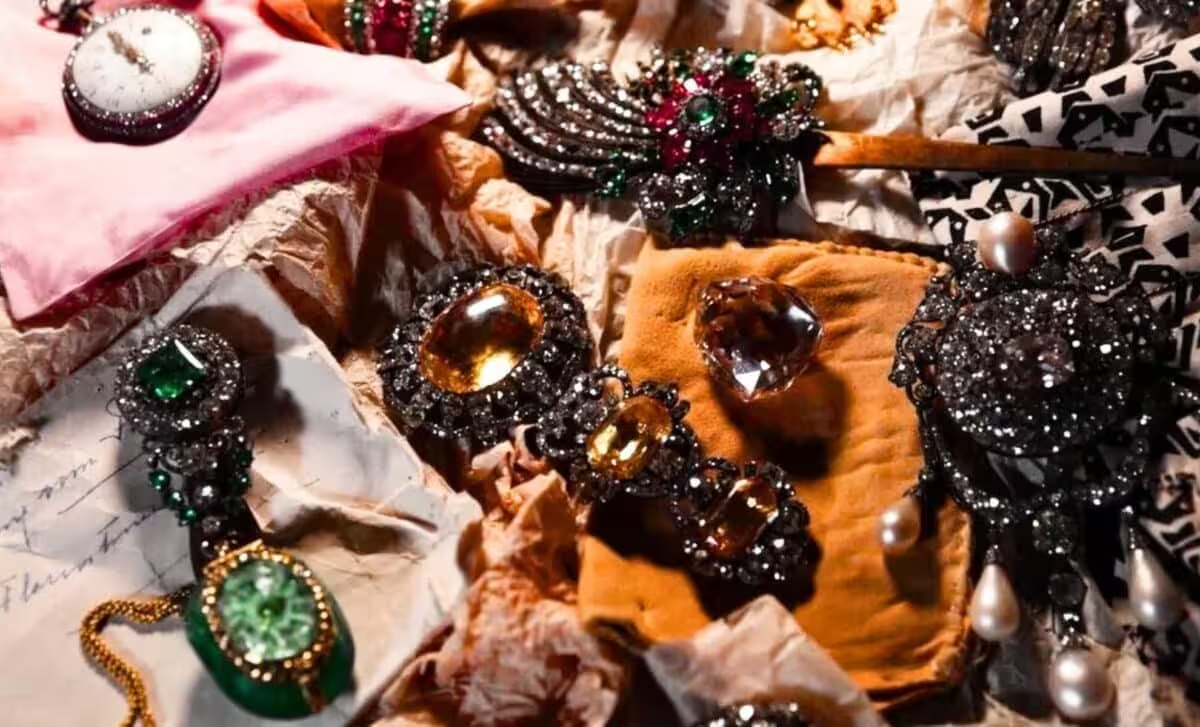
When the New York Times was invited to observe the vault’s opening in 2025, the family revealed a collection of historic pieces, among them a diamond‑encrusted Order of the Golden Fleece and the Florentine Diamond itself. The stone’s distinctive nine‑sided double rose cut matched archival illustrations, and Austrian jeweler Christoph Köchert of A.E. Köchert, former imperial court jeweler, authenticated the gem.
The box also contained jeweled insignia, hat pins in Hungarian colors, and brooches set with old‑cut diamonds and yellow sapphires, offering material evidence of court attire and ceremonial customs that written records alone cannot convey. For gemologists, the stone’s availability enables non‑destructive analyses of trace elements and facet geometry, potentially confirming its origin in the Golconda mines of India.
Future Exhibition and Ongoing Legal Questions
The Habsburgs plan to loan the jewels to a Canadian museum before returning them to private storage. Austrian authorities are presently assessing the appropriate custodial status of the Florentine Diamond, a debate that touches on broader issues of private versus national heritage ownership across Europe.
Karl von Habsburg-Lothringen emphasized the family’s desire to share the historically significant collection with the public, expressing gratitude to Canada for providing sanctuary during the family’s exile in 1940.
This article has been fact checked for accuracy, with information verified against reputable sources. Learn more about us and our editorial process.
Last reviewed on .
Article history
- Latest version
Cite this page:
- Posted by Bilal Abbasi