ALMA Maps Record Methanol Levels In Interstellar Comet 3I/ATLAS, A Cosmic Alcohol Fingerprint
An interstellar visitor shows a chemical signature unlike any comet near the Sun, hinting at exotic composition from another star system.
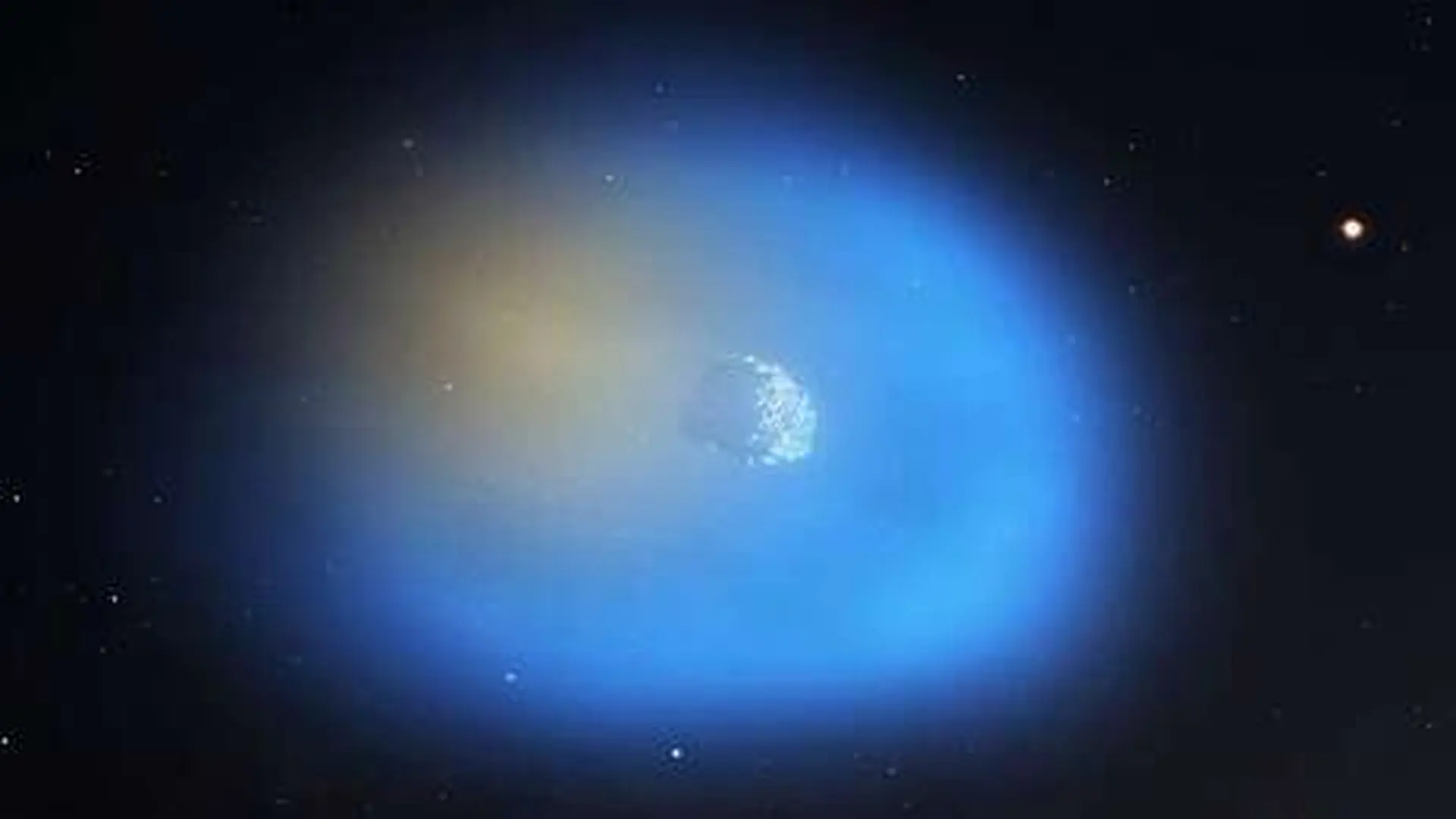
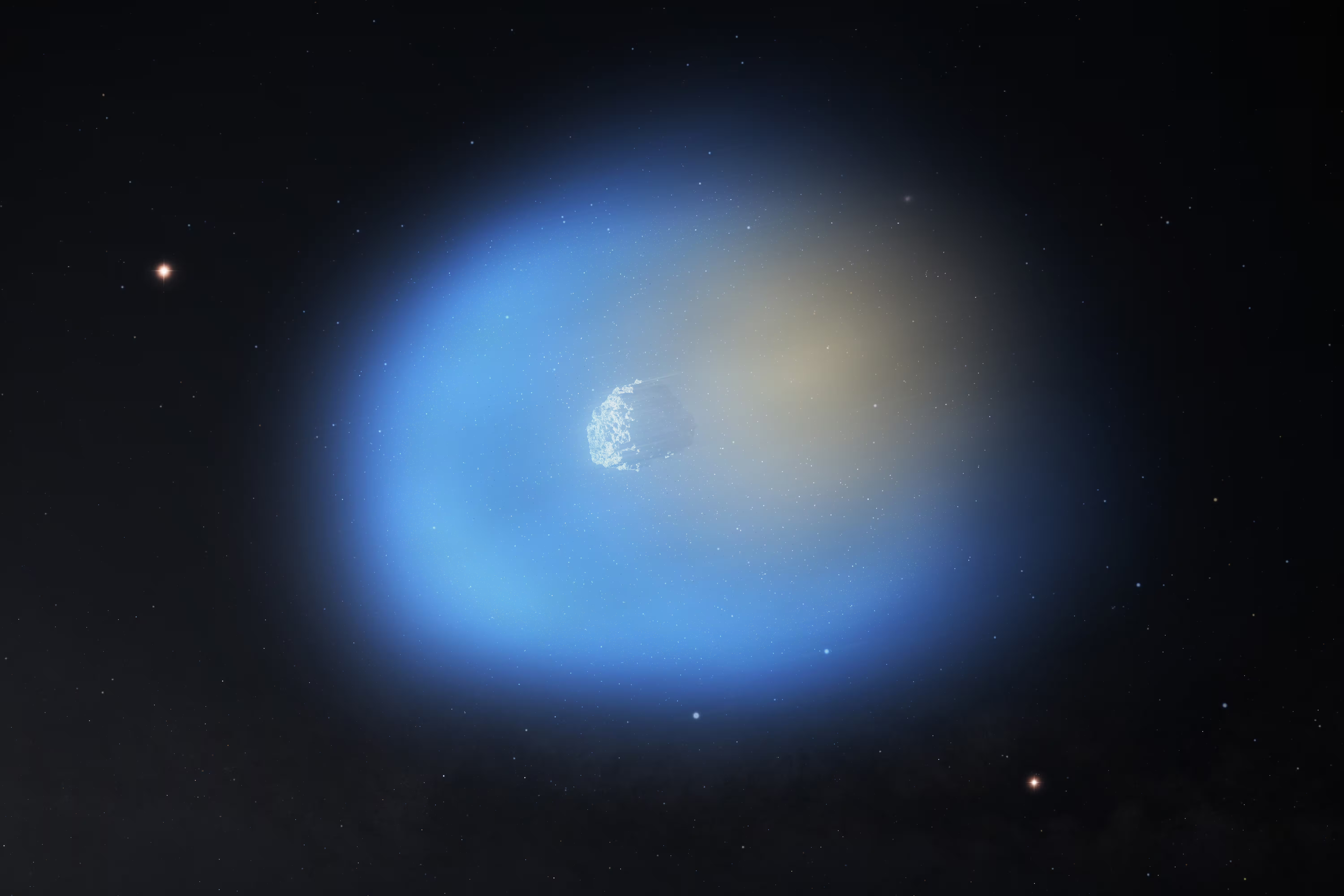
Only three interstellar travelers have ever been observed passing through our planetary neighborhood. The first, 1I/’Oumuamua, arrived in 2017 with a baffling appearance, while the second, 2I/Borisov, displayed a chemistry that matched familiar solar‑system comets. The latest visitor, 3I/ATLAS, is turning out to be even more enigmatic.
Using the Atacama Large Millimeter/submillimeter Array, astronomers have measured an unusually high concentration of methanol in 3I/ATLAS. The derived ratios place the comet among the most methanol‑rich bodies ever examined, surpassing every comet that formed around our Sun. The data suggest that the star system that birthed this object experienced a markedly different set of chemical conditions.
“Observing 3I/ATLAS is like taking a fingerprint from another solar system,” said Nathan Roth, lead author of the study published in The Astrophysical Journal Letters and professor at American University. “The details reveal what it’s made of, and it’s bursting with methanol in a way we just don’t usually see in comets in our own solar system.”
ALMA Follows ATLAS as Solar Heat Activates Its Surface
Roth’s team employed ALMA’s Atacama Compact Array, a subset of smaller dishes located in Chile’s Atacama Desert, to track 3I/ATLAS during several sessions in late 2025. As the comet approached the Sun, solar radiation caused surface ices to sublimate, generating a luminous coma that enveloped the nucleus.
The faint submillimeter emissions from this coma were analyzed to identify the chemical signatures of two organic molecules: methanol (CH₃OH) and hydrogen cyanide (HCN), a nitrogen‑bearing compound commonly observed in solar‑system comets.
Measurements taken on two separate dates revealed methanol‑to‑HCN production ratios of roughly 70 and 120. By contrast, comets that formed around our Sun typically exhibit far lower values, positioning 3I/ATLAS in a distinct chemical class.
Methanol and HCN Depart the Nucleus by Different Mechanisms
Analysis of the ALMA data showed that HCN originates almost entirely from the solid nucleus, mirroring the behavior of most solar‑system comets. Methanol, however, was released from both the nucleus and the icy dust grains suspended within the coma. Those grains act as secondary sources, sublimating methanol ice as they are heated by sunlight.
This dual release process, known as extended outgassing, has been documented in a few solar‑system comets, but according to the ALMA Observatory, 3I/ATLAS is the first interstellar object for which spatial mapping of this effect has been achieved. Mapping the source of methanol, rather than merely detecting its presence, provides a clearer picture of the comet’s composition.
JWST Previously Detected an Unusual Ice Composition
The high methanol content builds on earlier findings from the James Webb Space Telescope, which observed that 3I/ATLAS’s coma was dominated by carbon dioxide rather than water when the comet was still distant from the Sun—a departure from the norm for solar‑system comets at comparable distances.
Together, the JWST and ALMA observations paint a chemical portrait that diverges from familiar patterns at multiple points, suggesting that the comet’s material formed under conditions not encountered in our own planetary system.
Methanol forms on the surfaces of cold interstellar dust grains when hydrogen atoms add to carbon monoxide at very low temperatures. The efficiency of this conversion depends on temperature, radiation exposure, and elemental composition of the environment where the grains first condensed. An elevated methanol fraction relative to molecules such as HCN may signal that the material originated in an especially cold or chemically distinct region of a protoplanetary disk, although the study does not pinpoint a specific birthplace.
What the Third Interstellar Visitor Reveals
With only three confirmed interstellar objects to date, each arrival carries outsized scientific significance. ‘Oumuamua produced no detectable coma and displayed an acceleration that could not be explained by water ice alone. Borisov exhibited chemistry that closely matched local comets, implying that planet‑forming processes can yield similar results across many systems.
3I/ATLAS adds a new dimension to this limited sample. Its composition lies well outside the range observed for solar‑system comets, demonstrating that interstellar comets can also bear chemical signatures forged under markedly different conditions.
This article has been fact checked for accuracy, with information verified against reputable sources. Learn more about us and our editorial process.
Last reviewed on .
Article history
- Latest version
Reference(s)
- Roth, Nathan X.., et al. “CH 3 OH and HCN in Interstellar Comet 3I/ATLAS Mapped with the ALMA Atacama Compact Array: Distinct Outgassing Behaviors and a Remarkably High CH 3 OH/HCN Production Rate Ratio.” The Astrophysical Journal Letters, vol. 999, no. 2, March 6, 2026, pp. L32 American Astronomical Society, doi: 10.3847/2041-8213/ae433b. <https://iopscience.iop.org/article/10.3847/2041-8213/ae433b>.
- “ALMA Detects Extremely Abundant Alcohol in Interstellar Comet 3I/ATLAS | ALMA Observatory.” <https://www.almaobservatory.org/en/press-releases/alma-detects-extremely-abundant-alcohol-in-interstellar-comet-3i-atlas/>.
Cite this page:
- Posted by Bilal Abbasi