Gas Bubbles Reveal Why Etna Erupted Explosively Then Rapidly
Scientists reveal how hidden underground processes caused two vastly different eruptions at the same volcano thousands of years apart.
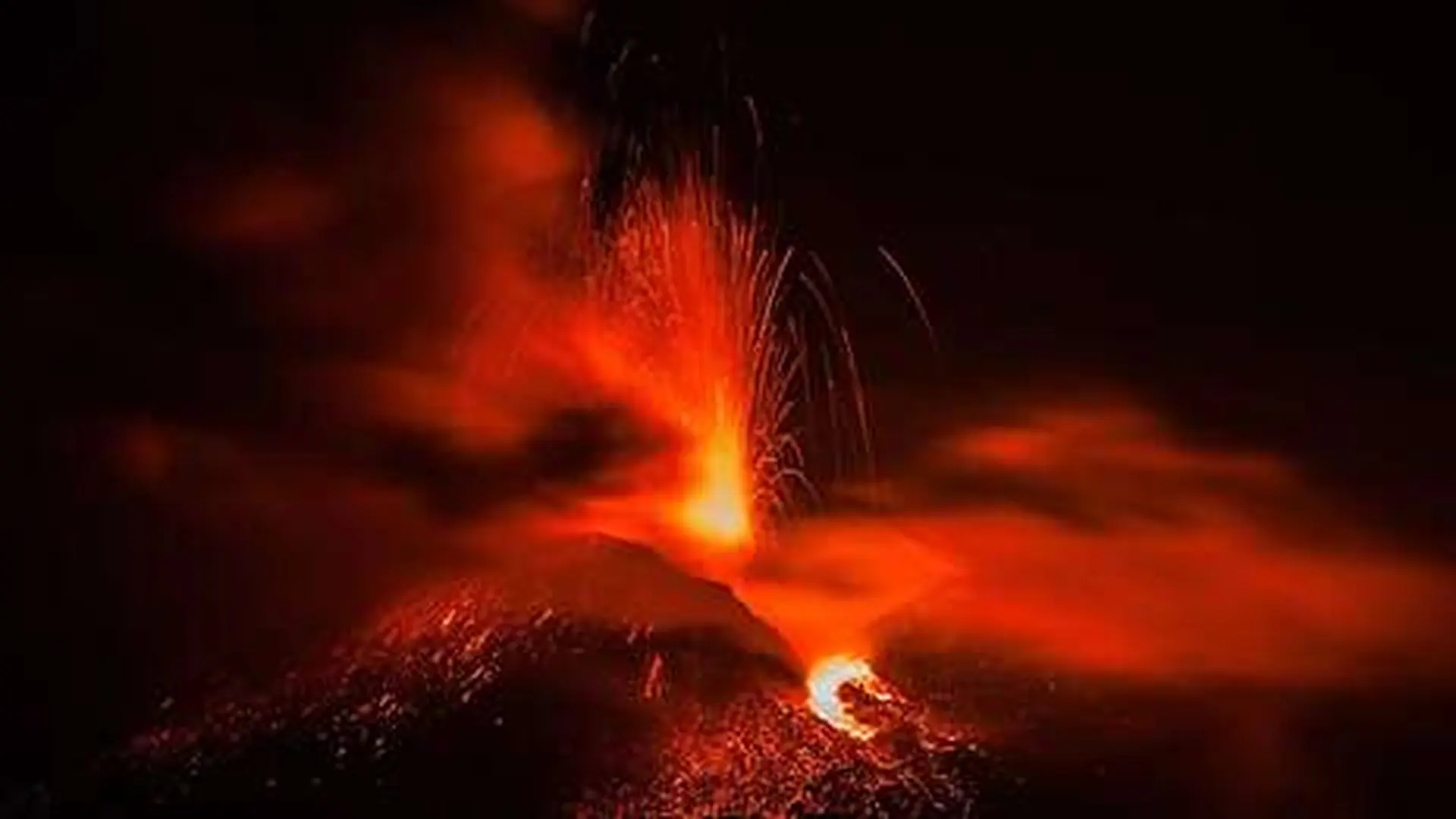
New research shows that Mount Etna’s internal magma conduits can remodel themselves over centuries, meaning a single volcano may erupt through completely separate mechanisms. The study compares two of the island’s most violent eruptions, revealing how the hidden plumbing shifted between events.
While a volcano’s external shape can appear static, the pathways that feed molten rock to the surface are anything but. Magma must travel through a network of reservoirs and channels that can reconfigure from one eruption to the next, complicating attempts to forecast volcanic activity.
To track these hidden changes, an international team examined two major Etna eruptions that are spaced by roughly 4,000 years. Their analysis, published in Geochemistry, Geophysics, Geosystems, demonstrates starkly different ascent patterns for each event.
Microscopic Bubbles Reveal Deep‑Earth Conditions
The explosivity of an eruption hinges on the gases dissolved in rising magma. As pressure drops, trapped gases expand, turning a relatively calm outflow into a violent blast. Historically, water vapor has been viewed as the primary driver, but recent work highlights carbon dioxide as an equally potent factor.
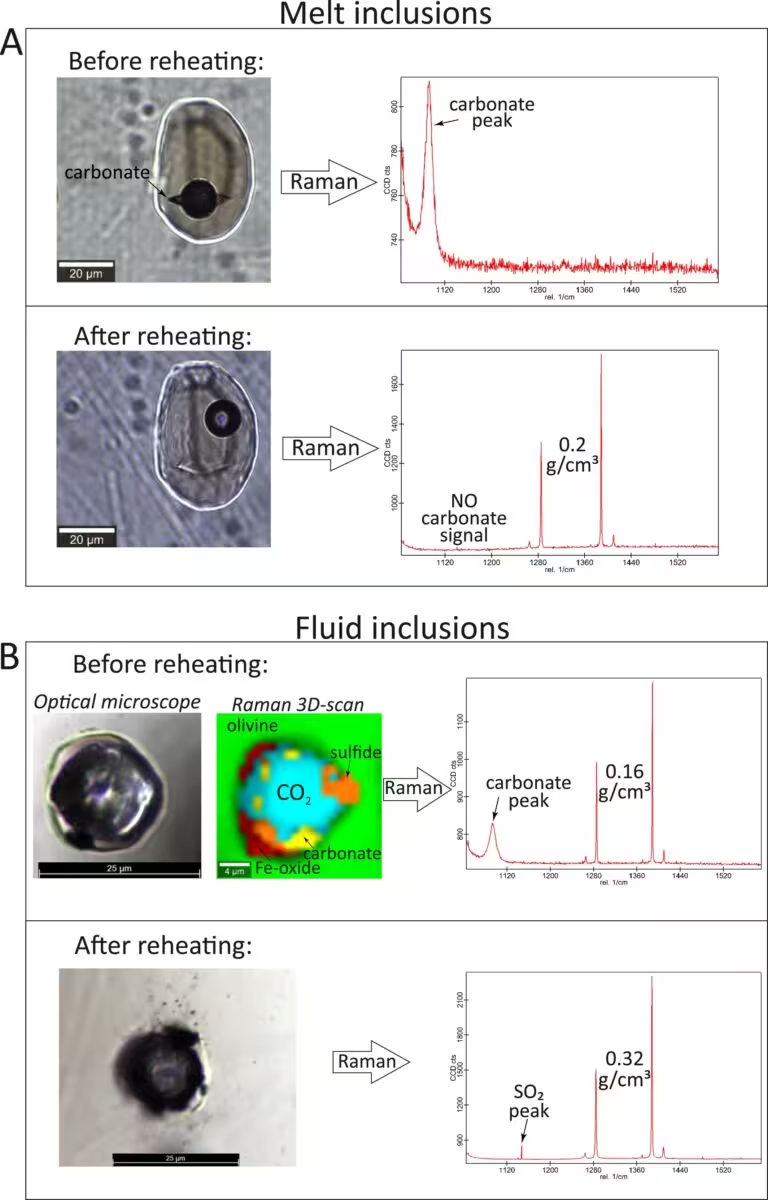
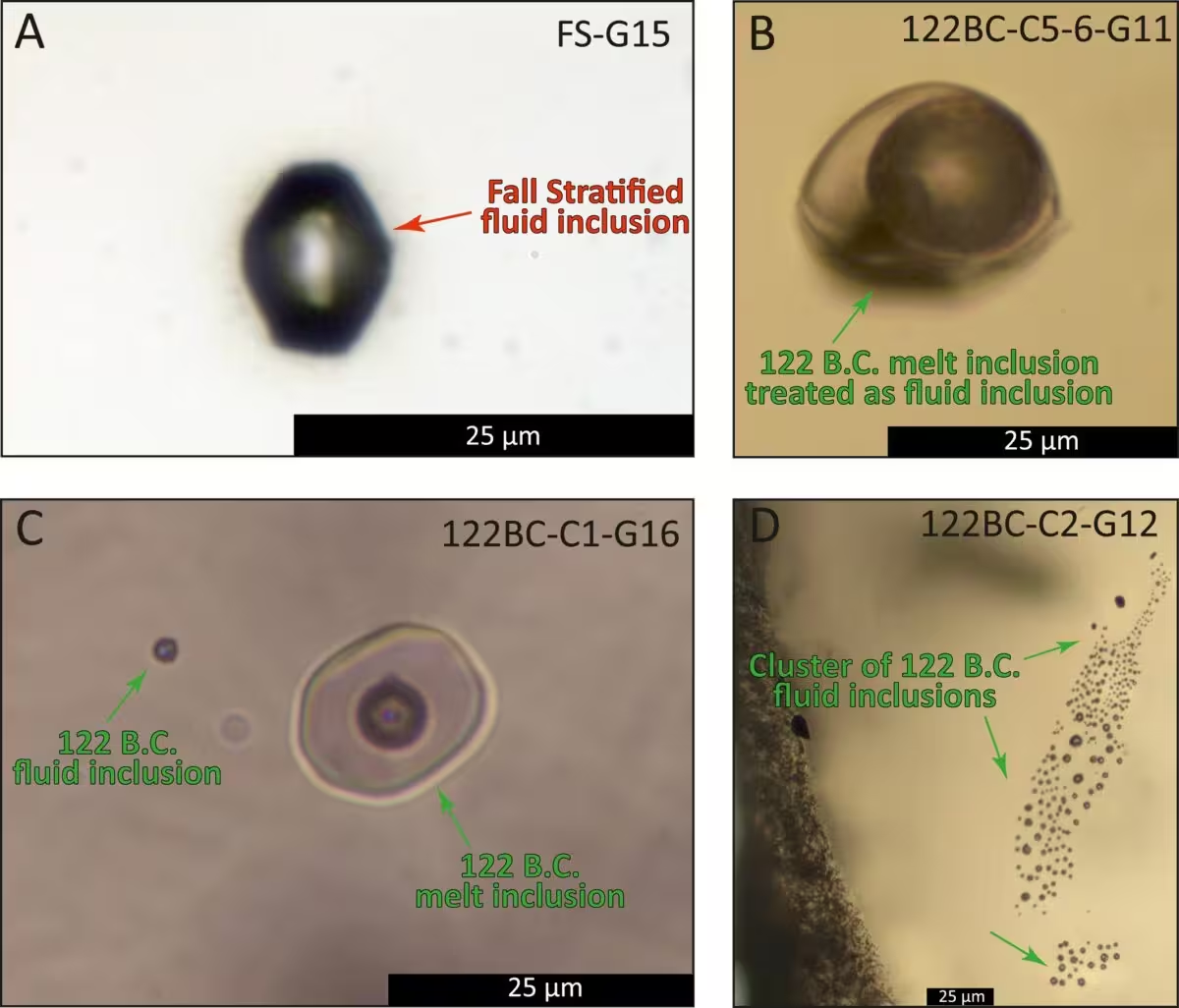
Researchers applied Raman spectroscopy to tiny bubbles frozen inside crystals that formed within the magma. According to Cornell University, these inclusions are only one to ten percent the thickness of a human hair, yet they retain a record of the pressure and depth at which they crystallized.
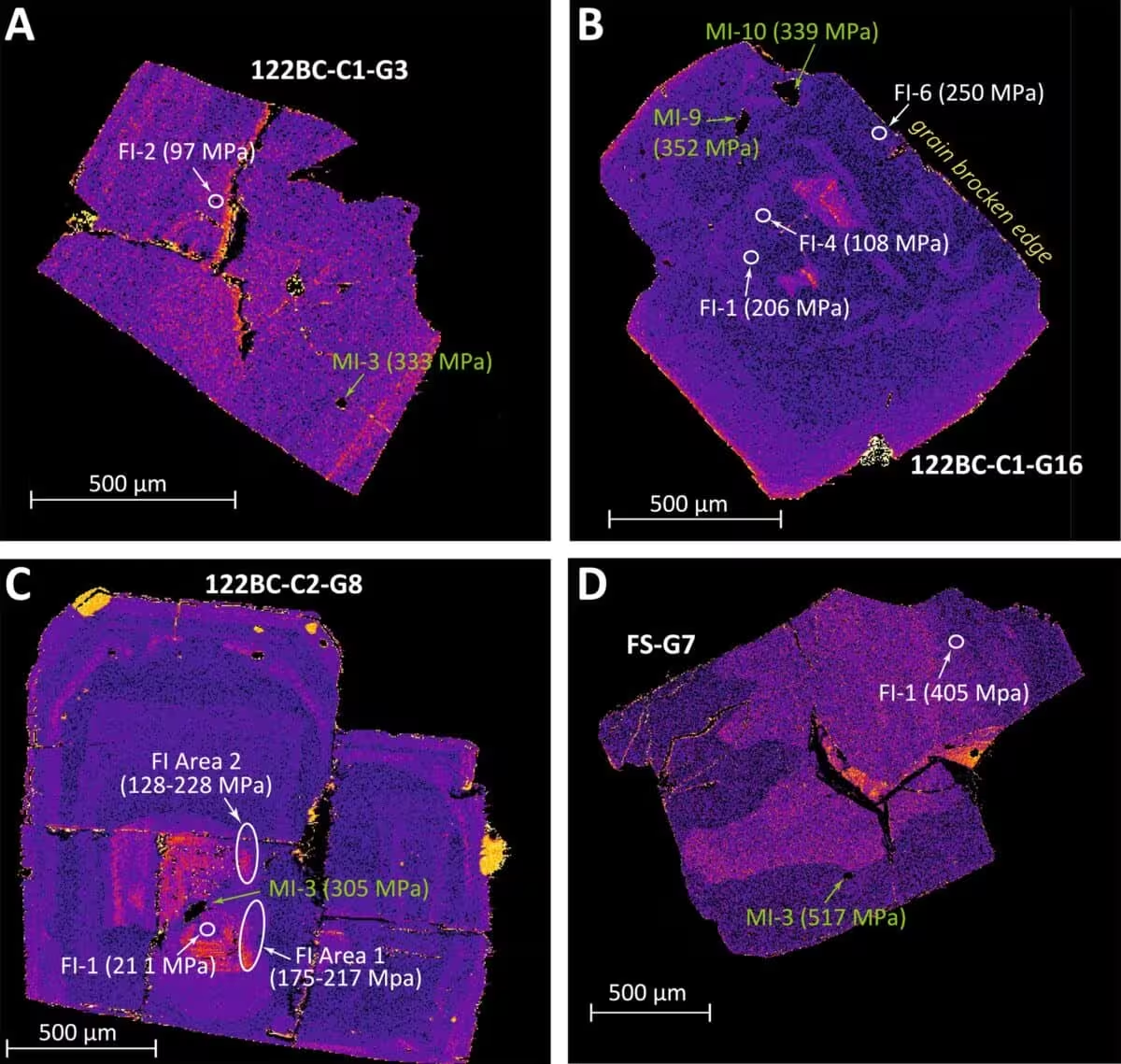
“The technique gives us the density of CO₂, and using a state equation we can transform that density into pressure, and pressure can be transformed into depth,” said first author Maxim Gavrilenko. “Then we apply those techniques to these explosive eruptions, and we are able to reconstruct the plumbing system with an unprecedented precision.”
Contrasting Paths of Two Ancient Eruptions
The older event, dated to 122 B.C., ranks among the most powerful eruptions recorded for Etna. Classified as a mafic Plinian eruption, it involved magma rich in magnesium and iron and produced a highly explosive column.
Analysis indicates that this magma originated at roughly 22 kilometers depth, stalled between 2 and 5 kilometers beneath the surface, and lingered there for weeks while gases gradually leaked before finally breaking through.
In contrast, the “Fall Stratified” eruption that occurred nearly 4,000 years later behaved like a fast‑acting firework. The magma surged upward from a source between 24 and 30 kilometers depth and erupted within a few hours, carrying markedly higher concentrations of carbon dioxide.
A Dual‑Gas System Unique to Etna
The side‑by‑side comparison underscores an unusual aspect of Mount Etna. Unlike many volcanoes where either water vapor or CO₂ dominates, Etna’s eruptions are shaped by a tug‑of‑war between the two gases. As noted in the latest paper, lead author Esteban Gazel explained that oceanic‑island volcanoes typically run on carbon dioxide, whereas subduction‑zone volcanoes are usually driven by water‑rich magma. Etna is one of the few settings where both gases compete for control.
“This shows that at a certain threshold of CO₂, the eruption will come from very deep and really fast, but when you have a higher threshold of water, then the process is controlled at shallow levels,” Gazel said.
The team is now extending the same Raman‑spectroscopy approach to volcanoes in Chile, Hawaii and other regions. Gazel emphasized that the ultimate aim is to feed these high‑resolution observations into physical models, thereby sharpening the tools used for volcanic risk assessment worldwide.
This article has been fact checked for accuracy, with information verified against reputable sources. Learn more about us and our editorial process.
Last reviewed on .
Article history
- Latest version
Reference(s)
- Rennie, Alistair. “What is Raman Spectroscopy? Raman Spectroscopy Principles.”, July 8, 2021 Edinburgh Instruments <https://www.edinst.com/resource/what-is-raman-spectroscopy/>.
- Chronicle, David. “Carbon dioxide and water played key role in historic Mount Etna eruption.”, June 2, 2026 Cornell Chronicle <https://news.cornell.edu/stories/2026/06/carbon-dioxide-and-water-played-key-role-historic-mount-etna-eruption>.
- “Dr. Maxim Gavrilenko.” Dr. Maxim Gavrilenko <https://maximgavrilenko.com/>.
- <https://whc.unesco.org/fr/list/1427/>.
- Gavrilenko, M.., et al. “Deep Origin and Shallow Launch for the Etna 122 B.C. Mafic Plinian Eruption.” Geochemistry, Geophysics, Geosystems, vol. 27, no. 6, June 2, 2026 American Geophysical Union (AGU), doi: 10.1029/2026GC012924. <https://agupubs.onlinelibrary.wiley.com/doi/10.1029/2026GC012924>.
- “Esteban Gazel | Cornell Duffield Engineering.”, August 21, 2024 Cornell Duffield Engineering <https://www.duffield.cornell.edu/people/esteban-gazel/>.
Cite this page:
- Posted by Bilal Abbasi