Perseverance Uncovers Shallowest Complex Organic Carbon on Ancient Martian Rock
NASA’s Perseverance rover discovers complex organics in an ancient Martian rock, a fresh clue to the Red Planet’s distant past.
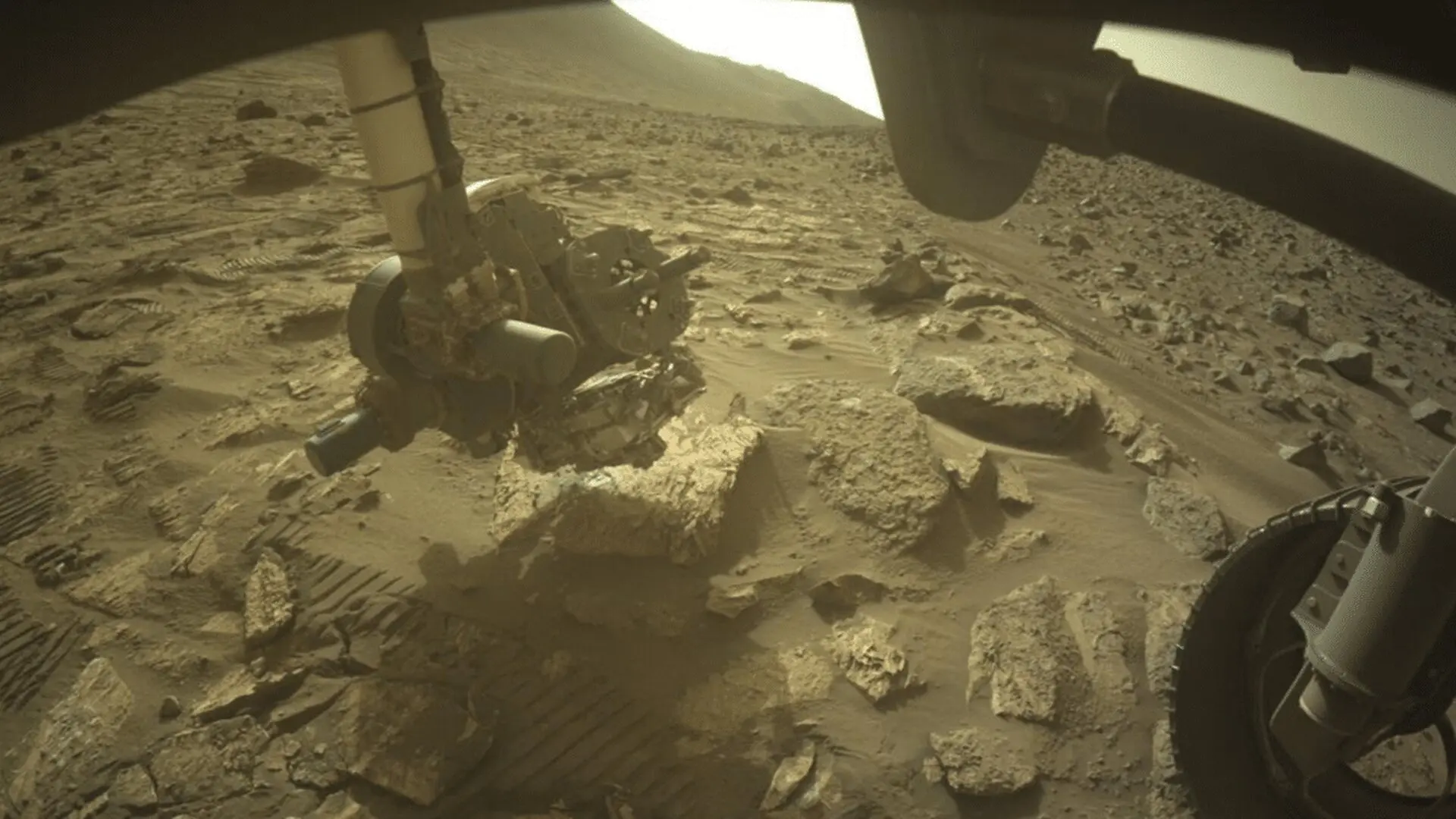
For many years researchers have probed the Martian surface for chemical clues that might hint at a past capable of supporting life. A recent find from NASA’s Perseverance rover adds a surprising piece to that puzzle: a rock recovered from an ancient lakebed contains unusually intricate organic material, representing one of the most notable chemical detections on the Red Planet to date. The study, published in Science Advances, does not confirm past life, but it shows that early Mars retained a richer organic chemistry than previously documented.
Complex Carbon Compounds Discovered in Jezero’s Ancient Sediments
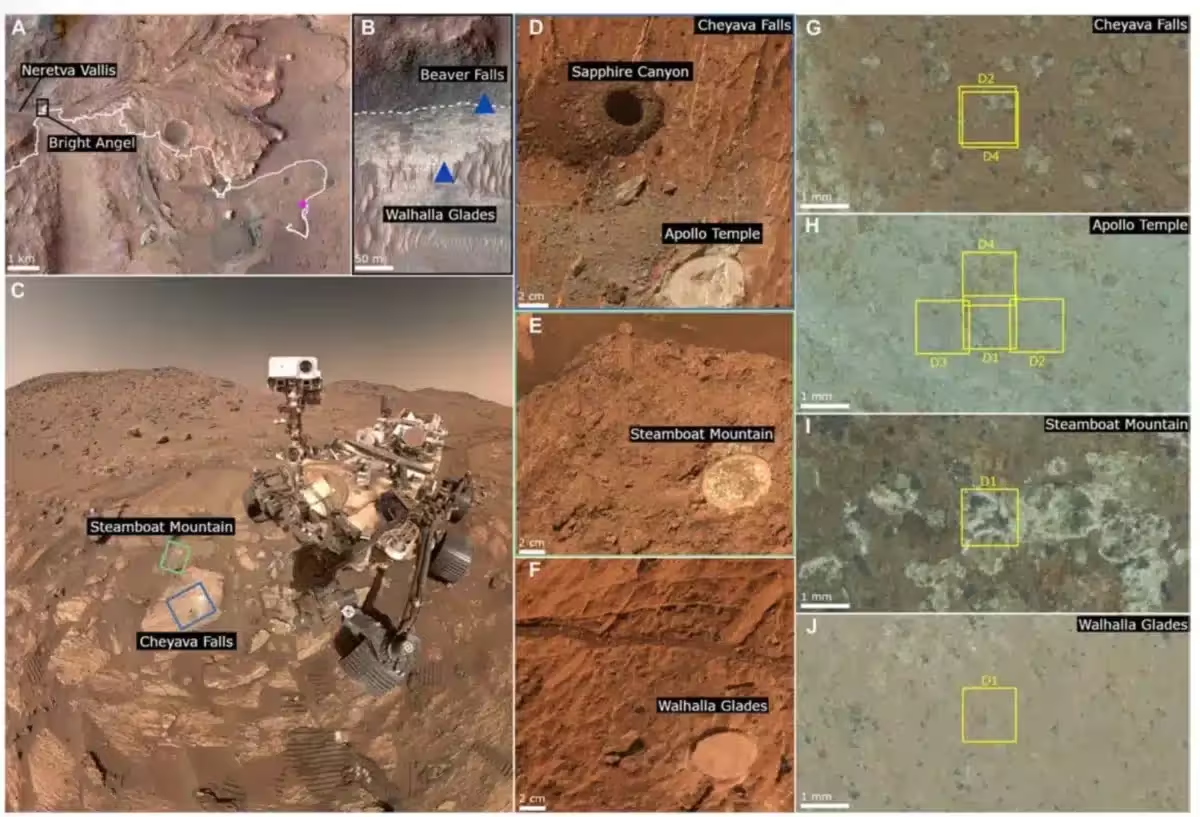
Since touching down in Jezero Crater in 2021, the Perseverance rover has been exploring a landscape that once hosted a large lake and river delta about 3.7 billion years ago. Scientists chose this site because its layered deposits could have trapped chemical signatures from an era when Mars was warmer and wetter. Using the rover’s suite of instruments, researchers identified macromolecular carbon in two rocks from the Bright Angel outcrop of Neretva Vallis, including the well‑known Cheyava Falls mudstone, previously noted for its spotted texture.
The carbon‑rich material exhibits a higher degree of chemical complexity than most organics previously detected on Mars, suggesting that ancient environments preserved a more diverse carbon inventory than expected. While such molecules are not definitive evidence of biology—because they can arise from abiotic processes—they remain essential building blocks for life as we understand it on Earth. This discovery therefore broadens the known spectrum of organic matter that has survived billions of years of Martian geological activity.
Surface-Level Organic Signature Sets New Record
One striking aspect of the find is that the organic material was detected directly on the rock’s exposed surface, rather than from a buried interior. This shallow detection could influence future sampling strategies. As Kyle Uckert, an astrobiologist at NASA’s Jet Propulsion Laboratory, told ScienceAlert, “Finding macromolecular carbon on the dust‑cleared, but otherwise unprepared surface of the ‘Cheyava Falls’ rock marks the shallowest organic detection on Mars.” He added that the organics may have been recently exposed or shielded by minerals with protective properties against ultraviolet radiation, implying that similar rocks could retain comparable chemical records.
If protective minerals have indeed preserved these compounds over immense timescales, the scientific value of sedimentary formations throughout Jezero Crater rises, reinforcing the importance of continued investigation of ancient lake deposits as long‑term chemical archives.
Raman Spectroscopy Identifies Amorphous Carbon
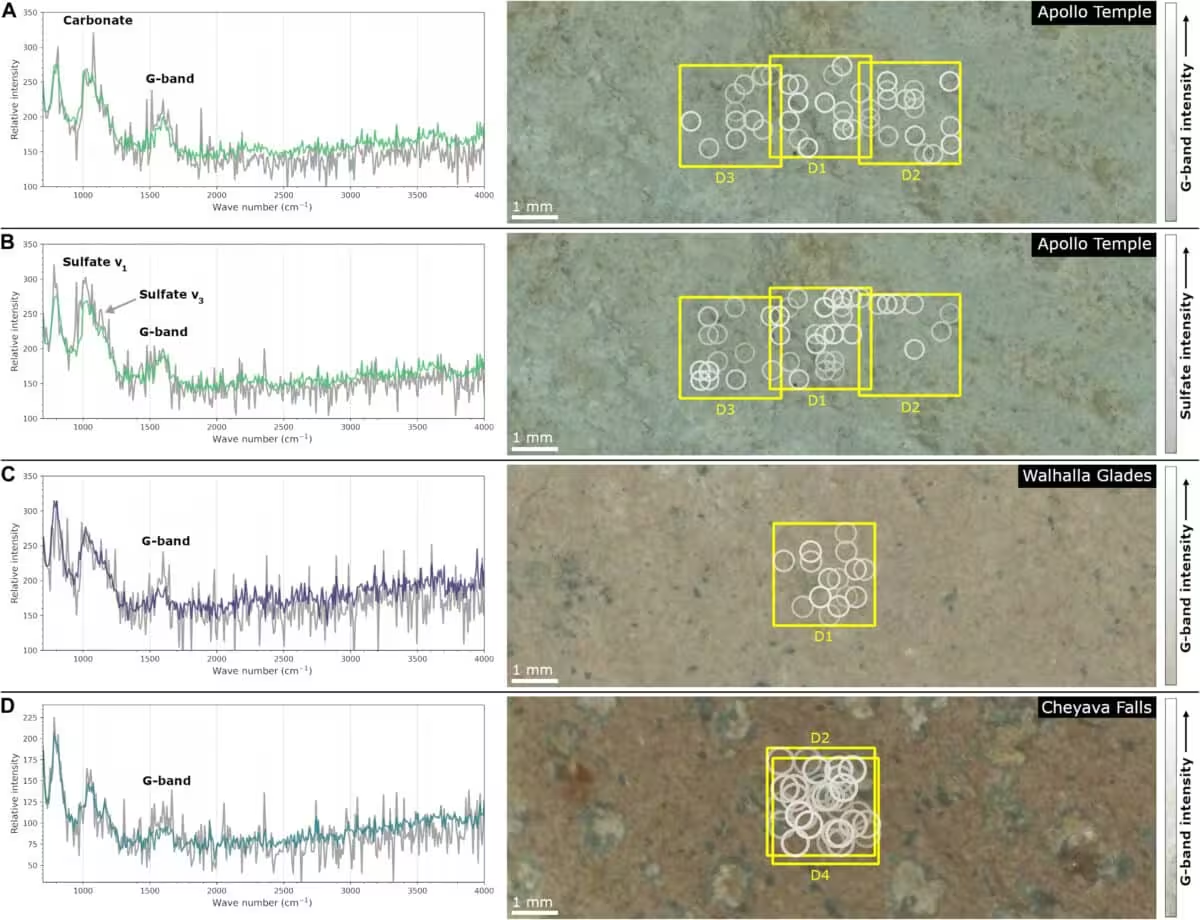
The analysis, detailed in Science Advances, relied on Perseverance’s SHERLOC instrument, which couples Raman spectroscopy with fluorescence measurements to pinpoint minerals and organics at microscopic scales. By comparing Martian spectra with terrestrial samples and meteorites, the team characterized the detected material. Geologist Ashley Murphy of the Planetary Science Institute explained, “Using the MMC’s Raman G‑band parameters, we determined that it is amorphous carbon.”
Amorphous carbon can emerge from a range of processes. On Earth it appears in biologically linked settings such as microbial mats and coal, as well as in meteorites and rocks altered by volcanic or hydrothermal activity. Because these diverse origins generate overlapping Raman signatures, the researchers cannot yet decide whether the Martian carbon formed through biological or purely geological pathways. The data confirm a chemically intricate carbon form, but its provenance remains open to interpretation.
Cautious Interpretation Highlights Multiple Origins
Despite the excitement, the authors emphasize that no direct evidence of ancient Martian organisms has been uncovered. Organic compounds can arrive via meteorites and interplanetary dust, or form in situ through volcanic, hydrothermal, or electrochemical reactions—all scientifically plausible routes. The key implication of the discovery is that Mars has retained a sophisticated carbon chemistry in rocks that date back billions of years. The coexistence of carbonates, sulfates, phosphates, and now macromolecular carbon suggests an environment where the precursors for complex chemistry were present.
Determining whether biology ever contributed to this chemistry will require analytical capabilities beyond those currently aboard the rover.
Future Sample‑Return Missions Hold the Key
The identified organic material strengthens the case for returning carefully chosen Martian rocks to Earth. Laboratory instruments on the ground can probe isotopic ratios, molecular structures, and microscopic textures with a precision unattainable on a robotic platform millions of miles away. Perseverance has already sealed several rock samples from Jezero Crater for future transport.
Should a sample‑return mission succeed, scientists will be able to assess whether the complex carbon originated from geological processes, extraterrestrial delivery, or as‑yet‑unknown mechanisms. Until that time, the finding stands as a significant milestone in the ongoing effort to reconstruct Mars’ ancient environment and evaluate its potential for past habitability.
This article has been fact checked for accuracy, with information verified against reputable sources. Learn more about us and our editorial process.
Last reviewed on .
Article history
- Latest version
Reference(s)
- Farkas, Ivan. “Perseverance Finds Complex Organic Compounds in Strange Mars Rocks.”, June 24, 2026 ScienceAlert <https://www.sciencealert.com/perseverance-finds-complex-organic-compounds-in-strange-mars-rocks>.
Cite this page:
- Posted by Bilal Abbasi